
According to insights from Real Time Data Stats, the Synthetic Gene Circuits Market was valued at USD 1.9 billion in 2025. It is expected to grow from USD 2.2 billion in 2026 to USD 5.8 billion by 2033, registering a CAGR of 14.9% during the forecast period (2026–2033).
MARKET SIZE AND SHARE
The global synthetic gene circuits market is transitioning from a niche sector into a mainstream pillar of biotechnology. Market share is concentrated among pioneering biotechnology firms and specialized synthetic biology companies that possess key intellectual property, advanced platform technologies, and scalable development capabilities, enabling them to maintain strong competitive positions.
A significant share of the market is held by organizations that integrate automation, artificial intelligence, and computational design to accelerate gene circuit development and prototyping. Control over foundational tools, software platforms, and proprietary technologies creates substantial barriers to entry. As therapeutic, industrial, and diagnostic applications continue to advance, new participants are expected to enter the market, although the competitive landscape will likely remain dominated by vertically integrated leaders and innovative academic spin-offs supported by strategic partnerships.
INDUSTRY OVERVIEW AND STRATEGY
The synthetic gene circuits industry centers on engineering genetic components to perform predefined functions in living cells, revolutionizing therapeutics, biosensing, and bioproduction. The strategic focus is on moving from proof-of-concept research to robust, reliable clinical and industrial applications. Key players prioritize platform development that standardizes and automates the design-build-test cycle, reducing costs and development timelines while improving circuit predictability and performance in complex biological environments.
Core strategy involves forging alliances between agile synthetic biology firms and large pharmaceutical or agricultural corporations. This leverages translational expertise and distribution networks. Companies also strategically protect their methodologies through expansive patents. The overarching aim is to demonstrate clear value propositions—such as smart cell therapies or sustainable chemical production—to secure sustained investment and navigate the stringent regulatory pathways essential for commercialization.
Analyst Key Takeaways:
The Synthetic Gene Circuits Market is experiencing strong growth due to increasing adoption of programmable genetic systems in therapeutic development, precision medicine, and advanced biotechnology research. Growing investments in synthetic biology, coupled with advancements in gene editing and cellular engineering technologies, are enabling the creation of more sophisticated and reliable genetic circuits for healthcare and industrial applications.
Market expansion is further supported by rising demand for engineered microbes, biosensors, and next-generation biomanufacturing solutions. Collaboration between biotechnology firms, academic institutions, and pharmaceutical companies is accelerating innovation, while improvements in automation, computational biology, and DNA synthesis platforms are enhancing the scalability and commercialization potential of synthetic gene circuit technologies.
REGIONAL TRENDS AND GROWTH
North America leads the market, fueled by substantial venture capital, concentrated biotech hubs, and supportive regulatory frameworks for advanced therapies. Europe follows, emphasizing ethical research and strong academic-commercial partnerships in biomedicine. The Asia-Pacific region emerges as the fastest-growing area, driven by significant government investments in bio-manufacturing and a rising focus on precision agriculture and personalized medicine, creating a dynamic competitive landscape.
Primary growth drivers include escalating demand for cell/gene therapies and programmable biologics. Key restraints are high development costs, technical complexity, and evolving regulatory uncertainty. Opportunities lie in expanding into environmental monitoring and in-vivo diagnostics. Future challenges involve ensuring genetic stability in delivered circuits, addressing biocontainment and public acceptance concerns, and managing the intense competition for specialized talent, which will critically shape the industry's trajectory.
SYNTHETIC GENE CIRCUITS MARKET SEGMENTATION ANALYSIS
BY TYPE:
The market segmentation by type is largely driven by the increasing need for precise genetic control and predictable cellular behavior across research and commercial applications. Toggle switch circuits are widely adopted due to their ability to maintain stable gene expression states, making them valuable in therapeutic and industrial processes that require controlled on–off responses. Oscillatory circuits gain traction in time-dependent biological functions such as rhythmic protein expression and biosensing, where dynamic regulation is essential. Logic gate circuits represent a rapidly growing segment as they enable cells to process multiple biological inputs simultaneously, aligning closely with the rising demand for smart therapeutics and advanced diagnostics. Feedback loop circuits further strengthen system stability and robustness, addressing challenges related to noise and variability in biological systems.
Sensor and memory circuits significantly influence market expansion by enabling cells to detect environmental or internal signals and retain information over time. sensor circuits are critical in diagnostics, environmental monitoring, and industrial bioprocessing, where real-time detection of stimuli enhances operational efficiency and safety. Memory circuits support long-term data storage within cells, enabling applications in lineage tracking, disease progression monitoring, and programmable therapeutics. The growing emphasis on autonomous and self-regulating biological systems continues to accelerate demand for advanced circuit types, positioning this segment as a core driver of technological innovation within the synthetic gene circuits market.
BY APPLICATION:
Application-based segmentation is primarily shaped by expanding biomedical and industrial use cases that require programmable and responsive biological systems. Therapeutics dominate the market due to the rapid growth of cell and gene therapies, where synthetic gene circuits enable controlled drug release, targeted cell behavior, and improved treatment safety. Diagnostics represent another major segment, driven by the need for highly sensitive, rapid, and cost-effective diagnostic platforms capable of detecting diseases at early stages. Drug discovery benefits significantly from synthetic gene circuits by enabling high-throughput screening, pathway analysis, and functional genomics, reducing development timelines and research costs.
Beyond healthcare, industrial biotechnology, environmental monitoring, and agriculture play an increasingly important role in market diversification. In industrial biotechnology, synthetic gene circuits optimize metabolic pathways, improve yield efficiency, and enable sustainable bio-manufacturing processes. Environmental monitoring applications rely on sensor-based circuits for pollutant detection and ecosystem analysis, supporting regulatory compliance and sustainability initiatives. Agricultural applications are expanding as gene circuits enable stress-resistant crops, controlled trait expression, and improved productivity, reinforcing the market’s long-term growth potential across both developed and emerging economies.
BY COMPONENT:
Component-based segmentation reflects the technological foundation of synthetic gene circuit design and performance. Promoters and transcription factors are critical components that determine expression strength, timing, and specificity, making them central to circuit optimization. Ribosome binding sites influence translation efficiency and are increasingly engineered for fine-tuned protein production. Reporter genes remain essential for monitoring circuit activity and validating system performance, especially in research and development environments. The growing emphasis on precision and reproducibility continues to drive innovation in component engineering.
Regulatory proteins and vectors further shape market dynamics by enabling control, delivery, and integration of gene circuits within host organisms. Regulatory proteins enhance system stability and responsiveness, addressing challenges related to genetic noise and environmental variability. Vectors, including plasmids and viral systems, play a vital role in determining delivery efficiency, scalability, and safety. Continuous improvements in vector design and component compatibility are expanding the commercial viability of synthetic gene circuits across multiple applications and organism types.
BY CIRCUIT COMPLEXITY:
Segmentation by circuit complexity is influenced by application requirements, development costs, and system reliability. Simple circuits dominate early-stage research and basic applications due to ease of design, lower risk, and faster implementation. Moderate complexity circuits are increasingly adopted as they balance functional capability with manageable design challenges, making them suitable for diagnostics and industrial processes. Multi-layer circuits enable advanced decision-making and signal integration, supporting sophisticated biological computations in therapeutic and research applications.
Modular, integrated, and adaptive circuits represent the most advanced segment, driven by the demand for scalable and customizable biological systems. Modular circuits allow reuse of standardized components, reducing development time and cost. Integrated circuits combine multiple functions into cohesive systems, enhancing performance and efficiency. Adaptive circuits, capable of learning or responding dynamically to environmental changes, are gaining prominence in next-generation therapeutics and autonomous bioprocessing, positioning this segment as a key driver of future market growth.
BY ORGANISM TYPE:
Organism-based segmentation reflects differences in engineering complexity, cost, and application suitability. Bacteria dominate the market due to ease of genetic manipulation, rapid growth rates, and widespread use in industrial biotechnology and research. Yeast serves as a versatile platform for metabolic engineering and pharmaceutical production, offering a balance between simplicity and functional complexity. Mammalian cells are increasingly important in therapeutic applications, particularly in cell-based therapies and advanced diagnostics, despite higher development costs and regulatory requirements.
Plant cells, algae, and cell-free systems are emerging segments driven by sustainability and biosafety considerations. Plant-based circuits support agricultural innovation and bio-production, while algae-based systems offer renewable solutions for biofuels and environmental applications. Cell-free systems are gaining momentum due to reduced biosafety risks, faster prototyping, and simplified regulatory pathways, making them attractive for diagnostics, biosensing, and decentralized manufacturing.
BY END USER:
End-user segmentation is shaped by research intensity, commercialization capabilities, and funding availability. Biotechnology companies lead the market due to their focus on innovation, rapid prototyping, and application development across healthcare and industrial sectors. Pharmaceutical companies increasingly adopt synthetic gene circuits to enhance drug development pipelines, improve therapeutic precision, and support personalized medicine strategies. Academic research institutes remain foundational contributors, driving early-stage discoveries and technological advancements.
Contract research organizations, government laboratories, and synthetic biology startups further expand the market ecosystem. CROs support scalability and validation, enabling faster commercialization. Government laboratories contribute through publicly funded research and regulatory frameworks. Synthetic biology startups play a critical role in disruptive innovation, introducing novel platforms and applications that accelerate market evolution and attract investment.
BY TECHNOLOGY:
Technology-based segmentation highlights innovation intensity and platform maturity. CRISPR-based circuits dominate due to high precision, programmability, and versatility across organisms. Recombinant DNA technology remains a core foundation, supporting large-scale adoption and industrial applications. RNA-based circuits are gaining traction due to rapid response times and reduced genomic integration risks, making them suitable for transient and therapeutic applications.
Protein engineering and genome editing platforms further expand functional capabilities, enabling complex regulatory networks and enhanced system stability. Cell-free synthetic systems represent a rapidly growing technology segment, driven by simplified workflows, faster development cycles, and reduced biosafety concerns. Together, these technologies define the competitive landscape and determine adoption rates across applications and regions.
BY FUNCTIONALITY:
Functional segmentation reflects the operational roles of synthetic gene circuits in biological systems. Sensing and signal processing functions dominate early adoption due to their importance in diagnostics, environmental monitoring, and industrial control. Decision-making and actuation capabilities enable cells to respond autonomously to complex inputs, supporting advanced therapeutic and bioprocessing applications.
Memory storage and self-regulation functions are increasingly important as demand grows for long-term stability and autonomous operation. Memory circuits support tracking, monitoring, and adaptive responses, while self-regulating systems enhance robustness and reduce external intervention. These functionalities collectively drive the transition from simple genetic constructs to intelligent biological systems.
BY DELIVERY METHOD:
Delivery method segmentation is driven by efficiency, safety, and scalability considerations. Viral vectors dominate therapeutic applications due to high delivery efficiency and stable expression, despite regulatory challenges. Plasmid delivery remains widely used in research and industrial settings due to simplicity and cost-effectiveness. Nanoparticle-based delivery systems are gaining momentum as they offer improved targeting and reduced immunogenicity.
Electroporation, microinjection, and liposome-based delivery methods support specialized applications requiring precise control or compatibility with specific organisms. Advancements in delivery technologies continue to enhance uptake efficiency and system stability, directly influencing adoption rates and commercial feasibility across diverse market segments.
RECENT DEVELOPMENTS
- In Jan 2024: Ginkgo Bioworks expanded its genetic circuits portfolio through a partnership with Merck, focusing on developing advanced biosynthesis pathways for key materials, accelerating the design-build-test cycle.
- In May 2024: Synthego launched a next-generation CRISPR-based toolkit specifically for rapid prototyping of logic gates and switches in mammalian cells, significantly reducing the time required for iterative circuit design.
- In Aug 2024: Synlogic announced the successful Phase 1b clinical results for its engineered bacterial therapeutic, SYNB1934, demonstrating a functional synthetic circuit effectively reducing blood phenylalanine in patients.
- In Nov 2024: Asimov announced a strategic collaboration with Bristol Myers Squibb to develop novel synthetic gene circuits for next-generation cell therapies, aiming to enhance safety and efficacy in oncology applications.
- In Feb 2025: Twist Bioscience introduced a new high-complexity gene circuit assembly service, providing researchers with access to large, multigene constructs with ultra-low error rates, enabling more sophisticated system-level engineering.
KEY PLAYERS ANALYSIS
- Ginkgo Bioworks
- Synlogic
- Twist Bioscience
- Asimov
- Synthego
- Berkeley Lights (now part of Bruker)
- GenScript Biotech
- Thermo Fisher Scientific
- Codexis
- Novartis AG
- Bristol Myers Squibb
- Merck KGaA
- Amyris
- Arctoris
- eGenesis
- Senti Biosciences
- Benchling
- Synthex
- Cellibre
- Preceres
Synthetic Gene Circuits Market Segmentation Analysis
By Type:
- Toggle Switch Circuits
- Oscillatory Circuits
- Logic Gate Circuits
- Feedback Loop Circuits
- Sensor Circuits
- Memory Circuits
By Application:
- Therapeutics
- Diagnostics
- Drug Discovery
- Industrial Biotechnology
- Environmental Monitoring
- Agriculture
By Component:
- Promoters
- Transcription Factors
- Ribosome Binding Sites
- Reporter Genes
- Regulatory Proteins
- Vectors
By Circuit Complexity:
- Simple Circuits
- Moderate Complexity Circuits
- Multi-Layer Circuits
- Modular Circuits
- Integrated Circuits
- Adaptive Circuits
By Organism Type:
- Bacteria
- Yeast
- Mammalian Cells
- Plant Cells
- Algae
- Cell-Free Systems
By End User:
- Biotechnology Companies
- Pharmaceutical Companies
- Academic Research Institutes
- Contract Research Organizations
- Government Laboratories
- Synthetic Biology Startups
By Technology:
- CRISPR-Based Circuits
- Recombinant DNA Technology
- RNA-Based Circuits
- Protein Engineering
- Genome Editing Platforms
- Cell-Free Synthetic Systems
By Functionality:
- Sensing
- Signal Processing
- Decision Making
- Actuation
- Memory Storage
- Self-Regulation
By Delivery Method:
- Viral Vectors
- Plasmid Delivery
- Nanoparticle Delivery
- Electroporation
- Microinjection
- Liposome-Based Delivery
By Geography:
- North America (USA, Canada, Mexico)
- Europe (UK, Germany, France, Italy, Spain, Rest of Europe)
- Asia-Pacific (China, Japan, Australia, South Korea, India, Rest of Asia-Pacific)
- South America (Brazil, Argentina, Rest of South America)
- Middle East and Africa (GCC Countries, South Africa, Rest of MEA)
Synthetic Gene Circuits Market: Table of Contents
Introduction
- Market Definition
- Synthetic Gene Circuits Overview
- Industry Scope
- Study Objectives
- Market Assumptions
- Limitations of the Study
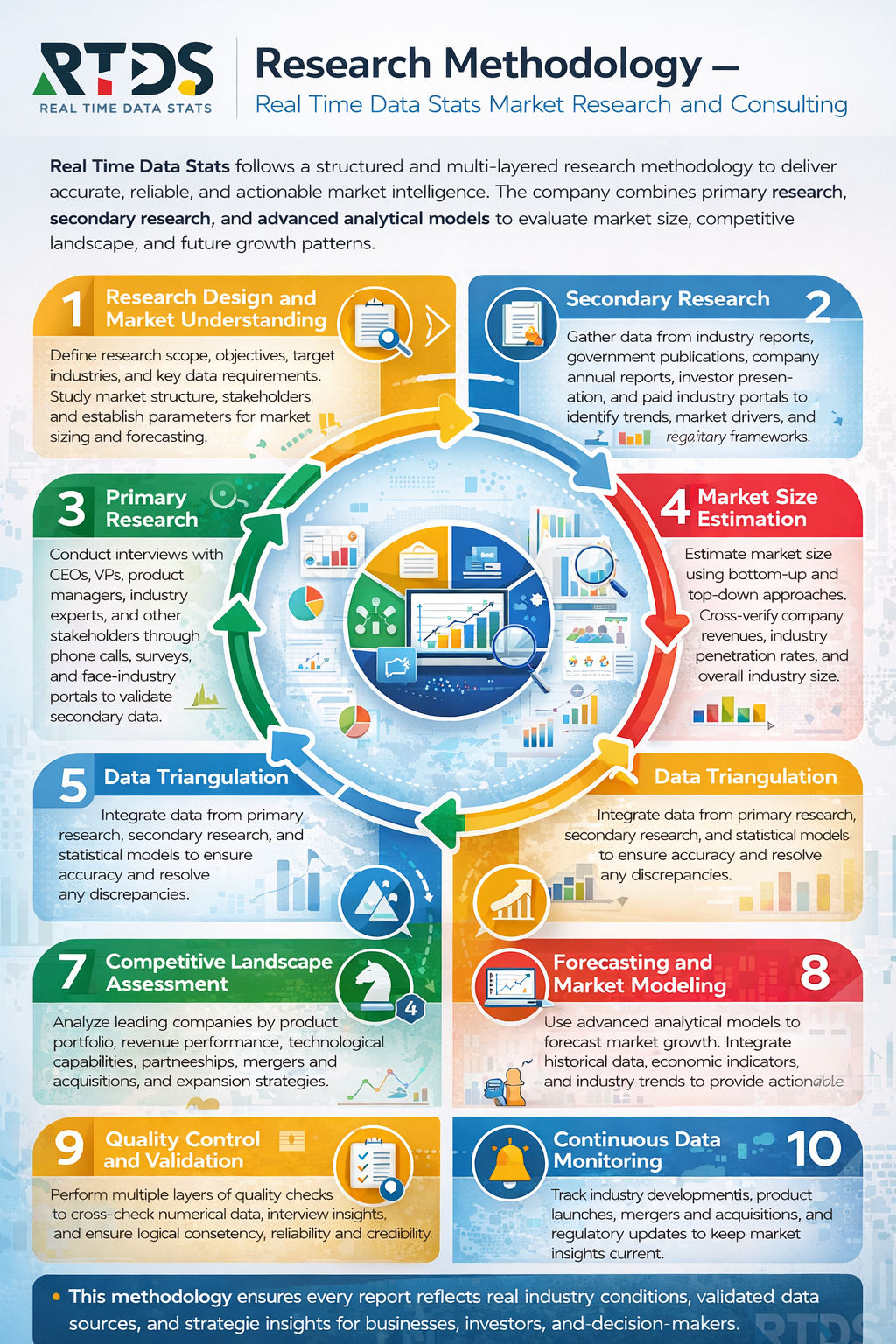
Research Methodology
- Primary Research Approach
- Secondary Research Sources
- Data Triangulation
- Market Estimation Techniques
- Forecasting Methodology
- Validation Process
Market Dynamics
- Market Drivers
- Market Restraints
- Market Opportunities
- Market Challenges
- Technological Advancements
- Regulatory Landscape
Global Synthetic Gene Circuits Market Overview
- Market Size Analysis
- Market Growth Trends
- Market Share Analysis
- Market Attractiveness Analysis
- Value Chain Analysis
- Pricing Analysis
Synthetic Gene Circuits Market Segmentation
- By Type
- Toggle Switch Circuits
- Oscillatory Circuits
- Logic Gate Circuits
- Feedback Loop Circuits
- Sensor Circuits
- Memory Circuits
- By Application
- Therapeutics
- Diagnostics
- Drug Discovery
- Industrial Biotechnology
- Environmental Monitoring
- Agriculture
- By Component
- Promoters
- Transcription Factors
- Ribosome Binding Sites
- Reporter Genes
- Regulatory Proteins
- Vectors
- By Circuit Complexity
- Simple Circuits
- Moderate Complexity Circuits
- Multi-Layer Circuits
- Modular Circuits
- Integrated Circuits
- Adaptive Circuits
- By Organism Type
- Bacteria
- Yeast
- Mammalian Cells
- Plant Cells
- Algae
- Cell-Free Systems
- By End User
- Biotechnology Companies
- Pharmaceutical Companies
- Academic Research Institutes
- Contract Research Organizations
- Government Laboratories
- Synthetic Biology Startups
- By Technology
- CRISPR-Based Circuits
- Recombinant DNA Technology
- RNA-Based Circuits
- Protein Engineering
- Genome Editing Platforms
- Cell-Free Synthetic Systems
- By Functionality
- Sensing
- Signal Processing
- Decision Making
- Actuation
- Memory Storage
- Self-Regulation
- By Delivery Method
- Viral Vectors
- Plasmid Delivery
- Nanoparticle Delivery
- Electroporation
- Microinjection
- Liposome-Based Delivery
Regional Market Analysis
- North America Market Analysis
- Europe Market Analysis
- Asia-Pacific Market Analysis
- Latin America Market Analysis
- Middle East Market Analysis
- Africa Market Analysis
Competitive Landscape
- Market Share Analysis
- Competitive Benchmarking
- Strategic Initiatives
- Mergers and Acquisitions
- Partnerships and Collaborations
- Product Launches
Company Profiles
- Company Overview
- Product Portfolio
- Financial Overview
- Recent Developments
- Strategic Outlook
- SWOT Analysis
- Future Outlook
- Emerging Trends
Investment Opportunities
- Technological Roadmap
- Market Growth Scenarios
- Innovation Pipeline
- Long-Term Market Forecast
Conclusion
- Rapid Innovation
- Expanding Applications
- Strong Growth Potential
Appendix
- Abbreviations and Acronyms
- Data Sources
- Methodology Notes
- Disclaimer
List of Tables
- Table:1: Global Synthetic Gene Circuits Market Size Overview
- Table:2: Market Segmentation by Type
- Table:3: Market Segmentation by Application
- Table:4: Market Segmentation by Component
- Table:5: Market Segmentation by Circuit Complexity
- Table:6: Market Segmentation by Organism Type
- Table:7: Market Segmentation by End User
- Table:8: Market Segmentation by Technology
- Table:9: Market Segmentation by Functionality
- Table:10: Market Segmentation by Delivery Method
- Table:11: Regional Market Size Comparison
- Table:12: Competitive Market Share Analysis
- Table:13: Key Company Financial Overview
- Table:14: Recent Strategic Developments
- Table:15: Future Market Forecast Summary
List of Figures
- Figure:1: Global Synthetic Gene Circuits Market Overview
- Figure:2: Market Dynamics Framework
- Figure:3: Value Chain Analysis
- Figure:4: Market Segmentation by Type
- Figure:5: Market Segmentation by Application
- Figure:6: Market Segmentation by Component
- Figure:7: Market Segmentation by Circuit Complexity
- Figure:8: Market Segmentation by Organism Type
- Figure:9: Market Segmentation by End User
- Figure:10: Market Segmentation by Technology
- Figure:11: Market Segmentation by Functionality
- Figure:12: Market Segmentation by Delivery Method
- Figure:13: Regional Market Analysis Map
- Figure:14: Competitive Landscape Matrix
- Figure:15: Future Market Growth Outlook
Synthetic Gene Circuits Market Key Factors
Drivers:
- Rising demand for cell-based therapies expands clinical applications.
- Advances in computational biology accelerate circuit design and testing.
- Increased R&D investment from pharmaceutical companies fuels innovation.
Restraints:
- High development costs and technical complexity limit widespread adoption.
- Unclear regulatory pathways delay product commercialization.
- Potential biosafety and ethical concerns hinder public acceptance.
Opportunities:
- Expanding synthetic biology tools enable more sophisticated circuit engineering.
- Growing focus on personalized medicine creates new therapeutic avenues.
- Partnerships between academia and industry accelerate translational research.
Challenges:
- Achieving reliable long-term circuit performance in living cells remains difficult.
- Scalability and manufacturing hurdles impede mass production.
- Intellectual property disputes create uncertainty for developers.
Synthetic Gene Circuits Market Key Regional Trends
North America:
- Strong venture capital funding fuels startup growth and research.
- Leading pharmaceutical firms actively integrate circuits into therapeutic pipelines.
- Regulatory agencies actively engage to shape forward-looking frameworks.
Europe:
- Public research grants strongly support foundational and applied research.
- Initiatives prioritize biosafety, ethical standards, and public dialogue.
- Focus increases on sustainable industrial applications using engineered cells.
Asia-Pacific:
- Governments strategically invest to build domestic synthetic biology capabilities.
- Research activity accelerates in biomedical and agricultural applications.
- Growing contract research and manufacturing services support global markets.
Frequently Asked Questions
Key Questions Answered
- What is the size and growth rate of the market industry?
- What are the main drivers influencing market growth trends?
- What are the key challenges and restraints faced by the market?
- What are the emerging trends and opportunities shaping the market?
- Who are the top players, and what strategies drive their success?
- What are the customer demographics and their buying behaviors?
- What are the key market segments, and what is their scope?
- What are the geographical dynamics, and which region dominates?
- What are the market forecasts and projections for the next decade?
- What regulatory factors are critical to consider for market growth?
Why Choose our Company?
- Major facts and stats backing every report we offer.
- Comprehensive analysis tailored to your business needs.
- Accurate insights backed by extensive market research.
- Expert support to address your queries promptly.
- Data-driven strategies for better decision-making.
- In-depth reports with actionable
recommendations. - Reliable statistics from trusted industry
sources. - Customizable reports to suit your specific goals.
- Unmatched quality and precision in market analysis.
- Competitive pricing with premium content delivery.
Share your experience!
We value you feedback. Please take a moment to review your experience with us.