
According to insights from Real Time Data Stats, the Synthetic Biomolecular Motors Market was valued at USD 190 million in 2025. It is expected to grow from USD 233 million in 2026 to USD 986 million by 2033, registering a CAGR of 22.8% during the forecast period (2026–2033).
MARKET SIZE AND SHARE
The global synthetic biomolecular motors market is transitioning from a niche research field into a broader commercial industry. Market share is currently concentrated among specialized biotechnology companies and academic spin-offs, particularly in North America and Europe. Strong growth is being supported by increasing R&D investments, expanding proof-of-concept studies, and the gradual commercialization of applications in therapeutics, diagnostics, and molecular engineering.
The market is expected to expand significantly as synthetic biomolecular motors gain wider adoption in targeted drug delivery, nanofabrication, and precision medicine. Market share distribution is likely to become more diversified as large pharmaceutical and nanotechnology companies enter the sector through strategic partnerships, acquisitions, and product development initiatives. Meanwhile, the Asia-Pacific region is projected to capture a growing share, supported by government funding, advanced biomedical research programs, and expanding manufacturing capabilities.
INDUSTRY OVERVIEW AND STRATEGY
The synthetic biomolecular motors industry involves engineering molecular machines from biological components for nanoscale applications. It is highly interdisciplinary, merging synthetic biology, nanotechnology, and biophysics. The current landscape is characterized by intense research, with key players focusing on prototyping and securing intellectual property. Primary applications under development include advanced medical therapeutics, such as intelligent drug delivery systems, and novel materials fabrication, positioning the field at the cutting edge of molecular engineering.
Core strategy for firms involves heavy investment in foundational R&D to overcome engineering challenges like stability and control. Strategic partnerships between startups and established pharmaceutical or tech companies are crucial for scaling and clinical translation. A focus on proprietary platform technologies, rather than single products, defines the strategic approach. Securing funding from venture capital and public grants while navigating an evolving regulatory pathway for nano-bio hybrids is essential for long-term commercial success.
Analyst Key Takeaways:
Synthetic biomolecular motors are emerging as a transformative technology within synthetic biology and nanotechnology, enabling precise control of molecular movement for applications in targeted drug delivery, molecular diagnostics, biosensing, and nanoscale manufacturing. Advances in molecular engineering, protein design, and biohybrid systems are accelerating the development of highly efficient biomolecular machines capable of performing complex tasks at the cellular and molecular levels.
The market is expected to benefit from increasing investments in synthetic biology research, growing interest in molecular robotics, and expanding applications in healthcare and biotechnology. Collaboration between academic institutions, biotechnology companies, and nanotechnology developers is fostering innovation, while ongoing progress in programmable biological systems and smart therapeutic platforms is creating new opportunities for commercialization and long-term industry growth.
REGIONAL TRENDS AND GROWTH
North America leads, driven by substantial NIH and DARPA funding, a strong venture capital ecosystem, and dense networks of top research institutions. Europe follows with coordinated EU projects and a strong academic foundation in biophysics. The Asia-Pacific region, particularly Japan and China, is the fastest-growing, due to significant government-led initiatives in nanotechnology and precision medicine, aiming to build domestic innovation and manufacturing leadership in this strategic field.
Key growth drivers include escalating demand for targeted therapeutics and miniaturized diagnostics, alongside technological convergence. Major restraints are technical hurdles in motor precision and scalability, alongside undefined regulatory frameworks. Opportunities lie in creating first-to-market therapeutic platforms and forming cross-industry alliances. Challenges involve high development costs, long timelines, and addressing public perception and ethical considerations surrounding advanced bio-nanotechnology, which could impact adoption rates and investment flows.
SYNTHETIC BIOMOLECULAR MOTORS MARKET SEGMENTATION ANALYSIS
BY TYPE:
Linear molecular motors dominate early-stage experimental and translational research due to their directional transport efficiency at the nanoscale. These motors closely mimic biological counterparts such as kinesin and myosin, allowing researchers to design predictable motion pathways for intracellular transport, molecular assembly, and targeted delivery. Their dominance is reinforced by strong compatibility with DNA origami scaffolds and polymer tracks, enabling precise control over movement direction, speed, and load-bearing capacity. Growing demand for controllable nanoscale transport systems in drug delivery and molecular robotics further accelerates adoption of linear motor architectures.
Rotary molecular motors, DNA-based motors, protein-based motors, enzyme-driven motors, and hybrid synthetic–biological motors collectively expand the functional diversity of the market. Rotary motors gain traction in energy conversion and signal amplification applications due to their cyclic motion efficiency, while DNA-based motors benefit from programmability and structural predictability. Protein-based and enzyme-driven motors leverage catalytic efficiency and biological recognition, supporting biomedical and diagnostic use cases. Hybrid motors emerge as a dominant innovation trend, combining synthetic stability with biological adaptability, which significantly enhances durability, responsiveness, and real-world deployment potential.
BY ENERGY SOURCE:
ATP-powered motors represent the most biologically aligned energy segment, benefiting from compatibility with cellular environments and biochemical systems. Their dominance stems from their ability to operate seamlessly within living systems, making them ideal for intracellular transport, targeted therapeutics, and biosensing applications. Extensive biological research infrastructure already supports ATP-based mechanisms, lowering development barriers and accelerating commercialization in biomedical domains.
Light-driven, chemical fuel–driven, electrochemical, thermal, and hybrid energy motors drive diversification across non-biological environments. Light-driven motors gain momentum due to precise external controllability and non-invasive activation, particularly in smart materials and microfluidic systems. Chemical and electrochemical motors offer scalability for industrial nanomanufacturing, while hybrid energy motors address efficiency limitations by enabling adaptive power switching. This multi-energy evolution strengthens market resilience by supporting cross-sector applications beyond life sciences.
BY MATERIAL COMPOSITION:
DNA origami–based materials dominate material selection due to unmatched structural programmability and nanoscale precision. These materials enable precise spatial arrangement of motor components, directly improving efficiency, directionality, and task specificity. High adoption in academic and institutional research further reinforces this segment, supported by falling synthesis costs and improved assembly techniques.
Peptide-based, polymer-based, metal–organic frameworks, carbon-based nanomaterials, and biohybrid composites expand performance boundaries. Polymer-based materials improve mechanical robustness and environmental stability, while MOFs enhance catalytic efficiency and structural rigidity. Carbon-based nanomaterials introduce electrical conductivity, supporting electrochemical motors. Biohybrid composites increasingly dominate advanced designs by balancing biocompatibility with durability, making them essential for implantable and long-term operational systems.
BY MECHANISM OF ACTION:
Conformational change–based motors lead the market due to their efficiency in translating chemical or optical stimuli into mechanical motion. These mechanisms allow precise control over motion cycles and force generation, making them suitable for programmable nanodevices. Their dominance is reinforced by predictable behavior, repeatability, and compatibility with multiple energy sources.
Chemical gradient–driven, photochemical, catalytic, Brownian ratchet, and self-assembly mechanisms broaden application flexibility. Brownian ratchet systems gain attention for exploiting stochastic motion at low energy costs, while catalytic motors excel in autonomous operation. Self-assembly mechanisms enable scalable motor networks, which significantly influence future applications in smart materials and molecular factories.
BY SCALE OF OPERATION:
Single-molecule and nanoscale motors dominate current commercialization pathways due to their alignment with biomedical and diagnostic applications. These scales allow precise interaction with cellular components, enabling high-value use cases such as targeted drug delivery and intracellular sensing. Strong research funding and clinical translation potential drive sustained growth at these scales.
Microscale, mesoscale, multi-motor assemblies, and hierarchical systems address scalability challenges. Multi-motor assemblies improve load capacity and reliability, while hierarchical systems enable coordinated functions across scales. These advances directly support industrial nanomanufacturing and complex molecular robotics, expanding the market beyond laboratory environments.
BY APPLICATION:
Targeted drug delivery and biosensing applications dominate revenue generation due to high unmet medical needs and strong funding pipelines. Synthetic biomolecular motors enable controlled transport, site-specific activation, and reduced systemic toxicity, which significantly improves therapeutic outcomes. Diagnostic applications benefit from enhanced sensitivity, real-time response, and miniaturization capabilities.
Molecular robotics, nano-manufacturing, smart material actuation, and research tools represent high-growth future segments. Molecular robotics leverages motor coordination for task execution, while smart materials exploit motion-responsive behavior. These applications attract interdisciplinary investment, accelerating commercialization across engineering and materials science sectors.
BY END USER:
Academic and research institutes dominate early adoption due to their central role in fundamental discovery and prototype validation. Strong government grants, collaborative research networks, and access to advanced instrumentation reinforce their leadership. These institutions significantly influence technology direction and standardization.
Pharmaceutical, biotechnology, nanotechnology, medical device, and defense organizations drive commercialization. Pharmaceutical firms prioritize motors for targeted therapies, while defense agencies invest in autonomous nanosystems. Industrial end users increasingly shape market demand by emphasizing scalability, reliability, and regulatory compliance.
BY FUNCTIONAL CAPABILITY:
Directional transport and load-bearing motors dominate functional demand due to their direct relevance to material movement and mechanical work. These capabilities form the foundation of drug delivery, assembly systems, and signal transport, making them essential for both biomedical and industrial use cases.
Switching, amplification, self-repairing, and programmable logic motors represent advanced functional evolution. Programmable motors enable decision-making at the molecular level, while self-repairing capabilities enhance system longevity. These functionalities significantly elevate system intelligence, positioning biomolecular motors as core components of future autonomous nanosystems.
BY INTEGRATION LEVEL:
Standalone and chip-integrated motors dominate current deployments due to ease of testing and integration with existing microfabrication platforms. Lab-on-chip compatibility accelerates adoption in diagnostics, biosensing, and analytical instruments, where compactness and precision are critical.
Implantable, wearable, and networked motor arrays define long-term growth potential. Implantable systems demand biocompatibility and durability, while networked arrays enable collective behavior and complex task execution. These integration advances directly support scalable, real-world deployment across healthcare and smart materials markets.
RECENT DEVELOPMENTS
In Jan 2024: Researchers from LMU Munich and TU Munich published a breakthrough in Science, demonstrating a synthetic motor that efficiently transports cargo through dense cellular environments, a major hurdle for practical application.
In Aug 2024: The startup Cascade Biocatalysts secured $12M in Series A funding to advance its platform of enzyme-powered nanomotors designed for targeted degradation of intracellular pathogens and toxic proteins.
In Nov 2024: A collaborative team from Kyoto University and RIKEN unveiled a light-controlled DNA-based rotary motor with unprecedented torque, published in Nature Nanotechnology, opening new avenues for precise nanomechanical systems.
In Feb 2025: The global pharmaceutical giant AstraZeneca announced a strategic research collaboration with Nanion Technologies to explore synthetic biomolecular motors for the ultra-precise delivery of oligonucleotide therapeutics to specific organelle targets.
In May 2025: The U.S. FDA granted its first-ever ""Exploratory IND"" designation for a synthetic biomolecular motor-based therapeutic, developed by Spinogenix, for a preclinical program targeting neurodegenerative disease pathways.
KEY PLAYERS ANALYSIS
- Cascade Biocatalysts
- Spinogenix
- Nanion Technologies
- Ginkgo Bioworks
- Evonetix
- Molecular Assemblies
- Arctoris
- Bionano Genomics
- Oxford Nanopore Technologies
- Bruker Corporation
- Danaher Corporation (via subsidiaries)
- Thermo Fisher Scientific Inc.
- Merck KGaA
- Agilent Technologies, Inc.
- Illumina, Inc.
- Novartis AG (Research Division)
- AstraZeneca plc (Research Division)
- Hoffmann-La Roche Ltd (Research Division)
- Ludwig Maximilian University of Munich (LMU)
- Kyoto University / RIKEN Center
Synthetic Biomolecular Motors Market Segmentation
By Type:
- Linear molecular motors
- Rotary molecular motors
- DNA-based molecular motors
- Protein-based molecular motors
- Enzyme-driven molecular motors
- Hybrid synthetic–biological motors
By Energy Source:
- ATP-powered motors
- Light-driven motors
- Chemical fuel–driven motors
- Electrochemical-driven motors
- Thermal-driven motors
- Multi-energy hybrid motors
By Material Composition:
- DNA origami–based materials
- Peptide-based materials
- Polymer-based materials
- Metal–organic frameworks
- Carbon-based nanomaterials
- Biohybrid composite materials
By Mechanism of Action:
- Conformational change–based motors
- Chemical gradient–driven motors
- Photochemical isomerization motors
- Catalytic reaction–driven motors
- Brownian ratchet–based motors
- Self-assembly–driven motors
By Scale of Operation:
- Single-molecule motors
- Nanoscale motors
- Microscale motors
- Mesoscale integrated motors
- Multi-motor assemblies
- Hierarchical motor systems
By Application:
- Targeted drug delivery
- Biosensing and diagnostics
- Molecular robotics
- Nano-manufacturing systems
- Smart material actuation
- Biomedical research tools
By End User:
- Academic and research institutes
- Pharmaceutical companies
- Biotechnology companies
- Nanotechnology firms
- Medical device manufacturers
- Defense and aerospace research organizations
By Functional Capability:
- Directional transport motors
- Load-bearing motors
- Switching and gating motors
- Signal amplification motors
- Self-repairing motors
- Programmable logic motors
By Integration Level:
- Standalone molecular motors
- Chip-integrated motors
- Lab-on-chip embedded motors
- Implantable system motors
- Wearable bio-integrated motors
- Networked motor arrays
By Geography:
- North America (USA, Canada, Mexico)
- Europe (UK, Germany, France, Italy, Spain, Rest of Europe)
- Asia-Pacific (China, Japan, Australia, South Korea, India, Rest of Asia-Pacific)
- South America (Brazil, Argentina, Rest of South America)
- Middle East and Africa (GCC Countries, South Africa, Rest of MEA)
Synthetic Biomolecular Motors Market: Table of Contents
Introduction
- Market definition and scope
- Evolution of synthetic biomolecular motors
- Key scientific principles and mechanisms
- Industry relevance and emerging importance
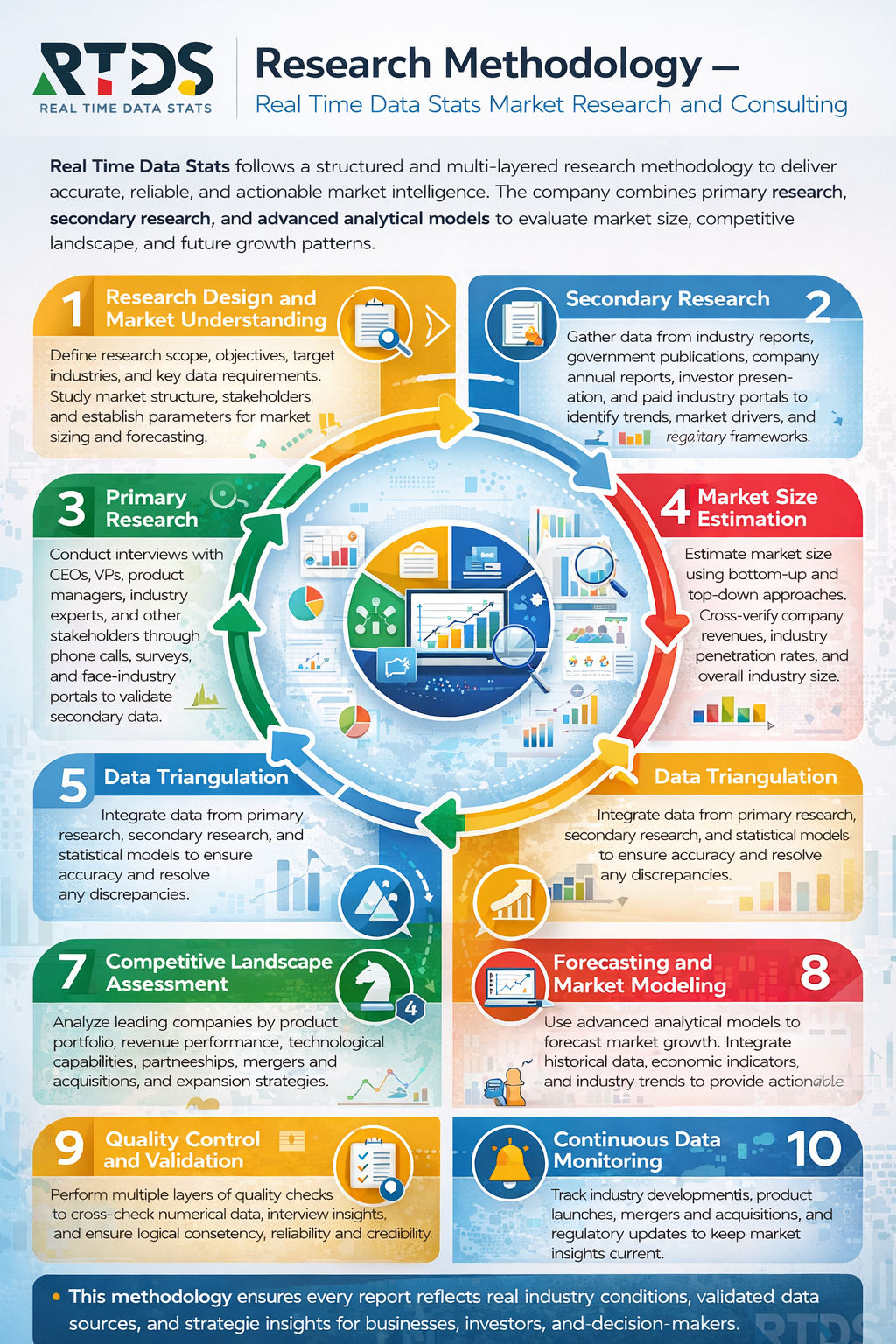
Research Methodology
- Primary research framework
- Secondary data sources
- Data triangulation approach
- Assumptions and limitations
- Validation and quality control
Market Overview
- Global market snapshot
- Market ecosystem analysis
- Value chain overview
- Technology landscape
- Regulatory and ethical considerations
Market Dynamics
- Growth drivers
- Market restraints
- Opportunity analysis
- Challenges and risk factors
- Impact of funding and grants
- Role of interdisciplinary research
Synthetic Biomolecular Motors Market Segmentation
- By Type
- Linear molecular motors
- Rotary molecular motors
- DNA-based molecular motors
- Protein-based molecular motors
- Enzyme-driven molecular motors
- Hybrid synthetic–biological motors
- By Energy Source
- ATP-powered motors
- Light-driven motors
- Chemical fuel–driven motors
- Electrochemical-driven motors
- Thermal-driven motors
- Multi-energy hybrid motors
- By Material Composition
- DNA origami–based materials
- Peptide-based materials
- Polymer-based materials
- Metal–organic frameworks
- Carbon-based nanomaterials
- Biohybrid composite materials
- By Mechanism of Action
- Conformational change–based motors
- Chemical gradient–driven motors
- Photochemical isomerization motors
- Catalytic reaction–driven motors
- Brownian ratchet–based motors
- Self-assembly–driven motors
- By Scale of Operation
- Single-molecule motors
- Nanoscale motors
- Microscale motors
- Mesoscale integrated motors
- Multi-motor assemblies
- Hierarchical motor systems
- By Application
- Targeted drug delivery
- Biosensing and diagnostics
- Molecular robotics
- Nano-manufacturing systems
- Smart material actuation
- Biomedical research tools
- By End User
- Academic and research institutes
- Pharmaceutical companies
- Biotechnology companies
- Nanotechnology firms
- Medical device manufacturers
- Defense and aerospace research organizations
- By Functional Capability
- Directional transport motors
- Load-bearing motors
- Switching and gating motors
- Signal amplification motors
- Self-repairing motors
- Programmable logic motors
- By Integration Level
- Standalone molecular motors
- Chip-integrated motors
- Lab-on-chip embedded motors
- Implantable system motors
- Wearable bio-integrated motors
- Networked motor arrays
Regional Analysis
- North America
- Europe
- Asia Pacific
- Latin America
- Middle East & Africa
Competitive Landscape
- Market share analysis
- Strategic initiatives and collaborations
- Research partnerships and funding trends
- Patent and intellectual property analysis
- Start-up and innovation landscape
Technology and Innovation Analysis
- Advancements in molecular design
- Integration with nanotechnology
- Role of AI and simulation tools
- Scalability and commercialization challenges
Regional Analysis
- Regional research intensity comparison
- Funding and policy environment
- Academic–industry collaboration trends
- Regional opportunity assessment
Future Outlook
- Emerging application areas
- Long-term technology roadmap
- Investment and commercialization potential
Conclusion
- Summary of Market Trends
- Key Drivers and Restraints
- Growth Opportunities
- Technology & Innovation Outlook
- Future Market Forecast
Appendix
- Glossary of terms
- Abbreviations
- Methodological notes
- Data sources
List of Tables
- Table:1: Global Synthetic Biomolecular Motors Market Overview
- Table:2: Market Segmentation by Type
- Table:3: Market Segmentation by Energy Source
- Table:4: Market Segmentation by Material Composition
- Table:5: Market Segmentation by Mechanism of Action
- Table:6: Market Segmentation by Scale of Operation
- Table:7: Market Segmentation by Application
- Table:8: Market Segmentation by End User
- Table:9: Market Segmentation by Functional Capability
- Table:10: Market Segmentation by Integration Level
- Table:11: Regional Market Distribution
- Table:12: Key Research Institutions and Contributions
- Table:13: Competitive Landscape Snapshot
- Table:14: Funding and Grant Analysis
- Table:15: Future Opportunity Mapping
List of Figures
- Figure:1: Synthetic Biomolecular Motors Market Ecosystem
- Figure:2: Value Chain Analysis
- Figure:3: Technology Landscape of Biomolecular Motors
- Figure:4: Market Dynamics Framework
- Figure:5: Segmentation Overview Diagram
- Figure:6: Type-Based Motor Classification
- Figure:7: Energy Source Utilization Map
- Figure:8: Material Composition Architecture
- Figure:9: Mechanism of Action Flowchart
- Figure:10: Scale of Operation Hierarchy
- Figure:11: Application Mapping Matrix
- Figure:12: End User Adoption Framework
- Figure:13: Functional Capability Comparison
- Figure:14: Regional Research Intensity Map
- Figure:15: Future Technology Roadmap
Synthetic Biomolecular Motors Market Key Factors
Drivers:
- Increasing government and private funding accelerates advanced biomedical research.
- Rising demand for targeted drug delivery systems expands application potential.
- Advancements in nanotechnology and synthetic biology enable more precise motor design.
Restraints:
- High research and development costs limit widespread commercial adoption.
- Technical complexities in integration with biological systems hinder progress.
- Stringent regulatory pathways for novel biomedical devices delay market entry.
Opportunities:
- Expanding into diagnostic applications creates new revenue streams.
- Collaborations between academia and industry foster innovative product development.
- Growing focus on personalized medicine opens avenues for customized therapeutic solutions.
Challenges:
- Ensuring biocompatibility and long-term safety remains a significant technical hurdle.
- Scalability and mass manufacturing pose substantial production obstacles.
- A shortage of highly skilled multidisciplinary talent slows development cycles.
Synthetic Biomolecular Motors Market Key Regional Trends
North America:
- Strong venture capital investment fuels startup growth and innovation.
- Leading academic institutes and corporations drive foundational technology patents.
- Regulatory agencies actively engage in shaping early framework guidelines.
Europe:
- Cross-border collaborative EU projects promote shared research initiatives.
- Strong focus on ethical and safety standards influences development priorities.
- Growing partnerships between biotech firms and engineering centers enhance prototyping.
Asia-Pacific:
- Governments are prioritizing and increasing strategic funding for nanotechnology.
- The contract research and manufacturing sector is expanding rapidly.
- A growing academic focus is producing a specialized skilled workforce.
Rest of the World:
- Regions are focusing on niche applications in environmental monitoring and biosensing.
- Late-mover adoption is occurring through international academic partnerships.
- Infrastructure development is currently limiting large-scale research capabilities.
Frequently Asked Questions
Key Questions Answered
- What is the size and growth rate of the market industry?
- What are the main drivers influencing market growth trends?
- What are the key challenges and restraints faced by the market?
- What are the emerging trends and opportunities shaping the market?
- Who are the top players, and what strategies drive their success?
- What are the customer demographics and their buying behaviors?
- What are the key market segments, and what is their scope?
- What are the geographical dynamics, and which region dominates?
- What are the market forecasts and projections for the next decade?
- What regulatory factors are critical to consider for market growth?
Why Choose our Company?
- Major facts and stats backing every report we offer.
- Comprehensive analysis tailored to your business needs.
- Accurate insights backed by extensive market research.
- Expert support to address your queries promptly.
- Data-driven strategies for better decision-making.
- In-depth reports with actionable
recommendations. - Reliable statistics from trusted industry
sources. - Customizable reports to suit your specific goals.
- Unmatched quality and precision in market analysis.
- Competitive pricing with premium content delivery.
Share your experience!
We value you feedback. Please take a moment to review your experience with us.