
According to insights from Real Time Data Stats, the Space microgravity manufacturing Market was valued at USD 0.80 billion in 2025. It is expected to grow from USD 0.94 billion in 2026 to USD 3.08 billion by 2033, registering a CAGR of 18.5% during the forecast period (2026–2033).
MARKET SIZE AND SHARE
The global space microgravity manufacturing market is being driven by successful pilot projects transitioning into commercial-scale operations. Market share is currently concentrated among a limited number of pioneering aerospace companies and specialized biotechnology firms, but broader participation is expected as new entrants validate innovative product applications in microgravity environments. Growing interest in pharmaceuticals, advanced materials, and high-performance fiber optics continues to strengthen the market’s long-term growth prospects.
Early market leadership is held by organizations with established spaceflight access, technical expertise, and strong financial resources. However, the competitive landscape is expected to become more diversified as increased launch frequency and the emergence of commercial space stations reduce entry barriers. Adoption rates will vary across end-use sectors, creating opportunities for niche market leaders, while strategic partnerships between manufacturers and launch service providers will play a key role in securing future market share within this high-potential industry.
INDUSTRY OVERVIEW AND STRATEGY
This nascent industry leverages the unique microgravity environment of space to manufacture goods impossible or superior to Earth-based production. Core segments include high-value pharmaceuticals like protein crystals, flawless optical fibers, and exotic alloys. The ecosystem involves payload integration firms, orbital platform developers like Axiom Space, and end-user industries in healthcare and semiconductors. The value proposition centers on unparalleled product purity and performance, justifying high initial costs for transformative breakthroughs in material science and medicine.
Winning strategies prioritize vertical integration and securing reliable, cost-effective access to microgravity. Companies are forming exclusive alliances with station developers and launch providers to guarantee payload space. Downstream, they engage in early co-development with potential clients to de-risk R&D. Business models focus on high-margin, low-volume production initially, with strategies to scale output as infrastructure matures. Intellectual property protection for space-manufactured processes is a paramount strategic concern for sustaining competitive advantage.
Analyst Key Takeaways:
The Space Microgravity Manufacturing Market is emerging as one of the most promising segments within the broader in-space manufacturing ecosystem, driven by increasing demand for high-value products that benefit from the unique conditions of microgravity. Applications such as advanced materials development, pharmaceutical research, semiconductor production, and bioprinting are gaining momentum as commercial space missions become more frequent and orbital infrastructure continues to expand. Growing collaboration between private space companies, research institutions, and government agencies is further accelerating technology development and commercialization efforts.
The market is expected to outpace many broader space industry segments due to its strong innovation potential and the increasing feasibility of conducting manufacturing operations in orbit. Advancements in reusable launch systems, commercial space stations, robotic manufacturing platforms, and automated production technologies are creating new opportunities for large-scale deployment. As industries seek superior product performance and novel manufacturing capabilities unattainable on Earth, microgravity manufacturing is positioned to become a strategic pillar of the future space economy.
REGIONAL TRENDS AND GROWTH
North America, spearheaded by NASA and strong private investment, holds dominant market share, driven by supportive policies and advanced launch infrastructure. Europe and Japan follow with robust government-funded research programs through ESA and JAXA, focusing on materials science. Growth here is steady, linked to institutional budgets. Emerging players in the UAE and China are investing heavily, aiming to capture future segments through state-led initiatives and developing sovereign orbital capabilities.
Primary drivers are plummeting launch costs, proven product viability, and significant venture capital inflow. Major restraints include extremely high upfront R&D expenditure and complex regulatory frameworks for space-derived products. The key opportunity lies in serial production of revolutionary therapeutics, creating entirely new markets. However, the industry faces the profound challenge of establishing a reliable, scalable supply chain from orbit to Earth, requiring unprecedented logistical and technical coordination to achieve economic sustainability.
SPACE MICROGRAVITY MANUFACTURING MARKET SEGMENTATION ANALYSIS
BY TYPE:
The Pharmaceuticals & Biotechnology segment dominates the space microgravity manufacturing market due to the unparalleled ability of microgravity conditions to produce highly pure protein crystals and biopharmaceuticals that are difficult to replicate on Earth. Microgravity enhances molecular interactions, leading to more stable and uniform drug formulations, making it a critical factor for drug discovery and development. Advanced materials, including polymers and alloys, are increasingly produced in microgravity as the environment reduces structural defects and allows precise material alignment, thereby improving strength-to-weight ratios and thermal resistance. Electronics and semiconductors also benefit from microgravity manufacturing, as reduced sedimentation allows the creation of highly sensitive, defect-free electronic components.
The microgravity environment is particularly favorable for nanomaterials and composite production, enabling uniform particle distribution and improved chemical reactivity. Food and beverage research in space microgravity is gaining traction due to enhanced nutrient retention and new methods of food structuring for long-duration space missions. Overall, the type-based segmentation emphasizes the market’s reliance on high-value, specialized manufacturing that leverages unique conditions in space to achieve quality, precision, and innovation that are unachievable on Earth.
BY APPLICATION:
Drug development leads the application segment, driven by the need for ultra-pure protein crystallization, cell growth experiments, and biologics that require precise environmental control. Microgravity allows pharmaceutical companies to accelerate research cycles and achieve higher efficacy in drug formulations. Tissue engineering and regenerative medicine also benefit from space microgravity, as the reduced gravitational stress enables more organized cell growth and scaffolding, supporting advanced therapeutic applications. High-precision electronics manufacturing in space minimizes defects and impurities in semiconductors and sensors, improving performance and durability.
Specialty chemicals and advanced alloys see significant demand in microgravity applications, as the environment allows controlled mixing and crystallization processes that produce materials with superior mechanical and chemical properties. Protein crystallization for structural biology and research is another key driver, enabling insights into disease mechanisms and drug target identification. Overall, the application segment reflects a convergence of biotechnology, pharmaceuticals, and high-tech materials, demonstrating the strategic importance of microgravity manufacturing in achieving next-generation products.
BY END-USE INDUSTRY:
The healthcare and pharmaceutical industry remains the largest end-user, capitalizing on the precision and purity that space microgravity offers for drug formulation and tissue engineering. Aerospace and defense applications drive demand for lightweight composites and advanced alloys, which enhance performance and fuel efficiency in spacecraft and aircraft. The electronics and semiconductor industry relies on microgravity for defect-free chips, high-performance sensors, and next-generation electronic devices that require minimal contamination.
Automotive applications focus on high-strength materials for electric vehicles and specialized components, while food and nutrition industries explore nutrient-rich and structured food designed for long-duration space missions. Chemical and materials companies leverage microgravity for experimental reactions and nanomaterial production, improving product quality and innovation. The diverse end-use industries highlight the broad applicability of microgravity manufacturing, driven by both technological advancement and strategic investment in high-value, high-precision sectors.
BY PRODUCT TYPE:
Biopharmaceuticals dominate due to microgravity’s ability to produce proteins and biologics with superior crystallinity and stability, enabling more effective therapeutics. Nanostructured materials benefit from uniform particle distribution and unique structural arrangements achievable in microgravity, enhancing mechanical, optical, and electronic properties. Microgravity-grown crystals, specialty polymers, and advanced composites are increasingly preferred in aerospace, electronics, and pharmaceutical applications, as they exhibit fewer defects, higher precision, and improved performance metrics.
Semiconductor components manufactured in microgravity show reduced contamination and enhanced electron mobility, which is critical for high-end electronic devices. The emphasis on advanced composites reflects the aerospace and defense sector’s demand for lightweight, high-strength materials. Overall, the product type segmentation highlights the market’s focus on premium, high-performance materials that maximize the advantages of the space environment.
BY TECHNOLOGY:
3D bioprinting is a major technological driver, allowing the creation of complex tissue structures that are difficult to replicate under normal gravity. Microgravity crystallization is extensively used for protein and material studies, providing unparalleled structural clarity and uniformity. Thin film deposition and nanofabrication techniques see accelerated adoption for high-tech electronics and nanomaterials, while additive manufacturing facilitates precision component creation in aerospace and medical applications.
Microencapsulation technology in microgravity enables highly uniform encapsulated products, useful in pharmaceuticals, specialty chemicals, and food applications. The technology-driven segment emphasizes innovation and efficiency, showcasing how advanced manufacturing processes in space lead to superior product performance and new applications that cannot be replicated on Earth.
BY PLATFORM:
The International Space Station (ISS) is the primary platform for research and commercial microgravity manufacturing, offering long-duration experiments and controlled environments. Suborbital flights and commercial space vehicles are increasingly used for shorter-term studies, rapid prototyping, and cost-efficient experiments, providing flexibility to startups and emerging companies. Orbital satellites and free-flying laboratories serve niche purposes, supporting automated production and testing for electronics, advanced materials, and biopharmaceuticals.
Space capsules allow targeted missions for specific material and pharmaceutical production, facilitating controlled delivery and sample return. The choice of platform is influenced by cost, duration, mission objectives, and experimental complexity, making it a key factor in market growth and accessibility for different types of microgravity manufacturing activities.
BY REVENUE MODEL:
Government funding dominates as space microgravity manufacturing heavily relies on public investments, research grants, and national space programs to offset high operational costs. Commercial contracts and public-private partnerships are increasingly popular, enabling private companies to access orbital platforms and develop commercially viable products. Licensing and royalties generate revenue from proprietary technologies, specialized processes, and intellectual property related to microgravity manufacturing.
Subscription-based services and research collaborations are gaining traction, allowing smaller organizations to access space-based facilities without heavy capital expenditure. The revenue model reflects a combination of high-cost investment, innovation-driven commercial strategies, and collaborative funding approaches that make the market financially viable and scalable.
BY MATERIAL TYPE:
Metals and alloys dominate due to the aerospace sector’s demand for high-strength, lightweight components. Ceramics are used for high-temperature and structural applications in aerospace and electronics. Polymers, nanomaterials, and composite materials are increasingly produced in space to achieve superior structural integrity, uniformity, and performance characteristics not possible on Earth.
Biological materials are gaining traction in pharmaceuticals and tissue engineering, taking advantage of microgravity’s ability to support organized growth and crystallization. The choice of material is influenced by the end-use, platform accessibility, and technological capabilities, making material type a crucial factor for determining the feasibility and success of microgravity manufacturing processes.
BY END-USER:
Research institutes are the primary beneficiaries, using microgravity environments to conduct fundamental studies and drug development experiments. Pharmaceutical companies leverage space manufacturing for advanced biologics, protein crystallization, and tissue engineering. Aerospace manufacturers use high-performance alloys, composites, and nanomaterials to reduce weight and improve durability, while semiconductor companies utilize defect-free electronics production.
Chemical manufacturers and food & nutrition companies explore specialty materials, nutrient-rich food production, and encapsulation processes for long-duration missions. The end-user segmentation underscores the market’s dependency on high-value, technology-driven applications and strategic partnerships between research, industry, and government agencies.
RECENT DEVELOPMENTS
- In Jan 2024: Varda Space Industries successfully returned its first pharmaceutical crystal batch manufactured in orbit, marking a historic milestone for in-space production and re-entry technology.
- In Mar 2024: Redwire Corporation expanded its in-space manufacturing portfolio by acquiring Space Fabrics, a developer of specialized materials for microgravity production environments.
- In Aug 2024: Axiom Space and pharmaceutical giant Merck announced a co-development agreement to advance biomedicine research on the Axiom Station, targeting novel drug formulations.
- In Nov 2024: ESA awarded a major contract to a consortium led by Airbus to develop the first European pilot plant for semiconductor material production in microgravity.
- In Feb 2025: SpaceX's dedicated Transporter-11 mission deployed multiple microgravity manufacturing payloads for startups, including for fiber optics and alloy testing, demonstrating increased flight access.
KEY PLAYERS ANALYSIS
- Varda Space Industries
- Redwire Corporation
- Axiom Space
- Space Tango
- Made In Space (A Redwire Company)
- Airbus SE
- Sierra Space
- Boeing
- Northrop Grumman
- Lockheed Martin
- Merck & Co. (MSD)
- FOMS (Fiber Optic Manufacturing in Space)
- Cosmic Shielding Corporation
- Techshot (A Redwire Company)
- Nanoracks (Voyager Space)
- Blue Origin
- Space Cargo Unlimited
- Rocket Lab
- Thales Alenia Space
- Alpha Space
Space Microgravity Manufacturing Market Segmentation Analysis
By Type:
- Pharmaceuticals & Biotechnology
- Advanced Materials
- Electronics & Semiconductors
- Nanomaterials
- Polymers & Composites
- Food & Beverages
By Application:
- Drug Development
- Tissue Engineering
- Protein Crystallization
- High-Precision Electronics
- Specialty Chemicals
- Advanced Alloys
By End-Use Industry:
- Healthcare & Pharmaceuticals
- Aerospace & Defense
- Electronics & Semiconductor
- Automotive
- Food & Nutrition
- Chemicals & Materials
By Product Type:
- Biopharmaceuticals
- Nanostructured Materials
- Microgravity-grown Crystals
- Specialty Polymers
- Semiconductor Components
- Advanced Composites
By Technology:
- 3D Bioprinting
- Microgravity Crystallization
- Thin Film Deposition
- Nanofabrication
- Additive Manufacturing
- Microencapsulation
By Platform:
- Space Station (ISS)
- Suborbital Flights
- Orbital Satellites
- Free-Flying Laboratories
- Commercial Space Vehicles
- Space Capsules
By Revenue Model:
- Government Funding
- Commercial Contracts
- Research Grants
- Public-Private Partnerships
- Subscription-based Services
- Licensing & Royalties
By Material Type:
- Metals & Alloys
- Ceramics
- Polymers
- Nanomaterials
- Biological Materials
- Composite Materials
By End-User:
- Research Institutes
- Pharmaceutical Companies
- Aerospace Manufacturers
- Semiconductor Companies
- Chemical Manufacturers
- Food & Nutrition Companies
By Geography:
- North America (USA, Canada, Mexico)
- Europe (UK, Germany, France, Italy, Spain, Rest of Europe)
- Asia-Pacific (China, Japan, Australia, South Korea, India, Rest of Asia-Pacific)
- South America (Brazil, Argentina, Rest of South America)
- Middle East and Africa (GCC Countries, South Africa, Rest of MEA)
Space Microgravity Manufacturing Market: Table of Contents
Executive Summary
- Market Overview
- Introduction
- Market Dynamics
- Drivers
- Restraints
- Opportunities
- Challenges
- Value Chain Analysis
- Market Trends
- Regulatory Landscape
Space Microgravity Manufacturing Market Segmentation Analysis
- By Type
- Pharmaceuticals & Biotechnology
- Advanced Materials
- Electronics & Semiconductors
- Nanomaterials
- Polymers & Composites
- Food & Beverages
- By Application
- Drug Development
- Tissue Engineering
- Protein Crystallization
- High-Precision Electronics
- Specialty Chemicals
- Advanced Alloys
- By End-Use Industry
- Healthcare & Pharmaceuticals
- Aerospace & Defense
- Electronics & Semiconductor
- Automotive
- Food & Nutrition
- Chemicals & Materials
- By Product Type
- Biopharmaceuticals
- Nanostructured Materials
- Microgravity-grown Crystals
- Specialty Polymers
- Semiconductor Components
- Advanced Composites
- By Technology
- 3D Bioprinting
- Microgravity Crystallization
- Thin Film Deposition
- Nanofabrication
- Additive Manufacturing
- Microencapsulation
- By Platform
- Space Station (ISS)
- Suborbital Flights
- Orbital Satellites
- Free-Flying Laboratories
- Commercial Space Vehicles
- Space Capsules
- By Revenue Model
- Government Funding
- Commercial Contracts
- Research Grants
- Public-Private Partnerships
- Subscription-based Services
- Licensing & Royalties
- By Material Type
- Metals & Alloys
- Ceramics
- Polymers
- Nanomaterials
- Biological Materials
- Composite Materials
- By End-User
- Research Institutes
- Pharmaceutical Companies
- Aerospace Manufacturers
- Semiconductor Companies
- Chemical Manufacturers
- Food & Nutrition Companies
Regional Analysis
- North America
- Europe
- Asia Pacific
- Middle East & Africa
- Latin America
Competitive Landscape
- Company Profiles
- Market Share Analysis
- Strategic Initiatives
- Market Forecast & Trends
Market Size Forecast (Revenue & Volume)
- Segment-wise Forecast
- Technology-wise Forecast
- Application-wise Forecast
- Regional Forecast
Conclusion
- Summary of Market Trends
- Key Drivers and Restraints
- Growth Opportunities
- Technology & Innovation Outlook
- Future Market Forecast
Appendix
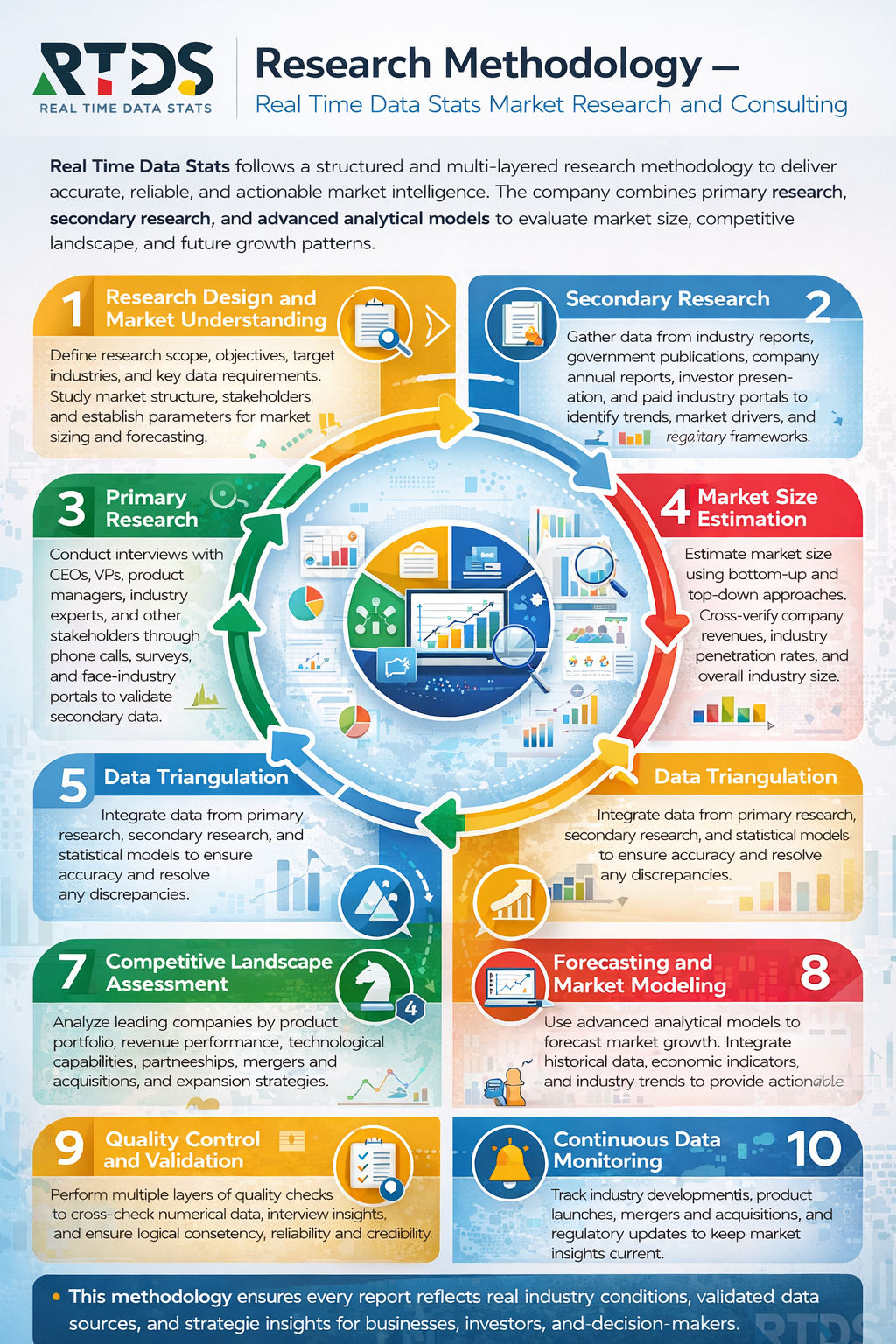
- Research Methodology
- Data Sources
- Acronyms & Definitions
List of Tables
- Table:1: Global Space Microgravity Manufacturing Market by Type
- Table:2: Market by Application
- Table:3: Market by End-Use Industry
- Table:4: Market by Product Type
- Table:5: Market by Technology
- Table:6: Market by Platform
- Table:7: Market by Geography
- Table:8: Market by Revenue Model
- Table:9: Market by Material Type
- Table:10: Market by End-User
- Table:11: Regional Market Share
- Table:12: Company Profiles and Revenue
- Table:13: Strategic Initiatives of Key Players
- Table:14: Market Forecast by Segment
- Table:15: Market Forecast by Region
List of Figures
- Figure:1: Market Overview
- Figure:2: Market Dynamics
- Figure:3: Value Chain Analysis
- Figure:4: Market Trends
- Figure:5: Regulatory Landscape
- Figure:6: Global Market by Type
- Figure:7: Global Market by Application
- Figure:8: Global Market by End-Use Industry
- Figure:9: Global Market by Product Type
- Figure:10: Global Market by Technology
- Figure:11: Market by Platform
- Figure:12: Market by Geography
- Figure:13: Market by Revenue Model
- Figure:14: Market by Material Type
- Figure:15: Competitive Landscape
Space Microgravity Manufacturing Market Key Factors
Drivers:
- Unique microgravity conditions enable the production of superior materials and biologics.
- Reduced launch costs from private space companies increase commercial access to orbit.
- Growing demand from the pharmaceutical and electronics sectors for advanced products pushes investment.
Restraints:
- Extremely high costs for development, launch, and operation limit participant entry.
- Immature in-space infrastructure and scaling technologies hinder mass production.
- Complex regulatory and safety frameworks across nations create compliance challenges.
Opportunities:
- Successful demonstration of high-value products, like flawless optical fibers, attracts new capital.
- Partnerships between aerospace firms and research institutions accelerate technology transfer.
- Government initiatives and funding programs support the establishment of a sustainable in-space economy.
Challenges:
- Establishing reliable and automated production systems in a harsh environment requires novel engineering.
- Ensuring safe return of manufactured goods to Earth presents technical and logistical hurdles.
- Defining clear legal frameworks for ownership and quality of space-manufactured goods remains unresolved.
Space Microgravity Manufacturing Market Key Regional Trends
North America:
- Private companies lead in developing dedicated manufacturing platforms and launch services.
- NASA and the Department of Defense fund pilot projects to demonstrate feasibility and secure supply chains.
- Venture capital heavily flows into startups focusing on specific high-value materials and tissues.
Europe:
- ESA member states collaborate on flagship programs to produce advanced alloys and crystal structures.
- Strong academic and research institutions partner with industry to pioneer biomedicine applications.
- Regulations emphasize sustainable operations and the development of in-orbit servicing.
Asia-Pacific:
- National space agencies aggressively expand capabilities, with China establishing its space station as a testbed.
- Growing semiconductor and electronics industries drive interest in space-produced specialty materials.
- Governments integrate microgravity manufacturing into long-term strategic plans for technological leadership.
Frequently Asked Questions
Key Questions Answered
- What is the size and growth rate of the market industry?
- What are the main drivers influencing market growth trends?
- What are the key challenges and restraints faced by the market?
- What are the emerging trends and opportunities shaping the market?
- Who are the top players, and what strategies drive their success?
- What are the customer demographics and their buying behaviors?
- What are the key market segments, and what is their scope?
- What are the geographical dynamics, and which region dominates?
- What are the market forecasts and projections for the next decade?
- What regulatory factors are critical to consider for market growth?
Why Choose our Company?
- Major facts and stats backing every report we offer.
- Comprehensive analysis tailored to your business needs.
- Accurate insights backed by extensive market research.
- Expert support to address your queries promptly.
- Data-driven strategies for better decision-making.
- In-depth reports with actionable
recommendations. - Reliable statistics from trusted industry
sources. - Customizable reports to suit your specific goals.
- Unmatched quality and precision in market analysis.
- Competitive pricing with premium content delivery.
Share your experience!
We value you feedback. Please take a moment to review your experience with us.