
According to insights from Real Time Data Stats, the Bioinspired Neural Chips Market was valued at USD 450 million in 2025. It is expected to grow from USD 550 million in 2026 to USD 2,250 million by 2033, registering a CAGR of 22.3% during the forecast period (2026–2033).
MARKET SIZE AND SHARE
The global bioinspired neural chips market is expanding rapidly, driven by growing demand for energy-efficient artificial intelligence and neuromorphic computing solutions. Market share remains concentrated among leading semiconductor companies and specialized neuromorphic hardware startups that are developing advanced brain-inspired processing architectures. Increasing adoption across edge computing, autonomous systems, and intelligent robotics continues to strengthen growth prospects and accelerate commercialization efforts.
Key market share opportunities are emerging in edge devices, autonomous platforms, and industrial automation systems. The competitive landscape remains dynamic, supported by substantial investments from established technology firms and innovative startups. As the technology matures, strategic partnerships, acquisitions, and product launches are expected to reshape market positioning. Future leadership will depend on energy efficiency, scalability, and successful deployment of bioinspired neural chips across consumer electronics and industrial applications.
INDUSTRY OVERVIEW AND STRATEGY
The bioinspired neural chips industry represents a paradigm shift in computing, moving beyond traditional von Neumann architectures to emulate the brain’s neural structure for ultra-low-power, adaptive processing. Core applications span artificial intelligence acceleration, sensory data processing, and cognitive computing. The industry is characterized by intensive R&D, interdisciplinary collaboration between neuroscience and silicon engineering, and a race to achieve commercial viability for scalable neuromorphic solutions.
Primary strategies involve forging ecosystems through partnerships with academic research labs and securing defense or government funding for foundational research. Companies are strategically targeting vertical integration, developing full-stack solutions from hardware to specialized software frameworks. A key strategic focus is on creating developer tools and accessible platforms to foster a software ecosystem, thereby accelerating adoption and moving from research prototypes to high-volume, cost-effective manufacturing for mainstream markets.
Analyst Key Takeaways:
The Bioinspired Neural Chips market is experiencing strong momentum as demand grows for energy-efficient, brain-inspired computing architectures capable of supporting advanced artificial intelligence workloads. Increasing research in neuromorphic engineering, cognitive computing, and edge AI is accelerating the development of chips that mimic biological neural networks, enabling faster decision-making, adaptive learning, and lower power consumption compared to conventional processors.
Industry adoption is expanding across autonomous systems, robotics, healthcare diagnostics, intelligent sensors, and next-generation computing platforms. Continued investments in AI hardware innovation, coupled with advancements in semiconductor design and neural processing technologies, are expected to strengthen commercialization opportunities and drive broader deployment of bioinspired computing solutions throughout the forecast period.
REGIONAL TRENDS AND GROWTH
North America holds the dominant market share, fueled by substantial DARPA and corporate R&D investments, a concentration of leading tech firms, and strong venture capital flow into neuromorphic startups. Europe follows with significant initiatives like the Human Brain Project, fostering strong academic-industrial collaboration. The Asia-Pacific region is identified as the fastest-growing market, driven by national AI strategies, semiconductor manufacturing prowess, and rapid adoption in consumer electronics and robotics.
Growth drivers include the insatiable demand for efficient AI at the edge, the limitations of current hardware, and supportive government policies. Key restraints are design complexity, high initial costs, and a nascent software ecosystem. Opportunities lie in healthcare diagnostics, autonomous vehicles, and smart sensors. Major challenges involve achieving algorithmic compatibility, ensuring reproducibility of brain-like functions, and establishing standardized benchmarks to measure performance gains over conventional chips.
BIOINSPIRED NEURAL CHIPS MARKET SEGMENTATION ANALYSIS
BY TYPE:
The market segmentation by type is primarily driven by the growing need for energy-efficient, brain-like computation systems capable of handling complex cognitive tasks. Spiking neural chips dominate this segment due to their ability to process information using event-based signals similar to biological neurons, making them highly suitable for real-time and low-power applications. Neuromorphic processors also hold a strong position as they integrate memory and processing units, reducing data transfer latency and enabling faster learning and inference. Increasing demand for adaptive AI systems in robotics, autonomous platforms, and edge intelligence continues to accelerate adoption across these chip types.
Memristor-based chips and hybrid analog-digital chips gain traction due to their capability to mimic synaptic behavior with high density and ultra-low power consumption. Analog neural chips remain relevant in niche applications requiring continuous signal processing, while event-driven neural chips experience rising demand in sensory processing and pattern recognition use cases. The diversification of chip types reflects the market’s shift toward specialized architectures optimized for distinct workloads rather than one-size-fits-all AI hardware solutions.
BY COMPONENT:
Component-based segmentation is influenced by advancements in neuromorphic hardware design, where neurons and synapses form the foundational elements enabling bioinspired computation. Synaptic components drive significant innovation as manufacturers focus on improving plasticity, learning efficiency, and scalability. Memory units play a dominant role as on-chip memory integration becomes critical for reducing power consumption and enabling parallel data access, which is essential for real-time AI processing.
Processing cores and interconnects are equally influential, as high-speed communication between neural elements determines overall system performance. power management units increasingly shape purchasing decisions due to the market’s emphasis on ultra-low energy consumption for edge and embedded applications. The continuous optimization of individual components directly impacts chip reliability, learning capability, and deployment feasibility across multiple industries.
BY ARCHITECTURE:
Architectural segmentation reflects the industry’s transition away from traditional computing models toward more efficient neural-inspired designs. Non–Von Neumann architectures dominate due to their ability to overcome the memory bottleneck inherent in conventional systems by integrating computation and storage. Crossbar and mesh-based architectures gain adoption because they support massive parallelism, which is essential for handling large-scale neural networks with minimal latency.
Hierarchical and distributed architectures further strengthen market growth by enabling scalability across complex systems such as autonomous vehicles and intelligent surveillance networks. These architectures allow localized decision-making while maintaining system-wide coordination. The dominance of advanced architectures highlights the market’s focus on performance optimization, adaptability, and real-time responsiveness rather than raw computational power alone.
BY TECHNOLOGY:
Technology-based segmentation is driven by rapid material and fabrication advancements aimed at improving speed, efficiency, and durability. CMOS-based technology continues to lead due to its manufacturing maturity, cost efficiency, and compatibility with existing semiconductor infrastructure. However, memristive and phase-change memory technologies are increasingly favored for their ability to emulate synaptic learning with high density and low energy consumption.
Spintronic and nanowire technologies are gaining attention as next-generation solutions capable of supporting ultra-fast switching and long-term stability. Mixed-signal technology plays a critical role in balancing analog efficiency with digital precision, making it suitable for real-world AI workloads. The competitive landscape in this segment is shaped by ongoing research investments and the push for commercially scalable fabrication processes.
BY PROCESSING MODE:
Processing mode segmentation reflects the growing importance of computation efficiency and responsiveness. Parallel processing dominates due to its capability to handle multiple neural events simultaneously, significantly improving throughput in AI inference tasks. Event-based and asynchronous processing modes are increasingly preferred for applications requiring real-time decision-making with minimal power usage, particularly in sensory and edge AI systems.
Low-power and adaptive processing modes further drive market growth as industries demand chips capable of learning and responding dynamically to environmental changes. Real-time processing remains critical in safety-sensitive applications such as autonomous navigation and medical diagnostics. The dominance of flexible processing modes demonstrates the market’s shift toward intelligent, context-aware hardware rather than static computing systems.
BY LEARNING PARADIGM:
Learning paradigm segmentation is shaped by the increasing need for autonomous and self-improving AI systems. Unsupervised and reinforcement learning gain strong momentum as bioinspired neural chips enable on-chip learning without extensive labeled data. Spike-timing-dependent plasticity plays a crucial role in mimicking biological learning processes, allowing chips to adapt efficiently over time.
Online and continual learning paradigms further strengthen adoption by enabling systems to evolve in real-world environments without retraining interruptions. Supervised learning remains relevant in controlled applications but gradually loses dominance as the market prioritizes adaptability and autonomy. This segment reflects the growing emphasis on lifelong learning capabilities embedded directly into hardware.
BY DEPLOYMENT:
Deployment-based segmentation is driven by the rapid expansion of edge intelligence and decentralized AI systems. Edge devices and embedded systems dominate due to their ability to process data locally, reducing latency and reliance on cloud connectivity. On-device AI deployment continues to gain traction as privacy concerns and bandwidth limitations push computation closer to the data source.
Hybrid and cloud-integrated deployments remain relevant for applications requiring large-scale data aggregation and centralized model updates. Standalone hardware solutions attract research institutions and specialized industrial users seeking dedicated neuromorphic platforms. The deployment landscape highlights the market’s preference for flexible integration across diverse computing environments.
BY APPLICATION:
Application segmentation is heavily influenced by the growing demand for intelligent perception and decision-making systems. Image and speech recognition dominate due to their widespread use in consumer electronics, surveillance, and human–machine interaction. Robotics control and autonomous systems drive substantial growth as bioinspired chips enable faster sensor fusion and adaptive motor responses.
Signal processing and pattern recognition applications continue to expand in defense, healthcare, and industrial automation. The ability of neural chips to process noisy, real-world data efficiently positions them as a preferred solution across high-complexity applications. Application diversity remains a key factor sustaining long-term market expansion.
BY END USE INDUSTRY:
End use industry segmentation reflects varied adoption rates based on technological readiness and investment capacity. Consumer electronics lead due to the integration of neuromorphic chips in smart devices requiring low-power AI functionality. Automotive applications grow rapidly as advanced driver assistance and autonomous systems demand real-time neural processing.
Healthcare and aerospace sectors increasingly adopt these chips for diagnostics, monitoring, and mission-critical decision-making. Industrial automation benefits from improved efficiency and predictive control enabled by neural computing. Research and academia remain essential contributors, driving innovation and early-stage adoption that supports long-term commercialization.
RECENT DEVELOPMENTS
- In Jan 2024: Intel unveiled its next-generation neuromorphic research chip, Loihi 2, showcasing significantly improved performance and efficiency for adaptive robotics and sensory processing applications in pilot projects.
- In Mar 2024: SynSense (formerly aiCTX) announced a strategic partnership with a major automotive supplier to co-develop low-power, neuromorphic vision processors for next-generation in-cabin monitoring and driver assistance systems.
- In Jul 2024: Samsung Electronics demonstrated a breakthrough in integrating memristor-based neuromorphic arrays with its advanced foundry process, aiming to commercialize high-density, on-device learning chips.
- In Nov 2024: The U.S. Department of Defense awarded a $15M contract to Applied Brain Research and a semiconductor partner to develop neuromorphic chips for autonomous, GPS-denied navigation in drones and field robotics.
- In Feb 2025: BrainChip Holdings Ltd. commenced volume shipments of its second-generation Akida™ PCIe accelerator boards to global OEMs for edge AI applications in smart cities and industrial IoT.
KEY PLAYERS ANALYSIS
- Intel Corporation (Loihi)
- IBM Research
- Samsung Electronics
- BrainChip Holdings Ltd.
- Qualcomm Technologies, Inc.
- Hewlett Packard Enterprise
- Applied Brain Research, Inc.
- SynSense AG
- General Vision Inc.
- GrAI Matter Labs
- Vicarious FPC
- Imec
- HRL Laboratories
- Applied Materials, Inc.
- aiCTX (now part of SynSense)
- Mythic AI
- Nepes Corporation
- Numenta
- Prophesee SA (Sensing)
- Taiwan Semiconductor Manufacturing Company (TSMC)
Bioinspired Neural Chips Market Segmentation Analysis
By Type:
- Spiking Neural Chips
- Neuromorphic Processors
- Memristor-Based Chips
- Analog Neural Chips
- Hybrid Analog-Digital Chips
- Event-Driven Neural Chips
By Component:
- Neurons
- Synapses
- Memory Units
- Processing Cores
- Interconnects
- Power Management Units
By Architecture:
- Von Neumann Inspired
- Non–Von Neumann
- Crossbar Architecture
- Mesh-Based Architecture
- Hierarchical Architecture
- Distributed Architecture
By Technology:
- CMOS-Based
- Memristive Technology
- Spintronic Technology
- Phase-Change Memory
- Nanowire Technology
- Mixed-Signal Technology
By Processing Mode:
- Parallel Processing
- Asynchronous Processing
- Event-Based Processing
- Real-Time Processing
- Low-Power Processing
- Adaptive Processing
By Learning Paradigm:
- Supervised Learning
- Unsupervised Learning
- Reinforcement Learning
- Spike-Timing-Dependent Plasticity
- Online Learning
- Continual Learning
By Deployment:
- Edge Devices
- Embedded Systems
- On-Device AI
- Cloud-Integrated Systems
- Standalone Hardware
- Hybrid Deployment
By Application:
- Image Recognition
- Speech Recognition
- Robotics Control
- Autonomous Systems
- Signal Processing
- Pattern Recognition
By End Use Industry:
- Consumer Electronics
- Automotive
- Healthcare
- Aerospace & Defense
- Industrial Automation
- Research & Academia
By Geography:
- North America (USA, Canada, Mexico)
- Europe (UK, Germany, France, Italy, Spain, Rest of Europe)
- Asia-Pacific (China, Japan, Australia, South Korea, India, Rest of Asia-Pacific)
- South America (Brazil, Argentina, Rest of South America)
- Middle East and Africa (GCC Countries, South Africa, Rest of MEA)
Bioinspired Neural Chips Market: Table of Contents
Introduction
- Market Definition and Scope
- Bioinspired Neural Chips Overview
- Evolution of Neuromorphic Computing
- Market Ecosystem Analysis
- Industry Value Chain Overview
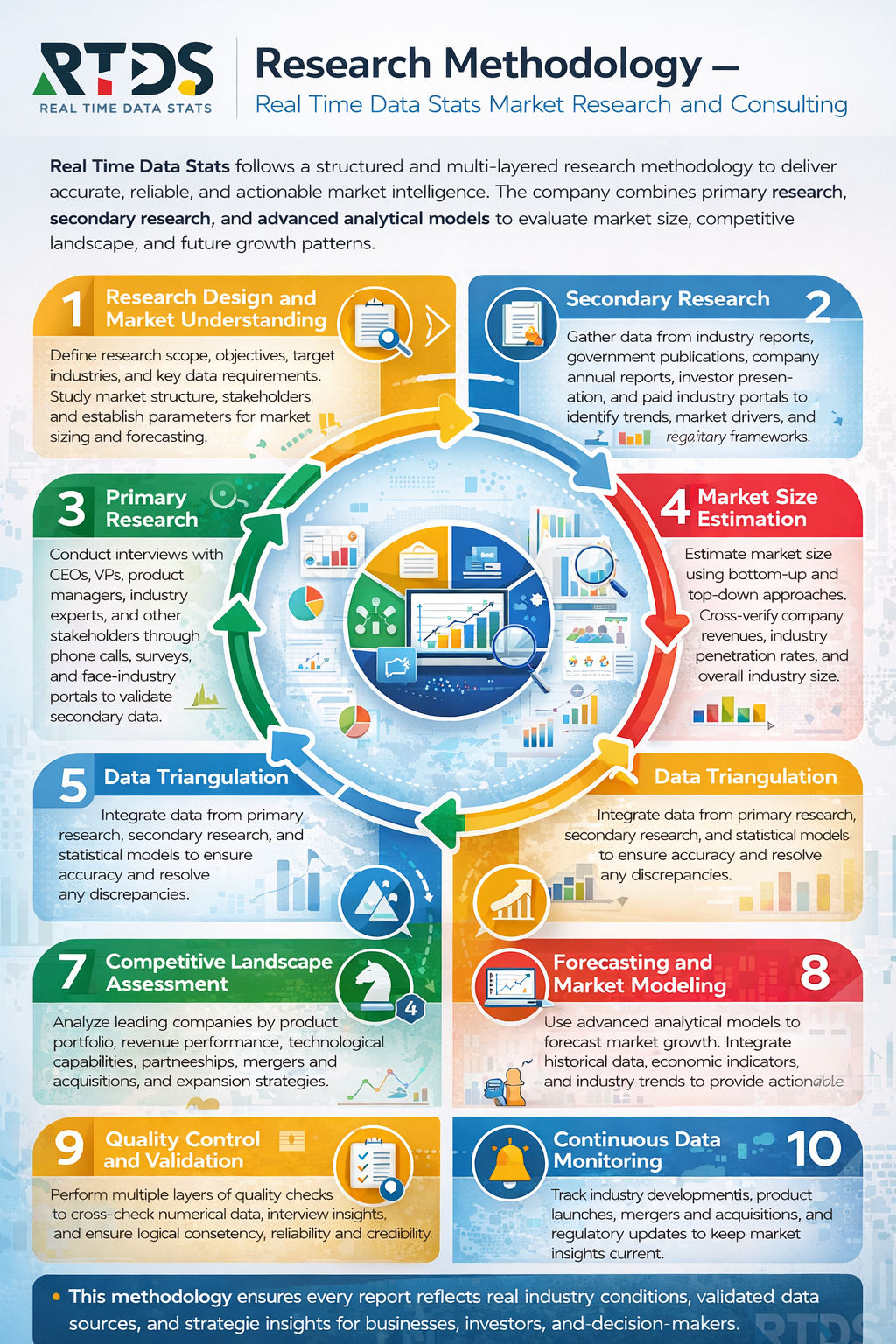
Research Methodology
- Primary Research Approach
- Secondary Research Sources
- Data Validation and Triangulation
- Market Assumptions
- Forecasting Methodology
- Limitations of the Study
Executive Summary
- Market Snapshot
- Key Market Trends
- High-Growth Segments
- Regional Highlights
- Strategic Insights
Market Dynamics
- Market Drivers
- Market Restraints
- Market Opportunities
- Market Challenges
- Impact of Emerging Technologies
Bioinspired Neural Chips Market Segmentation
- By Type
- Spiking Neural Chips
- Neuromorphic Processors
- Memristor-Based Chips
- Analog Neural Chips
- Hybrid Analog-Digital Chips
- Event-Driven Neural Chips
- By Component
- Neurons
- Synapses
- Memory Units
- Processing Cores
- Interconnects
- Power Management Units
- By Architecture
- Von Neumann Inspired
- Non–Von Neumann
- Crossbar Architecture
- Mesh-Based Architecture
- Hierarchical Architecture
- Distributed Architecture
- By Technology
- CMOS-Based
- Memristive Technology
- Spintronic Technology
- Phase-Change Memory
- Nanowire Technology
- Mixed-Signal Technology
- By Processing Mode
- Parallel Processing
- Asynchronous Processing
- Event-Based Processing
- Real-Time Processing
- Low-Power Processing
- Adaptive Processing
- By Learning Paradigm
- Supervised Learning
- Unsupervised Learning
- Reinforcement Learning
- Spike-Timing-Dependent Plasticity
- Online Learning
- Continual Learning
- By Deployment
- Edge Devices
- Embedded Systems
- On-Device AI
- Cloud-Integrated Systems
- Standalone Hardware
- Hybrid Deployment
- By Application
- Image Recognition
- Speech Recognition
- Robotics Control
- Autonomous Systems
- Signal Processing
- Pattern Recognition
- By End Use Industry
- Consumer Electronics
- Automotive
- Healthcare
- Aerospace & Defense
- Industrial Automation
- Research & Academia
Regional Market Analysis
- North America Market Overview
- Europe Market Overview
- Asia-Pacific Market Overview
- Latin America Market Overview
- Middle East Market Overview
- Africa Market Overview
Competitive Landscape
- Market Share Analysis
- Competitive Benchmarking
- Strategic Initiatives
- Partnerships and Collaborations
- Mergers and Acquisitions
Company Profiles
- Business Overview
- Product Portfolio
- Technology Focus
- Financial Overview
- Strategic Developments
Future Outlook
- Emerging Trends
- Investment Opportunities
- Technology Roadmap
- Long-Term Market Projections
Conclusion
- Key Findings Summary
- Strategic Recommendations
- Market Outlook Synopsis
Appendix
- Abbreviations and Acronyms
- Data Sources
- Methodology Notes
- Disclaimer
List of Tables
- Table:1: Global Bioinspired Neural Chips Market Overview
- Table:2: Market Segmentation by Type
- Table:3: Market Segmentation by Component
- Table:4: Market Segmentation by Architecture
- Table:5: Market Segmentation by Technology
- Table:6: Market Segmentation by Processing Mode
- Table:7: Market Segmentation by Learning Paradigm
- Table:8: Market Segmentation by Deployment
- Table:9: Market Segmentation by Application
- Table:10: Market Segmentation by End Use Industry
- Table:11: Regional Market Size Comparison
- Table:12: North America Market Analysis
- Table:13: Europe Market Analysis
- Table:14: Asia-Pacific Market Analysis
- Table:15: Competitive Landscape Summary
List of Figures
- Figure:1: Bioinspired Neural Chips Market Ecosystem
- Figure:2: Market Research Methodology Flow
- Figure:3: Global Market Snapshot
- Figure:4: Market Dynamics Framework
- Figure:5: Segmentation by Type Analysis
- Figure:6: Segmentation by Component Analysis
- Figure:7: Segmentation by Architecture Analysis
- Figure:8: Segmentation by Technology Analysis
- Figure:9: Segmentation by Processing Mode Analysis
- Figure:10: Segmentation by Learning Paradigm Analysis
- Figure:11: Segmentation by Deployment Analysis
- Figure:12: Segmentation by Application Analysis
- Figure:13: End Use Industry Share Analysis
- Figure:14: Regional Market Distribution
- Figure:15: Competitive Landscape Matrix
Bioinspired Neural Chips Market Key Factors
Drivers:
- Increasing demand for low-power, high-efficiency computing solutions pushes adoption.
- Advancements in neuromorphic algorithms and materials science accelerate chip development.
- The rapid growth of edge AI and autonomous devices creates urgent need for specialized hardware.
Restraints:
- High research and fabrication costs limit widespread commercialization.
- Immature design tools and programming frameworks hinder developer adoption.
- The lack of standardized benchmarks and architectures slows industry convergence.
Opportunities:
- Expanding applications in smart sensors and real-time robotics open new markets.
- Potential for revolutionizing brain-computer interface technology emerges.
- Growing public and private investment in next-generation computing fuels R&D.
Challenges:
- Bridging the gap between biological fidelity and computational practicality remains difficult.
- Intense competition from established AI chipmakers pressures new entrants.
- Ensuring system reliability and explainability for critical applications poses hurdles.
Bioinspired Neural Chips Market Key Regional Trends
North America:
- Strong venture capital and government defense funding drive advanced research.
- Leading tech firms and universities aggressively file patents and form research consortia.
- Focus shifts toward commercializing applications for data centers and aerospace.
Europe:
- Public-funded projects emphasize ethical AI and energy-efficient computing goals.
- Research clusters collaborate heavily across borders on neuromorphic engineering.
- Early adoption trends appear in automotive and industrial IoT for sensor processing.
Asia-Pacific:
- Governments prioritize neuromorphic computing in national AI and semiconductor strategies.
- Massive manufacturing ecosystems support prototyping and scale-up efforts.
- Companies focus on consumer electronics and mobile applications for first-generation products.
Frequently Asked Questions
Key Questions Answered
- What is the size and growth rate of the market industry?
- What are the main drivers influencing market growth trends?
- What are the key challenges and restraints faced by the market?
- What are the emerging trends and opportunities shaping the market?
- Who are the top players, and what strategies drive their success?
- What are the customer demographics and their buying behaviors?
- What are the key market segments, and what is their scope?
- What are the geographical dynamics, and which region dominates?
- What are the market forecasts and projections for the next decade?
- What regulatory factors are critical to consider for market growth?
Why Choose our Company?
- Major facts and stats backing every report we offer.
- Comprehensive analysis tailored to your business needs.
- Accurate insights backed by extensive market research.
- Expert support to address your queries promptly.
- Data-driven strategies for better decision-making.
- In-depth reports with actionable
recommendations. - Reliable statistics from trusted industry
sources. - Customizable reports to suit your specific goals.
- Unmatched quality and precision in market analysis.
- Competitive pricing with premium content delivery.
Share your experience!
We value you feedback. Please take a moment to review your experience with us.