
According to insights from Real Time Data Stats, The Global Autonomous Biomanufacturing Market was valued at USD 3.18 billion in 2025. It is expected to grow from USD 3.59 billion in 2026 to USD 9.57 billion by 2033, registering a CAGR of 15.0% during the forecast period (2026–2033).
MARKET SIZE AND SHARE
The autonomous biomanufacturing market is experiencing significant growth, driven by the increasing demand for efficient pharmaceutical production, advanced biologics, and personalized therapies. This expansion reflects the transition from traditional manufacturing methods to automated, data-driven bioproduction processes that improve operational efficiency, reduce production costs, enhance product quality, and accelerate the time-to-market for critical biopharmaceutical products.
Market share is becoming increasingly concentrated among leading technology providers and established biopharmaceutical companies investing heavily in automation and digital manufacturing capabilities. Strategic collaborations between AI software developers, automation solution providers, and bioreactor manufacturers are reshaping the competitive landscape. Meanwhile, emerging companies specializing in niche applications, such as cell and gene therapy automation, are capturing growing market opportunities, contributing to a dynamic and highly competitive market throughout the forecast period.
INDUSTRY OVERVIEW AND STRATEGY
Autonomous biomanufacturing integrates AI, robotics, and advanced analytics to create self-optimizing production systems for biologics. This industry evolution addresses critical challenges in conventional bioproduction, including variability, scalability, and high labor costs. The overarching goal is to establish continuous, closed-loop processes that enhance yield, ensure consistent quality, and enable the agile production of complex therapeutics, from monoclonal antibodies to cell and gene therapies.
Corporate strategy centers on heavy R&D investment to develop integrated platforms and secure intellectual property. Key players are pursuing vertical integration and forming consortia to set industry standards. A core strategic focus is demonstrating tangible ROI through pilot facilities and leveraging data from closed-loop control systems to create new, high-margin service models, thereby transitioning from equipment vendors to holistic productivity partners.
Analyst Key Takeaways:
Autonomous biomanufacturing is emerging as a transformative segment within the broader next-generation biomanufacturing ecosystem, driven by rapid advances in artificial intelligence, robotics, digital twins, autonomous process control, and real-time analytics. Manufacturers are increasingly adopting self-optimizing production systems to improve process consistency, reduce human intervention, accelerate scale-up, and enhance regulatory compliance across biologics, cell and gene therapies, and vaccine manufacturing.
North America remains at the forefront of innovation due to strong biotechnology investments, advanced manufacturing infrastructure, and supportive research initiatives, while Asia Pacific is expected to witness the fastest adoption as biopharmaceutical production capacity expands and automation investments increase. Strategic collaborations between biotechnology companies, AI solution providers, and automation technology vendors are expected to accelerate commercialization, making autonomous biomanufacturing a key enabler of future smart bioprocessing facilities.
REGIONAL TRENDS AND GROWTH
North America leads the market, fueled by strong biotechnology funding, regulatory advancements, and the presence of major pharmaceutical companies. Europe follows, with significant initiatives in advanced therapy manufacturing and supportive EU policies for pharmaceutical innovation. The Asia-Pacific region is the fastest-growing, driven by substantial government investments in biopharma infrastructure and increasing outsourcing of production to contract manufacturers within the region.
Primary growth drivers include the need for supply chain resilience, rapid vaccine development, and personalized medicine. Key restraints are high capital expenditure and a shortage of skilled personnel. Opportunities lie in cloud-based platform adoption and AI-driven predictive maintenance. Major challenges involve integrating legacy systems, navigating complex regulatory pathways for autonomous processes, and ensuring robust cybersecurity for sensitive bioprocess data.
AUTONOMOUS BIOMANUFACTURING MARKET SEGMENTATION ANALYSIS
BY TYPE:
The Bioreactors segment is a critical component in autonomous biomanufacturing, offering controlled environments for microbial, animal, or plant cell growth. The increasing adoption of single-use and modular bioreactors, combined with advanced monitoring systems, is driving efficiency in upstream production processes. Dominant factors influencing this segment include scalability, operational flexibility, ease of sterilization, and integration with digital control systems, which allow real-time optimization of growth parameters. Additionally, the rising demand for biologics and cell-based products across pharmaceuticals fuels the growth of high-performance bioreactor systems.
Cell Culture Systems, Downstream Processing Equipment, Sensors & Monitoring Systems, Automation Software, and Analytical Instruments together form a comprehensive ecosystem enabling autonomous workflows. Cell culture systems are advancing with automated feeding and environmental controls, enhancing reproducibility. Downstream processing equipment is increasingly automated, improving purification and recovery yields. Sensors and monitoring systems provide continuous feedback on process variables, while automation software integrates data analytics for predictive control. Analytical instruments support real-time quality assurance, ensuring compliance with stringent regulatory standards. Dominant growth factors include process efficiency, reduced labor costs, minimized human error, and enhanced product consistency.
BY APPLICATION:
Biopharmaceuticals and vaccines dominate the application landscape, driven by the growing prevalence of chronic diseases and the need for rapid vaccine production, as evidenced during pandemic responses. Autonomous biomanufacturing accelerates development timelines and improves process reliability, reducing batch-to-batch variability. Enzyme production is another high-growth application, particularly in industrial and pharmaceutical sectors, where precision and high yield are critical. Gene therapy, cell therapy, and regenerative medicine are increasingly dependent on automated manufacturing due to the complex, sensitive nature of the biological materials involved.
Dominant factors include the rising adoption of personalized medicine, increased R&D investments, and stringent regulatory requirements mandating high-quality, reproducible manufacturing. autonomous systems enhance process scalability and compliance while enabling cost-effective production of complex biologics. The integration of advanced monitoring, AI-driven predictive analytics, and robotics ensures optimal conditions throughout the production pipeline, reducing human intervention and contamination risk. Collectively, these applications are pushing the market toward more efficient, data-driven, and fully automated biomanufacturing solutions.
BY TECHNOLOGY:
Single-Use Systems are gaining popularity due to their flexibility, reduced contamination risk, and lower capital expenditure compared to traditional stainless-steel systems. Continuous manufacturing is revolutionizing production by minimizing downtime, improving efficiency, and supporting real-time quality monitoring. Closed system automation enhances process safety and containment, particularly for high-value biologics and gene therapies, by limiting exposure to external environments.
Robotics integration and AI & machine learning platforms are key enablers for predictive process optimization and autonomous decision-making. Process Analytical Technology (PAT) provides real-time insight into critical process parameters, ensuring consistent quality and compliance. Dominant factors driving technology adoption include cost-effectiveness, scalability, operational efficiency, regulatory compliance, and the increasing complexity of biologics requiring precise and reproducible process control. These technologies collectively transform traditional biomanufacturing into a fully autonomous, intelligent ecosystem.
BY END-USER:
Pharmaceutical companies leverage autonomous biomanufacturing to streamline production, reduce operational costs, and accelerate time-to-market for biologics. Biotechnology firms focus on innovative therapies and often rely on automation for scaling experimental processes into commercial production. Contract Manufacturing Organizations (CMOs) adopt these technologies to meet diverse client requirements while ensuring high efficiency and quality standards.
Academic and research institutes use autonomous systems to conduct high-throughput experiments with reproducibility and precision, while hospitals and clinics are beginning to explore small-scale automated systems for personalized cell therapies. Government research centers utilize these technologies for vaccine development, regenerative medicine, and strategic biomanufacturing projects. Dominant factors driving end-user adoption include the need for high efficiency, reduced human error, regulatory compliance, cost reduction, and the ability to scale production rapidly across multiple applications.
BY SCALE:
Laboratory scale systems support early-stage R&D, offering precise control for small-batch experiments. Pilot scale solutions bridge the gap between research and commercial production, allowing process optimization and validation under semi-industrial conditions. Commercial scale systems focus on high-volume production with fully integrated automation, ensuring efficiency, consistency, and compliance.
Small-, medium-, and large-scale bioreactors provide flexibility across production requirements, with large-scale systems catering to global demand for biologics and vaccines. Dominant factors influencing scale adoption include process reproducibility, scalability of technology, cost efficiency, integration capabilities with automation, and regulatory compliance. Autonomous systems allow seamless transition from lab to pilot to commercial scales while maintaining product quality and operational efficiency.
BY WORKFLOW:
Upstream processing involves cultivation and growth of biological materials, requiring precise control over environmental parameters. Downstream processing focuses on purification and recovery, where automation reduces contamination risk and ensures consistency. Formulation and filling are critical for final product integrity, and autonomous systems ensure sterile, reproducible operations.
Quality control, packaging, and supply chain management benefit from integrated automation by enabling real-time monitoring, predictive analytics, and traceability. Dominant factors include reduction of human error, enhanced efficiency, process standardization, and regulatory compliance. Automation across the workflow improves throughput, reduces operational costs, and supports rapid scaling of production, making fully integrated autonomous systems essential for modern biomanufacturing.
BY COMPONENT:
Hardware components such as bioreactors, sensors, and actuators form the backbone of autonomous systems. Software components provide real-time process monitoring, predictive analytics, and integration with enterprise systems. Sensors and monitoring devices ensure accurate data collection, while actuators control environmental parameters precisely. Control systems tie all components together, enabling fully automated and reproducible processes.
Dominant factors driving component adoption include operational reliability, precision, ease of integration, and ability to support scalable and flexible manufacturing. Advanced hardware-software integration allows autonomous decision-making, predictive maintenance, and remote monitoring, making production more efficient and compliant with regulatory standards. The synergy of these components ensures seamless operation across all stages of biomanufacturing.
BY PRODUCT TYPE:
Monoclonal antibodies and recombinant proteins dominate the market due to their therapeutic applications in oncology, immunology, and infectious diseases. Vaccines are increasingly produced using autonomous systems to meet high-volume demands rapidly. Cell-based therapies, gene-based products, and enzymes rely on precision manufacturing where automation ensures process reproducibility and product quality.
Dominant factors include growing demand for biologics, personalized medicine trends, complexity of production processes, and regulatory compliance requirements. Autonomous biomanufacturing improves yield, reduces production time, ensures sterility, and provides scalable solutions for a wide range of complex biologics. The integration of real-time monitoring and AI-driven control is critical for producing these high-value products consistently and efficiently.
BY AUTOMATION LEVEL:
Fully automated systems offer end-to-end process control, minimizing human intervention and maximizing reproducibility. Semi-automated systems combine manual oversight with automated operations, balancing flexibility and efficiency. Manual-assisted automation is often used in smaller setups where full automation is not feasible.
AI-driven systems, robotics-assisted systems, and remote monitoring systems enable predictive analytics, real-time optimization, and remote process supervision. Dominant factors include reduced operational errors, labor cost savings, improved process efficiency, regulatory compliance, and enhanced product quality. The level of automation adopted depends on production scale, complexity of the biologics, and need for precise, reproducible processes, making automation a key driver of market growth.
RECENT DEVELOPMENTS
- In Jan 2024: Ginkgo Bioworks acquired a foundational AI model for protein design, enhancing its autonomous foundry's capabilities for rapid, AI-driven strain and enzyme development.
- In Mar 2024: Siemens and Atinary launched an AI-powered self-optimizing bioreactor platform, integrating advanced process control to autonomously maximize bioprocess yield and efficiency.
- In Jun 2024: BioNTech partnered with AI firm InstaDeep to deploy autonomous robotics and machine learning for high-throughput, automated testing and optimization of mRNA vaccine manufacturing processes.
- In Nov 2024: Thermo Fisher Scientific introduced its new Gibco CTS DynaCellect Plus system, a fully automated, closed-cell processing platform designed for scalable cell therapy manufacturing.
- In Feb 2025: ABB announced a strategic collaboration with a major CDMO to implement a fully autonomous pilot biomanufacturing line, utilizing collaborative robots and digital twin technology.
KEY PLAYERS ANALYSIS
- Thermo Fisher Scientific Inc.
- Siemens AG
- ABB Ltd.
- Sartorius AG
- Danaher Corporation (Cytiva)
- Merck KGaA
- Roche Diagnostics
- GE HealthCare
- Agilent Technologies
- Honeywell International Inc.
- Emerson Electric Co.
- Rockwell Automation, Inc.
- Bio-Rad Laboratories, Inc.
- PerkinElmer, Inc.
- Waters Corporation
- 10x Genomics, Inc.
- Illumina, Inc.
- GINKGO BIOWORKS
- Zymergen Inc.
- Synthace (a Antha company)
Autonomous Biomanufacturing Market Segmentation
By Type:
- Bioreactors
- Cell Culture Systems
- Downstream Processing Equipment
- Sensors & Monitoring Systems
- Automation Software
- Analytical Instruments
By Application:
- Biopharmaceuticals
- Vaccines
- Enzyme Production
- Gene Therapy
- Cell Therapy
- Regenerative Medicine
By Technology:
- Single-Use Systems
- Continuous Manufacturing
- Closed System Automation
- Robotics Integration
- AI & Machine Learning Platforms
- Process Analytical Technology (PAT)
By End-User:
- Pharmaceutical Companies
- Biotechnology Firms
- Contract Manufacturing Organizations (CMOs)
- Academic & Research Institutes
- Hospitals & Clinics
- Government Research Centers
By Scale:
- Laboratory Scale
- Pilot Scale
- Commercial Scale
- Small-Scale Bioreactors
- Medium-Scale Bioreactors
- Large-Scale Bioreactors
By Workflow:
- Upstream Processing
- Downstream Processing
- Formulation & Filling
- Quality Control
- Packaging
- Supply Chain Management
By Component:
- Hardware Components
- Software Components
- Sensors
- Actuators
- Monitoring Devices
- Control Systems
By Product Type:
- Monoclonal Antibodies
- Recombinant Proteins
- Vaccines
- Cell-Based Therapies
- Gene-Based Products
- Enzymes
By Automation Level:
- Fully Automated Systems
- Semi-Automated Systems
- Manual-Assisted Automation
- AI-Driven Systems
- Robotics-Assisted Systems
- Remote Monitoring Systems
By Geography:
- North America (USA, Canada, Mexico)
- Europe (UK, Germany, France, Italy, Spain, Rest of Europe)
- Asia-Pacific (China, Japan, Australia, South Korea, India, Rest of Asia-Pacific)
- South America (Brazil, Argentina, Rest of South America)
- Middle East and Africa (GCC Countries, South Africa, Rest of MEA)
Autonomous Biomanufacturing Market: Table of Contents
Market Introduction
- Definition of Autonomous Biomanufacturing
- Scope of the Study
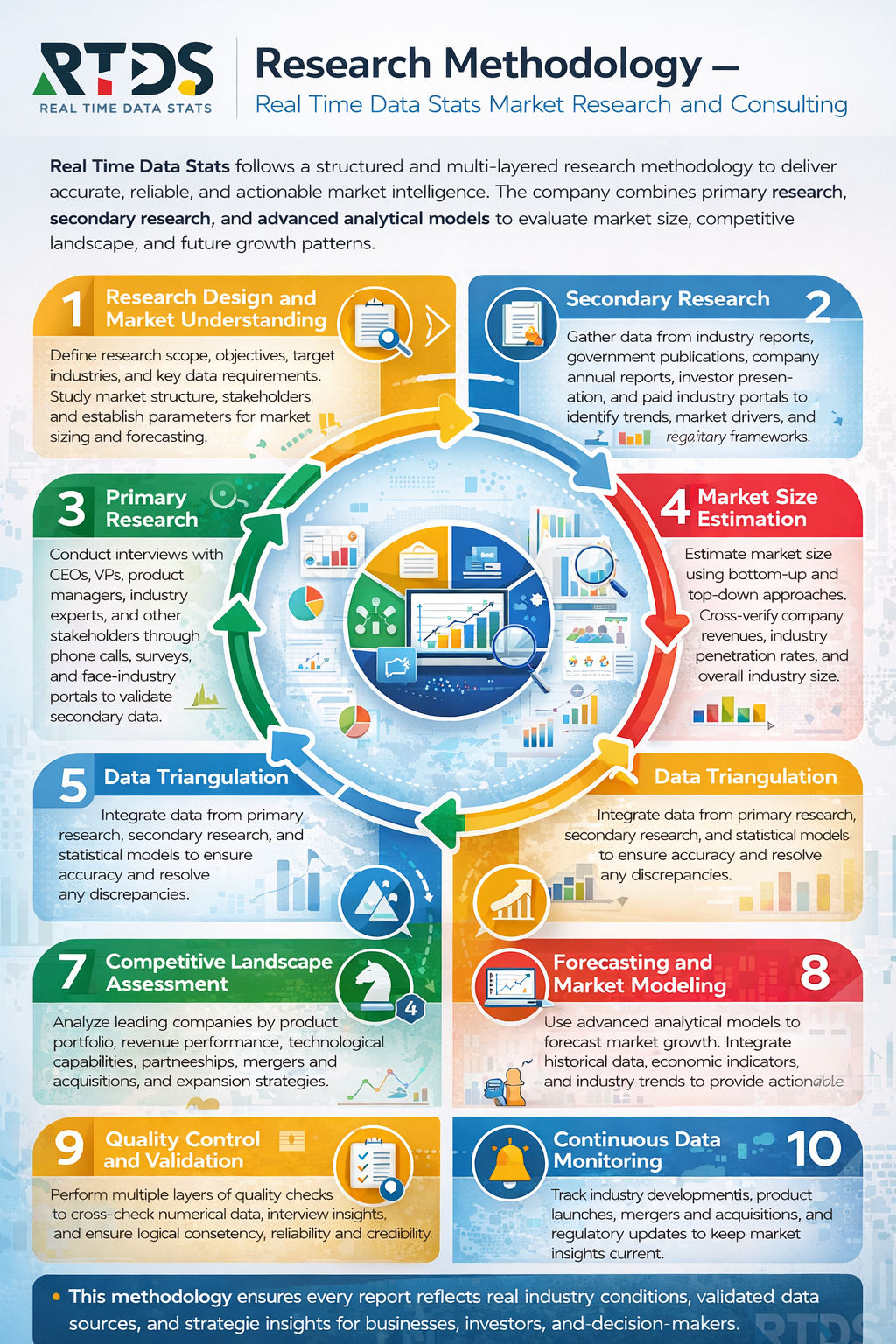
- Research Methodology Overview
- Data Sources and Validation Approach
- Market Assumptions and Limitations
Executive Summary
- Key Market Highlights
- Analyst Insights and Strategic Outlook
- Market Dynamics
- Market Drivers
Increasing Demand for Biologics and Personalized Medicine
- Integration of Artificial Intelligence in Bioprocessing
- Growth of Continuous Biomanufacturing
- Rising Need for Cost-Efficient Production
Market Dynamics
- Drivers
- Restraints
- Opportunities
- Challenges
Raw Material and Input Suppliers
- Technology and Automation Providers
- Bioprocess Equipment Manufacturers
- Software and AI Solution Providers
- Biopharmaceutical Manufacturers
- End-User Delivery Channels
Technology Landscape
- Robotics and Automation Systems
- AI-Driven Process Optimization
- Digital Twin Technology
- Advanced Bioreactor Systems
- Sensor Integration and Real-Time Monitoring
- Cloud-Based Biomanufacturing Platforms
Autonomous Biomanufacturing Market Segmentation
- By Type:
- Bioreactors
- Cell Culture Systems
- Downstream Processing Equipment
- Sensors & Monitoring Systems
- Automation Software
- Analytical Instruments
- By Application:
- Biopharmaceuticals
- Vaccines
- Enzyme Production
- Gene Therapy
- Cell Therapy
- Regenerative Medicine
- By Technology:
- Single-Use Systems
- Continuous Manufacturing
- Closed System Automation
- Robotics Integration
- AI & Machine Learning Platforms
- Process Analytical Technology (PAT)
- By End-User:
- Pharmaceutical Companies
- Biotechnology Firms
- Contract Manufacturing Organizations (CMOs)
- Academic & Research Institutes
- Hospitals & Clinics
- Government Research Centers
- By Scale:
- Laboratory Scale
- Pilot Scale
- Commercial Scale
- Small-Scale Bioreactors
- Medium-Scale Bioreactors
- Large-Scale Bioreactors
- By Workflow:
- Upstream Processing
- Downstream Processing
- Formulation & Filling
- Quality Control
- Packaging
- Supply Chain Management
- By Component:
- Hardware Components
- Software Components
- Sensors
- Actuators
- Monitoring Devices
- Control Systems
- By Product Type:
- Monoclonal Antibodies
- Recombinant Proteins
- Vaccines
- Cell-Based Therapies
- Gene-Based Products
- Enzymes
- By Automation Level:
- Fully Automated Systems
- Semi-Automated Systems
- Manual-Assisted Automation
- AI-Driven Systems
- Robotics-Assisted Systems
- Remote Monitoring Systems
Regional Market Analysis
- North America Market Overview
- Europe Market Overview
- Asia-Pacific Market Overview
- Latin America Market Overview
- Middle East and Africa Market Overview
Country-Level Analysis
- United States
- Canada
- Germany
- United Kingdom
- France
- China
- Japan
- India
- South Korea
- Brazil
Competitive Landscape
- Market Share Analysis
- Competitive Positioning Matrix
- Strategic Developments and Partnerships
- Mergers and Acquisitions
- Product Launches and Innovations
- R&D Investment Trends
Company Profiles
- Company Overview
- Financial Performance
- Product Portfolio
- Strategic Initiatives
Recent Developments
- Investment and Funding Analysis
- Venture Capital Trends
- Government Funding Programs
- Private Equity Involvement
- Regulatory Framework
Global Regulatory Landscape
- Compliance Requirements
- Quality Standards and Certifications
- Future Market Outlook
- Emerging Technology Trends
- Forecasted Industry Shifts
- Long-Term Growth Opportunities
Conclusion
Appendix
- Abbreviations
- Research Methodology Details
- Data Triangulation Approach
- Disclaimer
List of Tables
- Table: 1: Global Autonomous Biomanufacturing Market Snapshot
- Table: 2: Key Market Drivers Impact Analysis
- Table: 3: Market Restraints Impact Assessment
- Table: 4: Opportunity Mapping by Region
- Table: 5: Value Chain Stakeholder Analysis
- Table: 6: Technology Comparison Matrix
- Table: 7: Component Segment Revenue Breakdown
- Table: 8: Application Segment Market Share
- Table: 9: End User Adoption Trends
- Table: 10: Deployment Model Comparison
- Table: 11: Regional Market Size Forecast
- Table: 12: Country-Level Growth Rates
- Table: 13: Competitive Market Share Analysis
- Table: 14: Investment and Funding Trends
- Table: 15: Regulatory Requirements by Region
List of Figures
- Figure: 1: Autonomous Biomanufacturing Ecosystem Overview
- Figure: 2: Market Growth Drivers Illustration
- Figure: 3: Market Restraints Framework
- Figure: 4: Opportunity Landscape Map
- Figure: 5: Industry Value Chain Diagram
- Figure: 6: Technology Architecture of Autonomous Biomanufacturing
- Figure: 7: Component Segment Distribution
- Figure: 8: Application Segment Share Visualization
- Figure: 9: End User Adoption Chart
- Figure: 10: Deployment Model Structure
- Figure: 11: Regional Market Share Distribution
- Figure: 12: Country-Wise Market Growth Comparison
- Figure: 13: Competitive Positioning Matrix
- Figure: 14: Investment Flow Diagram
- Figure: 15: Future Trend Projection Graph
Autonomous Biomanufacturing Market Key Factors
Drivers:
- Rising drug demand pressures manufacturers to increase production speed.
- Companies adopt automation to reduce high labor costs and human error.
- Advanced sensors and AI improve process control and product consistency.
Restraints:
- High initial investment limits access for small-scale producers.
- Inadequate industry standards hinder system integration and data exchange.
- A skills gap slows adoption due to a shortage of trained technicians.
Opportunities:
- AI and machine learning unlock potential for predictive process optimization.
- Modular systems enable flexible production of personalized medicines.
- Expanding into novel therapy manufacturing creates new growth avenues.
Challenges:
- Securing sensitive process and patient data raises significant cybersecurity concerns.
- Regulators struggle to validate and approve complex, self-optimizing processes.
- Integrating new autonomous platforms with legacy equipment poses technical difficulties.
Autonomous Biomanufacturing Market Key Regional Trends
North America:
- Strong R&D investment accelerates AI and robotics integration.
- Regulatory agencies actively develop adaptive framework guidelines.
- Major biopharma firms forge partnerships with tech startups.
Europe:
- Public funding strongly promotes sustainable and green manufacturing initiatives.
- Focus increases on compact, modular systems for cell and gene therapies.
- Stricter data governance laws shape platform development and compliance.
Asia-Pacific:
- Governments invest heavily in modernizing biopharmaceutical production infrastructure.
- Contract manufacturers rapidly adopt automation to boost global capacity.
- Local AI solution providers emerge to cater to specific regional needs.
Frequently Asked Questions
Key Questions Answered
- What is the size and growth rate of the market industry?
- What are the main drivers influencing market growth trends?
- What are the key challenges and restraints faced by the market?
- What are the emerging trends and opportunities shaping the market?
- Who are the top players, and what strategies drive their success?
- What are the customer demographics and their buying behaviors?
- What are the key market segments, and what is their scope?
- What are the geographical dynamics, and which region dominates?
- What are the market forecasts and projections for the next decade?
- What regulatory factors are critical to consider for market growth?
Why Choose our Company?
- Major facts and stats backing every report we offer.
- Comprehensive analysis tailored to your business needs.
- Accurate insights backed by extensive market research.
- Expert support to address your queries promptly.
- Data-driven strategies for better decision-making.
- In-depth reports with actionable
recommendations. - Reliable statistics from trusted industry
sources. - Customizable reports to suit your specific goals.
- Unmatched quality and precision in market analysis.
- Competitive pricing with premium content delivery.
Share your experience!
We value you feedback. Please take a moment to review your experience with us.