
According to insights from Real Time Data Stats, the Urban Vertical Farming Automation Market was valued at USD 0.53 billion in 2025. It is expected to grow from USD 0.68 billion in 2026 to USD 3.53 billion by 2033, registering a CAGR of 27% during the forecast period (2026–2033).
MARKET SIZE AND SHARE
The global Urban Vertical Farming Automation Market is experiencing accelerated growth, primarily driven by the rising demand for food security and the need for efficient, year-round crop production in densely populated urban centers, which is compelling increased adoption of automation technologies.
Market share is currently dominated by key players specializing in hardware solutions, including climate control systems and robotic harvesting technologies, alongside integrated software platforms. The competitive landscape remains dynamic, with North America and Europe accounting for significant revenue shares due to their advanced technological infrastructure. However, the Asia-Pacific region is projected to capture a rapidly expanding share, driven by large urban populations and supportive government initiatives promoting sustainable agricultural technologies.
INDUSTRY OVERVIEW AND STRATEGY
The urban vertical farming automation industry integrates advanced technologies like robotics, AI, and IoT to optimize indoor agriculture. It encompasses systems for climate management, lighting, irrigation, seeding, and harvesting, all controlled via centralized software. The core strategy focuses on maximizing yield per square foot while minimizing labor costs, resource use, and operational inefficiencies. This tech-driven approach is essential for making urban farming economically viable and scalable to meet growing metropolitan food demands.
Key strategic priorities for market participants include heavy investment in research and development to enhance system intelligence and reliability. Companies are pursuing vertical integration to offer turnkey solutions and forming strategic partnerships with real estate developers and retailers. The overarching strategy is to transition from selling discrete hardware to providing data-driven, subscription-based services that offer predictable harvests and superior quality control, thereby ensuring long-term customer retention and recurring revenue streams.
REGIONAL TRENDS AND GROWTH
North America leads in adoption, driven by high-tech investment and consumer demand for local produce. Europe follows closely, with strong regulatory support for sustainability. The Asia-Pacific region exhibits the highest growth potential, spurred by mega-cities, food import dependency, and government subsidies. The Middle East is also emerging, utilizing automation to overcome arid climates. Each region tailors solutions to local crop preferences and infrastructure constraints, creating diverse market dynamics.
Primary drivers include rising labor costs, advances in AI and sensor technology, and urgent climate resilience needs. Significant restraints are high initial capital expenditure and technical complexity. Opportunities lie in integrating renewable energy and expanding into emerging economies. Major challenges involve achieving cost parity with traditional agriculture and developing skilled technicians for system maintenance, which will crucially influence future growth trajectories across all regions.
URBAN VERTICAL FARMING AUTOMATION MARKET SEGMENTATION ANALYSIS
BY TYPE:
The segmentation by type is strongly influenced by the growing need for precision agriculture technologies that ensure maximum yield within confined urban spaces. Climate control systems, lighting automation, and irrigation automation dominate due to their direct impact on plant growth cycles, energy efficiency, and water conservation. Environmental monitoring systems and nutrient management tools are gaining importance as operators focus on data-driven cultivation and predictive maintenance. The integration of sensors, AI analytics, and automated feedback loops is a major factor shaping dominance in this segment.
Robotic harvesting systems, seeding and transplanting automation, and vertical rack conveyor systems are becoming increasingly dominant as labor costs rise and operational scalability becomes essential. Control software and integrated automation solutions hold strong influence because centralized management improves efficiency, reduces human error, and enhances productivity across multiple crop layers. Market growth in this segment is also driven by demand for modular systems, interoperability between hardware and software, and the shift toward fully synchronized automated farming ecosystems in dense metropolitan environments.
BY APPLICATION:
Application-based segmentation is primarily led by leafy greens and herb cultivation due to their shorter growth cycles, high turnover rates, and strong urban consumer demand. Fruit crop and medicinal plant cultivation are also expanding as automation technologies improve environmental precision and yield consistency. Research and development facilities play a crucial role in innovation, testing new lighting spectrums, nutrient formulas, and robotics, which significantly influences adoption trends across commercial and institutional vertical farming operations.
Commercial urban farms and food retail integration dominate this segment because supermarkets and grocery chains seek hyper-local produce with minimal transportation costs. Institutional farming and smart city agriculture projects are gaining traction due to government sustainability initiatives and urban food security policies. The dominance factors include profitability, rapid urbanization, increased consumer preference for pesticide-free produce, and partnerships between technology providers and large-scale food distributors aiming to build resilient local food supply networks.
BY COMPONENT:
Component segmentation is heavily influenced by the balance between hardware reliability, software intelligence, and service support. Hardware components such as sensors, actuators, LED fixtures, and robotic arms dominate initial investment spending because they directly control environmental variables and operational execution. Software platforms are equally critical as they enable analytics, remote monitoring, and automation scheduling. The interaction between hardware precision and software intelligence forms the core driver of competitive advantage in this segment.
Services are becoming increasingly dominant as vertical farms require installation, maintenance, system upgrades, and technical consulting. Managed services and training programs significantly influence long-term operational success and customer retention. Subscription-based software services and predictive maintenance offerings are expanding due to recurring revenue models and continuous optimization needs. The dominant factors include lifecycle cost management, technological complexity, and the growing dependence on vendor expertise for seamless integration and uninterrupted farm productivity.
BY FARM SIZE:
Farm size segmentation is shaped by capital investment capacity, urban land availability, and production scalability requirements. Small-scale farms are dominant in residential and community settings where affordability and modular automation kits are key drivers. Medium-scale farms represent a balance between cost efficiency and production volume, making them attractive for startups and regional distributors. Flexibility, lower operational risk, and adaptability to mixed crop production strongly influence growth within these two categories.
Large-scale farms dominate revenue generation due to economies of scale, advanced automation infrastructure, and long-term supply contracts with retailers and food chains. These farms benefit from higher technological integration, energy optimization systems, and sophisticated analytics platforms. Dominant factors include bulk production capability, investor funding availability, and strategic urban warehouse utilization. Expansion in this segment is also driven by rising urban population density and the need for continuous high-volume food production within metropolitan regions.
BY DEPLOYMENT MODE:
Deployment mode segmentation is primarily driven by data accessibility, cybersecurity concerns, and operational flexibility. On-premises deployment remains dominant among large commercial operators who prioritize data control, system customization, and reduced dependency on internet connectivity. This mode is particularly influential in regions with strict data regulations or unstable network infrastructure. Reliability, internal IT management, and long-term infrastructure ownership are major dominance factors within this segment.
Cloud-based deployment is rapidly gaining dominance due to scalability, remote monitoring capabilities, and lower upfront investment requirements. Real-time analytics, multi-location farm management, and AI-powered forecasting tools significantly strengthen cloud adoption. Startups and mid-sized farms prefer cloud solutions for flexibility and automatic updates. The dominant factors include subscription affordability, seamless software upgrades, cross-device accessibility, and the growing trend of smart agriculture ecosystems that rely heavily on interconnected digital platforms.
BY GROWING SYSTEM:
Growing system segmentation is strongly influenced by water efficiency, nutrient delivery precision, and crop growth speed. Hydroponics dominates due to its simplicity, cost effectiveness, and proven productivity across leafy greens and herbs. Aeroponics is gaining momentum because of faster growth cycles and reduced water usage, making it highly attractive for technologically advanced farms seeking maximum yield density. These systems are favored for their compatibility with automation tools and consistent performance in controlled environments.
Aquaponics holds a niche yet growing position due to its sustainability appeal and integrated fish-plant ecosystem benefits. Environmental consciousness, organic produce demand, and closed-loop resource utilization are key dominance factors for this segment. The choice of growing system is heavily influenced by operational costs, energy consumption, crop compatibility, and automation adaptability. Technological innovation and research investments continue to shift dominance as farms seek higher efficiency and reduced ecological impact.
BY END USER:
End-user segmentation is primarily driven by purchasing power, production objectives, and technological awareness. Commercial growers dominate due to their need for large-scale, continuous production and ability to invest in high-end automation infrastructure. Government and municipal bodies are increasingly influential as they implement food security programs and urban sustainability initiatives. Funding availability, policy support, and long-term urban agricultural planning are major factors shaping dominance in this segment.
Educational institutions and residential users contribute to steady growth through research experimentation and small-scale adoption. Universities drive innovation by testing advanced automation prototypes, while residential users focus on compact smart farming units. Dominant factors include awareness of healthy food consumption, educational funding, and the rising popularity of home-grown produce. Collaboration between academic research centers and technology vendors further accelerates innovation and adoption across diverse end-user groups.
BY AUTOMATION LEVEL:
Automation level segmentation is largely influenced by labor cost reduction, operational precision, and scalability potential. Semi-automated systems remain dominant among mid-sized farms due to lower investment requirements and easier adaptability. These systems allow human oversight while automating repetitive tasks, balancing efficiency and affordability. Dominant factors include gradual technology transition, workforce familiarity, and lower implementation risk for emerging vertical farming businesses.
Fully automated systems are rapidly gaining dominance as artificial intelligence, robotics, and IoT connectivity become more affordable and reliable. These systems offer continuous monitoring, predictive analytics, and minimal human intervention, which significantly enhances productivity and consistency. Major dominance drivers include long-term cost savings, data-driven optimization, and the growing demand for uninterrupted production cycles. Large commercial farms and smart city projects are the primary adopters accelerating this transition.
BY DISTRIBUTION CHANNEL:
Distribution channel segmentation is driven by partnership networks, technical expertise, and after-sales support capabilities. Direct sales dominate among large automation manufacturers because they enable customized solutions, stronger client relationships, and higher profit margins. This channel is particularly influential for large-scale farms requiring tailored system integration, on-site installation, and continuous technical assistance. Brand reputation and long-term service contracts significantly shape dominance here.
Distributors and system integrators play a crucial role in expanding market reach, especially for small and medium-sized farms. Their dominance is supported by localized support services, bundled technology packages, and quicker deployment capabilities. Integrators bridge the gap between hardware suppliers and farm operators by offering end-to-end solutions. Key dominance factors include regional accessibility, technical training availability, and the increasing need for multi-vendor system compatibility in complex automated farming environments.
RECENT DEVELOPMENTS
- In Jan 2024: AeroFarms and Intel collaborated to integrate advanced AI vision systems into their vertical farms, enhancing real-time plant monitoring and predictive analytics for optimized growth cycles and defect detection.
- In Mar 2024: Plenty Unlimited Inc. announced a strategic partnership with Walmart to build a new high-tech vertical farm in Virginia, expanding its network to supply fresh greens directly to hundreds of retail stores.
- In Jul 2024: Infarm launched its next-generation, fully automated farming units with integrated robotic seeding and harvesting, significantly reducing manual labor and increasing throughput for its global modular farm network.
- In Nov 2024: Bowery Farming secured $300 million in a Series E funding round, earmarked for scaling its AI-powered farm operations and expanding its footprint into new major metropolitan areas across the United States.
- In Feb 2025: Agricool, backed by Siemens, unveiled a new proprietary automation software platform that uses digital twins to simulate and control entire farm environments, aiming to boost energy efficiency by over 30%.
KEY PLAYERS ANALYSIS
- Plenty Unlimited Inc.
- AeroFarms
- Bowery Farming
- Infarm
- AppHarvest (Now under reorganization)
- Kalera
- BrightFarms
- Gotham Greens
- Urban Crop Solutions
- Spread Co., Ltd. (Techno Farm)
- Iron Ox
- 80 Acres Farms
- Signify (Philips Horticulture LED)
- Osram
- Priva
- Richel Group
- Logiqs
- Motorleaf
- Hortiplan
- SananBio
Urban Vertical Farming Automation Market Segmentation Analysis
By Type:
- Climate Control Systems
- Lighting Automation Systems
- Irrigation Automation Systems
- Nutrient Management Systems
- Environmental Monitoring Systems
- Robotic Harvesting Systems
- Seeding and Transplanting Automation
- Vertical Rack and Conveyor Systems
- Control Software and Analytics
- Integrated Automation Solutions
By Application:
- Leafy Greens Production
- Fruit Crop Production
- Herb Cultivation
- Medicinal Plant Cultivation
- Ornamental Plant Production
- Research and Development Facilities
- Commercial Urban Farms
- Food Retail Integration
- Institutional Farming
- Smart City Agriculture Projects
By Component:
- Hardware
- Software
- Services
By Farm Size:
- Small-Scale Farms
- Medium-Scale Farms
- Large-Scale Farms
By Deployment Mode:
- On-Premises
- Cloud-Based
By Growing System:
- Hydroponics
- Aeroponics
- Aquaponics
By End User:
- Commercial Growers
- Government and Municipal Bodies
- Educational Institutions
- Residential Users
By Automation Level:
- Semi-Automated Systems
- Fully Automated Systems
By Distribution Channel:
- Direct Sales
- Distributors and Integrators
By Geography:
- North America (USA, Canada, Mexico)
- Europe (UK, Germany, France, Italy, Spain, Rest of Europe)
- Asia-Pacific (China, Japan, Australia, South Korea, India, Rest of Asia-Pacific)
- South America (Brazil, Argentina, Rest of South America)
- Middle East and Africa (GCC Countries, South Africa, Rest of MEA)
Urban Vertical Farming Automation Market: Table of Contents
Executive Summary
- Market Snapshot
- Key Findings
- Strategic Insights
- Analyst Perspective
- Automation Adoption Overview
- Growth Outlook
Introduction
- Market Definition
- Scope of Study
- Research Objectives
- Market Structure
- Stakeholder Mapping
- Assumptions and Limitations
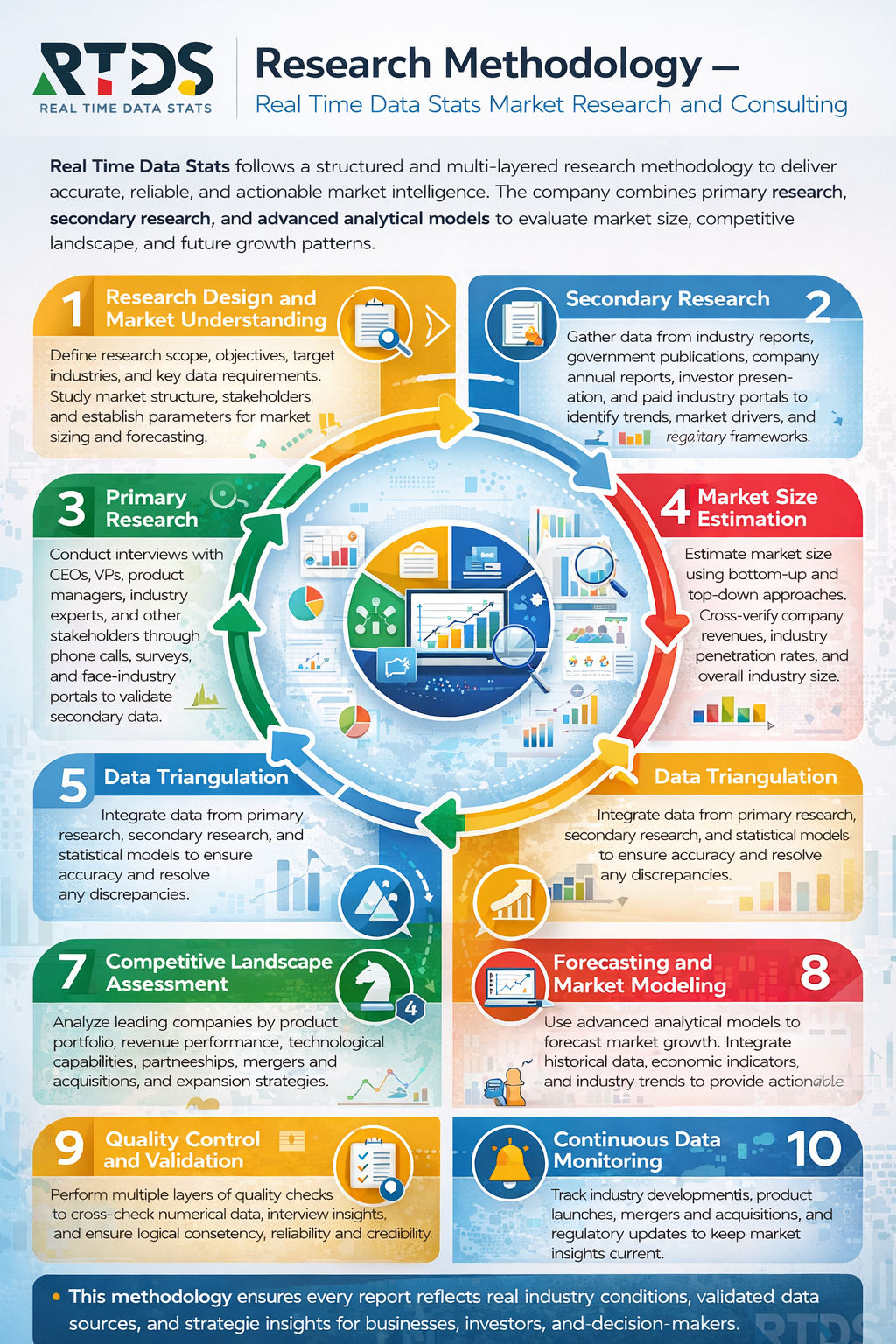
Research Methodology
- Primary Research
- Secondary Research
- Data Triangulation
- Market Estimation Model
- Forecasting Framework
- Validation Process
Market Overview
- Industry Evolution
- Value Chain Analysis
- Supply Chain Overview
- Technology Landscape
- Regulatory Environment
- Investment Landscape
Market Dynamics
- Growth Drivers
- Market Restraints
- Emerging Opportunities
- Key Challenges
Innovation Trends
- Adoption Barriers
- Competitive Landscape
- Market Share Analysis
Company Profiling
- Product Portfolio Analysis
- Strategic Developments
- Mergers and Acquisitions
- Partnerships and Collaborations
Urban Vertical Farming Automation Market Segmentation Analysis
- By Type
- Climate Control Systems
- Lighting Automation Systems
- Irrigation Automation Systems
- Nutrient Management Systems
- Environmental Monitoring Systems
- Robotic Harvesting Systems
- Seeding and Transplanting Automation
- Vertical Rack and Conveyor Systems
- Control Software and Analytics
- Integrated Automation Solutions
- By Application
- Leafy Greens Production
- Fruit Crop Production
- Herb Cultivation
- Medicinal Plant Cultivation
- Ornamental Plant Production
- Research and Development Facilities
- Commercial Urban Farms
- Food Retail Integration
- Institutional Farming
- Smart City Agriculture Projects
- By Component
- Hardware
- Software
- Services
- By Farm Size
- Small-Scale Farms
- Medium-Scale Farms
- Large-Scale Farms
- By Deployment Mode
- On-Premises
- Cloud-Based
- By Growing System
- Hydroponics
- Aeroponics
- Aquaponics
- By End User
- Commercial Growers
- Government and Municipal Bodies
- Educational Institutions
- Residential Users
- By Automation Level
- Semi-Automated Systems
- Fully Automated Systems
- By Distribution Channel
- Direct Sales
- Distributors and Integrators
Regional Market Analysis
- North America Market Insights
- Europe Market Insights
- Asia Pacific Market Insights
- Middle East & Africa Market Insights
- Latin America Market Insights
Investment and Funding Analysis
- Venture Capital Trends
- Government Grants
- Corporate Investments
- Startup Ecosystem
- ROI Analysis
Technology Advancements
- AI Integration
- IoT Deployment
- Robotics Innovations
- Data Analytics Platforms
- Edge Computing Adoption
- Sustainability and ESG Impact
Energy Efficiency
- Water Optimization
- Carbon Footprint Reduction
- Waste Management
- Circular Economy Models
Future Outlook
- Short-Term Projections
- Mid-Term Forecast
- Long-Term Scenario Analysis
- Disruptive Innovations
- Strategic Recommendations
Conclusion
- Market summary
- Key findings
- Strategic insights
Appendix
- Abbreviations
- Glossary
- List of Companies Profiled
- Data Sources
- Methodology Details
- Disclaimer
List of Tables
- Table:1: Global Market Size Overview
- Table:2: Market Growth Rate by Region
- Table:3: Market Share by Type
- Table:4: Market Share by Application
- Table:5: Market Share by Component
- Table:6: Market Size by Farm Size
- Table:7: Deployment Mode Analysis
- Table:8: Growing System Revenue Distribution
- Table:9: End User Revenue Analysis
- Table:10: Automation Level Comparison
- Table:11: Distribution Channel Revenue Split
- Table:12: Regional Market Forecast
- Table:13: Competitive Landscape Snapshot
- Table:14: Investment and Funding Overview
- Table:15: Technology Adoption Matrix
List of Figures
- Figure:1: Urban Vertical Farming Automation Market Overview
- Figure:2: Market Value Chain Structure
- Figure:3: Industry Ecosystem Map
- Figure:4: Market Dynamics Framework
- Figure:5: Growth Drivers Impact Analysis
- Figure:6: Segmentation by Type
- Figure:7: Segmentation by Application
- Figure:8: Segmentation by Component
- Figure:9: Segmentation by Farm Size
- Figure:10: Deployment Mode Distribution
- Figure:11: Growing System Analysis
- Figure:12: End User Segmentation
- Figure:13: Automation Level Comparison
- Figure:14: Regional Market Share Analysis
- Figure:15: Future Growth Outlook Chart
Urban Vertical Farming Automation Market Key Factors
Drivers:
- Increasing urban populations intensify demand for local food.
- Rising consumer preference for fresh, pesticide-free produce boosts adoption.
- Advancements in AI and robotics enhance farm efficiency and yield.
Restraints:
- High initial capital investment limits market entry.
- Technical complexities and a skilled labor shortage hinder operations.
- Significant energy consumption raises operational costs and environmental concerns.
Opportunities:
- Integrating renewable energy sources reduces carbon footprint and costs.
- Developing scalable, plug-and-play systems opens the market to new entrants.
- Data analytics and IoT create new revenue streams through predictive insights.
Challenges:
- Achieving consistent profitability and return on investment pressures operators.
- Navigating diverse and evolving urban regulations slows deployment.
- Managing crop diversity with automated systems requires ongoing technical adaptation.
Urban Vertical Farming Automation Market Key Regional Trends
North America:
- Major technology firms invest heavily in AI-driven automation and data platforms.
- Large-scale vertical farms prioritize automation to address high labor costs.
- Retail and restaurant chains directly partner with farms for transparent supply chains.
Europe:
- Strict sustainability regulations drive adoption of energy-efficient, closed-loop systems.
- Research focuses on automating diverse crops, including fruits and vegetables, beyond leafy greens.
- Urban redevelopment projects frequently incorporate vertical farming modules.
Asia-Pacific:
- Governments actively fund urban agriculture to enhance food security in dense cities.
- Manufacturers develop cost-effective, modular automation solutions for widespread adoption.
- Vertical farms integrate directly into hyper-local retail and e-commerce delivery networks.
Frequently Asked Questions
Key Questions Answered
- What is the size and growth rate of the market industry?
- What are the main drivers influencing market growth trends?
- What are the key challenges and restraints faced by the market?
- What are the emerging trends and opportunities shaping the market?
- Who are the top players, and what strategies drive their success?
- What are the customer demographics and their buying behaviors?
- What are the key market segments, and what is their scope?
- What are the geographical dynamics, and which region dominates?
- What are the market forecasts and projections for the next decade?
- What regulatory factors are critical to consider for market growth?
Why Choose our Company?
- Major facts and stats backing every report we offer.
- Comprehensive analysis tailored to your business needs.
- Accurate insights backed by extensive market research.
- Expert support to address your queries promptly.
- Data-driven strategies for better decision-making.
- In-depth reports with actionable
recommendations. - Reliable statistics from trusted industry
sources. - Customizable reports to suit your specific goals.
- Unmatched quality and precision in market analysis.
- Competitive pricing with premium content delivery.
Share your experience!
We value you feedback. Please take a moment to review your experience with us.