
According to insights from Real Time Data Stats, the Urban Air Pollution Forecasting Market was valued at USD 0.779 billion in 2025. It is expected to grow from USD 0.838 billion in 2026 to USD 1.381 billion by 2033, registering a CAGR of 8.0% during the forecast period (2026–2033).
MARKET SIZE AND SHARE
The global urban air pollution forecasting market is driven by stringent environmental regulations and rising health consciousness. Market share is concentrated among key technology and environmental solution providers, with North America and Europe historically holding dominant positions due to early adoption of monitoring systems and supportive government policies.
The competitive landscape features a mix of established meteorological firms, specialized AI analytics startups, and large industrial conglomerates. Leading players are leveraging advanced technologies, such as IoT sensor networks and machine learning, to capture greater market share. The Asia-Pacific region is expected to gain substantial share during the forecast period, driven by severe pollution challenges and rapid urbanization, which will spur increased investments in forecasting infrastructure and public information systems.
INDUSTRY OVERVIEW AND STRATEGY
This industry provides predictive insights into pollutant concentrations, utilizing sensor data, satellite imagery, and AI-driven models to forecast air quality. It serves critical stakeholders, including government agencies, healthcare providers, industrial operators, and the general public, aiming to mitigate health risks and ensure regulatory compliance. The core value proposition lies in transforming raw environmental data into actionable intelligence for proactive decision-making and public health advisories in increasingly congested urban landscapes worldwide.
Strategic imperatives for market players center on technological differentiation and strategic partnerships. Key strategies involve developing proprietary, high-accuracy forecasting algorithms and integrating hyper-local sensor data. Companies are forming alliances with municipal governments, smart city developers, and health organizations to embed their solutions into public warning systems and urban planning frameworks. Success hinges on offering scalable, real-time platforms that combine monitoring with predictive analytics and actionable mitigation recommendations.
REGIONAL TRENDS AND GROWTH
Regionally, Asia-Pacific exhibits the strongest growth trajectory, driven by megacities grappling with severe PM2.5 and NO2 pollution, prompting government mandates for forecasting. Europe maintains steady growth, focused on achieving EU Green Deal objectives with advanced, cross-border monitoring networks. North America sees expansion through public-private partnerships and smart city initiatives, while the Middle East & Africa region shows emerging potential, particularly in monitoring dust and sandstorm events.
Primary growth drivers include escalating urban health concerns, stringent global air quality standards, and advancements in AI and big data analytics. Significant restraints involve high deployment costs for sensor networks and data interoperability challenges. Opportunities arise from integrating forecasts with urban mobility and IoT platforms, while key challenges encompass ensuring model accuracy amidst changing climate patterns and securing sustained public funding for monitoring infrastructure in developing economies.
URBAN AIR POLLUTION FORECASTING MARKET SEGMENTATION ANALYSIS
BY TYPE:
Short-term and real-time forecasting dominate this segment due to rising demand for immediate air quality alerts, emergency response systems, and public health protection. Governments, smart cities, and transportation authorities rely heavily on accurate hourly and daily forecasts to manage traffic flows, issue pollution warnings, and regulate industrial activities. Growing urbanization, climate variability, and increasing frequency of pollution spikes have accelerated adoption of short-term predictive models using AI, IoT, and high-resolution sensor networks.
Long-term and probabilistic forecasting segments are gaining importance for policy formulation, urban planning, and environmental sustainability strategies. These forecasting models support infrastructure planning, emission control regulations, and climate adaptation initiatives. Integration of meteorological data, satellite imagery, and machine learning algorithms enhances long-range prediction accuracy. Governments and environmental agencies increasingly adopt these models to design pollution mitigation strategies, assess long-term exposure risks, and implement sustainable development programs for urban resilience.
BY APPLICATION:
Government and public agencies represent the largest application segment, driven by increasing regulatory requirements, public health monitoring initiatives, and smart governance programs. Urban authorities utilize forecasting systems to establish pollution alerts, regulate vehicular traffic, control industrial emissions, and implement emergency response mechanisms. Rising public awareness, stricter air quality standards, and political focus on sustainable urban development are significantly boosting investments in air pollution forecasting technologies.
Smart cities, transportation management, healthcare, and environmental research sectors are witnessing rapid growth due to digital transformation and climate action initiatives. Smart city projects integrate air quality forecasting with traffic control, energy optimization, and public safety platforms. Healthcare institutions depend on accurate forecasts to predict respiratory disease outbreaks and hospital admission trends. Research organizations increasingly use predictive analytics to study pollution patterns, climate change impacts, and long-term environmental risks.
BY COMPONENT:
Software solutions dominate the market due to increasing demand for advanced analytics platforms, AI-based prediction engines, and real-time monitoring dashboards. Cloud-based software platforms enable centralized data processing, predictive modeling, and visualization, supporting scalable and cost-efficient deployments. Growing adoption of big data analytics, machine learning algorithms, and decision-support systems is enhancing forecasting accuracy and usability, making software solutions the core revenue contributor within this segment.
Hardware components, including sensors, monitoring stations, and IoT devices, play a critical role in data collection and real-time monitoring. Continuous technological advancements in low-cost sensors, remote sensing equipment, and satellite communication technologies are improving data accuracy and spatial coverage. Additionally, consulting services, maintenance support, and system integration solutions are gaining momentum, as organizations require expert assistance for system deployment, calibration, customization, and operational optimization.
BY TECHNOLOGY:
Artificial intelligence and machine learning technologies dominate the market due to their superior predictive capabilities, adaptive learning functions, and high computational efficiency. These technologies enable complex pattern recognition, anomaly detection, and real-time prediction, improving forecast accuracy. The integration of deep learning models with meteorological data, traffic information, and satellite imagery allows highly precise urban air pollution forecasting, supporting proactive policy decisions and real-time public alerts.
IoT, big data analytics, remote sensing, and GIS technologies significantly complement AI-driven forecasting systems. IoT networks facilitate continuous data collection from distributed sensors, while big data platforms process large-scale datasets efficiently. Remote sensing and GIS technologies enable spatial visualization and pollution dispersion modeling, supporting urban planning and environmental monitoring. Combined technological integration is enhancing system intelligence, scalability, and operational efficiency across smart city ecosystems.
BY END USER:
Government authorities constitute the largest end-user group, driven by regulatory mandates, national air quality monitoring programs, and environmental compliance requirements. Public sector investments in smart infrastructure, pollution control policies, and climate resilience initiatives significantly drive adoption. These users require robust forecasting solutions for city-wide pollution management, emergency preparedness, and public awareness campaigns, making them the primary revenue contributors in the global market.
Research institutions, environmental agencies, industrial enterprises, and healthcare organizations are emerging as high-growth end users. Industrial operators deploy forecasting systems to optimize production processes, minimize emission levels, and comply with environmental regulations. Healthcare institutions leverage air quality predictions for disease forecasting and patient risk management. Commercial enterprises adopt predictive platforms for operational safety, workforce protection, and sustainability reporting, expanding the market’s commercial footprint.
BY DEPLOYMENT MODE:
Cloud-based deployment dominates the market due to its scalability, cost-effectiveness, and remote accessibility. Cloud platforms support centralized data processing, seamless system updates, and advanced analytics capabilities. Organizations prefer cloud deployment for its reduced infrastructure costs, faster implementation timelines, and improved system flexibility. Growing adoption of smart city platforms, real-time monitoring systems, and AI-based analytics further strengthens cloud-based solutions as the preferred deployment model.
On-premise and hybrid deployment models are gaining traction among government agencies, defense organizations, and large enterprises requiring high data security, system control, and regulatory compliance. Hybrid models combine cloud flexibility with local infrastructure reliability, supporting mission-critical applications. Edge-based and mobile-based deployments are also emerging, driven by the need for low-latency data processing, real-time alerts, and decentralized monitoring in high-risk urban zones.
BY POLLUTANT TYPE:
PM2.5 and PM10 segments dominate due to their significant health implications and widespread regulatory monitoring requirements. Fine particulate matter contributes to respiratory disorders, cardiovascular diseases, and reduced life expectancy, making it the primary focus of urban pollution control strategies. Governments and healthcare institutions prioritize predictive monitoring of particulate matter to implement early warning systems, reduce public exposure, and improve urban air quality management programs.
Nitrogen oxides, sulfur dioxide, ozone, and carbon monoxide segments are experiencing steady growth due to increasing industrial emissions and vehicle exhaust. Forecasting these pollutants enables regulatory enforcement, emission reduction planning, and urban traffic management. Advanced sensor networks and atmospheric modeling tools are improving detection accuracy, enabling authorities to design targeted pollution mitigation strategies. Growing environmental awareness further drives adoption across industrial and transportation sectors.
BY FORECAST HORIZON:
Hourly and daily forecasting dominate due to rising demand for real-time air quality alerts, traffic regulation, and emergency response planning. Urban authorities rely on short-term forecasts to issue public warnings, manage traffic flows, and regulate industrial operations during pollution spikes. Continuous monitoring combined with predictive analytics ensures rapid decision-making, minimizing public health risks and enabling immediate mitigation actions during critical pollution events.
Weekly, monthly, seasonal, and annual forecasting segments support long-term planning, infrastructure development, and climate policy formulation. These forecasts enable policymakers to assess long-term pollution trends, evaluate regulatory effectiveness, and develop sustainable urban development strategies. Advanced simulation models and machine learning algorithms enhance forecast reliability, allowing accurate long-range predictions. Growing emphasis on climate resilience and environmental sustainability is driving adoption of long-term forecasting solutions.
BY DATA SOURCE:
Ground-based sensors represent the largest data source due to their high accuracy, continuous monitoring capability, and localized measurement efficiency. Advanced sensor networks deployed across urban zones provide granular pollution data, supporting high-resolution predictive modeling. Integration with meteorological stations, traffic monitoring systems, and industrial emission databases enhances forecasting accuracy and reliability, enabling comprehensive pollution trend analysis and real-time alert generation.
Satellite data and public databases are gaining traction due to their broad spatial coverage and long-term historical data availability. Remote sensing technologies provide large-scale pollution mapping and atmospheric modeling capabilities. Traffic data and industrial emission records further support emission source identification and dispersion modeling. Combined multi-source data integration significantly improves forecasting precision, helping policymakers and researchers develop data-driven pollution mitigation strategies.
RECENT DEVELOPMENTS
- In Jan 2024: IBM and NASA expanded their geospatial AI partnership, launching a new foundation model to improve climate and pollution forecasting accuracy for urban areas globally.
- In Mar 2024: Siemens AG acquired Breeze Technologies, a startup specializing in hyperlocal air quality sensors and forecasting software, to strengthen its smart city and building technology portfolio.
- In Aug 2024: The European Space Agency (ESA) initiated the ""Digital Twin Earth"" project, integrating high-resolution satellite data with AI to create real-time, predictive air quality models for major European cities.
- In Nov 2024: Aclima, in partnership with Google, launched a major street-level mobile mapping campaign across 50 global cities, providing block-by-block pollution data to enhance forecasting models.
- In Feb 2025: Plume Labs unveiled ""Flow Pro,"" a new AI-powered software-as-a-service platform for municipalities, offering 72-hour, street-level pollution forecasts to manage traffic and industrial activity.
KEY PLAYERS ANALYSIS
- IBM
- Siemens AG
- Plume Labs
- Aclima Inc.
- BreezoMeter
- Descartes Labs
- Aeroqual
- Vaisala
- AccuWeather
- The Weather Company
- ClimaCell (now Tomorrow.io)
- PurpleAir
- Teledyne Technologies
- Horiba, Ltd.
- ENVEA
- Kaiterra
- EarthSense
- Ambee
- 3M
- General Electric (GE)
Urban Air Pollution Forecasting Market Segmentation
By Type:
- Short-Term Forecasting
- Medium-Term Forecasting
- Long-Term Forecasting
- Real-Time Forecasting
- Deterministic Forecasting
- Probabilistic Forecasting
By Application:
- Government & Public Agencies
- Smart Cities
- Transportation & Traffic Management
- Industrial Monitoring
- Healthcare & Public Health
- Environmental Research
By Component:
- Software
- Hardware
- Sensors
- Data Analytics Platforms
- Cloud Services
- Consulting Services
By Technology:
- Artificial Intelligence
- Machine Learning
- Internet of Things (IoT)
- Big Data Analytics
- Remote Sensing
- Geographic Information Systems (GIS)
By End User:
- Government Authorities
- Research Institutions
- Environmental Agencies
- Industrial Enterprises
- Healthcare Organizations
- Commercial Enterprises
By Deployment Mode:
- Cloud-Based
- On-Premise
- Hybrid
- Web-Based
- Mobile-Based
- Edge-Based
By Pollutant Type:
- 5
- PM10
- Nitrogen Oxides (NOx)
- Sulfur Dioxide (SO₂)
- Ozone (O₃)
- Carbon Monoxide (CO)
By Forecast Horizon:
- Hourly
- Daily
- Weekly
- Monthly
- Seasonal
- Annual
By Data Source:
- Ground-Based Sensors
- Satellite Data
- Meteorological Stations
- Traffic Data
- Industrial Emission
By Geography:
- North America (USA, Canada, Mexico)
- Europe (UK, Germany, France, Italy, Spain, Rest of Europe)
- Asia-Pacific (China, Japan, Australia, South Korea, India, Rest of Asia-Pacific)
- South America (Brazil, Argentina, Rest of South America)
- Middle East and Africa (GCC Countries, South Africa, Rest of MEA)
Urban Air Pollution Forecasting Market: Table of Contents
Introduction
- Market Definition
- Scope of the Study
- Research Objectives
- Market Taxonomy
- Study Assumptions
- Limitations
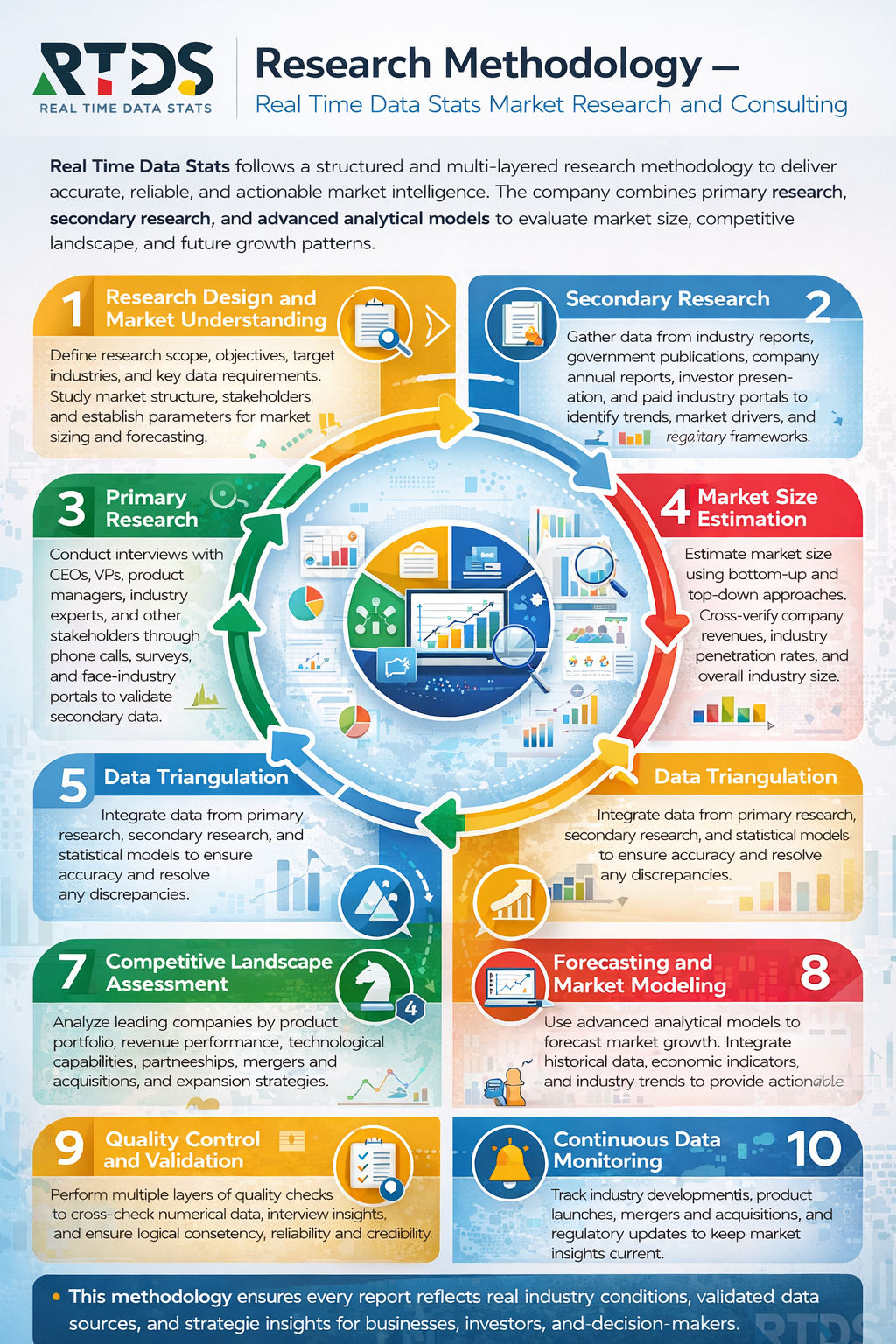
Research Methodology
- Primary Research
- Secondary Research
- Data Collection Techniques
- Data Validation
- Market Estimation Approach
- Forecasting Model
Triangulation Method
- Quality Control
- Executive Summary
- Market Snapshot
- Key Findings
Market Outlook
- Strategic Insights
- Market Overview
- Industry Ecosystem
- Value Chain Analysis
Market Dynamics
- Drivers
- Restraints
- Opportunities
- Challenges
Impact Analysis
- Regulatory Framework
- Environmental Policies
- Market Dynamics Analysis
- Demand-Side Analysis
- Supply-Side Analysis
- Pricing Analysis
- Technology Trends
Innovation Landscape
- Adoption Trends
- Impact of Urbanization
- Impact of Climate Change
Urban Air Pollution Forecasting Market Segmentation
- By Type:
- Short-Term Forecasting
- Medium-Term Forecasting
- Long-Term Forecasting
- Real-Time Forecasting
- Deterministic Forecasting
- Probabilistic Forecasting
- By Application:
- Government & Public Agencies
- Smart Cities
- Transportation & Traffic Management
- Industrial Monitoring
- Healthcare & Public Health
- Environmental Research
- By Component:
- Software
- Hardware
- Sensors
- Data Analytics Platforms
- Cloud Services
- Consulting Services
- By Technology:
- Artificial Intelligence
- Machine Learning
- Internet of Things (IoT)
- Big Data Analytics
- Remote Sensing
- Geographic Information Systems (GIS)
- By End User:
- Government Authorities
- Research Institutions
- Environmental Agencies
- Industrial Enterprises
- Healthcare Organizations
- Commercial Enterprises
- By Deployment Mode:
- Cloud-Based
- On-Premise
- Hybrid
- Web-Based
- Mobile-Based
- Edge-Based
- By Pollutant Type:
- 5
- PM10
- Nitrogen Oxides (NOx)
- Sulfur Dioxide (SO₂)
- Ozone (O₃)
- Carbon Monoxide (CO)
- By Forecast Horizon:
- Hourly
- Daily
- Weekly
- Monthly
- Seasonal
- Annual
- By Data Source:
- Ground-Based Sensors
- Satellite Data
- Meteorological Stations
- Traffic Data
- Industrial Emission Data
- Public Databases
Regional Market Analysis
- North America Market Overview
- Europe Market Overview
- Asia Pacific Market Overview
- Latin America Market Overview
- Middle East Market Overview
- Africa Market Overview
Competitive Landscape
- Market Share Analysis
- Competitive Benchmarking
- Strategic Developments
- Mergers & Acquisitions
- Partnerships & Collaborations
- Product Launches
- Innovation Strategies
Company Profiles
- Business Overview
- Product Portfolio
- Financial Performance
- SWOT Analysis
- Strategic Initiatives
- Investment & Opportunity Analysis
- Emerging Opportunities
Investment Hotspots
- Venture Capital Trends
- Funding Landscape
- Startup Ecosystem
Future Outlook
- Market Forecast
- Technology Roadmap
- Growth Strategies
- Long-Term Trends
Conclusion
- Market summary
- Key findings
- Strategic insights
Appendix
- Abbreviations
- Definitions
- Data Sources
- Methodology Notes
- Disclaimer
List of Tables
- Table:1: Global Urban Air Pollution Forecasting Market Size Overview
- Table:2: Market Segmentation by Type
- Table:3: Market Segmentation by Application
- Table:4: Market Segmentation by Component
- Table:5: Market Segmentation by Technology
- Table:6: Market Segmentation by End User
- Table:7: Market Segmentation by Deployment Mode
- Table:8: Market Segmentation by Pollutant Type
- Table:9: Market Segmentation by Forecast Horizon
- Table:10: Market Segmentation by Data Source
- Table:11: Market Segmentation by Region
- Table:12: Regional Market Revenue Comparison
- Table:13: Competitive Market Share Analysis
- Table:14: Key Company Financial Performance
- Table:15: Investment & Opportunity Mapping
List of Figures
- Figure:1: Urban Air Pollution Forecasting Market Ecosystem
- Figure:2: Research Methodology Framework
- Figure:3: Market Dynamics Overview
- Figure:4: Value Chain Analysis
- Figure:5: Market Segmentation Structure
- Figure:6: Technology Landscape Mapping
- Figure:7: Deployment Mode Distribution
- Figure:8: Regional Market Contribution
- Figure:9: Competitive Landscape Matrix
- Figure:10: Market Share by Key Players
- Figure:11: Investment Trend Analysis
- Figure:12: Growth Opportunity Mapping
- Figure:13: Forecast Model Architecture
- Figure:14: Strategic Development Timeline
- Figure:15: Future Market Outlook Projection
Urban Air Pollution Forecasting Market Key Factors
Drivers:
- Governments enact stricter air quality regulations.
- Rising public health awareness increases demand for personalized air quality information.
- Advancements in IoT and sensor networks improve real-time data collection.
Restraints:
- High costs hinder the deployment of advanced monitoring infrastructure.
- Data inconsistencies and gaps compromise forecast accuracy in some regions.
- Complex atmospheric chemistry challenges model precision.
Opportunities:
- AI and machine learning integration enhances predictive model capabilities.
- Smart city initiatives create new integration partnerships.
- Growing industrial adoption opens commercial and compliance markets.
Challenges:
- Integrating diverse data sources from multiple providers remains difficult.
- Scalability issues affect reliable forecasting in developing urban areas.
- The lack of universal standards hinders global solution adoption.
Urban Air Pollution Forecasting Market Key Regional Trends
North America:
- Governments and businesses increasingly fuse health data with pollution forecasts.
- Commercial providers expand hyper-local, street-level air quality services.
- Regulations push for integrating forecasts into public transit and urban planning.
Europe:
- The EU mandates broader use of forecasts for public warning systems.
- A strong focus develops on tracking cross-border pollutant transport.
- Cities actively link pollution data with carbon emission monitoring.
Asia Pacific:
- Rapid industrialization and dense cities drive urgent investments in forecasting systems.
- Mobile apps providing real-time pollution alerts see massive user growth.
- Governments pilot forecasting to manage traffic and industrial activity.
Latin America:
- Major cities first deploy monitoring networks to establish baseline data.
- Public initiatives prioritize forecasting to protect vulnerable populations.
- Solutions gradually expand from capital cities to secondary urban areas.
Middle East & Africa:
- Monitoring efforts focus heavily on particulate matter from dust storms.
- International partnerships fund initial forecasting system deployments.
- A growing recognition links air quality forecasts with tourism and economic health.
Frequently Asked Questions
Key Questions Answered
- What is the size and growth rate of the market industry?
- What are the main drivers influencing market growth trends?
- What are the key challenges and restraints faced by the market?
- What are the emerging trends and opportunities shaping the market?
- Who are the top players, and what strategies drive their success?
- What are the customer demographics and their buying behaviors?
- What are the key market segments, and what is their scope?
- What are the geographical dynamics, and which region dominates?
- What are the market forecasts and projections for the next decade?
- What regulatory factors are critical to consider for market growth?
Why Choose our Company?
- Major facts and stats backing every report we offer.
- Comprehensive analysis tailored to your business needs.
- Accurate insights backed by extensive market research.
- Expert support to address your queries promptly.
- Data-driven strategies for better decision-making.
- In-depth reports with actionable
recommendations. - Reliable statistics from trusted industry
sources. - Customizable reports to suit your specific goals.
- Unmatched quality and precision in market analysis.
- Competitive pricing with premium content delivery.
Share your experience!
We value you feedback. Please take a moment to review your experience with us.