
According to insights from Real Time Data Stats, the Space Microbial Systems Market was valued at USD 117 million in 2025. It is expected to grow from USD 140 million in 2026 to USD 490 million by 2033, registering a CAGR of 19.5% during the forecast period (2026–2033).
MARKET SIZE AND SHARE
The Space Microbial Systems market shifts from a niche focus into a growing commercial sector. Rising lunar and Martian missions drive demand for controlled microbial solutions. Investment flows into biomanufacturing and life support systems that enable long-term human survival beyond Earth. This shift builds a strong foundation for a new space economy segment centered on sustainability, resource recycling, and advanced biological systems.
Market share stays concentrated among major aerospace contractors, biotechnology firms, and government space agencies leading innovation. Organizations like NASA and SpaceX secure large shares, while agile biotech startups expand their presence. Strategic partnerships between aerospace leaders and microbial science firms drive integration, accelerate deployment, and shape competitive advantage in this critical emerging sector.
INDUSTRY OVERVIEW AND STRATEGY
The Space Microbial Systems industry focuses on developing microbial technologies for extraterrestrial applications, including in-situ resource utilization, pharmaceuticals, and waste recycling. This sector merges advanced biotechnology with aerospace engineering, targeting the closure of life support loops and manufacturing of essentials off-planet. The overarching goal is to enable long-duration human spaceflight and habitation by creating sustainable, biologically-driven ecosystems that reduce reliance on Earth-bound supply chains for missions to the Moon, Mars, and beyond.
Core strategies involve heavy investment in research and development to engineer resilient microbial strains for harsh space conditions. Companies are pursuing collaborative frameworks, forming consortia between academic institutions, space agencies, and private firms to share risks and accelerate innovation. A key strategic pillar is the demonstration of technology readiness through orbital and lunar experiments, proving system viability to secure further governmental and venture capital funding for scaling production and integration into mission architectures.
Analyst Key Takeaways:
Space microbial systems are emerging as a mission-critical layer within the broader space biomanufacturing ecosystem, driven by the increasing complexity of long-duration missions and closed-loop habitats. Their role extends beyond basic microbial detection to integrated environmental monitoring, contamination control, and life-support system optimization. As space agencies and private operators accelerate lunar and deep-space programs, the demand for real-time, autonomous, and miniaturized microbial solutions is intensifying, positioning this niche for above-parent growth.
A key insight is the market’s dependence on dual innovation streams—advancements in space infrastructure and breakthroughs in microbial diagnostics technologies. While the space biomanufacturing domain provides the primary demand base, technology maturation from terrestrial microbiology enhances system accuracy, speed, and scalability. However, adoption remains tightly linked to mission frequency, regulatory validation, and reliability standards, making partnerships between aerospace firms and life sciences companies a critical success factor in this evolving landscape.
REGIONAL TRENDS AND GROWTH
North America commands the largest market share, fueled by NASA's Artemis program and substantial private investment from companies like SpaceX and Blue Origin. Europe follows closely, with ESA member states actively developing microbial life support systems for the Lunar Gateway. The Asia-Pacific region is an emerging high-growth area, driven by China's ambitious space station and lunar exploration initiatives, which include dedicated biological experiments to advance closed-loop ecosystem technologies for long-term missions.
Primary growth drivers include the global push for sustainable deep-space exploration and advancements in synthetic biology. Significant restraints involve high development costs, stringent planetary protection regulations, and technical challenges in microbial system reliability. Opportunities lie in creating scalable biomanufacturing platforms for space-derived materials and medicines. The foremost challenge remains ensuring system robustness and containment in variable gravity and radiation environments, requiring extensive ground and flight testing to guarantee mission safety and success.
SPACE MICROBIAL SYSTEMS MARKET SEGMENTATION ANALYSIS
BY TYPE:
The type-based segmentation of the Space Microbial Systems Market gains momentum from the rising need for self-sustaining biological systems capable of long-duration space missions. Closed-loop microbial systems dominate this segment due to their ability to recycle waste into oxygen, nutrients, and water with minimal external input. Engineered microbial consortia further accelerate adoption as they deliver predictable metabolic outputs under microgravity. Synthetic biology–based systems attract investments by offering precision control over microbial behavior in extreme space environments.
Natural microbial ecosystems and biofilm-based systems also strengthen this segment by demonstrating resilience under radiation and fluctuating pressure conditions. Genetically modified microbial systems expand rapidly as space agencies seek optimized strains for specific mission objectives. The increasing feasibility of custom-designed microbial platforms and advances in containment safety technologies continue to elevate this segment’s importance, positioning system type as a foundational determinant of market growth.
BY APPLICATION:
Application-based segmentation benefits strongly from the growing complexity of human space exploration missions. Life support and air regeneration applications lead demand as microbial systems efficiently convert carbon dioxide into oxygen. Waste recycling applications gain traction due to the necessity of minimizing payload weight and resupply missions. Space food production systems receive attention as microbes provide protein-rich, sustainable nutrition alternatives suitable for confined environments.
Water purification and radiation protection applications further strengthen this segment as microbial processes ensure potable water reuse and biological shielding. Planetary habitat sustainability applications expand rapidly, driven by lunar and Mars colonization initiatives. The increasing alignment of microbial applications with mission-critical survival functions makes application segmentation one of the most commercially influential areas in the market.
BY FUNCTION:
Functional segmentation advances due to the multifunctionality of microbial systems in space environments. Oxygen generation remains the most critical function, supporting crew survival during extended missions. Carbon dioxide fixation systems gain dominance by enabling atmospheric balance within spacecraft and habitats. Nutrient recycling functions contribute significantly by converting waste into reusable inputs, reducing dependency on Earth-based supplies.
Bioremediation and pathogen control functions experience accelerated adoption as microbial systems maintain hygienic and contamination-free environments. Resource recovery functions further enhance system efficiency by reclaiming valuable elements from waste streams. The ability of a single microbial system to perform multiple essential functions reinforces this segment’s strategic value across space mission architectures.
BY MICROORGANISM TYPE:
Microorganism-based segmentation expands as research identifies species best suited for microgravity and radiation exposure. Bacteria dominate due to their rapid reproduction rates, metabolic versatility, and ease of genetic modification. Algae gain prominence for oxygen generation and carbon sequestration, while fungi contribute to waste decomposition and structural material development.
Archaea and cyanobacteria gain increasing attention for their resilience in extreme environments. Mixed microbial communities outperform single-species systems by offering stability and redundancy. Continuous advancements in microbial selection and strain optimization reinforce this segment’s importance, making microorganism type a critical performance differentiator in system design.
BY SYSTEM COMPONENT:
Component-based segmentation grows through technological integration and system modularity. Bioreactors lead this segment as the primary operational unit for microbial cultivation. Sensors and monitoring units play a vital role by enabling real-time tracking of microbial health and environmental conditions. Control and automation modules enhance system reliability by reducing human intervention.
Nutrient delivery systems and containment units ensure precise resource distribution and biosafety compliance. Data analytics platforms strengthen decision-making by optimizing microbial performance using predictive modeling. The increasing convergence of biotechnology and digital systems drives innovation across all components, supporting scalable deployment in diverse space missions.
BY TECHNOLOGY:
Technology segmentation accelerates due to breakthroughs in biological engineering. Metabolic engineering dominates by enabling tailored microbial outputs for oxygen, food, and waste conversion. CRISPR-based modification expands rapidly as it offers high-precision genetic control. Systems biology modeling enhances predictability by simulating microbial behavior under space conditions.
AI-driven microbial optimization gains traction by improving system efficiency through adaptive learning. Lab-on-chip technologies reduce system size and energy consumption, while microgravity-adapted cultivation techniques improve survivability. The continuous evolution of enabling technologies positions this segment as a key driver of long-term market competitiveness.
BY END USER:
End-user segmentation reflects diversified demand across public and private sectors. Government space agencies lead adoption due to large-scale exploration programs and long-term mission planning. Commercial spaceflight companies accelerate market growth by integrating microbial systems into reusable spacecraft and private space stations.
Research institutes and academic centers drive innovation through experimentation and validation. Defense and aerospace organizations adopt microbial systems for resilience and autonomous operations. Space station operators rely heavily on microbial solutions for daily life-support functions. The expanding end-user base ensures steady commercialization and sustained investment across this segment.
BY MISSION TYPE:
Mission-type segmentation strengthens as exploration goals diversify beyond low Earth orbit. Low Earth orbit missions dominate early adoption due to lower risk and frequent experimentation. Lunar missions drive demand for habitat-supporting microbial systems, while Mars missions significantly elevate long-term system reliability requirements.
Deep space and interplanetary missions increase reliance on autonomous microbial systems due to extended durations. Space station missions continue to serve as testing platforms for next-generation technologies. The growing complexity and duration of missions amplify the importance of mission-specific microbial system customization.
BY DEPLOYMENT MODE:
Deployment-based segmentation evolves with mission architecture innovation. Onboard spacecraft systems dominate due to direct integration with life-support infrastructure. Space station–integrated systems benefit from continuous operation and scalability. Planetary surface installations gain importance as permanent habitats become a strategic focus.
Orbital laboratory systems enable experimentation, while modular deployable units enhance flexibility. Autonomous self-regulating systems attract strong interest as they reduce crew workload. The shift toward decentralized and adaptive deployment models strengthens this segment’s role in future space infrastructure development.
RECENT DEVELOPMENTS
- In Jan 2024: NASA awarded new grants for the Biomanufacturing Consortium to develop microbes for producing nutrients and materials on Mars, accelerating in-situ resource utilization technologies.
- In Apr 2024: SpaceX's Starship test flight included a private biotech payload from Ginkgo Bioworks to study yeast strain resilience in deep space radiation and microgravity conditions.
- In Aug 2024: The European Space Agency (ESA) and Airbus successfully concluded the ""BioPilot"" experiment on the ISS, demonstrating automated bacterial production of pharmaceuticals in orbit.
- In Nov 2024: Startup Cosmiculture announced Series B funding of $30M to scale its proprietary microbial reactors designed for converting lunar regolith into breathable oxygen.
- In Feb 2025: Axiom Space and BioMADE revealed a partnership to integrate a microbial waste recycling system into the design of their commercial space station modules.
KEY PLAYERS ANALYSIS
- NASA
- SpaceX
- ESA (European Space Agency)
- Airbus Defence and Space
- Lockheed Martin
- Northrop Grumman
- Boeing
- Sierra Space
- Axiom Space
- Blue Origin
- Ginkgo Bioworks
- BioMADE
- Cosmiculture
- OffWorld
- Relativity Space
- JAXA (Japan Aerospace Exploration Agency)
- Roscosmos
- CNSA (China National Space Administration)
- KBR
- Nanoracks
Space Microbial Systems Market Segmentation Analysis
By Type:
- Closed-loop microbial systems
- Engineered microbial consortia
- Synthetic biology–based systems
- Natural microbial ecosystems
- Biofilm-based systems
- Genetically modified microbial systems
By Application:
- Life support and air regeneration
- Waste recycling and decomposition
- Space food production
- Water purification and recycling
- Radiation protection solutions
- Planetary habitat sustainability
By Function:
- Oxygen generation
- Carbon dioxide fixation
- Nutrient recycling
- Bioremediation
- Pathogen control
- Resource recovery
By Microorganism Type:
- Bacteria
- Algae
- Fungi
- Archaea
- Cyanobacteria
- Mixed microbial communities
By System Component:
- Bioreactors
- Sensors and monitoring units
- Control and automation modules
- Nutrient delivery systems
- Containment and shielding units
- Data analytics platforms
By Technology:
- Metabolic engineering
- CRISPR-based modification
- Systems biology modeling
- AI-driven microbial optimization
- Lab-on-chip technologies
- Microgravity-adapted cultivation
By End User:
- Government space agencies
- Commercial spaceflight companies
- Space research institutes
- Defense and aerospace organizations
- Academic research centers
- Space station operators
By Mission Type:
- Low Earth orbit missions
- Lunar missions
- Mars missions
- Deep space exploration missions
- Space station missions
- Interplanetary travel missions
By Deployment Mode:
- Onboard spacecraft systems
- Space station–integrated systems
- Planetary surface installations
- Orbital laboratory systems
- Modular deployable units
- Autonomous self-regulating systems
By Geography:
- North America (USA, Canada, Mexico)
- Europe (UK, Germany, France, Italy, Spain, Rest of Europe)
- Asia-Pacific (China, Japan, Australia, South Korea, India, Rest of Asia-Pacific)
- South America (Brazil, Argentina, Rest of South America)
- Middle East and Africa (GCC Countries, South Africa, Rest of MEA)
Table of Contents
- Executive Summary
1.1 Market Overview
1.2 Key Findings
1.3 Analyst Key Takeaways
1.4 Strategic Recommendations
- Market Introduction
2.1 Definition and Scope
2.2 Market Taxonomy
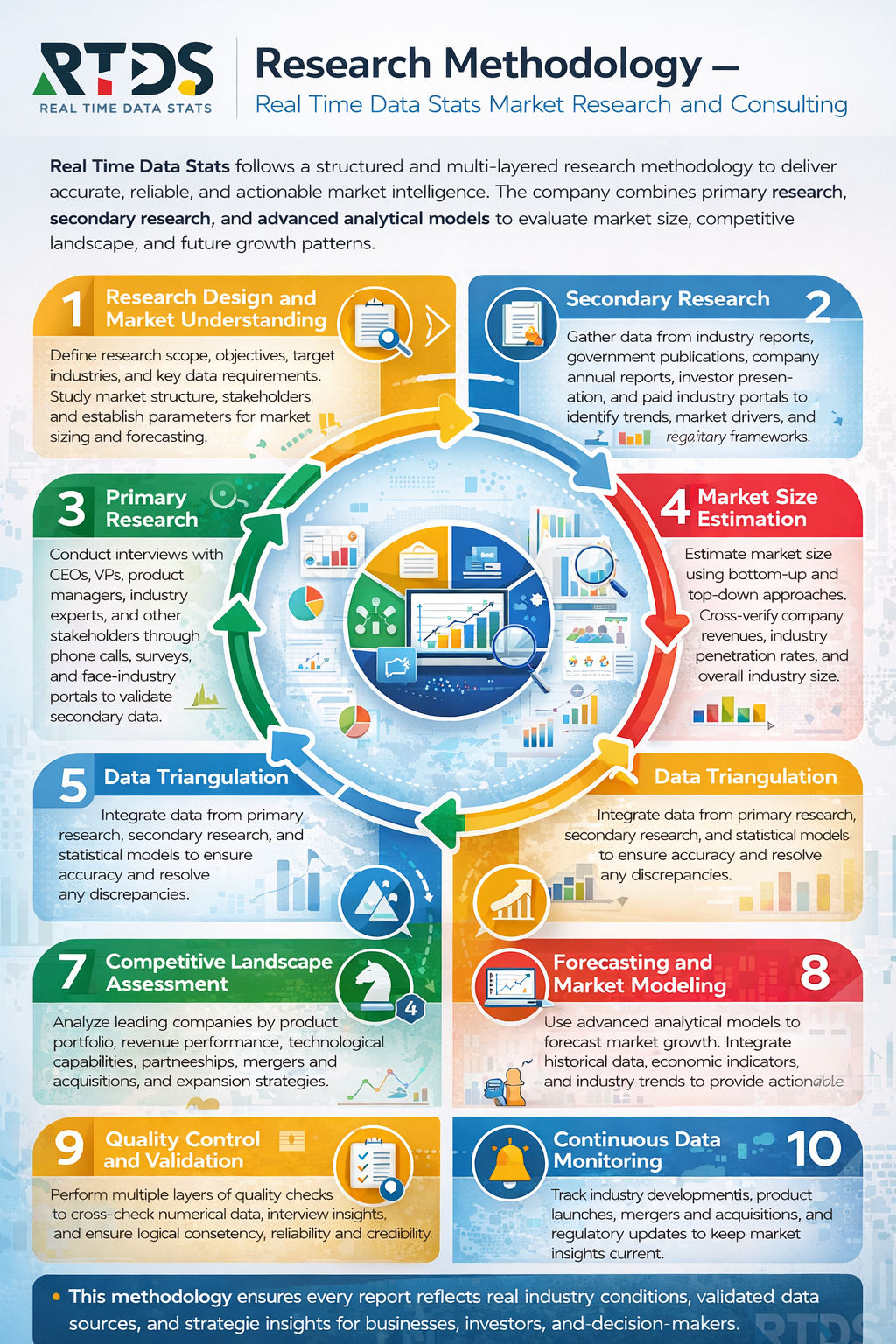
2.3 Research Methodology
2.4 Assumptions and Limitations
- Market Dynamics
3.1 Drivers
3.2 Restraints
3.3 Opportunities
3.4 Challenges
3.5 Emerging Trends
- Industry Ecosystem Analysis
4.1 Value Chain Analysis
4.2 Technology Landscape
4.3 Regulatory Framework
4.4 Competitive Benchmarking
- Market Segmentation Analysis
- 1 By Type
5.1.1 Closed-loop Microbial Systems
5.1.2 Engineered Microbial Consortia
5.1.3 Synthetic Biology–based Systems
5.1.4 Natural Microbial Ecosystems
5.1.5 Biofilm-based Systems
5.1.6 Genetically Modified Microbial Systems
- 2 By Application
5.2.1 Life Support and Air Regeneration
5.2.2 Waste Recycling and Decomposition
5.2.3 Space Food Production
5.2.4 Water Purification and Recycling
5.2.5 Radiation Protection Solutions
5.2.6 Planetary Habitat Sustainability
- 3 By Function
5.3.1 Oxygen Generation
5.3.2 Carbon Dioxide Fixation
5.3.3 Nutrient Recycling
5.3.4 Bioremediation
5.3.5 Pathogen Control
5.3.6 Resource Recovery
- 4 By Microorganism Type
5.4.1 Bacteria
5.4.2 Algae
5.4.3 Fungi
5.4.4 Archaea
5.4.5 Cyanobacteria
5.4.6 Mixed Microbial Communities
- 5 By System Component
5.5.1 Bioreactors
5.5.2 Sensors and Monitoring Units
5.5.3 Control and Automation Modules
5.5.4 Nutrient Delivery Systems
5.5.5 Containment and Shielding Units
5.5.6 Data Analytics Platforms
- 6 By Technology
5.6.1 Metabolic Engineering
5.6.2 CRISPR-based Modification
5.6.3 Systems Biology Modeling
5.6.4 AI-driven Microbial Optimization
5.6.5 Lab-on-Chip Technologies
5.6.6 Microgravity-adapted Cultivation
- 7 By End User
5.7.1 Government Space Agencies
5.7.2 Commercial Spaceflight Companies
5.7.3 Space Research Institutes
5.7.4 Defense and Aerospace Organizations
5.7.5 Academic Research Centers
5.7.6 Space Station Operators
- 8 By Mission Type
5.8.1 Low Earth Orbit Missions
5.8.2 Lunar Missions
5.8.3 Mars Missions
5.8.4 Deep Space Exploration Missions
5.8.5 Space Station Missions
5.8.6 Interplanetary Travel Missions
- 9 By Deployment Mode
5.9.1 Onboard Spacecraft Systems
5.9.2 Space Station–Integrated Systems
5.9.3 Planetary Surface Installations
5.9.4 Orbital Laboratory Systems
5.9.5 Modular Deployable Units
5.9.6 Autonomous Self-regulating Systems
- 10 By Geography
5.10.1 North America
5.10.2 Europe
5.10.3 Asia-Pacific
5.10.4 South America
5.10.5 Middle East & Africa
- Regional Market Analysis
6.1 North America
6.2 Europe
6.3 Asia-Pacific
6.4 South America
6.5 Middle East & Africa
- Competitive Landscape
7.1 Market Share Analysis
7.2 Key Player Strategies
7.3 Mergers & Acquisitions
7.4 Partnerships & Collaborations
- Company Profiles
8.1 Overview
8.2 Product Portfolio
8.3 Financial Insights
8.4 Strategic Developments
- Future Outlook and Forecast
9.1 Market Forecast Analysis
9.2 Scenario Analysis
9.3 Strategic Roadmap
List of Figures
F1. Space Microbial Systems Market Structure
F2. Market Segmentation Overview
F3. Value Chain Analysis Diagram
F4. Technology Evolution Framework
F5. Market Dynamics Impact Analysis
F6. By Type – Segment Share Analysis
F7. By Application – Segment Share Analysis
F8. By Function – Segment Share Analysis
F9. By Microorganism Type – Segment Share
F10. By System Component – Architecture Diagram
F11. By Technology – Adoption Curve
F12. By End User – Demand Distribution
F13. By Mission Type – Utilization Mapping
F14. By Deployment Mode – System Integration Model
F15. Regional Market Share Analysis
F16. Competitive Positioning Matrix
F17. Growth Opportunity Mapping
F18. Future Technology Roadmap
List of Tables
T1. Market Definition and Scope
T2. Research Methodology Summary
T3. Key Assumptions and Forecast Factors
T4. Market Dynamics Summary
T5. Value Chain Stakeholders
T6. Regulatory Landscape by Region
T7. By Type – Comparative Analysis
T8. By Application – Use Case Mapping
T9. By Function – Functional Efficiency Comparison
T10. By Microorganism Type – Performance Characteristics
T11. By System Component – Component Functionality
T12. By Technology – Technology Benchmarking
T13. By End User – Adoption Trends
T14. By Mission Type – Mission Requirements Analysis
T15. By Deployment Mode – Deployment Feasibility
T16. Regional Market Comparison
T17. Competitive Benchmarking of Key Players
T18. Strategic Initiatives by Companies
T19. Partnership and Collaboration Analysis
T20. Future Opportunity Assessment
Space Microbial Systems Market Key Factors
Drivers:
- Increasingly ambitious space exploration missions create demand for sustainable life support.
- Governments and private entities invest heavily in developing biotechnologies for space.
- Advancing synthetic biology enables the engineering of microbes for specific space-based applications.
Restraints:
- High research and development costs challenge widespread commercialization.
- Strict planetary protection protocols limit testing and deployment scenarios.
- Uncertain long-term effects of space conditions on microbial systems pose scientific and regulatory risks.
Opportunities:
- In-situ resource utilization (ISRU) initiatives create a major application for microbial mining and manufacturing.
- Rising demand for space-based pharmaceutical production opens new revenue streams.
- Growing interest in closed-loop ecosystems for long-duration missions drives innovation.
Challenges:
- Engineering reliable and robust systems for extreme microgravity and radiation environments remains difficult.
- Public and scientific concerns regarding contamination and ethical use require careful management.
- Scaling lab-proven concepts to operational, industrial-scale systems presents significant technical hurdles.
Space Microbial Systems Market Key Regional Trends
North America:
- NASA and DARPA programs aggressively fund research into microbial life support and resource utilization.
- Leading private space companies partner with biotech firms to develop in-space manufacturing solutions.
- Strong venture capital investment flows into startups focused on astrobiology and space synthetic biology.
Europe:
- ESA-led consortia prioritize circular system research, integrating microbial processes into habitat design.
- Academic institutions excel in fundamental research on extremophiles and space bioprocessing.
- Regulatory frameworks for space biotechnology begin development, focusing on safety and ethics.
Asia-Pacific:
- National space agencies rapidly expand capabilities, increasing R&D budgets for biological life support.
- Growing biotechnology sector explores dual-use applications for terrestrial and space markets.
- New national space stations and lunar mission plans generate specific requirements for microbial systems.
Rest of the World:
- Emerging space nations participate through targeted international partnerships and research collaborations.
- Focus increases on developing relevant terrestrial spin-off technologies in agriculture and waste management.
- Research entities investigate unique microbial strains from extreme environments for potential space applications.
Frequently Asked Questions
Key Questions Answered
- What is the size and growth rate of the market industry?
- What are the main drivers influencing market growth trends?
- What are the key challenges and restraints faced by the market?
- What are the emerging trends and opportunities shaping the market?
- Who are the top players, and what strategies drive their success?
- What are the customer demographics and their buying behaviors?
- What are the key market segments, and what is their scope?
- What are the geographical dynamics, and which region dominates?
- What are the market forecasts and projections for the next decade?
- What regulatory factors are critical to consider for market growth?
Why Choose our Company?
- Major facts and stats backing every report we offer.
- Comprehensive analysis tailored to your business needs.
- Accurate insights backed by extensive market research.
- Expert support to address your queries promptly.
- Data-driven strategies for better decision-making.
- In-depth reports with actionable
recommendations. - Reliable statistics from trusted industry
sources. - Customizable reports to suit your specific goals.
- Unmatched quality and precision in market analysis.
- Competitive pricing with premium content delivery.
Share your experience!
We value you feedback. Please take a moment to review your experience with us.