
According to insights from Real Time Data Stats, the Rural Broadband via Low-Orbit Satellites Market was valued at USD 5.31 billion in 2025. It is expected to grow from USD 6.05 billion in 2026 to USD 15.03 billion by 2033, registering a CAGR of 17% during the forecast period (2026–2033).
MARKET SIZE AND SHARE
The global Rural Broadband via Low-Orbit Satellites Market is led by Starlink, which holds approximately 55% share, followed by OneWeb at 25% and Amazon Kuiper at 15%. Emerging players account for the remaining 5%.
Regionally, North America leads with a 40% share, followed by Europe at 30%, Asia-Pacific at 20%, and the rest of the world at 10%. Subscription-based services generate the majority of revenue, contributing 70%, while hardware equipment accounts for 25%. Government contracts make up the remaining 5%. The enterprise segment holds a 60% share, compared to 40% from residential users.
INDUSTRY OVERVIEW AND STRATEGY
Rural Broadband via Low-Orbit Satellites Market encompasses low-latency high-speed internet connectivity delivered through LEO satellite constellations targeting underserved rural populations. Key players deploy megaconstellations comprising thousands of small satellites operating at 500-2000km altitudes. Infrastructure investments exceed USD 50 billion industry-wide. Primary applications include tele-education, telemedicine, precision agriculture, and remote business operations.
Strategic priorities include accelerated constellation deployment through reusable launch vehicles, development of flat-panel phased array antennas, and consumer-friendly user terminals. Pricing strategies emphasize aggressive hardware subsidies recouped through subscription fees. Vertical integration across satellite manufacturing, launch services, and ground infrastructure enables cost leadership. Partnership strategies target telecommunications companies, agricultural cooperatives, and government rural development programs.
REGIONAL TRENDS AND GROWTH
North America demonstrates highest adoption driven by FCC rural digital opportunity funding and extensive unserved acreage. Europe follows with European Space Agency initiatives and cross-border connectivity projects. Asia-Pacific exhibits fastest growth potential through India BharatNet and Indonesia Palapa Ring integration. Latin America and Africa present nascent markets with significant donor-funded pilot projects and mobile network operator partnerships.
Key drivers include increasing data consumption, falling user terminal costs, and governmental universal service obligations. Restraints comprise orbital debris concerns, spectrum allocation complexities, and initial capital intensity. Opportunities exist in backhaul provisioning for terrestrial networks, maritime applications, and emergency response connectivity. Challenges include competition from fiber expansion, high customer acquisition costs, and sustainable space operations compliance.
RURAL BROADBAND VIA LOW-ORBIT SATELLITES MARKET SEGMENTATION ANALYSIS
BY TYPE:
Low Earth Orbit satellite systems dominate rural broadband deployment due to their low latency, high bandwidth capability, and ability to provide consistent connectivity in geographically isolated areas. Their closer proximity to Earth enables improved signal strength and reduced transmission delays, making them ideal for real-time applications such as video conferencing, telemedicine, and online education. The growing demand for uninterrupted digital access in rural economies is significantly accelerating the adoption of advanced LEO satellite constellations across emerging and developed markets.
Hybrid satellite architectures combining LEO, MEO, and GEO technologies are gaining increasing traction due to their capacity to balance coverage, performance, and cost efficiency. These systems enable continuous connectivity by dynamically switching between satellite orbits, ensuring reliability in complex terrains. Innovations in nanosatellite and CubeSat networks are further driving deployment flexibility, cost optimization, and faster constellation scalability, making rural broadband projects financially viable for governments and private service providers alike.
BY APPLICATION:
Residential connectivity represents a significant application segment, driven by increasing demand for high-speed internet access for communication, entertainment, education, and remote work. Rising digital literacy, government-led digital inclusion programs, and growing dependence on cloud-based platforms are reinforcing the need for stable rural broadband services. Low-orbit satellite networks effectively bridge infrastructure gaps, ensuring reliable coverage in remote households, thereby fostering socio-economic development and improving quality of life across rural communities.
Commercial and institutional applications are experiencing strong growth due to rising demand for operational connectivity across agriculture, healthcare, education, and governance. Educational institutions depend heavily on satellite broadband for virtual classrooms, online assessments, and digital resources, while healthcare facilities utilize it for telemedicine and emergency response. Government connectivity initiatives further expand service reach, supporting administrative efficiency, public safety communication, and smart rural infrastructure deployment.
BY END USER:
Households constitute the largest end-user segment, primarily driven by growing digital consumption, increasing smartphone penetration, and expanding online service availability. Rural families increasingly rely on broadband access for education, healthcare consultations, financial services, and entertainment. Satellite-based broadband provides a cost-effective alternative to fiber infrastructure, ensuring consistent connectivity despite geographical limitations. This rising dependency significantly boosts demand for scalable and affordable low-orbit satellite broadband solutions.
Government agencies and institutional users represent a critical end-user category due to extensive investments in rural digitization and connectivity enhancement programs. Governments utilize satellite broadband to enable e-governance, disaster management, and rural development initiatives. Educational institutions and healthcare facilities rely heavily on high-performance networks for knowledge dissemination and medical diagnostics. This institutional demand drives long-term service contracts, infrastructure investment, and technology upgrades, fostering sustained market expansion.
BY COMPONENT:
Satellites and user terminals represent the core components of rural broadband infrastructure, with continuous advancements enhancing system performance and operational efficiency. Modern satellites integrate high-throughput payloads, beamforming capabilities, and laser inter-satellite links to optimize data transmission. User terminals equipped with phased-array antennas improve signal acquisition and stability, ensuring seamless broadband delivery. The increasing deployment of compact, energy-efficient hardware solutions significantly enhances service reliability in remote rural conditions.
Ground stations, antennas, modems, and network management systems form the supporting infrastructure, ensuring smooth data routing, monitoring, and optimization. Advanced software-defined networking platforms enable real-time traffic management, enhancing service quality and reducing latency. Innovations in automation, artificial intelligence, and predictive analytics further streamline network operations, lower maintenance costs, and improve fault detection. These technological upgrades collectively strengthen overall system resilience and scalability.
BY SERVICE TYPE:
Internet access services remain the dominant offering, fueled by the rapid expansion of digital platforms, cloud computing, and e-learning applications. High-speed connectivity is essential for economic participation, information access, and digital inclusion in rural areas. Low-orbit satellite broadband ensures consistent network availability, supporting video streaming, online gaming, and real-time collaboration. The growing reliance on broadband-driven services significantly elevates demand for robust satellite-based internet solutions.
IoT connectivity, cloud services, and data transmission applications are rapidly expanding due to digital transformation initiatives across agriculture, logistics, and smart rural infrastructure. Precision farming, environmental monitoring, and asset tracking increasingly depend on satellite-enabled IoT networks. These services enhance productivity, reduce operational costs, and improve decision-making. The convergence of satellite broadband with IoT platforms creates new growth opportunities, fostering advanced service deployment in previously underserved rural regions.
BY FREQUENCY BAND:
Ka-band and Ku-band frequencies dominate due to their superior data transmission capacity and high bandwidth availability. These bands support high-throughput satellite operations, enabling faster speeds, improved spectral efficiency, and enhanced service quality. Their suitability for dense data environments and multimedia applications makes them ideal for rural broadband networks. Growing demand for streaming, telemedicine, and cloud computing significantly boosts deployment across these high-frequency spectrum bands.
C-band, S-band, and L-band frequencies are widely used in regions with challenging climatic and environmental conditions. Their lower susceptibility to atmospheric interference ensures stable signal transmission, particularly during heavy rainfall and adverse weather events. These bands are preferred for mission-critical communication, emergency response, and disaster recovery operations. Their reliability and broader coverage range strengthen their role in delivering resilient and uninterrupted rural broadband services.
BY DEPLOYMENT MODEL:
Fixed satellite broadband systems lead deployment models due to their stable connectivity, high throughput capacity, and suitability for permanent residential and institutional installations. These systems enable consistent internet access for households, schools, and healthcare centers. Fixed solutions also support community hotspot projects, facilitating shared broadband access in remote villages. Their cost-effectiveness, scalability, and ease of installation drive widespread adoption across developing rural economies.
Mobile and portable satellite broadband systems are gaining traction due to their flexibility and rapid deployment capabilities. These solutions are particularly beneficial for emergency response units, disaster management agencies, and temporary field operations. Portable terminals enable on-demand connectivity in disaster-prone or inaccessible regions, supporting relief coordination and communication. Their mobility, compact design, and rapid setup capabilities significantly enhance network resilience and operational readiness.
BY TECHNOLOGY:
Phased array antennas, beamforming systems, and laser inter-satellite links form the technological backbone of modern low-orbit satellite networks. These technologies significantly enhance spectral efficiency, reduce signal interference, and improve data throughput. AI-driven network optimization further enables intelligent traffic routing, predictive maintenance, and real-time performance enhancement. Continuous advancements in satellite manufacturing and software-defined networking platforms are rapidly transforming rural broadband service delivery models.
Cloud-based network management and edge computing integration are driving operational agility and service customization. These technologies allow real-time analytics, adaptive bandwidth allocation, and localized data processing, reducing latency and operational overhead. Edge computing improves application performance in remote areas by enabling faster data access and response. This technological convergence enhances service reliability, cost efficiency, and user experience across diverse rural connectivity use cases.
BY DISTRIBUTION CHANNEL:
Telecom service providers and system integrators dominate distribution due to their extensive infrastructure capabilities, technical expertise, and established customer networks. Their ability to deploy, manage, and maintain large-scale broadband projects enables efficient rural network expansion. Government contracts and public-private partnerships further strengthen their market presence, ensuring sustainable revenue generation and long-term service delivery in underserved rural and remote regions.
Online platforms and direct sales channels are increasingly influencing procurement decisions due to growing digital adoption and e-commerce integration. These channels provide cost transparency, product customization, and rapid deployment options for individual consumers and small enterprises. The expansion of digital marketplaces enables broader product accessibility, faster customer acquisition, and enhanced service scalability, reinforcing competitive dynamics across the rural satellite broadband distribution ecosystem.
RECENT DEVELOPMENTS
- In Jan 2024: SpaceX Starlink deployed 126 additional low-orbit satellites, expanding rural broadband coverage across Sub-Saharan Africa and Latin America through five dedicated Falcon 9 launches achieving 40% regional capacity increase.
- In Mar 2024: Amazon Project Kuiper secured FCC approval for full 3,236-satellite constellation, initiated mass production of low-cost user terminals, and announced rural partnerships with Verizon and Vodafone.
- In Jun 2024: OneWeb completed global LEO coverage with 634 satellites, merged with Eutelsat, and launched commercial rural broadband services across Alaska, Northern Canada, and remote Australian outback regions.
- In Sep 2024: AST SpaceMobile successfully demonstrated direct-to-smartphone satellite broadband connectivity for rural users, partnering with AT&T and Rakuten for commercial deployment targeting 2025.
- In Nov 2024: Telesat Lightspeed secured USD 2.5 billion Canadian government funding for polar orbit constellation dedicated to northern rural communities, initiating construction with MDA and Thales Alenia Space.
- In Jan 2025: China Satellite Network Group launched first batch of 18 Guowang constellation satellites, aiming 13,000 LEO spacecraft for nationwide rural broadband coverage by 2030.
- In Feb 2025: SpaceX Starlink surpassed four million global subscribers, reduced terminal pricing to USD 299, and introduced direct-to-cell service for remote rural emergency communications.
- In Mar 2025: European Commission awarded IRIS² constellation contract valued at EUR 10.6 billion to SpaceRISE consortium for secure rural broadband connectivity across EU member states.
KEY PLAYERS ANALYSIS
- SpaceX Starlink
- OneWeb
- Amazon Project Kuiper
- Telesat
- AST SpaceMobile
- Lynk Global
- Hughes Network Systems
- Viasat
- Inmarsat
- SES
- Iridium Communications
- Kepler Communications
- Satellogic
- Planet Labs
- Rivada Space Networks
- China Satellite Network Group
- Thales Alenia Space
- Airbus Defence and Space
- Boeing
- Lockheed Martin
Rural Broadband via Low-Orbit Satellites Market Segmentation Analysis
By Type:
- LEO Satellite Systems
- MEO Satellite Systems
- Hybrid Satellite Systems
- CubeSat Networks
- Nanosatellite Networks
- Microsatellite Networks
By Application:
- Residential Connectivity
- Commercial Connectivity
- Government Connectivity
- Educational Connectivity
- Healthcare Connectivity
- Agricultural Connectivity
By End User:
- Households
- Small Businesses
- Large Enterprises
- Government Agencies
- Educational Institutions
- Healthcare Facilities
By Component:
- Satellites
- User Terminals
- Ground Stations
- Antennas
- Modems & Routers
- Network Management Systems
By Service Type:
- Internet Access Services
- Voice Communication Services
- Data Transmission Services
- Video Streaming Services
- Cloud Connectivity Services
- IoT Connectivity Services
By Frequency Band:
- Ka-Band
- Ku-Band
- X-Band
- C-Band
- S-Band
- L-Band
By Deployment Model:
- Fixed Satellite Broadband
- Mobile Satellite Broadband
- Portable Satellite Broadband
- Community Hotspot Systems
- Enterprise Network Systems
- Emergency Communication Systems
By Technology:
- Phased Array Antennas
- Beamforming Technology
- Laser Inter-Satellite Links
- AI-Driven Network Optimization
- Cloud-Based Network Control
- Edge Computing Integration
By Distribution Channel:
- Direct Sales
- Online Platforms
- Telecom Service Providers
- Government Contracts
- System Integrators
- Value-Added Resellers
By Geography:
- North America (USA, Canada, Mexico)
- Europe (UK, Germany, France, Italy, Spain, Rest of Europe)
- Asia-Pacific (China, Japan, Australia, South Korea, India, Rest of Asia-Pacific)
- South America (Brazil, Argentina, Rest of South America)
- Middle East and Africa (GCC Countries, South Africa, Rest of MEA)
Rural Broadband via Low-Orbit Satellites Market: Table of Contents
Introduction
- Market Definition
- Market Scope
- Market Objectives
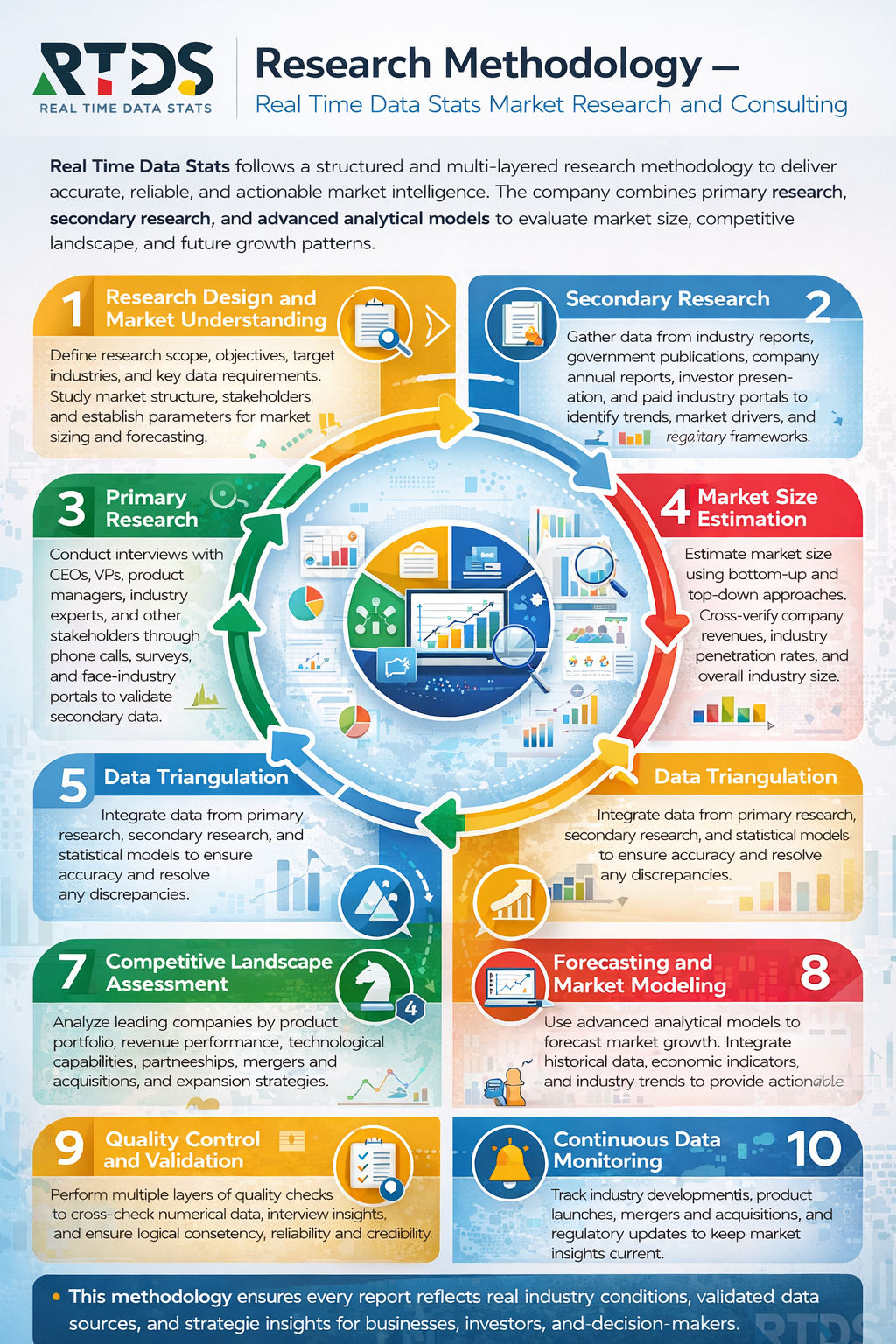
- Research Methodology
- Market Assumptions
- Limitations
Executive Summary
- Market Overview
- Key Market Insights
- Market Trends Snapshot
- Market Growth Outlook
- Competitive Landscape Summary
- Strategic Recommendations
Market Dynamics
- Market Drivers
- Market Restraints
- Market Opportunities
- Market Challenges
- Industry Trends
- Regulatory Framework
Market Ecosystem Analysis
- Value Chain Analysis
- Stakeholder Analysis
- Technology Providers
- Service Providers
- End-User Analysis
Infrastructure Analysis
- Market Size & Forecast Analysis
- Global Market Overview
- Historical Market Analysis
- Current Market Estimation
Market Forecast
- Growth Rate Analysis
- Revenue Projection
- Technology Landscape
- Satellite Architecture
- LEO Satellite Constellations
- Network Infrastructure
Ground Segment Technologies
- Terminal Equipment
- Advanced Communication Systems
- Regulatory & Policy Framework
- Global Regulatory Policies
Spectrum Allocation Policies
- Licensing Framework
- Government Initiatives
- Rural Connectivity Programs
- Policy Impact Assessment
Rural Broadband via Low-Orbit Satellites Market Segmentation Analysis
- By Type:
- LEO Satellite Systems
- MEO Satellite Systems
- Hybrid Satellite Systems
- CubeSat Networks
- Nanosatellite Networks
- Microsatellite Networks
- By Application:
- Residential Connectivity
- Commercial Connectivity
- Government Connectivity
- Educational Connectivity
- Healthcare Connectivity
- Agricultural Connectivity
- By End User:
- Households
- Small Businesses
- Large Enterprises
- Government Agencies
- Educational Institutions
- Healthcare Facilities
- By Component:
- Satellites
- User Terminals
- Ground Stations
- Antennas
- Modems & Routers
- Network Management Systems
- By Service Type:
- Internet Access Services
- Voice Communication Services
- Data Transmission Services
- Video Streaming Services
- Cloud Connectivity Services
- IoT Connectivity Services
- By Frequency Band:
- Ka-Band
- Ku-Band
- X-Band
- C-Band
- S-Band
- L-Band
- By Deployment Model:
- Fixed Satellite Broadband
- Mobile Satellite Broadband
- Portable Satellite Broadband
- Community Hotspot Systems
- Enterprise Network Systems
- Emergency Communication Systems
- By Technology:
- Phased Array Antennas
- Beamforming Technology
- Laser Inter-Satellite Links
- AI-Driven Network Optimization
- Cloud-Based Network Control
- Edge Computing Integration
- By Distribution Channel:
- Direct Sales
- Online Platforms
- Telecom Service Providers
- Government Contracts
- System Integrators
- Value-Added Resellers
Regional Market Analysis
- North America Market Overview
- Europe Market Overview
- Asia Pacific Market Overview
- Latin America Market Overview
- Middle East Market Overview
- Africa Market Overview
Competitive Landscape
- Market Share Analysis
- Competitive Benchmarking
- Strategic Initiatives
- Mergers & Acquisitions
- Partnerships & Collaborations
- Product Launches
Company Profiles
- Business Overview
- Product Portfolio
- Financial Overview
- Strategic Developments
- SWOT Analysis
- Recent Innovations
- Investment & Opportunity Analysis
Investment Hotspots
- Funding Trends
- Growth Opportunities
- Risk Assessment
- Return on Investment Analysis
- Strategic Recommendations
Future Outlook
- Market Growth Trends
- Technology Roadmap
- Policy Impact
- Industry Evolution
- Long-Term Opportunities
- Strategic Roadmap
Conclusion
- Market Summary
- Key Findings
- Strategic Insights
- Final Recommendations
- Growth Perspective
Appendix
- Research Methodology
- Data Sources
- Abbreviations
- Glossary
- Assumptions
- Disclaimer
List of Tables
- Table:1: Global Market Size Overview
- Table:2: Market Growth Rate Analysis
- Table:3: Market Segmentation by Type
- Table:4: Market Segmentation by Application
- Table:5: Market Segmentation by End User
- Table:6: Market Segmentation by Component
- Table:7: Market Segmentation by Service Type
- Table:8: Market Segmentation by Frequency Band
- Table:9: Market Segmentation by Deployment Model
- Table:10: Market Segmentation by Technology
- Table:11: Market Segmentation by Distribution Channel
- Table:12: Regional Market Analysis
- Table:13: Competitive Landscape Comparison
- Table:14: Company Market Share Analysis
- Table:15: Investment & Opportunity Mapping
List of Figures
- Figure:1: Global Market Overview
- Figure:2: Market Growth Trends
- Figure:3: Market Segmentation Structure
- Figure:4: Value Chain Analysis
- Figure:5: Market Ecosystem Framework
- Figure:6: Technology Architecture Diagram
- Figure:7: Regulatory Framework Flowchart
- Figure:8: Regional Market Distribution
- Figure:9: Competitive Landscape Mapping
- Figure:10: Market Share Comparison
- Figure:11: Strategic Initiatives Overview
- Figure:12: Investment Trend Analysis
- Figure:13: Opportunity Matrix
- Figure:14: Future Market Roadmap
- Figure:15: Market Forecast Model
Rural Broadband via Low-Orbit Satellites Market Key Factors
Drivers:
- Governments fund infrastructure grants to close the digital divide.
- Remote workers demand reliable, high-speed connectivity in unserved areas.
- Farmers adopt precision agriculture tools requiring constant data transmission.
Restraints:
- Consumer-facing terminals carry high upfront equipment costs.
- Engineers face complex orbital deployment and space debris mitigation.
- Terrestrial providers lobby to protect subsidized rural incumbent networks.
Opportunities:
- Telcos partner with satellite firms to backhaul 5G towers.
- Emergency responders secure dedicated bandwidth for disaster zones.
- Airlines and maritime operators contract for in-motion connectivity.
Challenges:
- Technicians struggle with consumer self-installation and line-of-sight obstructions.
- Regulators lag in granting spectrum rights for non-geostationary orbits.
- Astronomers raise interference concerns, delaying some launch approvals.
Rural Broadband via Low-Orbit Satellites Market Key Regional Trends
North America:
- Ranchers deploy terminals to monitor livestock across vast acreages.
- Tribal nations secure federal grants to build sovereign satellite networks.
- Schools in Appalachia shift fully to cloud-based curricula via LEO links.
Europe:
- Alpine villages replace copper lines with satellite backhaul.
- EU mandates universal service funds include non-terrestrial solutions.
- Scandinavian reindeer herders track herds using real-time IoT collars.
Asia-Pacific:
- Indonesian island clinics adopt telemedicine through LEO constellations.
- Australian outback stations automate mustering via satellite-connected drones.
- Japanese tsunami sirens integrate LEO failover for early warning systems.
Latin America:
- Amazonian riverine communities access digital banking for the first time.
- Chilean miners use LEO hotspots for safety telemetry underground.
- Mexican agribusiness connects refrigerated export trucks cross-border.
Middle East & Africa:
- Sahel pastoralists receive weather alerts via basic satellite SMS gateways.
- Nigerian fintech agents operate offline-capable POS units synced via LEO.
- UAE desert logistics firms track convoys beyond terrestrial coverage.
Frequently Asked Questions
Key Questions Answered
- What is the size and growth rate of the market industry?
- What are the main drivers influencing market growth trends?
- What are the key challenges and restraints faced by the market?
- What are the emerging trends and opportunities shaping the market?
- Who are the top players, and what strategies drive their success?
- What are the customer demographics and their buying behaviors?
- What are the key market segments, and what is their scope?
- What are the geographical dynamics, and which region dominates?
- What are the market forecasts and projections for the next decade?
- What regulatory factors are critical to consider for market growth?
Why Choose our Company?
- Major facts and stats backing every report we offer.
- Comprehensive analysis tailored to your business needs.
- Accurate insights backed by extensive market research.
- Expert support to address your queries promptly.
- Data-driven strategies for better decision-making.
- In-depth reports with actionable
recommendations. - Reliable statistics from trusted industry
sources. - Customizable reports to suit your specific goals.
- Unmatched quality and precision in market analysis.
- Competitive pricing with premium content delivery.
Share your experience!
We value you feedback. Please take a moment to review your experience with us.