
According to insights from Real Time Data Stats, the Remote Border Surveillance Drone Market was valued at USD 1.44 billion in 2025. It is expected to grow from USD 1.65 billion in 2026 to USD 4.22 billion by 2033, registering a CAGR of 14.4% during the forecast period (2026–2033).
MARKET SIZE AND SHARE
The remote border surveillance drone market is driven by heightened global security needs. Market share is concentrated among leading defense and technology firms specializing in long-endurance and autonomous systems. This growth reflects the strategic shift from traditional patrols to persistent, cost-effective aerial monitoring across vast and challenging terrains worldwide.
Growth is expected to be fueled by rising territorial disputes and transnational crime. North America currently holds a dominant market share due to substantial defense budgets. However, the Asia-Pacific region is projected to gain a larger share, supported by rapid procurement and indigenous manufacturing. The competitive landscape will intensify as companies advance AI integration and sensor technologies to secure contracts and expand their global footprint in this critical security sector.
INDUSTRY OVERVIEW AND STRATEGY
This industry provides unmanned aerial systems specifically designed for continuous border monitoring. Key offerings include drones with advanced sensors, AI-driven analytics, and secure data links. The market is defined by high technological barriers and stringent regulatory compliance, serving primarily government defense and homeland security agencies. The shift from manual surveillance to automated, data-centric threat detection forms the core of this evolving, security-critical industry.
Vendor strategy focuses on developing integrated turnkey solutions beyond hardware. This includes data management platforms and predictive analytics services. Strategic partnerships with government bodies and local contractors are essential for market entry. Companies compete through continuous R&D in stealth, endurance, and swarming technology while navigating export controls and emphasizing cybersecurity to protect sensitive border intelligence data from interception or compromise.
REGIONAL TRENDS AND GROWTH
In North America and Europe, trends involve modernizing existing fleets with AI and integrating drones with other border technologies. The Asia-Pacific region shows the fastest growth, driven by active procurement and indigenous production in China and India. The Middle East invests heavily in response to regional instability, while Latin America focuses on curbing illicit trafficking, presenting varied regional adoption patterns and technological preferences.
Primary growth drivers are rising security expenditures and the cost-efficacy of drones versus manned assets. Restraints include regulatory airspace hurdles and privacy concerns. Opportunities lie in developing hybrid drones and multi-domain command systems. Key challenges involve counter-drone threats, harsh operational environments, and achieving interoperability within existing defense and surveillance infrastructure, which will shape future market dynamics and technological roadmaps.
REMOTE BORDER SURVEILLANCE DRONE MARKET SEGMENTATION ANALYSIS
BY TYPE:
Fixed-wing drones dominate border surveillance due to their long endurance, extended flight duration, and stability across large territories. They support cross-border operations and continuous monitoring missions efficiently, reducing operational costs. Equipped with high-resolution cameras, thermal and infrared sensors, and GPS-enabled navigation systems, these drones provide real-time intelligence and situational awareness. Government and military agencies prefer fixed-wing drones for strategic patrolling, large-area coverage, and integration with autonomous or semi-autonomous control, enabling comprehensive surveillance with minimal human intervention.
Rotary-wing drones offer vertical takeoff, hovering, and high maneuverability, ideal for localized surveillance and inaccessible terrains. Their agility allows detailed inspections of checkpoints, critical infrastructure, and high-risk zones. Lightweight and versatile, they integrate multiple payloads such as optical cameras, thermal sensors, and AI analytics for real-time monitoring. Tactical, hybrid, micro/nano, and long-endurance drones complement fixed and rotary options, providing flexibility across operational needs, from covert reconnaissance to extended-area patrolling, enhancing border security coverage in diverse terrains and environments.
BY APPLICATION:
Border security monitoring remains the primary use of surveillance drones, ensuring real-time threat detection, perimeter control, and intrusion prevention. Advanced drones integrate AI-driven analytics, thermal imaging, and high-resolution cameras for rapid detection of unauthorized crossings. They enhance situational awareness and enable strategic responses to illegal activities. Agencies use drones to reduce manpower requirements and operational risks, providing persistent observation across remote and challenging areas. Long-range and BVLOS drones further strengthen monitoring efficiency in national security operations.
Illegal activity detection and smuggling prevention are critical applications, with drones monitoring human trafficking, contraband transport, and cross-border crime. Thermal sensors, infrared imaging, and real-time video analytics detect anomalies and suspicious movement patterns. Wildlife poaching surveillance, infrastructure protection, and maritime border monitoring also benefit, safeguarding protected areas, strategic assets, and coastal zones. Drones offer remote patrolling, persistent observation, and data collection, enhancing decision-making for law enforcement and government agencies tasked with securing land and maritime borders effectively.
BY COMPONENT:
Camera systems are the primary drone component, providing high-resolution optical, thermal, and infrared imaging for threat detection and evidence collection. Integration with AI analytics enables automated target recognition, minimizing human error and enhancing border security. Cameras support day-and-night operations, real-time monitoring, and rapid response, forming the foundation of surveillance effectiveness for defense and law enforcement agencies.
Sensors and detectors complement cameras, offering motion, heat, and environmental detection for comprehensive border analysis. Communication systems enable secure data transmission to ground control stations. Navigation systems provide GPS-based accuracy and autonomous route planning. Payload systems allow multi-sensor integration, and ground control stations manage drone operations, flight paths, and data processing, ensuring coordinated, reliable, and continuous border surveillance for operational efficiency and strategic decision-making.
BY END USER:
Military and defense agencies are the primary end users, deploying drones for strategic border operations, intelligence collection, and tactical missions. They prioritize long-endurance and AI-enabled drones capable of covering remote areas with minimal human intervention, ensuring national security.
Homeland security agencies and law enforcement utilize drones for crime prevention, illegal entry detection, and rapid-response operations. Border patrol units rely on short- and medium-range drones for daily patrolling. Private security companies implement drones for asset protection and surveillance services. Government agencies use drones for policy enforcement, environmental monitoring, and infrastructure protection, highlighting their widespread adoption across public and private sectors.
BY RANGE:
Short-range drones excel in localized monitoring, infrastructure inspection, and urban border management due to agility, compact size, and rapid deployment. They provide cost-effective, high-frequency coverage for sensitive locations, complementing long-range systems in comprehensive border security networks.Medium- and long-range drones dominate cross-border surveillance, covering expansive areas and remote regions efficiently. BVLOS and tactical-range drones allow persistent monitoring without constant human control.
Extended-endurance drones reduce operational costs, minimize manpower requirements, and enable continuous observation of critical areas. These drones are essential for strategic, military, and government operations where coverage, reliability, and persistence are key performance factors.
BY PAYLOAD CAPACITY:
Light payload drones provide rapid deployment and efficient short-range surveillance. They carry compact cameras, sensors, and communication modules for high-frequency monitoring and data collection.Medium- and heavy payload drones support multiple sensors, cameras, and specialized equipment for long-range and strategic operations. Surveillance-specific, multi-sensor, and armored drones combine optical, thermal, and AI-enabled detection tools.
These drones enhance situational awareness, provide actionable intelligence, and strengthen security operations across military, law enforcement, and government missions requiring robust payload and operational versatility.
BY OPERATION MODE:
Manual operation allows precise piloting for targeted inspections and high-risk missions, giving operators full control over navigation and surveillance decisions. It is useful for tactical, short-range, and sensitive operations requiring flexibility and human judgment.Autonomous and semi-autonomous drones leverage AI, GPS, and analytics for extended operations with minimal human oversight.
Swarm operations provide coordinated coverage of large areas, while remote-controlled and AI-assisted drones enable real-time threat response, predictive monitoring, and adaptive missions. These modes reduce labor requirements, enhance operational efficiency, and improve responsiveness during critical border security missions.
BY TECHNOLOGY:
GPS-based navigation ensures accurate route planning, geofencing, and precise positioning during surveillance. AI and machine learning improve threat detection, predictive analysis, and automated target recognition, reducing response times.Real-time video analytics, infrared, and thermal imaging enable day-and-night monitoring. Night vision capabilities allow covert operations, while IoT-enabled drones create connected networks for multi-drone coordination.
These technological integrations improve reliability, efficiency, and scalability, enabling agencies to monitor vast borders with minimal human intervention while maintaining high situational awareness and operational readiness.
BY PRICE RANGE:
Low-cost drones provide affordable monitoring for small-scale operations, training, or regional surveillance. They are accessible for local law enforcement and private security units.Mid-range and high-end drones offer enhanced endurance, multi-sensor payloads, AI analytics, and autonomous capabilities. Premium tactical, commercial-grade, and government/defense-specific drones combine advanced technology, extended range, and operational versatility.
Pricing reflects performance, coverage, and payload sophistication, influencing adoption across military, law enforcement, private security, and government sectors for strategic border operations.
RECENT DEVELOPMENTS
- In Jan 2024: Shield AI demonstrated fully autonomous Hivemind-powered drone swarms for perimeter defense, showcasing advanced AI for collective surveillance without GPS or comms.
- In Mar 2024: Teledyne FLIR launched the SkyRaider UAV, integrating a high-resolution EO/IR gimbal and a ground radar for persistent wide-area border surveillance in a single platform.
- In Jul 2024: Anduril Industries unveiled its new Anvil air defense drone, doubling as a persistent surveillance asset, designed to counter drones and loiter over borders for extended missions.
- In Nov 2024: Elbit Systems secured a $150M contract to supply its Hermes 450 and 900 StarLiner UAVs to a European nation for comprehensive border and coastal monitoring operations.
- In Feb 2025: Dedrone, a counter-UAS leader, announced its new persistent surveillance software layer, enabling border drones to autonomously detect, track, and classify unauthorized drone incursions.
KEY PLAYERS ANALYSIS
- AeroVironment, Inc.
- Elbit Systems Ltd.
- Israel Aerospace Industries (IAI)
- Lockheed Martin Corporation
- Northrop Grumman Corporation
- Airbus SE
- Boeing
- DJI (Despite security concerns)
- General Atomics Aeronautical Systems
- Thales Group
- Raytheon Technologies
- Leonardo S.p.A.
- Anduril Industries
- Shield AI
- Teledyne FLIR
- Parrot Drone SAS
- Textron Systems
- BAE Systems
- Dedrone
- Rafael Advanced Defense Systems
Remote Border Surveillance Drone Market Segmentation Analysis
By Type:
- Fixed-Wing Drones
- Rotary-Wing Drones
- Hybrid Drones
- Micro/Nano Drones
- Tactical Drones
- Long-Endurance Drones
By Application:
- Border Security Monitoring
- Illegal Activity Detection
- Smuggling Prevention
- Wildlife Poaching Surveillance
- Infrastructure Protection
- Maritime Border Surveillance
By Component:
- Camera Systems
- Sensors & Detectors
- Communication Systems
- Navigation Systems
- Payload Systems
- Ground Control Stations
By End User:
- Military & Defense
- Homeland Security Agencies
- Law Enforcement
- Border Patrol Units
- Private Security Companies
- Government Agencies
By Range:
- Short-Range Drones
- Medium-Range Drones
- Long-Range Drones
- Beyond Visual Line of Sight (BVLOS) Drones
- Tactical Range Drones
- Extended Endurance Drones
By Payload Capacity:
- Light Payload Drones
- Medium Payload Drones
- Heavy Payload Drones
- Surveillance-Specific Payload Drones
- Multi-Sensor Payload Drones
- Armored Payload Drones
By Operation Mode:
- Manual Operation
- Autonomous Operation
- Semi-Autonomous Operation
- Swarm Operation
- Remote-Controlled Operation
- AI-Assisted Operation
By Technology:
- GPS-Based Navigation
- AI & Machine Learning Integration
- Real-Time Video Analytics
- Infrared & Thermal Imaging
- Night Vision Capabilities
- IoT-Enabled Drones
By Price Range:
- Low-Cost Drones
- Mid-Range Drones
- High-End Drones
- Premium Tactical Drones
- Commercial-Grade Drones
- Government/Defense-Specific Drones
By Geography:
- North America (USA, Canada, Mexico)
- Europe (UK, Germany, France, Italy, Spain, Rest of Europe)
- Asia-Pacific (China, Japan, Australia, South Korea, India, Rest of Asia-Pacific)
- South America (Brazil, Argentina, Rest of South America)
- Middle East and Africa (GCC Countries, South Africa, Rest of MEA)
Remote Border Surveillance Drone Market: Table of Contents
Executive Summary
- Market Introduction
- Market Definition
- Scope of Study
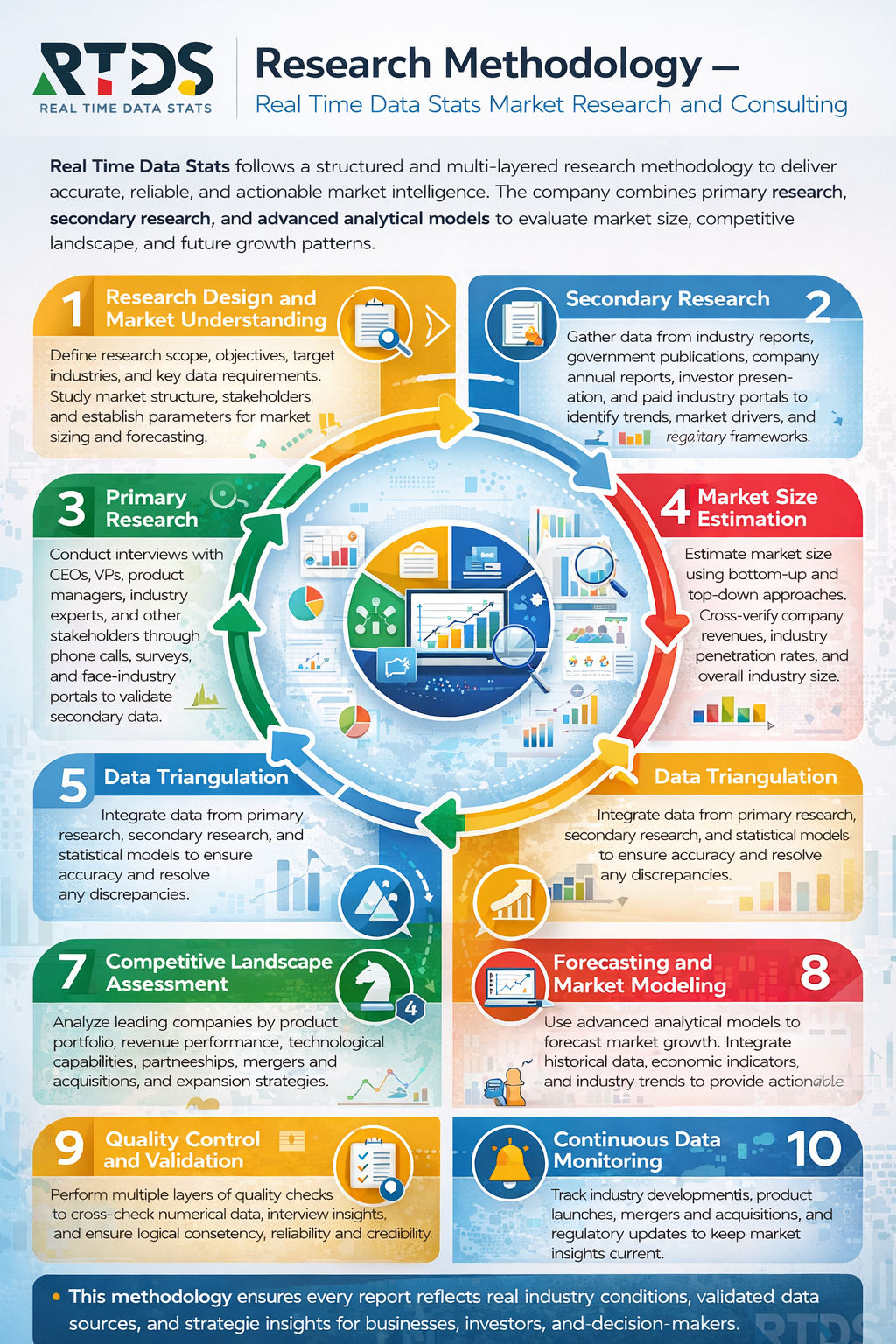
Research Methodology
- Data Sources
- Assumptions & Limitations
- Market Overview
- Market Dynamics
- Market Drivers
- Market Restraints
- Market Opportunities
- Market Challenges
Industry Trends
- Regulatory Framework
- Value Chain Analysis
- Supply Chain Analysis
- Pricing Analysis
Remote Border Surveillance Drone Market Segmentation
- By Type:
- Fixed-Wing Drones
- Rotary-Wing Drones
- Hybrid Drones
- Micro/Nano Drones
- Tactical Drones
- Long-Endurance Drones
- By Application:
- Border Security Monitoring
- Illegal Activity Detection
- Smuggling Prevention
- Wildlife Poaching Surveillance
- Infrastructure Protection
- Maritime Border Surveillance
- By Component:
- Camera Systems
- Sensors & Detectors
- Communication Systems
- Navigation Systems
- Payload Systems
- Ground Control Stations
- By End User:
- Military & Defense
- Homeland Security Agencies
- Law Enforcement
- Border Patrol Units
- Private Security Companies
- Government Agencies
- By Range:
- Short-Range Drones
- Medium-Range Drones
- Long-Range Drones
- Beyond Visual Line of Sight (BVLOS) Drones
- Tactical Range Drones
- Extended Endurance Drones
- By Payload Capacity:
- Light Payload Drones
- Medium Payload Drones
- Heavy Payload Drones
- Surveillance-Specific Payload Drones
- Multi-Sensor Payload Drones
- Armored Payload Drones
- By Operation Mode:
- Manual Operation
- Autonomous Operation
- Semi-Autonomous Operation
- Swarm Operation
- Remote-Controlled Operation
- AI-Assisted Operation
- By Technology:
- GPS-Based Navigation
- AI & Machine Learning Integration
- Real-Time Video Analytics
- Infrared & Thermal Imaging
- Night Vision Capabilities
- IoT-Enabled Drones
- By Price Range:
- Low-Cost Drones
- Mid-Range Drones
- High-End Drones
- Premium Tactical Drones
- Commercial-Grade Drones
- Government/Defense-Specific Drones
Competitive Landscape
- Market Share Analysis
- Company Benchmarking
- Strategic Developments
- Mergers & Acquisitions
- Partnerships & Collaborations
- Product Launches
- R&D Investments
Company Profiles
- Company Overview
- Financial Performance
- Product Portfolio
- Strategic Initiatives
- Regional Presence
- SWOT Analysis
Regional Market Analysis
- North America Market Analysis
- Europe Market Analysis
- Asia Pacific Market Analysis
- Latin America Market Analysis
- Middle East Market Analysis
- Africa Market Analysis
Market Forecast Analysis
- Revenue Forecast
- Volume Forecast
- Segment Forecast
- Regional Forecast
- Growth Rate Analysis
- Opportunity Mapping
Investment & Funding Analysis
- Venture Capital Trends
- Government Funding
- Private Investments
- Startup Ecosystem
- ROI Analysis
- Risk Assessment
Technological Advancements
- Drone Automation
- Edge Computing Integration
- Advanced Imaging Systems
- Cybersecurity Enhancements
- Swarm Technology
- Cloud-Based Analytics
Case Studies & Use Cases
- Border Monitoring Case Study
- Coastal Security Case Study
- Military Surveillance Use Case
- Disaster Response Case Study
- Anti-Smuggling Operations
- Emergency Rescue Missions
Conclusion
- Summary of Market Trends
- Key Drivers and Restraints
- Growth Opportunities
- Technology & Innovation Outlook
- Future Market Forecast
Appendix
- Abbreviations
- Glossary
- Research Method Details
- Data Tables
- Legal Disclaimer
- Contact Information
List of Tables
- Table: 1: Global Market Size Overview
- Table: 2: Market Growth Rate Comparison
- Table: 3: Type Segment Revenue Share
- Table: 4: Component Segment Analysis
- Table: 5: Range Segment Performance
- Table: 6: End User Market Share
- Table: 7: Application Revenue Analysis
- Table: 8: Technology Adoption Rates
- Table: 9: Payload Capacity Comparison
- Table: 10: Deployment Mode Distribution
- Table: 11: Energy Source Utilization
- Table: 12: Regional Revenue Breakdown
- Table: 13: Competitive Market Share
- Table: 14: Investment Trends
- Table: 15: Forecast Revenue by Segment
List of Figures
- Figure: 1: Market Growth Trend Graph
- Figure: 2: Value Chain Diagram
- Figure: 3: Supply Chain Flowchart
- Figure: 4: Market Segmentation Pie Chart
- Figure: 5: Type Segment Visualization
- Figure: 6: Component Distribution Chart
- Figure: 7: Application Usage Graph
- Figure: 8: Regional Market Map
- Figure: 9: Technology Adoption Curve
- Figure: 10: Competitive Landscape Matrix
- Figure: 11: Investment Flow Diagram
- Figure: 12: Forecast Growth Chart
- Figure: 13: Deployment Mode Illustration
- Figure: 14: Energy Source Comparison Graph
- Figure: 15: Opportunity Mapping Chart
Remote Border Surveillance Drone Market Key Factors
Drivers:
- Governments globally seek to strengthen national security and monitor illegal crossings.
- Advanced drones provide more cost-effective surveillance than traditional patrols and fixed systems.
- New technologies like AI and thermal imaging enhance real-time threat detection and identification.
Restraints:
- Strict aviation regulations and airspace restrictions limit drone deployment and operations.
- High initial investment costs deter budget-constrained agencies from large-scale adoption.
- Public concerns persist over privacy and the ethical use of surveillance drones.
Opportunities:
- Emerging markets present significant potential for modernizing border security infrastructure.
- Developing hybrid drones that combine long endurance with vertical take-off and landing capabilities creates new solutions.
- Increasing cross-border terrorism and trafficking activities drive demand for advanced surveillance systems.
Challenges:
- Harsh environmental conditions at borders degrade drone performance and durability.
- Sophisticated jamming and spoofing technologies threaten drone communication and control.
- A lack of standardized protocols and interoperability hinders joint operations between agencies and nations.
Remote Border Surveillance Drone Market Key Regional Trends
North America:
- Agencies integrate artificial intelligence for automated border monitoring.
- A strong focus exists on developing counter-drone systems to address security threats.
- Manufacturers increasingly offer drones with extended range and heavy payload capacities.
Europe:
- The EU funds collaborative programs for cross-border drone surveillance initiatives.
- Regulations emphasize robust data protection and privacy-compliant operations.
- Demand rises for maritime patrol drones to monitor coastal borders.
Asia-Pacific:
- Nations rapidly deploy drones along disputed and mountainous border territories.
- Domestic production of military-grade surveillance drones accelerates.
- Investments grow in drone swarming technology for large-area monitoring.
Middle East & Africa:
- Drones are primarily used to prevent smuggling and unauthorized immigration.
- Operations frequently occur in extreme desert and hot climates, requiring durable platforms.
- Partnerships with global defense contractors drive market development.
Latin America:
- Governments employ drones to combat drug trafficking and secure remote jungles.
- Budget limitations encourage the adoption of smaller, tactical surveillance drone systems.
- Countries begin establishing national regulatory frameworks for drone operations.
Frequently Asked Questions
Key Questions Answered
- What is the size and growth rate of the market industry?
- What are the main drivers influencing market growth trends?
- What are the key challenges and restraints faced by the market?
- What are the emerging trends and opportunities shaping the market?
- Who are the top players, and what strategies drive their success?
- What are the customer demographics and their buying behaviors?
- What are the key market segments, and what is their scope?
- What are the geographical dynamics, and which region dominates?
- What are the market forecasts and projections for the next decade?
- What regulatory factors are critical to consider for market growth?
Why Choose our Company?
- Major facts and stats backing every report we offer.
- Comprehensive analysis tailored to your business needs.
- Accurate insights backed by extensive market research.
- Expert support to address your queries promptly.
- Data-driven strategies for better decision-making.
- In-depth reports with actionable
recommendations. - Reliable statistics from trusted industry
sources. - Customizable reports to suit your specific goals.
- Unmatched quality and precision in market analysis.
- Competitive pricing with premium content delivery.
Share your experience!
We value you feedback. Please take a moment to review your experience with us.