
According to insights from Real Time Data Stats, the Quantum Neural Bioengineering Market was valued at USD 9.2 million in 2025. It is expected to grow from USD 16.3 million in 2026 to USD 363 million by 2033, registering a CAGR of 36% during the forecast period (2026–2033).
MARKET SIZE AND SHARE
The Quantum Neural Bioengineering market is expanding rapidly, driven by the convergence of quantum computing and advanced neurotechnology. Companies accelerate innovation by combining quantum algorithms with neural interface design, enabling breakthroughs in brain–machine communication and precision therapies. Market share remains concentrated among specialized tech–biotech hybrids and major technology firms that invest heavily in foundational research, intellectual property, and proprietary platforms. These players focus on early-stage innovation, pilot deployments, and strategic positioning to secure a first-mover advantage in this emerging and highly competitive space.
North America holds the leading market share, exceeding 50%, supported by strong government funding, advanced research infrastructure, and dense innovation ecosystems. Europe and Asia-Pacific regions show fast-paced growth, driven by rising investments and collaborative research initiatives. The competitive landscape remains fragmented, but consolidation is expected as technologies mature and commercialization accelerates. Future market share will depend on strategic alliances between quantum hardware providers, AI software developers, and established medical device companies working together to scale, integrate, and deliver viable clinical and industrial solutions.
INDUSTRY OVERVIEW AND STRATEGY
Quantum Neural Bioengineering represents the frontier intersection of quantum information processing, artificial neural networks, and biological systems engineering. The industry focuses on developing platforms for ultra-precise molecular simulation, advanced neuro-prosthetics, and accelerated drug discovery for neurological disorders. It is characterized by high R&D intensity, long development cycles, and a collaborative ecosystem requiring expertise from disparate scientific and engineering disciplines to solve profound biological complexity.
Primary strategies involve forming cross-industry consortia to pool knowledge and share immense computational costs. Companies are pursuing proprietary algorithm development and securing patents on quantum-biophysical interfaces. A dual strategy is prevalent: targeting near-term applications in quantum-accelerated biomolecular design while investing in long-term goals like brain-computer interface optimization. Success hinges on strategic academia partnerships and navigating a nascent but evolving regulatory landscape for bio-quantum technologies.
Analyst Key Takeaways:
Quantum Neural Bioengineering is emerging at the intersection of quantum computing, neuroscience, and advanced bioengineering, positioning it as a highly experimental but strategically significant frontier technology. Its development is being shaped by rapid progress in quantum algorithms, neural modeling systems, and computational biology, which together are enabling early-stage exploration of brain simulation, neural signal decoding, and quantum-assisted biological computation.
The market’s trajectory is strongly influenced by foundational advancements in quantum hardware stability and the increasing integration of AI-driven biological research. While still in a pre-commercial phase, investment interest is accelerating due to its potential applications in neurotechnology, precision medicine, and complex biological system modeling. However, scalability remains dependent on overcoming technical barriers in qubit coherence, biological data mapping, and real-world validation of quantum-enhanced neural systems.
REGIONAL TRENDS AND GROWTH
North America leads, fueled by DARPA and NIH initiatives and private investment from Silicon Valley. Europe shows strong collaborative trends through EU flagship projects, emphasizing ethical frameworks. The Asia-Pacific region, particularly China and Japan, is rapidly scaling up with significant state-led investments in quantum infrastructure and genomics, aiming to close the technology gap and address regional healthcare burdens through advanced bioengineering solutions.
Key drivers include the escalating demand for neurological disorder treatments and the exponential growth in computational power. Major restraints are immense technical hurdles, high costs, and a severe talent shortage. Opportunities lie in personalized neuro-therapeutics and quantum-enhanced diagnostic tools. Critical challenges involve establishing biocompatible quantum interfaces, managing data privacy at a quantum scale, and creating standardized validation protocols for these novel, complex biomedical systems.
QUANTUM NEURAL BIOENGINEERING MARKET SEGMENTATION ANALYSIS
BY TYPE:
The market segmentation by type is primarily driven by rapid innovation in neural interface engineering and quantum-enhanced signal processing systems. Neural interface engineering dominates due to rising demand for precise brain–machine communication, especially in cognitive augmentation and neurological research. Hybrid quantum–biological neural systems gain momentum as they bridge biological adaptability with quantum computational speed, enabling higher neural fidelity. Continuous investments in bioengineered neural circuits further strengthen this segment’s expansion across research and applied neurotechnology domains.
Quantum-enhanced brain–machine interfaces and neural quantum sensors significantly influence market growth by enabling ultra-sensitive neural data acquisition. These technologies benefit from advancements in quantum coherence and bio-compatibility, reducing signal loss and biological rejection risks. Increasing cross-disciplinary collaboration among neuroscientists, quantum physicists, and bioengineers accelerates commercialization. The growing emphasis on scalable neural systems capable of real-time processing further positions type-based segmentation as a critical determinant of competitive differentiation.
BY TECHNOLOGY:
Technology-based segmentation is shaped by the integration of quantum computing into neural bioengineering workflows. Quantum computing–integrated neural systems dominate due to their ability to process complex neural datasets with unprecedented speed and accuracy. Quantum sensors for neural mapping experience strong adoption as they enhance resolution in brain activity monitoring. Quantum imaging technologies further support advanced visualization of neural structures, driving demand in both clinical research and experimental neuroscience.
Quantum simulation platforms and quantum signal amplification technologies expand rapidly due to their role in modeling neural behavior and enhancing weak bioelectrical signals. Error correction technologies also gain relevance as neural data complexity increases. The convergence of quantum algorithms with biological neural models improves predictive accuracy and system stability. Continuous improvements in hardware miniaturization and algorithm optimization significantly reinforce technology-based segmentation growth.
BY COMPONENT:
Component segmentation is strongly influenced by advancements in quantum processors and bioengineered neural chips. Quantum processors dominate as core computational units enabling ultra-fast neural data analysis. Neural bioelectrodes experience rising demand due to improvements in biocompatibility and signal sensitivity. Quantum sensors and detectors play a crucial role in precise neural signal capture, supporting applications that require minimal noise and maximum fidelity.
Software and control systems emerge as essential components for managing complex quantum–neural interactions. Signal processing units enhance data interpretation and real-time feedback mechanisms. The growing need for integrated hardware–software ecosystems drives innovation across component categories. Increasing emphasis on modular and upgradeable components further supports scalability, making component-level optimization a key competitive factor in the market.
BY APPLICATION:
Application-based segmentation is driven by increasing adoption of quantum neural bioengineering in cognitive enhancement and neurological disorder treatment. Cognitive enhancement applications gain traction due to growing interest in memory augmentation, learning acceleration, and mental performance optimization. Neurological disorder treatment applications benefit from improved diagnostic precision and targeted neural modulation, addressing conditions such as neurodegenerative diseases and brain injuries.
Brain–computer interface development and advanced neuroprosthetics significantly contribute to application growth by enabling direct neural control and sensory restoration. Neural regeneration and repair applications expand as bioengineered neural circuits support tissue recovery and synaptic rebuilding. Cognitive research and modeling further strengthen this segment by providing deeper insights into brain functionality. Expanding clinical trials and translational research initiatives continue to drive application diversity.
BY END USER:
End-user segmentation reflects strong participation from research institutions and biotechnology companies. Academic and research institutions dominate due to their role in foundational innovation and experimental validation. Biotechnology companies actively commercialize breakthroughs by translating laboratory discoveries into scalable products. Healthcare and clinical centers increasingly adopt quantum neural technologies to improve diagnostic accuracy and personalized treatment approaches.
Neurotechnology startups drive disruption by introducing agile, application-focused solutions. Defense and security organizations invest heavily due to strategic interest in cognitive performance and neural resilience technologies. Pharmaceutical and life science firms leverage quantum neural systems to enhance drug discovery and neurological therapeutics. The diversity of end users strengthens market resilience and accelerates multi-sector adoption.
BY DEPLOYMENT MODE:
Deployment-based segmentation is influenced by infrastructure flexibility and data processing requirements. On-premise quantum neural systems dominate in research-intensive environments requiring high security and low-latency processing. Cloud-based platforms gain momentum due to scalability, remote accessibility, and cost efficiency. Hybrid deployment models emerge as preferred solutions by balancing computational power with operational flexibility.
Laboratory-embedded systems remain essential for experimental precision and controlled testing environments. Portable neural bioengineering devices expand rapidly due to miniaturization and demand for field-based applications. Customized institutional installations support specialized research and clinical workflows. Deployment mode selection increasingly depends on data sensitivity, computational intensity, and long-term operational scalability.
BY MATERIAL TYPE:
Material-based segmentation is driven by the need for biocompatibility and quantum efficiency. Biocompatible quantum materials dominate due to reduced immune response and enhanced neural integration. Graphene-based neural materials gain popularity for their conductivity, flexibility, and durability. Nanoengineered biological polymers support adaptive neural interfaces, enabling long-term implantation and signal stability.
Semiconductor quantum materials continue to play a critical role in processing and sensing applications. Organic–inorganic hybrid materials improve interface longevity and performance. Conductive bio-nanomaterials enhance signal transmission while maintaining biological safety. Continuous material innovation significantly influences device performance, regulatory approval, and long-term clinical viability.
BY FUNCTIONALITY:
Functionality-based segmentation emphasizes neural signal acquisition and processing capabilities. Neural signal acquisition dominates due to the demand for accurate brain activity measurement. Neural signal modulation technologies gain importance for therapeutic stimulation and cognitive control. Neural data processing functions benefit from quantum acceleration, enabling real-time interpretation of complex neural patterns.
Cognitive state monitoring and neural pattern simulation expand rapidly due to applications in behavioral analysis and mental health assessment. Adaptive neural feedback systems enhance responsiveness and personalization of neural interventions. The integration of multiple functionalities into unified platforms increases system efficiency. Functional versatility remains a key differentiator in technology adoption and user preference.
BY RESEARCH FOCUS:
Research focus segmentation is shaped by increasing interdisciplinary collaboration. Quantum neurobiology dominates as researchers explore quantum effects in biological neural processes. Neural plasticity engineering gains traction due to its role in learning enhancement and recovery mechanisms. Brain signal optimization research improves communication efficiency between biological and artificial neural systems.
Quantum neural learning models advance understanding of cognition and decision-making. Bioengineered cognitive networks enable synthetic replication of neural behavior. Neural system integration studies focus on harmonizing biological, digital, and quantum elements. Strong funding support and academic interest continue to accelerate innovation across diverse research focus areas.
RECENT DEVELOPMENTS
- In Jan 2024: Google Quantum AI and Genentech expanded collaboration, publishing a milestone paper on using quantum algorithms to simulate protein-folding dynamics relevant to neurodegenerative diseases.
- In Jun 2024: IBM and Hoffmann-La Roche announced a multi-year partnership to quantum-accelerate drug discovery in neuroscience, specifically targeting Alzheimer's, leveraging IBM's quantum processors and generative AI.
- In Sep 2024: The U.S. Department of Energy awarded a $15M grant to a consortium led by Sandia National Labs and a biotech startup to develop a specialized quantum processor for modeling neural cell networks.
- In Dec 2024: Quantinuum launched its ""Quantum Biology"" platform, featuring new algorithms and high-fidelity ion-trap hardware modules specifically optimized for simulating complex biochemical pathways in the brain.
- In Feb 2025: A European team from Qu&Co and a major university published breakthrough results in Nature on using photonic quantum computing to model synaptic transmission, a key step for neuro-prosthetic design.
KEY PLAYERS ANALYSIS
- IBM
- Google Quantum AI (Alphabet)
- Microsoft (Quantum Azure)
- Quantinuum
- Atom Computing
- IonQ
- Rigetti Computing
- D-Wave Systems
- Hoffmann-La Roche (Genentech)
- Novartis
- Pfizer (via partnerships)
- Sandia National Laboratories
- IBM (Healthcare & Life Sciences)
- Intel (Neuromorphic & Quantum)
- NEC Corporation
- QunaSys
- ProteinQure
- Zapata Computing (now Quantinuum)
- PsiQuantum
- QC Ware
Quantum Neural Bioengineering Market Segmentation
By Type:
- Neural Interface Engineering
- Quantum Neural Signal Processing
- Bioengineered Neural Circuits
- Hybrid Quantum–Biological Neural Systems
- Neural Quantum Sensors
- Quantum-Enhanced Brain–Machine Interfaces
By Technology:
- Quantum Computing–Integrated Neural Systems
- Quantum Sensors for Neural Mapping
- Quantum Signal Amplification Technologies
- Quantum Imaging for Neural Bioengineering
- Quantum Error Correction in Neural Data
- Quantum Simulation Platforms for Neural Modeling
By Component:
- Quantum Processors
- Neural Bioelectrodes
- Quantum Sensors and Detectors
- Bioengineered Neural Chips
- Signal Processing Units
- Software and Control Systems
By Application:
- Cognitive Enhancement Engineering
- Neurological Disorder Treatment
- Brain–Computer Interface Development
- Advanced Neuroprosthetics
- Neural Regeneration and Repair
- Cognitive Research and Modeling
By End User:
- Research and Academic Institutions
- Biotechnology Companies
- Healthcare and Clinical Centers
- Neurotechnology Startups
- Defense and Security Organizations
- Pharmaceutical and Life Science Firms
By Deployment Mode:
- On-Premise Quantum Neural Systems
- Cloud-Based Quantum Neural Platforms
- Hybrid Deployment Models
- Laboratory-Embedded Systems
- Portable Neural Bioengineering Devices
- Customized Institutional Installations
By Material Type:
- Biocompatible Quantum Materials
- Graphene-Based Neural Materials
- Nanoengineered Biological Polymers
- Semiconductor Quantum Materials
- Organic–Inorganic Hybrid Materials
- Conductive Bio-Nanomaterials
By Functionality:
- Neural Signal Acquisition
- Neural Signal Modulation
- Neural Data Processing
- Cognitive State Monitoring
- Neural Pattern Simulation
- Adaptive Neural Feedback Systems
By Research Focus:
- Quantum Neurobiology
- Neural Plasticity Engineering
- Brain Signal Optimization
- Quantum Neural Learning Models
- Bioengineered Cognitive Networks
- Neural System Integration Studies
By Geography:
- North America (USA, Canada, Mexico)
- Europe (UK, Germany, France, Italy, Spain, Rest of Europe)
- Asia-Pacific (China, Japan, Australia, South Korea, India, Rest of Asia-Pacific)
- South America (Brazil, Argentina, Rest of South America)
- Middle East and Africa (GCC Countries, South Africa, Rest of MEA)
Quantum Neural Bioengineering Market: Table of Contents
Executive Summary
- Market Overview and Scope
- Evolution of Quantum Neural Bioengineering
- Key Market Highlights
- Strategic Insights and Opportunity Mapping
Introduction
- Definition and Conceptual Framework
- Quantum–Neural–Biological Convergence
- Industry Ecosystem Overview
- Market Assumptions and Limitations
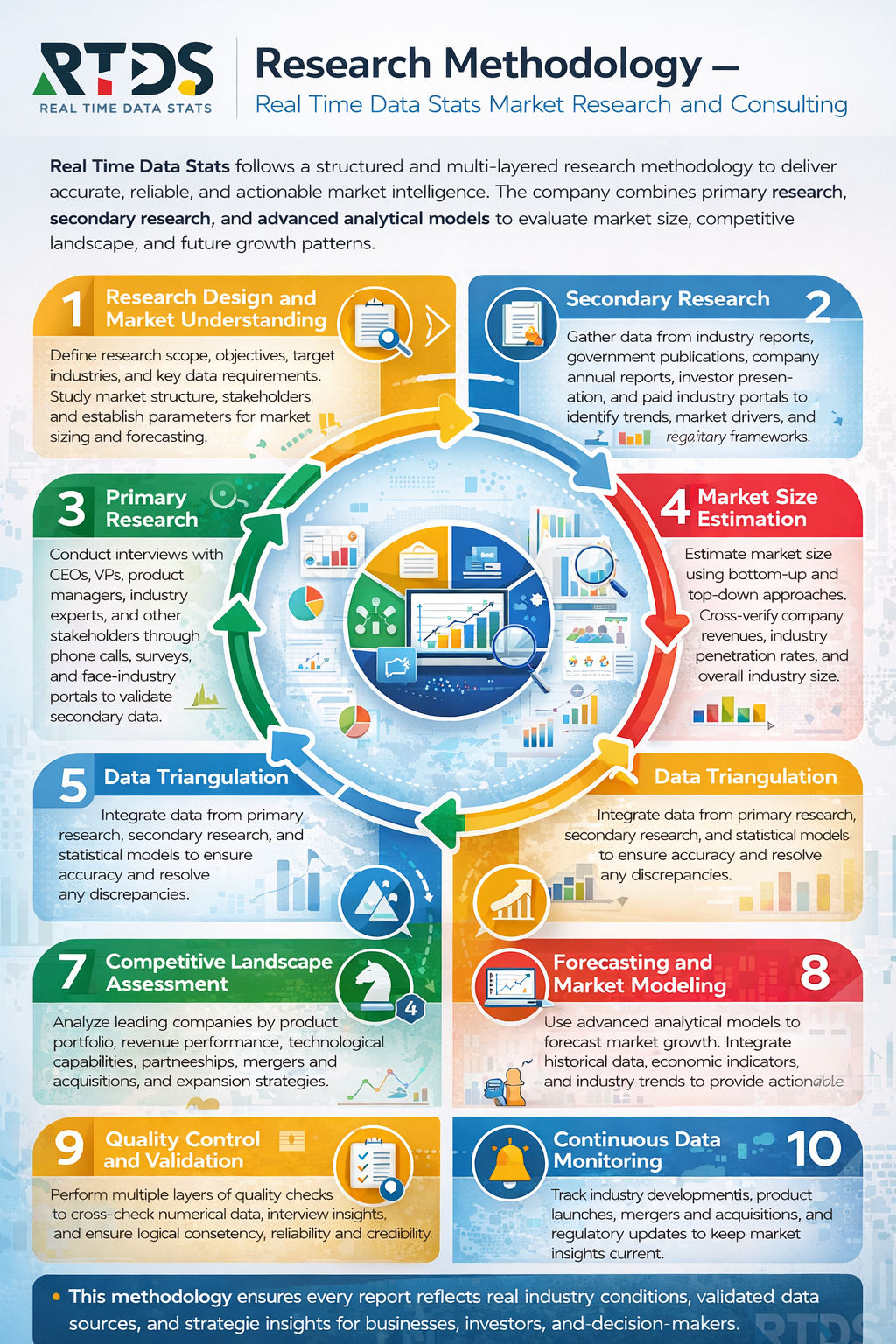
Research Methodology
- Data Collection Approach
- Primary Research Framework
- Secondary Research Sources
- Data Validation and Triangulation
- Market Estimation Techniques
Market Dynamics
- Growth Drivers
- Market Restraints
- Emerging Opportunities
- Technology Challenges
- Regulatory and Ethical Considerations
Quantum Neural Bioengineering Market Segmentation
- By Type
- Neural Interface Engineering
- Quantum Neural Signal Processing
- Bioengineered Neural Circuits
- Hybrid Quantum–Biological Neural Systems
- Neural Quantum Sensors
- Quantum-Enhanced Brain–Machine Interfaces
- By Technology
- Quantum Computing–Integrated Neural Systems
- Quantum Sensors for Neural Mapping
- Quantum Signal Amplification Technologies
- Quantum Imaging for Neural Bioengineering
- Quantum Error Correction in Neural Data
- Quantum Simulation Platforms for Neural Modeling
- By Component
- Quantum Processors
- Neural Bioelectrodes
- Quantum Sensors and Detectors
- Bioengineered Neural Chips
- Signal Processing Units
- Software and Control Systems
- By Application
- Cognitive Enhancement Engineering
- Neurological Disorder Treatment
- Brain–Computer Interface Development
- Advanced Neuroprosthetics
- Neural Regeneration and Repair
- Cognitive Research and Modeling
- By End User
- Research and Academic Institutions
- Biotechnology Companies
- Healthcare and Clinical Centers
- Neurotechnology Startups
- Defense and Security Organizations
- Pharmaceutical and Life Science Firms
- By Deployment Mode
- On-Premise Quantum Neural Systems
- Cloud-Based Quantum Neural Platforms
- Hybrid Deployment Models
- Laboratory-Embedded Systems
- Portable Neural Bioengineering Devices
- Customized Institutional Installations
- By Material Type
- Biocompatible Quantum Materials
- Graphene-Based Neural Materials
- Nanoengineered Biological Polymers
- Semiconductor Quantum Materials
- Organic–Inorganic Hybrid Materials
- Conductive Bio-Nanomaterials
- By Functionality
- Neural Signal Acquisition
- Neural Signal Modulation
- Neural Data Processing
- Cognitive State Monitoring
- Neural Pattern Simulation
- Adaptive Neural Feedback Systems
- By Research Focus
- Quantum Neurobiology
- Neural Plasticity Engineering
- Brain Signal Optimization
- Quantum Neural Learning Models
- Bioengineered Cognitive Networks
- Neural System Integration Studies
Regional Market Analysis
- Regional Market Overview
- Technology Adoption Trends
- Research Infrastructure Landscape
- Investment and Funding Patterns
Competitive Landscape
- Market Share Analysis
- Strategic Collaborations
- Mergers and Acquisitions
- Product Development Strategies
- Innovation and Patent Analysis
Company Profiles
- Business Overview
- Product and Technology Portfolio
- Strategic Developments
- Financial Overview
Future Outlook
- Emerging Technology Trends
- Long-Term Market Opportunities
- Investment Hotspots
- Innovation Roadmap
Conclusion
- Summary of Key Market Insights
- Strategic Market Implications
- Future Growth Perspective
- Technology and Innovation Outlook
Appendix
- Abbreviations and Acronyms
- Data Sources and References
- Assumptions and Methodology Notes
- Disclaimer and Scope Clarification
List of Tables
- Table:1: Market Scope and Definition
- Table:2: Research Methodology Framework
- Table:3: Market Dynamics Overview
- Table:4: Market Segmentation by Type
- Table:5: Market Segmentation by Technology
- Table:6: Market Segmentation by Component
- Table:7: Market Segmentation by Application
- Table:8: Market Segmentation by End User
- Table:9: Market Segmentation by Deployment Mode
- Table:10: Market Segmentation by Material Type
- Table:11: Market Segmentation by Functionality
- Table:12: Market Segmentation by Research Focus
- Table:13: Market Segmentation by Region
- Table:14: Competitive Landscape Snapshot
- Table:15: Future Market Outlook Summary
List of Figures
- Figure:1: Quantum Neural Bioengineering Market Overview
- Figure:2: Market Research Flow Diagram
- Figure:3: Market Dynamics Interaction Model
- Figure:4: Segmentation Framework Illustration
- Figure:5: Type-Based Market Structure
- Figure:6: Technology Stack Architecture
- Figure:7: Component-Level Value Chain
- Figure:8: Application Mapping Matrix
- Figure:9: End User Adoption Landscape
- Figure:10: Deployment Mode Comparison
- Figure:11: Material Innovation Pipeline
- Figure:12: Functional Workflow of Quantum Neural Systems
- Figure:13: Research Focus Evolution Map
- Figure:14: Regional Market Distribution
- Figure:15: Competitive Positioning Matrix
Quantum Neural Bioengineering Market Key Factors
Drivers:
- Rising neurological disorder prevalence increases demand for advanced diagnostics and treatments.
- Expanding computing and biotechnology investments accelerate research and development.
- Growing adoption of brain-computer interfaces (BCIs) and neuroprosthetics fuels market growth.
Restraints:
- Extremely high R&D and technology costs limit widespread adoption.
- Significant technical hurdles in quantum coherence and neural integration persist.
- A severe shortage of skilled, cross-disciplinary professionals slows progress.
Opportunities:
- Integrating AI and machine learning unlocks new capabilities in data analysis and modeling.
- Expanding into personalized medicine and drug discovery opens new applications.
- Increasing public-private partnerships can de-risk projects and scale infrastructure.
Challenges:
- Unclear regulatory pathways create uncertainty for product commercialization.
- Major ethical concerns regarding data privacy and cognitive enhancement demand resolution.
- Achieving stable, large-scale quantum-neural systems presents a formidable engineering barrier.
Quantum Neural Bioengineering Market Key Regional Trends
North America:
- Significant defense and healthcare funding drives advanced neurotechnology research.
- Leading tech and biotech firms actively form strategic partnerships and acquisitions.
- Regulatory agencies begin developing frameworks for neurotechnology and quantum-bio devices.
Europe:
- Strong emphasis on ethical guidelines and data governance shapes project development.
- Cross-border collaborative EU grants support foundational quantum biology research.
- Focus increases on translating research into clinical diagnostics and therapeutic applications.
Asia-Pacific:
- Governments launch national initiatives and allocate substantial funds for quantum technology.
- Research accelerates in brain mapping and quantum-inspired algorithms for healthcare.
- The growing biotechnology sector seeks early adoption of computational neuro-engineering tools.
Rest of the World:
- Efforts concentrate on building foundational research capacity and specialized talent pools.
- Focus targets solving region-specific neurological and public health challenges.
- Countries explore partnerships to access technology and avoid a widening innovation gap.
Frequently Asked Questions
Key Questions Answered
- What is the size and growth rate of the market industry?
- What are the main drivers influencing market growth trends?
- What are the key challenges and restraints faced by the market?
- What are the emerging trends and opportunities shaping the market?
- Who are the top players, and what strategies drive their success?
- What are the customer demographics and their buying behaviors?
- What are the key market segments, and what is their scope?
- What are the geographical dynamics, and which region dominates?
- What are the market forecasts and projections for the next decade?
- What regulatory factors are critical to consider for market growth?
Why Choose our Company?
- Major facts and stats backing every report we offer.
- Comprehensive analysis tailored to your business needs.
- Accurate insights backed by extensive market research.
- Expert support to address your queries promptly.
- Data-driven strategies for better decision-making.
- In-depth reports with actionable
recommendations. - Reliable statistics from trusted industry
sources. - Customizable reports to suit your specific goals.
- Unmatched quality and precision in market analysis.
- Competitive pricing with premium content delivery.
Share your experience!
We value you feedback. Please take a moment to review your experience with us.