
According to insights from Real Time Data Stats, the Neural Synapse Mapping Market was valued at USD 102 million in 2025. It is expected to grow from USD 121 million in 2026 to USD 390 million by 2033, registering a CAGR of 18.2% during the forecast period (2026–2033).
MARKET SIZE AND SHARE
The global neural synapse mapping market is driven by increasing investments in neuroscience research and the growing need to understand complex brain connectivity. Market share is currently dominated by established imaging, microscopy, and life science technology companies that benefit from strong technological capabilities, extensive product portfolios, and global distribution networks in this highly specialized field.
Market share distribution is expected to evolve as innovation accelerates across artificial intelligence, automated imaging, and advanced neural labeling technologies. Emerging companies focused on scalable analytics and next-generation mapping solutions will gain traction, creating a more diversified competitive landscape. Strategic partnerships and acquisitions by major industry participants will further reshape market dynamics, helping companies expand their technological expertise and strengthen their positions throughout the forecast period.
INDUSTRY OVERVIEW AND STRATEGY
The neural synapse mapping industry is an interdisciplinary field combining advanced microscopy, molecular biology, and computational power to chart the brain's wiring. Its primary goal is to create comprehensive connectomes, providing foundational insights for understanding brain function and dysfunction. The industry serves advanced academic research, pharmaceutical R&D for neurological disorders, and burgeoning AI development seeking to emulate neural architectures, positioning itself at the core of next-generation brain science.
Core strategy centers on technological supremacy. Companies compete by developing faster, higher-resolution, and more affordable mapping platforms. Key strategic pillars include forming deep alliances with top-tier research institutes, aggressively patenting novel methodologies, and vertically integrating hardware with proprietary AI software. The overarching commercial strategy is to transition from pure research tools to indispensable platforms for drug discovery and validation, thereby securing sustainable, long-term revenue streams in clinical and therapeutic markets.
Analyst Key Takeaways:
The Neural Synapse Mapping Market is poised for robust expansion, supported by growing research efforts in connectomics, brain circuit analysis, and precision neuroscience. Increasing adoption of advanced imaging technologies, AI-powered data analytics, and high-resolution microscopy is enabling researchers to map synaptic connections with greater accuracy, accelerating discoveries related to brain function and neurological disorders.
A key growth driver is the rising investment in neurotechnology and large-scale brain research initiatives aimed at understanding neural connectivity and disease mechanisms. The market is also benefiting from expanding applications in drug discovery, neurodegenerative disease research, and brain-computer interface development, positioning neural synapse mapping as a critical tool within the broader neuroscience and brain mapping ecosystem.
REGIONAL TRENDS AND GROWTH
North America commands the largest market share, fueled by massive public funding from the NIH, a concentration of elite research universities, and a vibrant venture capital ecosystem for neurotech startups. Europe is a strong contender, characterized by large-scale, collaborative multinational projects focused on basic brain science. The Asia-Pacific region is the fastest-growing market, with China, Japan, and South Korea making neuroscience a national strategic priority and investing heavily in new research infrastructure.
Primary growth drivers are rising prevalence of brain disorders, increasing investment in AI, and technological convergence. Major restraints include prohibitive instrument costs, data management complexities, and a global shortage of specialized expertise. Key opportunities lie in cloud-based data analysis platforms and miniaturized, accessible tools. Future challenges involve navigating ethical concerns over brain data privacy and establishing standardized protocols to enable data sharing and reproducibility across the global research community.
NEURAL SYNAPSE MAPPING MARKET SEGMENTATION ANALYSIS
BY TYPE:
The Neural Synapse Mapping market by type is predominantly segmented into structural, functional, molecular, electrical, chemical, and hybrid synapse mapping. Structural synapse mapping leads the market due to its critical role in visualizing synaptic connections at high resolution, aiding in neurodegenerative disease research and neural network modeling. Functional synapse mapping is gaining traction with the rise of advanced imaging techniques, such as calcium imaging and optogenetics, that allow real-time observation of neural activity. Molecular synapse mapping is increasingly adopted for drug discovery and understanding neurotransmitter dynamics, while electrical and chemical mapping remain crucial for electrophysiology and synaptic signaling studies. Hybrid mapping techniques, integrating multiple modalities, are emerging as a dominant factor due to their ability to provide both structural and functional insights in a single workflow.
The demand for advanced mapping types is heavily influenced by technological advancements, research funding in neuroscience, and the growing prevalence of neurological disorders. Structural and functional mapping continue to see high adoption in academic and pharmaceutical research institutes because of their capacity to generate highly precise datasets. Hybrid approaches are expected to witness the fastest growth, driven by the need for comprehensive datasets and AI-assisted analysis. Factors such as increased adoption of connectomics platforms, rising focus on synaptic plasticity studies, and government initiatives supporting neurotechnology further strengthen the market growth by type.
BY APPLICATION:
Neural synapse mapping finds applications across neuroscience research, drug discovery, neurological disorder studies, brain–computer interface development, cognitive science research, and regenerative medicine. Neuroscience research remains the dominant application segment due to the fundamental need to understand synaptic connectivity, neuroplasticity, and brain circuitry. Drug discovery is increasingly leveraging synapse mapping to identify potential therapeutic targets and evaluate drug efficacy, particularly for Alzheimer’s, Parkinson’s, and epilepsy. Neurological disorder studies benefit from high-resolution mapping techniques that can detect synaptic degeneration or abnormal connectivity patterns, while brain–computer interface development utilizes mapping data to improve neural signal interpretation and device precision.
Applications in cognitive science and regenerative medicine are also emerging rapidly, as mapping data helps in modeling learning processes, memory formation, and neuronal regeneration strategies. The market’s growth is driven by increased R&D investments, cross-disciplinary collaborations, and rising prevalence of neurodegenerative and psychiatric disorders. Additionally, government-backed neuroscience initiatives and increased commercialization of mapping platforms support broader application adoption. Overall, the application segment demonstrates a combination of established dominance in research and high growth potential in translational and therapeutic applications.
BY TECHNOLOGY:
Technology segmentation includes electron microscopy, super-resolution microscopy, optogenetics, connectomics platforms, calcium imaging, and multielectrode arrays. Electron microscopy remains a backbone for high-resolution structural mapping, while super-resolution microscopy has expanded capabilities for observing synaptic structures at nanometer scales. Optogenetics and calcium imaging dominate functional mapping applications, enabling researchers to manipulate and visualize neural activity with high temporal precision. Connectomics platforms are gaining rapid adoption as they allow comprehensive mapping of entire neural networks and integrate AI-driven analytics for faster interpretation. Multielectrode arrays support electrophysiological studies and remain essential in preclinical neurophysiology research.
Technological adoption is influenced by factors such as increasing R&D budgets, advancements in imaging sensors, and integration with AI and machine learning for automated data analysis. High costs and complexity of some platforms, like electron microscopy, are being mitigated by the development of accessible hybrid systems. Emerging trends, including miniaturized imaging tools and cloud-based analytics, are accelerating technology adoption. The market growth in this segment is dominated by innovations that improve resolution, throughput, and real-time analysis of synaptic activity, creating opportunities for both academic and industrial research.
BY COMPONENT:
Component segmentation divides the market into hardware systems, software platforms, imaging tools, data analytics solutions, reagents and probes, and AI-based mapping tools. Hardware systems, including microscopes and multielectrode arrays, represent a significant share due to their essential role in mapping workflows. Software platforms for image acquisition, processing, and visualization are increasingly critical as datasets become larger and more complex. Imaging tools such as fluorescent dyes, probes, and optogenetic devices are in high demand to support both structural and functional mapping. AI-based mapping tools and data analytics solutions are rapidly gaining prominence because they enable automated synapse detection, connectivity analysis, and predictive modeling.
Market growth in components is driven by technological innovation, integration of AI, and demand for turnkey solutions. Reagents and probes are seeing steady adoption due to their role in enhancing imaging sensitivity and specificity. Software and AI tools are becoming increasingly indispensable, as they reduce analysis time, improve reproducibility, and facilitate multimodal data integration. The dominance of these components is fueled by rising research complexity, collaborations between technology providers and research institutions, and the growing requirement for end-to-end synapse mapping solutions.
BY END USER:
End users include academic research institutes, pharmaceutical companies, biotechnology firms, hospitals and clinics, contract research organizations (CROs), and government research laboratories. Academic and research institutes dominate due to their extensive neuroscience research programs and ongoing studies in synaptic connectivity. Pharmaceutical companies and biotech firms are rapidly adopting mapping technologies for drug discovery, target validation, and preclinical trials. Hospitals and clinics use synapse mapping for translational research, particularly in neurodegenerative and psychiatric disease studies, while CROs provide outsourced mapping services to organizations lacking in-house capabilities. Government labs contribute significantly to foundational research and policy-driven neurotechnology initiatives.
Factors driving end-user adoption include increasing funding for neuroscience research, collaborative projects between academia and industry, and a rising need for personalized medicine approaches. Pharmaceutical and biotech investments are pushing advanced mapping solutions into translational and therapeutic applications. CROs and government labs are catalyzing market growth by providing access to state-of-the-art technologies and promoting standardization of mapping protocols. Overall, academic and industrial adoption dominates the market, but growth in CROs and clinical research applications is reshaping end-user dynamics.
BY DISEASE INDICATION:
The disease indication segment includes Alzheimer’s disease, Parkinson’s disease, epilepsy, autism spectrum disorders, schizophrenia, and depression. Alzheimer’s disease represents a dominant share due to its growing prevalence and the need to understand synaptic degeneration and connectivity loss. Parkinson’s disease and epilepsy are major segments, driven by the need for functional and molecular synapse mapping to develop targeted therapies. Autism spectrum disorders and schizophrenia are emerging focus areas for synaptic connectivity studies, especially in research aiming to elucidate neurodevelopmental and psychiatric mechanisms. Depression-related studies increasingly leverage mapping technologies to explore neural circuitry involved in mood regulation.
Market growth is strongly influenced by rising neurological and psychiatric disorder prevalence, government and private research funding, and the drive for early diagnosis and therapeutic development. Advanced mapping technologies are enabling more precise detection of synaptic abnormalities associated with these diseases, attracting pharmaceutical and biotech research investment. Alzheimer’s and Parkinson’s research dominate due to their social and economic impact, while emerging focus on neurodevelopmental and psychiatric disorders indicates future growth opportunities in disease-specific synapse mapping applications.
BY MAPPING APPROACH:
Mapping approaches include in vivo, in vitro, ex vivo, whole-brain, single-neuron, and network-level mapping. In vivo mapping is dominant due to its ability to capture real-time neural activity within living organisms, while in vitro and ex vivo approaches are widely used in controlled experimental setups to study synaptic mechanisms. Whole-brain mapping is emerging as a critical tool for connectomics, enabling comprehensive visualization of neuronal networks. Single-neuron and network-level mapping approaches are increasingly applied in precision neuroscience and AI-based brain modeling, facilitating detailed functional and structural connectivity analyses.
The market growth in this segment is driven by advances in imaging techniques, high-resolution microscopy, and computational modeling. In vivo and network-level mapping are gaining significant traction due to their application in drug discovery, disease modeling, and neuroengineering. The increasing adoption of integrative approaches that combine single-neuron, network, and whole-brain mapping is a dominant factor, enabling comprehensive datasets that inform both fundamental neuroscience and translational research applications.
BY DATA TYPE:
Data types in the market are structural connectivity, functional connectivity, synaptic density, neurochemical, electrophysiological, and multimodal datasets. Structural connectivity dominates due to its importance in understanding neural network architecture, synaptic organization, and neurodegenerative pathology. Functional connectivity data are gaining momentum for real-time analysis of neuronal activity and brain signaling patterns. Synaptic density and neurochemical data support drug discovery and mechanistic studies of neurotransmission. Electrophysiological datasets are critical for understanding electrical signaling at the synapse, while multimodal datasets combine various data types to provide holistic insights.
Dominant factors driving data type adoption include advancements in imaging, AI-assisted analysis, and the growing need for high-resolution, multi-dimensional datasets. Structural and functional connectivity data are particularly critical in research targeting neurological disorders and cognitive function modeling. Multimodal datasets are expected to grow rapidly due to their ability to integrate structural, functional, chemical, and electrical information, supporting comprehensive neuroscience studies and accelerating translational applications.
BY WORKFLOW STAGE:
Workflow stages include sample preparation, image acquisition, signal amplification, data processing, visualization and modeling, and data storage and management. Image acquisition and data processing dominate the market due to their critical role in capturing high-quality neural images and analyzing complex datasets. Sample preparation, including staining, slicing, and labeling, is essential for accuracy and reproducibility. Signal amplification improves detection sensitivity, while visualization and modeling tools translate raw data into actionable insights. Data storage and management are increasingly important due to large-scale datasets generated by modern imaging platforms.
Factors driving growth in workflow stages include the increasing complexity of mapping experiments, the rise of high-throughput imaging, and the integration of AI and cloud-based data management solutions. Advanced visualization and modeling tools are enhancing interpretability of synapse mapping studies, while scalable storage solutions address the challenge of large, multi-dimensional datasets. Overall, image acquisition, processing, and modeling remain dominant, but demand for comprehensive workflow solutions across all stages is expanding rapidly.
RECENT DEVELOPMENTS
- In Jan 2024: Zeiss launched the Atlas 5, an automated volume EM platform, drastically accelerating large-scale synapse mapping for connectomics research with enhanced AI-driven analysis.
- In Aug 2024: Google's Connectomics team published a breakthrough in Nature, detailing an AI algorithm that can reconstruct neural circuits from electron microscopy data with over 95% accuracy, a significant efficiency leap.
- In Nov 2024: Thermo Fisher Scientific introduced the Aquilos 2 Cryo-FIB/SEM, a next-generation instrument enabling high-resolution, volumetric imaging of neural tissue with unprecedented preservation of synaptic structures.
- In Feb 2025: A consortium led by the Allen Institute released a preliminary map of a mouse hippocampal connectome, the most comprehensive to date, utilizing newly developed high-throughput synaptic staining protocols.
- In May 2025: NanoString Technologies announced a collaboration with Stanford to adapt its GeoMx spatial biology platform for proteomic profiling of individual synapses, aiming to map molecular diversity across neural circuits.
KEY PLAYERS ANALYSIS
- Carl Zeiss AG
- Thermo Fisher Scientific Inc.
- Danaher Corporation (Leica Microsystems)
- Bruker Corporation
- Nikon Corporation
- Oxford Instruments
- Google LLC (Connectomics)
- Meta (Reality Labs Research)
- Allen Institute for Brain Science
- Janelia Research Campus (HHMI)
- MIT & Harvard (Broad Institute)
- NanoString Technologies
- 10x Genomics, Inc.
- Salk Institute for Biological Studies
- Braintree Scientific (Neuroscience tools)
- Gatan, Inc. (EM solutions)
- Delmic BV (Integrated microscopy)
- Genentech (Neuroscience R&D)
- Pfizer Inc. (Neuroscience R&D)
- Roche (Pharmaceuticals R&D)
Neural Synapse Mapping Market Segmentation Analysis
By Type:
- Structural synapse mapping
- Functional synapse mapping
- Molecular synapse mapping
- Electrical synapse mapping
- Chemical synapse mapping
- Hybrid synapse mapping
By Application:
- Neuroscience research
- Drug discovery
- Neurological disorder studies
- Brain–computer interface development
- Cognitive science research
- Regenerative medicine
By Technology:
- Electron microscopy
- Super-resolution microscopy
- Optogenetics
- Connectomics platforms
- Calcium imaging
- Multielectrode arrays
By Component:
- Hardware systems
- Software platforms
- Imaging tools
- Data analytics solutions
- Reagents and probes
- AI-based mapping tools
By End User:
- Academic research institutes
- Pharmaceutical companies
- Biotechnology firms
- Hospitals and clinics
- Contract research organizations
- Government research laboratories
By Disease Indication:
- Alzheimer’s disease
- Parkinson’s disease
- Epilepsy
- Autism spectrum disorders
- Schizophrenia
- Depression
By Mapping Approach:
- In vivo mapping
- In vitro mapping
- Ex vivo mapping
- Whole-brain mapping
- Single-neuron mapping
- Network-level mapping
By Data Type:
- Structural connectivity data
- Functional connectivity data
- Synaptic density data
- Neurochemical data
- Electrophysiological data
- Multimodal datasets
By Workflow Stage:
- Sample preparation
- Image acquisition
- Signal amplification
- Data processing
- Visualization and modeling
- Data storage and management
By Geography:
- North America (USA, Canada, Mexico)
- Europe (UK, Germany, France, Italy, Spain, Rest of Europe)
- Asia-Pacific (China, Japan, Australia, South Korea, India, Rest of Asia-Pacific)
- South America (Brazil, Argentina, Rest of South America)
- Middle East and Africa (GCC Countries, South Africa, Rest of MEA)
Neural Synapse Mapping Market: Table of Contents
Introduction
- Market definition and scope
- Neural synapse mapping overview
- Evolution of synapse mapping technologies
- Industry ecosystem analysis
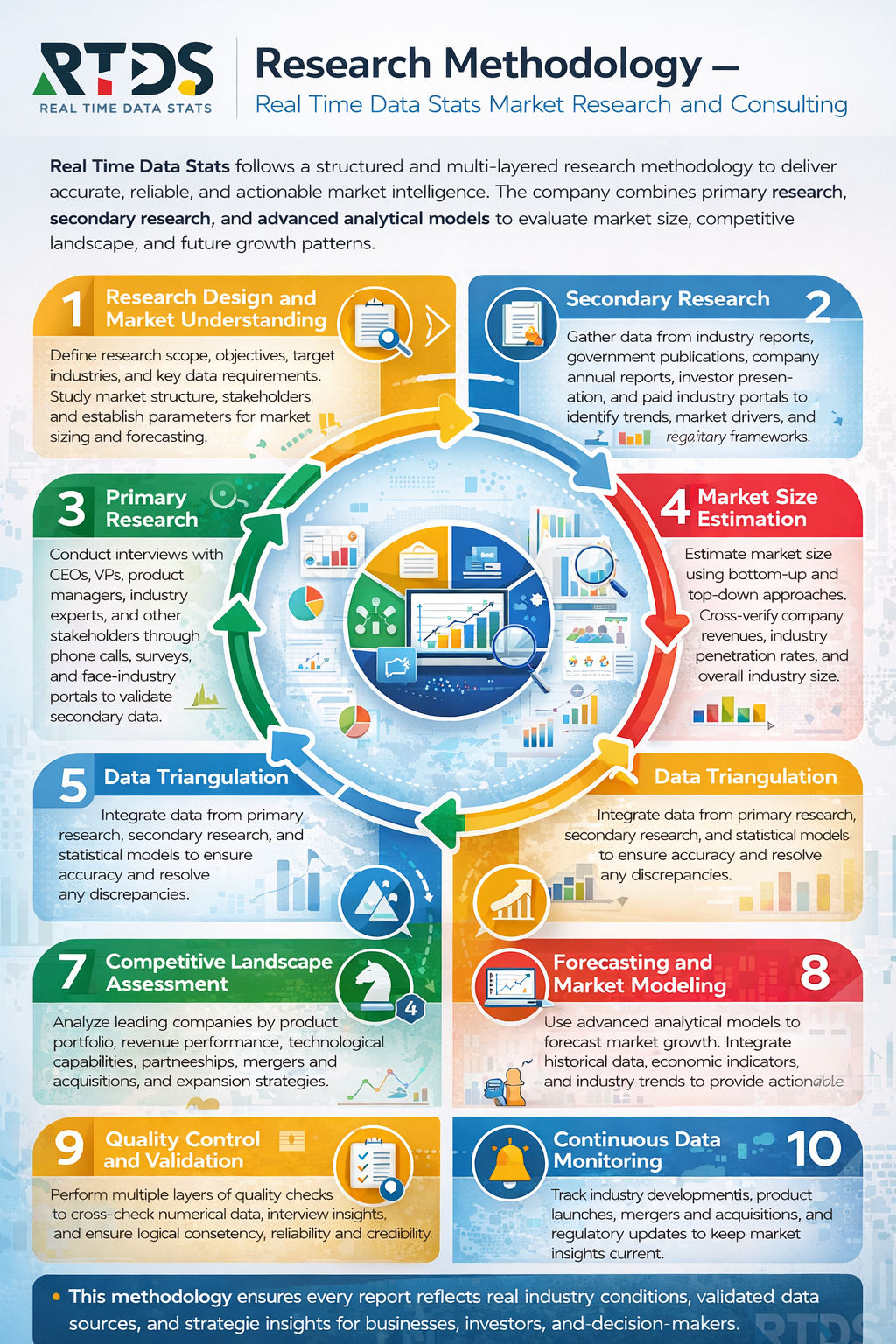
Research Methodology
- Primary research approach
- Secondary research sources
- Data triangulation method
- Market estimation techniques
- Assumptions and limitations
Executive Summary
- Market snapshot
- Key market highlights
- Strategic takeaways
- Opportunity assessment
Market Dynamics
- Market drivers
- Market restraints
- Market opportunities
- Market challenges
- Technology advancement impact
Regulatory landscape overview
- Neural Synapse Mapping Market Overview
- Market size analysis
- Market growth trends
- Market attractiveness analysis
- Value chain analysis
- Pricing analysis
Neural Synapse Mapping Market Segmentation
- By Type
- Structural synapse mapping
- Functional synapse mapping
- Molecular synapse mapping
- Electrical synapse mapping
- Chemical synapse mapping
- Hybrid synapse mapping
- By Application
- Neuroscience research
- Drug discovery
- Neurological disorder studies
- Brain–computer interface development
- Cognitive science research
- Regenerative medicine
- By Technology
- Electron microscopy
- Super-resolution microscopy
- Optogenetics
- Connectomics platforms
- Calcium imaging
- Multielectrode arrays
- By Component
- Hardware systems
- Software platforms
- Imaging tools
- Data analytics solutions
- Reagents and probes
- AI-based mapping tools
- By End User
- Academic research institutes
- Pharmaceutical companies
- Biotechnology firms
- Hospitals and clinics
- Contract research organizations
- Government research laboratories
- By Disease Indication
- Alzheimer’s disease
- Parkinson’s disease
- Epilepsy
- Autism spectrum disorders
- Schizophrenia
- Depression
- By Mapping Approach
- In vivo mapping
- In vitro mapping
- Ex vivo mapping
- Whole-brain mapping
- Single-neuron mapping
- Network-level mapping
- By Data Type
- Structural connectivity data
- Functional connectivity data
- Synaptic density data
- Neurochemical data
- Electrophysiological data
- Multimodal datasets
- By Workflow Stage
- Sample preparation
- Image acquisition
- Signal amplification
- Data processing
- Visualization and modeling
- Data storage and management
Regional Market Analysis
- North America market analysis
- Europe market analysis
- Asia Pacific market analysis
- Latin America market analysis
- Middle East market analysis
- Africa market analysis
Competitive Landscape
- Market share analysis
- Competitive benchmarking
- Strategic initiatives
- Mergers and acquisitions
- Collaborations and partnerships
- Product pipeline analysis
Company Profiles
- Company overview
- Product portfolio
- Financial performance
- Strategic developments
- SWOT analysis
Future Outlook
- Emerging trends
- Innovation roadmap
- Investment opportunities
- Long-term market projections
Conclusion
- Summary of Market Trends
- Key Drivers and Restraints
- Growth Opportunities
- Technology & Innovation Outlook
- Future Market Forecast
Appendix
- Abbreviations and acronyms
- Data sources
- Research assumptions
- Disclaimer
List of Tables
- Table:1: Global Neural Synapse Mapping Market Snapshot
- Table:2: Market Size by Type
- Table:3: Market Size by Application
- Table:4: Market Size by Technology
- Table:5: Market Size by Component
- Table:6: Market Size by End User
- Table:7: Market Size by Disease Indication
- Table:8: Market Size by Mapping Approach
- Table:9: Market Size by Data Type
- Table:10: Market Size by Workflow Stage
- Table:11: Regional Market Size Analysis
- Table:12: North America Market Breakdown
- Table:13: Europe Market Breakdown
- Table:14: Asia Pacific Market Breakdown
- Table:15: Competitive Landscape Comparison
List of Figures
- Figure:1: Neural Synapse Mapping Market Overview
- Figure:2: Market Research Methodology Flowchart
- Figure:3: Value Chain Analysis
- Figure:4: Market Dynamics Framework
- Figure:5: Market Segmentation Overview
- Figure:6: Market Share by Type
- Figure:7: Market Share by Application
- Figure:8: Market Share by Technology
- Figure:9: Market Share by Component
- Figure:10: Market Share by End User
- Figure:11: Market Share by Region
- Figure:12: Regional Market Growth Trends
- Figure:13: Competitive Landscape Matrix
- Figure:14: Strategic Development Trends
- Figure:15: Future Market Outlook Visualization
Neural Synapse Mapping Market Key Factors
Drivers:
- Rising neurological disorder prevalence increases demand for advanced brain mapping.
- Expanding neuroscience research fuels investment in synaptic-level analysis tools.
- Technological advancements in imaging and AI enhance mapping resolution and speed.
Restraints:
- Prohibitive equipment costs limit widespread laboratory and clinical adoption.
- Technical complexities in data interpretation require highly specialized expertise.
- Ethical concerns and stringent regulations govern human brain research and data.
Opportunities:
- Integrating artificial intelligence unlocks potential for automated synapse analysis.
- Developing personalized neurology treatments creates a new application frontier.
- Collaborative initiatives between academia and industry accelerate product innovation.
Challenges:
- Managing and processing extreme volumes of imaging data strains existing infrastructure.
- Validating mapping technologies for clinical use requires lengthy and costly trials.
- The field faces a significant shortage of skilled multidisciplinary researchers.
Neural Synapse Mapping Market Key Regional Trends
North America:
- Strong funding from both government agencies and private ventures propels research.
- Leading biotechnology and pharma firms drive adoption for drug discovery.
- Presence of major market players accelerates the development of commercial products.
Europe:
- Collaborative multinational research programs foster large-scale brain initiative projects.
- Strict data privacy regulations (like GDPR) shape research methodologies and data handling.
- Significant public and private investment focuses on neurodegenerative disease research.
Asia-Pacific:
- Governments are strategically increasing investments in neuroscience and neurotechnology.
- The rapidly expanding healthcare sector and rising patient awareness boost market growth.
- Growing academic research output increases the domestic demand for mapping tools.
Rest of the World:
- Focus remains on establishing fundamental neuroscience research infrastructure.
- International collaborations and grants provide essential access to advanced technologies.
- Market growth is emerging but faces constraints due to limited local funding and expertise.
Frequently Asked Questions
Key Questions Answered
- What is the size and growth rate of the market industry?
- What are the main drivers influencing market growth trends?
- What are the key challenges and restraints faced by the market?
- What are the emerging trends and opportunities shaping the market?
- Who are the top players, and what strategies drive their success?
- What are the customer demographics and their buying behaviors?
- What are the key market segments, and what is their scope?
- What are the geographical dynamics, and which region dominates?
- What are the market forecasts and projections for the next decade?
- What regulatory factors are critical to consider for market growth?
Why Choose our Company?
- Major facts and stats backing every report we offer.
- Comprehensive analysis tailored to your business needs.
- Accurate insights backed by extensive market research.
- Expert support to address your queries promptly.
- Data-driven strategies for better decision-making.
- In-depth reports with actionable
recommendations. - Reliable statistics from trusted industry
sources. - Customizable reports to suit your specific goals.
- Unmatched quality and precision in market analysis.
- Competitive pricing with premium content delivery.
Share your experience!
We value you feedback. Please take a moment to review your experience with us.