
According to insights from Real Time Data Stats, the Neural Motor Decoding Market was valued at USD 0.47 billion in 2025. It is expected to grow from USD 0.55 billion in 2026 to USD 1.53 billion by 2033, registering a CAGR of 15.9% during the forecast period (2026–2033).
MARKET SIZE AND SHARE
The global neural motor decoding market is transitioning from a niche neurotechnology segment to a mainstream healthcare solution. Market growth is being driven by the increasing prevalence of neurological disorders, spinal cord injuries, and neurodegenerative conditions, creating strong demand for advanced brain-computer interface systems. These technologies enable direct neural control, support motor function restoration, and improve patient outcomes, contributing to sustained market expansion throughout the forecast period.
Market share is expected to remain concentrated among leading companies and research organizations developing invasive and non-invasive neural decoding technologies. Competition is centered on algorithm performance, device miniaturization, clinical validation, and integration with rehabilitation systems. Strategic collaborations, mergers, and partnerships with healthcare providers are anticipated to strengthen market positions, expand patient access, and shape the competitive landscape through 2032.
INDUSTRY OVERVIEW AND STRATEGY
The neural motor decoding industry focuses on developing interfaces that translate neural activity into commands for external devices, aiming to restore mobility for paralyzed individuals. This interdisciplinary field merges neuroscience, biomedical engineering, and machine learning, driven by intense research in academic labs and significant venture capital investment. The primary strategic objective is to create reliable, real-time systems that seamlessly integrate with the human nervous system for natural movement control.
Core strategy involves a dual-track approach: pursuing non-invasive solutions for broader accessibility while advancing invasive implants for superior fidelity. Companies prioritize forming alliances with neurology clinics for clinical trials and securing regulatory approvals. A key strategic pillar is the continuous refinement of decoding algorithms using AI to improve adaptability and reduce calibration time, ensuring commercial viability and user adoption in both clinical and assistive technology markets.
Analyst Key Takeaways:
Neural motor decoding is emerging as a critical enabling technology within the broader brain-computer interface (BCI) and neurotechnology ecosystem, driven by advances in neural signal processing, artificial intelligence, and real-time brain-machine communication. Growing research efforts focused on restoring motor function, improving neurorehabilitation outcomes, and enabling seamless control of prosthetic devices are accelerating technology adoption across healthcare and assistive applications.
The market is expected to benefit from increasing integration of neural motor decoding algorithms into neuroprosthetics, exoskeletons, and next-generation assistive technologies. Strong momentum in BCI development, expanding investments in neurotechnology innovation, and rising demand for personalized neural interfaces are positioning neural motor decoding as a key component of future human-machine interaction systems, supporting sustained growth throughout the forecast period.
REGIONAL TRENDS AND GROWTH
North America leads the market, driven by substantial NIH funding, a concentration of tech pioneers, and a supportive regulatory framework. Europe follows closely, emphasizing strong clinical research collaborations under stringent EU medical device regulations. The Asia-Pacific region emerges as the fastest-growing area, due to increasing healthcare investment, rising neurological disease burden, and government initiatives promoting neurotechnology research, particularly in China, Japan, and South Korea, fostering a vibrant innovation ecosystem.
Primary growth drivers include the escalating global incidence of stroke and ALS, alongside rapid advancements in AI and neural implants. Significant restraints are high device costs, lengthy regulatory pathways, and surgical risks for invasive models. Key opportunities lie in miniaturized, wireless bioelectronics and telehealth integration. Major challenges encompass addressing data privacy concerns, achieving long-term implant biocompatibility, and ensuring equitable access to these high-cost therapies across different economic regions.
NEURAL MOTOR DECODING MARKET SEGMENTATION ANALYSIS
BY TYPE:
The segmentation by type reflects the technological depth and clinical risk-reward balance that defines adoption across the neural motor decoding ecosystem. Invasive neural decoding dominates high-precision clinical and research environments due to its superior signal fidelity and direct cortical access, making it critical for advanced prosthetic control and paralysis recovery applications. Semi-invasive decoding bridges performance and safety, gaining traction in translational research and early commercial trials. Non-invasive neural decoding continues to experience the fastest volume-based growth, driven by lower regulatory barriers, expanding wearable EEG systems, and growing consumer-oriented neurotechnology use cases. Hybrid neural decoding approaches are emerging as a strategic solution, combining invasive accuracy with non-invasive scalability to optimize performance across diverse patient profiles.
Adaptive and closed-loop neural decoding represent the most transformative developments within this segment, driven by real-time learning algorithms and feedback-based neural modulation. Adaptive decoding systems improve accuracy over time by learning individual neural patterns, significantly enhancing long-term usability in rehabilitation and assistive technologies. Closed-loop neural decoding, which continuously adjusts stimulation or control outputs based on neural feedback, is becoming essential for next-generation neuroprosthetics and therapeutic interventions. Regulatory progress, AI integration, and rising investment in personalized neurotechnology are expected to accelerate adoption across all type segments, with adaptive and closed-loop systems showing the strongest long-term growth potential.
BY APPLICATION:
Application-based segmentation highlights the expanding functional scope of neural motor decoding beyond traditional clinical use. Prosthetic control remains the largest and most mature application, driven by rising amputation rates, defense-related injuries, and continuous improvements in motor intention decoding accuracy. Brain-computer interfaces represent a rapidly scaling segment, supported by increasing research funding, commercial BCI startups, and broader interest in human-machine interaction. Neurorehabilitation applications are gaining strong momentum as decoding technologies enable personalized therapy for stroke, spinal cord injury, and neurodegenerative disorders, significantly improving motor recovery outcomes.
Assistive communication applications are expanding rapidly, particularly for patients with ALS and severe motor impairments, where neural decoding enables direct communication pathways. Robotics control is emerging as a high-growth application area, especially in medical robotics, industrial automation, and defense systems where neural inputs enhance precision and response time. Gaming and virtual reality applications, while currently smaller in revenue contribution, are acting as a commercialization catalyst by accelerating user acceptance, lowering hardware costs, and driving innovation in non-invasive decoding platforms. Together, these applications are broadening the market from a clinical niche into a multi-industry neurotechnology ecosystem.
BY TECHNOLOGY:
Technology-based segmentation underscores the critical role of computational intelligence in decoding complex neural signals. Machine learning–based decoding remains foundational, offering reliable pattern recognition and adaptability across clinical and non-clinical use cases. Deep learning–based decoding is gaining dominance due to its superior ability to process high-dimensional neural data, enabling more accurate motor intention prediction and real-time response. Signal processing–based decoding continues to be essential in preprocessing and feature extraction, particularly in environments where computational efficiency and latency reduction are critical.
AI-integrated decoding platforms are reshaping the competitive landscape by combining neural networks, adaptive algorithms, and contextual learning, enabling more autonomous and scalable systems. Real-time neural decoding is a key performance driver, especially in prosthetics, robotics, and closed-loop systems where latency directly impacts functionality. Cloud-based neural decoding is expanding rapidly due to its scalability, collaborative research benefits, and ability to support continuous algorithm updates, although data privacy and latency concerns continue to influence deployment decisions. Together, these technologies are converging to create highly intelligent, responsive, and personalized neural decoding systems.
BY SIGNAL TYPE:
Signal-type segmentation reflects trade-offs between signal quality, invasiveness, and scalability. EEG-based decoding dominates commercial and research adoption due to its non-invasive nature, portability, and cost efficiency, making it ideal for wearables and consumer-facing applications. ECoG-based decoding offers superior spatial resolution compared to EEG and is increasingly adopted in clinical trials where higher accuracy is required without fully invasive procedures. MEG-based decoding, while limited by cost and infrastructure requirements, remains valuable in advanced research and high-precision neurological studies.
fNIRS-based decoding is gaining attention for its portability and complementary use with EEG, particularly in rehabilitation and cognitive-motor studies. Single-neuron signal decoding represents the highest accuracy tier and is critical for advanced prosthetics and experimental therapies, although adoption remains limited to specialized clinical and research settings. Multi-neuron signal decoding is expanding more rapidly due to its balance of robustness and scalability, supporting complex motor decoding tasks across clinical, research, and emerging commercial applications.
BY COMPONENT:
Component segmentation highlights the structural foundation of neural motor decoding systems. Hardware components, including electrodes, headsets, and implantable devices, account for a significant portion of market revenue due to high manufacturing complexity and regulatory requirements. Software platforms are becoming increasingly critical as they enable data interpretation, visualization, and system integration across applications. Algorithms form the core value driver, determining decoding accuracy, adaptability, and long-term performance, and are a key area of competitive differentiation.
Sensors play a vital role in signal acquisition quality and user comfort, directly influencing adoption rates across invasive and non-invasive systems. Processing units are evolving rapidly to support real-time decoding and edge computing, reducing latency and dependence on centralized infrastructure. Interface systems, which translate decoded signals into actionable outputs, are expanding in importance as user experience becomes a key success factor, particularly in assistive and consumer-oriented applications.
BY END USER:
End-user segmentation reflects diverse adoption drivers across institutional and commercial environments. Hospitals represent the largest end-user segment due to clinical deployment of neural decoding for surgery, rehabilitation, and assistive care. Research institutes play a critical role in innovation, validation, and early-stage technology development, driving continuous advancement across decoding methodologies. Rehabilitation centers are emerging as high-growth end users as neural decoding becomes integral to personalized recovery programs.
Academic institutions contribute significantly to foundational research and talent development, supporting long-term market sustainability. Defense organizations are increasingly investing in neural motor decoding for human performance enhancement, prosthetic development, and advanced robotics control. Commercial enterprises, including neurotech startups and consumer electronics companies, are accelerating market expansion by driving product commercialization, cost reduction, and large-scale adoption.
BY DEPLOYMENT MODE:
Deployment-mode segmentation reflects infrastructure preferences and operational requirements. On-premise deployment remains dominant in hospitals and research facilities where data security, regulatory compliance, and low latency are critical. Cloud-based deployment is gaining strong traction due to scalability, collaborative capabilities, and cost efficiency, particularly in research and commercial development environments. Edge-based deployment is emerging rapidly as real-time performance becomes essential for prosthetics, robotics, and wearable applications.
Hybrid deployment models are increasingly preferred as they balance performance, security, and scalability by integrating cloud and edge capabilities. Portable systems are driving adoption in rehabilitation and home-care settings by improving accessibility and continuity of care. Wearable systems represent one of the fastest-growing deployment formats, supported by advancements in miniaturization, battery efficiency, and consumer acceptance of neurotechnology.
BY PATIENT TYPE:
Patient-type segmentation highlights the clinical demand drivers shaping market growth. Spinal cord injury patients represent a major target group due to the potential of neural decoding to restore motor function and independence. Stroke patients form a rapidly expanding segment as decoding-enabled rehabilitation demonstrates improved recovery outcomes. Parkinson’s disease patients benefit from neural decoding through improved motor control and symptom management, driving clinical research and adoption.
ALS patients represent a critical application area for assistive communication and motor intention decoding, with strong ethical and clinical support driving innovation. Amputees continue to be a primary focus due to advances in prosthetic control and sensory feedback integration. Cerebral palsy patients are an emerging segment as early-intervention neurotechnology gains traction, supported by growing awareness and investment in pediatric neurorehabilitation solutions.
RECENT DEVELOPMENTS
- In Jan 2024: Synchron initiated the COMMAND trial for its Stentrode BCI in the US, aiming for permanent implantation to enable severely paralyzed patients to control digital devices with their thoughts.
- In Mar 2024: Neuralink showcased its first human participant, Noland Arbaugh, playing online chess and controlling a cursor via the Telepathy implant, marking a significant public milestone for the company.
- In May 2024: Blackrock Neurotech received FDA Breakthrough Device Designation for its MoveAgain BCI system, accelerating its path to market for restoring motor function in patients with paralysis.
- In Nov 2024: Precision Neuroscience reported successful implant of its Layer 7 Cortical Interface in a first-in-human clinical study, demonstrating high-resolution neural recording for motor decoding applications.
- In Feb 2025: Paradromics commenced patient enrollment for its CONNECT BCI system clinical trial, focusing on restoring communication and motor control with its high-data-rate neural interface.
KEY PLAYERS ANALYSIS
- Neuralink
- Synchron
- Blackrock Neurotech
- Paradromics
- Precision Neuroscience
- BrainGate Consortium
- Kernel
- MindMaze
- Cognixion
- Neurable
- CTRL-Labs (Meta)
- Science Corporation
- NeuroPace
- Medtronic
- Abbott
- Boston Scientific
- CorTec
- MindX
- InBrain Neuroelectronics
- Nevro
Neural Motor Decoding Market Segmentation Analysis
By Type:
- Invasive Neural Decoding
- Semi-Invasive Neural Decoding
- Non-Invasive Neural Decoding
- Hybrid Neural Decoding
- Adaptive Neural Decoding
- Closed-Loop Neural Decoding
By Application:
- Prosthetic Control
- Brain-Computer Interfaces
- Neurorehabilitation
- Assistive Communication
- Robotics Control
- Gaming and Virtual Reality
By Technology:
- Machine Learning–Based Decoding
- Deep Learning–Based Decoding
- Signal Processing–Based Decoding
- AI-Integrated Decoding
- Real-Time Neural Decoding
- Cloud-Based Neural Decoding
By Signal Type:
- EEG-Based Decoding
- ECoG-Based Decoding
- MEG-Based Decoding
- fNIRS-Based Decoding
- Single-Neuron Signals
- Multi-Neuron Signals
By Component:
- Hardware
- Software
- Algorithms
- Sensors
- Processing Units
- Interface Systems
By End User:
- Hospitals
- Research Institutes
- Rehabilitation Centers
- Academic Institutions
- Defense Organizations
- Commercial Enterprises
By Deployment Mode:
- On-Premise
- Cloud-Based
- Edge-Based
- Hybrid Deployment
- Portable Systems
- Wearable Systems
By Patient Type:
- Spinal Cord Injury Patients
- Stroke Patients
- Parkinson’s Disease Patients
- ALS Patients
- Amputees
- Cerebral Palsy Patients
By Geography:
- North America (USA, Canada, Mexico)
- Europe (UK, Germany, France, Italy, Spain, Rest of Europe)
- Asia-Pacific (China, Japan, Australia, South Korea, India, Rest of Asia-Pacific)
- South America (Brazil, Argentina, Rest of South America)
- Middle East and Africa (GCC Countries, South Africa, Rest of MEA)
Neural Motor Decoding Market: Table of Contents
Introduction
- Market Definition
- Scope of the Study
- Research Objectives
- Market Taxonomy
- Study Assumptions
- Limitations
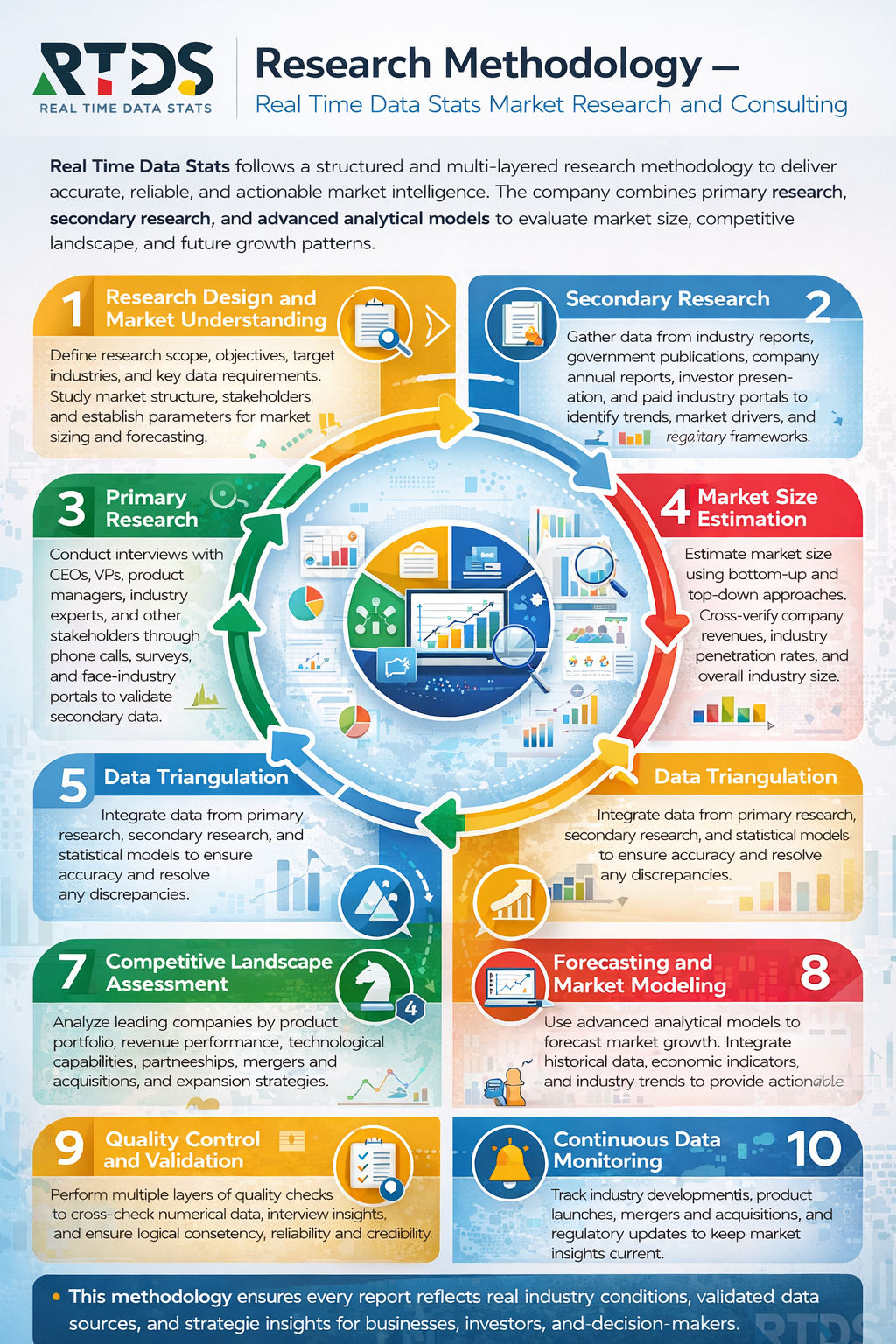
Research Methodology
- Primary Research
- Secondary Research
- Data Triangulation
- Market Estimation Techniques
- Forecasting Methodology
- Validation Process
Market Overview
- Industry Snapshot
- Market Evolution
- Ecosystem Analysis
- Value Chain Analysis
- Pricing Analysis
Regulatory Landscape
- Market Dynamics
- Market Drivers
- Market Restraints
- Market Opportunities
- Market Challenges
- Technology Trends
- Innovation Landscape
Neural Motor Decoding Market Segmentation Analysis
- By Type
- Invasive Neural Decoding
- Semi-Invasive Neural Decoding
- Non-Invasive Neural Decoding
- Hybrid Neural Decoding
- Adaptive Neural Decoding
- Closed-Loop Neural Decoding
- By Application
- Prosthetic Control
- Brain-Computer Interfaces
- Neurorehabilitation
- Assistive Communication
- Robotics Control
- Gaming and Virtual Reality
- By Technology
- Machine Learning–Based Decoding
- Deep Learning–Based Decoding
- Signal Processing–Based Decoding
- AI-Integrated Decoding
- Real-Time Neural Decoding
- Cloud-Based Neural Decoding
- By Signal Type
- EEG-Based Decoding
- ECoG-Based Decoding
- MEG-Based Decoding
- fNIRS-Based Decoding
- Single-Neuron Signals
- Multi-Neuron Signals
- By Component
- Hardware
- Software
- Algorithms
- Sensors
- Processing Units
- Interface Systems
- By End User
- Hospitals
- Research Institutes
- Rehabilitation Centers
- Academic Institutions
- Defense Organizations
- Commercial Enterprises
- By Deployment Mode
- On-Premise
- Cloud-Based
- Edge-Based
- Hybrid Deployment
- Portable Systems
- Wearable Systems
- By Patient Type
- Spinal Cord Injury Patients
- Stroke Patients
- Parkinson’s Disease Patients
- ALS Patients
- Amputees
- Cerebral Palsy Patients
Regional Analysis
- North America
- Europe
- Asia Pacific
- Latin America
- Middle East & Africa
Competitive Landscape
- Market Share Analysis
- Competitive Benchmarking
- Strategic Initiatives
- Mergers and Acquisitions
- Collaborations and Partnerships
- Product Launches
Company Profiles
- Overview
- Product Portfolio
- Financial Overview
- Strategic Developments
- SWOT Analysis
Future Outlook
- Emerging Technologies
- Investment Trends
- Market Growth Scenarios
- Strategic Recommendations
Conclusion
- Summary of Market Trends
- Key Drivers and Restraints
- Growth Opportunities
- Technology & Innovation Outlook
- Future Market Forecast
Appendix
- Abbreviations
- Definitions
- Research Assumptions
- Data Sources
List of Tables
- Table:1: Global Neural Motor Decoding Market Overview
- Table:2: Market Size by Type
- Table:3: Market Size by Application
- Table:4: Market Size by Technology
- Table:5: Market Size by Signal Type
- Table:6: Market Size by Component
- Table:7: Market Size by End User
- Table:8: Market Size by Deployment Mode
- Table:9: Market Size by Patient Type
- Table:10: Regional Market Analysis
- Table:11: North America Market Breakdown
- Table:12: Europe Market Breakdown
- Table:13: Asia-Pacific Market Breakdown
- Table:14: Competitive Market Share Analysis
- Table:15: Key Company Comparison
List of Figures
- Figure:1: Neural Motor Decoding Market Segmentation Framework
- Figure:2: Market Value Chain Analysis
- Figure:3: Market Ecosystem Overview
- Figure:4: Market Dynamics Framework
- Figure:5: Technology Evolution Timeline
- Figure:6: Neural Signal Processing Workflow
- Figure:7: By Type Market Share
- Figure:8: By Application Market Share
- Figure:9: By Technology Market Share
- Figure:10: Regional Market Share Distribution
- Figure:11: Competitive Landscape Matrix
- Figure:12: Company Positioning Map
- Figure:13: Investment Trend Analysis
- Figure:14: Future Market Growth Outlook
- Figure:15: Strategic Opportunity Map
Neural Motor Decoding Market: Key Factors
Drivers:
- Rising neurological disorder prevalence expands the patient population.
- Advancing neurotechnology enhances decoding accuracy and system performance.
- Increasing research funding accelerates product development and clinical trials.
Restraints:
- High device and treatment costs restrict market accessibility.
- Stringent regulatory approvals delay commercial product launches.
- Technical complexities in signal interpretation hinder widespread adoption.
Opportunities:
- Emerging brain-computer interface (BCI) applications create new use cases.
- Integrating artificial intelligence improves real-time decoding algorithms.
- Expanding into rehabilitation and assistive technologies opens new markets.
Challenges:
- Ensuring long-term safety and stability of neural implants remains difficult.
- Achieving high-fidelity signals in non-invasive devices presents technical hurdles.
- Addressing ethical concerns and data privacy issues requires clear frameworks.
Neural Motor Decoding Market: Key Regional Trends
North America:
- Strong venture capital investment fuels startup growth and innovation.
- Leading research institutions are conducting pivotal clinical trials.
- Regulatory agencies are actively shaping frameworks for neurotechnology.
Europe:
- Collaborative EU-funded projects are driving cross-border research.
- Stringent GDPR regulations are impacting data management strategies.
- Focus is increasing on ethical guidelines for neural data and BCI use.
Asia-Pacific:
- Governments are launching national initiatives to support neurotech research.
- Manufacturing advancements are reducing component costs.
- Rising healthcare investments are expanding access to advanced treatments.
Frequently Asked Questions
Key Questions Answered
- What is the size and growth rate of the market industry?
- What are the main drivers influencing market growth trends?
- What are the key challenges and restraints faced by the market?
- What are the emerging trends and opportunities shaping the market?
- Who are the top players, and what strategies drive their success?
- What are the customer demographics and their buying behaviors?
- What are the key market segments, and what is their scope?
- What are the geographical dynamics, and which region dominates?
- What are the market forecasts and projections for the next decade?
- What regulatory factors are critical to consider for market growth?
Why Choose our Company?
- Major facts and stats backing every report we offer.
- Comprehensive analysis tailored to your business needs.
- Accurate insights backed by extensive market research.
- Expert support to address your queries promptly.
- Data-driven strategies for better decision-making.
- In-depth reports with actionable
recommendations. - Reliable statistics from trusted industry
sources. - Customizable reports to suit your specific goals.
- Unmatched quality and precision in market analysis.
- Competitive pricing with premium content delivery.
Share your experience!
We value you feedback. Please take a moment to review your experience with us.