
According to insights from Real Time Data Stats, the Neural Computation Market was valued at USD 32.3 billion in 2025. It is expected to grow from USD 40.3 billion in 2026 to USD 190.7 billion by 2033, registering a CAGR of 24.8% during the forecast period (2026–2033).
MARKET SIZE AND SHARE
The neural computation market is driven by the growing demand for artificial intelligence and machine learning solutions across industries. Advanced neural network applications in healthcare, automotive, finance, and industrial automation continue to accelerate adoption. Market share remains concentrated among leading technology companies that invest heavily in neuromorphic computing, deep learning research, and high-performance AI infrastructure to strengthen their competitive positions.
Market share distribution is characterized by strong competition between established semiconductor manufacturers and emerging AI-focused innovators. North America currently holds a significant share due to substantial R&D investments and early technology adoption. Meanwhile, the Asia-Pacific region is expected to gain considerable market share through 2032, supported by rapid digital transformation initiatives. The competitive landscape continues to evolve through strategic partnerships, acquisitions, and product innovations aimed at expanding market presence and capturing growth opportunities.
INDUSTRY OVERVIEW AND STRATEGY
The neural computation industry encompasses hardware and software systems designed to mimic biological neural networks, forming the backbone of modern artificial intelligence. Core activities include developing neuromorphic chips, advanced algorithms, and cognitive computing platforms. The industry is inherently interdisciplinary, merging neuroscience, computer science, and engineering. Its primary objective is to create efficient, brain-inspired computing paradigms that surpass traditional architectures in processing complex, unstructured data for real-world problem-solving.
Key strategic imperatives for market players involve aggressive research and development to achieve architectural breakthroughs. Companies are strategically forming alliances with academic institutions and cross-industry partners to accelerate innovation. A dominant strategy is vertical integration, controlling the stack from specialized silicon to end-user software solutions. Furthermore, focusing on scalable and energy-efficient designs is critical for long-term competitiveness and addressing the computational demands of next-generation AI applications.
Analyst Key Takeaways:
The Neural Computation Market is experiencing rapid expansion driven by the growing adoption of artificial intelligence, deep learning, and brain-inspired computing technologies across industries. Increasing demand for high-performance computing architectures capable of processing complex data sets in real time is accelerating innovation in neural processors, neuromorphic systems, and advanced machine learning frameworks. Continuous advancements in edge AI and autonomous decision-making applications are further strengthening market momentum.
Neuromorphic computing and neural network technologies are emerging as key growth pillars, supported by rising investments in next-generation AI infrastructure, robotics, and intelligent automation. Technology providers are focusing on energy-efficient computing models, enhanced processing capabilities, and scalable neural architectures to meet evolving enterprise requirements. Strong research activity and expanding commercialization of cognitive computing solutions are expected to create significant opportunities throughout the forecast period.
REGIONAL TRENDS AND GROWTH
Regionally, North America leads due to strong tech infrastructure and defense funding for AI. Europe shows steady growth, emphasizing ethical AI frameworks and research consortia like the Human Brain Project. The Asia-Pacific region is the fastest-growing, fueled by national AI strategies in China, Japan, and South Korea, alongside massive manufacturing and consumer electronics integration. Other regions are emerging as adoption in automation and smart city projects increases, creating a globally uneven but expanding landscape.
Primary growth drivers include the explosion of big data, demand for efficient AI processing, and proliferation of edge computing. Significant restraints involve high development costs, a shortage of skilled talent, and hardware design complexities. Opportunities lie in healthcare diagnostics, autonomous systems, and quantum-neural hybrids. Major challenges encompass ethical concerns, algorithmic bias, and establishing standardized benchmarks for performance evaluation, which could hinder widespread adoption and interoperability across different platforms.
NEURAL COMPUTATION MARKET SEGMENTATION ANALYSIS
BY TYPE:
The Neural Computation Market, when segmented by type, encompasses a diverse range of neural network architectures including Artificial Neural Networks (ANN), Convolutional Neural Networks (CNN), Recurrent Neural Networks (RNN), Long Short-Term Memory Networks (LSTM), Deep Belief Networks (DBN), and Spiking Neural Networks (SNN). Among these, ANNs dominate due to their widespread adoption across multiple industries for predictive analytics and automation. CNNs have gained substantial traction owing to their superior capability in image and video recognition, making them highly sought-after in sectors such as healthcare diagnostics and autonomous vehicles. RNNs and LSTMs are particularly preferred for sequential data processing applications, including natural language processing and speech recognition, due to their ability to retain temporal information. DBNs and SNNs, though niche, are increasingly explored for complex pattern recognition and neuromorphic computing applications. The dominance of each type is influenced by factors like computational efficiency, accuracy in pattern recognition, scalability, and adaptability to domain-specific requirements.
The market growth in this segment is primarily driven by the rising need for advanced cognitive computing solutions capable of learning from vast datasets and delivering actionable insights. The increasing emphasis on real-time decision-making, particularly in robotics and autonomous systems, further strengthens the demand for RNNs and LSTMs. CNNs benefit from the expansion of image and video-intensive applications such as security surveillance, medical imaging, and augmented reality. Spiking Neural Networks are gaining interest due to their energy-efficient operation, which is crucial for edge computing devices. Overall, the type-based segmentation reflects a shift towards more sophisticated and specialized neural computation models, with adoption being dictated by domain-specific performance, hardware compatibility, and the growing integration of AI in daily operations.
BY APPLICATION:
Neural computation finds application across diverse fields such as image recognition, speech recognition, natural language processing (NLP), robotics, predictive analytics, and autonomous vehicles. Image recognition applications lead the market due to surging demand in healthcare diagnostics, facial recognition systems, and industrial quality control. Speech recognition and NLP are witnessing exponential growth, driven by the increasing adoption of virtual assistants, chatbots, and multilingual customer support systems. Robotics applications leverage neural computation for tasks like motion planning, perception, and adaptive learning, enhancing operational efficiency in manufacturing and defense. Predictive analytics is transforming business decision-making across finance, healthcare, and retail by enabling accurate forecasting and risk assessment. Autonomous vehicles, integrating a combination of CNNs, RNNs, and LSTMs, rely heavily on neural computation for navigation, obstacle detection, and real-time decision-making.
Dominant factors influencing this segment include the need for high accuracy, latency optimization, and scalability of neural computation models. Industries increasingly demand AI models that can process unstructured data efficiently, which fuels growth in NLP and predictive analytics. Robotics and autonomous vehicles benefit from advancements in deep learning algorithms and real-time neural network deployment on specialized hardware like GPUs and accelerators. Additionally, regulatory compliance, safety requirements, and rising investment in AI-powered mobility solutions are propelling adoption in sectors like automotive and aerospace. Overall, the application-based segmentation highlights the market's trajectory toward intelligent, adaptive, and high-performing solutions that address domain-specific operational challenges.
BY COMPONENT:
The Neural Computation Market by component is segmented into hardware, software, and services, with further subdivisions including processors, memory modules, and accelerators. Hardware components, particularly GPUs, TPUs, and neuromorphic processors, dominate due to their critical role in high-performance neural network training and inference. Software components include neural network frameworks, libraries, and analytics platforms that enable model development and deployment, making them crucial for enterprise adoption. Services encompass consulting, integration, and maintenance, helping organizations optimize neural computation systems and ensure seamless operation. Accelerators and memory modules are increasingly significant as the demand for faster computation, lower latency, and energy efficiency rises.
Market growth in this segment is driven by rapid advancements in AI hardware, including specialized processors designed to handle massive datasets and complex computations efficiently. The software ecosystem is expanding as open-source frameworks and AI development tools simplify the implementation of neural networks. Service providers play a pivotal role in deploying solutions tailored to industry-specific needs, supporting scalability, and reducing total cost of ownership. Dominant factors include technological innovation in processors and accelerators, increasing R&D investments, and the need for integrated hardware-software solutions that enhance performance, reliability, and efficiency. Together, these components form the backbone of the neural computation ecosystem, enabling rapid adoption across industries.
BY END-USER:
End-user segmentation covers healthcare, automotive, IT & telecom, aerospace & defense, manufacturing, and finance & banking. Healthcare is a key adopter due to applications in medical imaging, drug discovery, and patient diagnostics, where neural computation enhances accuracy and accelerates decision-making. The automotive sector, particularly in autonomous driving and predictive maintenance, relies heavily on real-time neural network processing. IT & telecom companies use neural computation for network optimization, AI-driven customer support, and cybersecurity solutions. Aerospace and defense leverage neural networks for surveillance, autonomous drones, and mission-critical analytics. Manufacturing and finance & banking sectors focus on process automation, fraud detection, and predictive maintenance, benefiting from neural computation’s capability to process large-scale operational data efficiently.
Dominant factors driving adoption among end-users include operational efficiency, cost reduction, improved safety, and accuracy in complex decision-making tasks. Regulatory compliance and the need for secure and interpretable AI solutions further boost adoption in healthcare, aerospace, and finance. Additionally, the proliferation of iot devices and connected systems in manufacturing and automotive enhances the need for AI-powered edge processing. Enterprises increasingly prefer neural computation solutions that integrate seamlessly with existing IT infrastructure, offering scalable, reliable, and high-performance analytics. This segmentation demonstrates how neural computation is no longer confined to tech companies but is becoming essential across diverse industry verticals.
BY DEPLOYMENT MODE:
Deployment modes in neural computation include on-premises, cloud-based, hybrid, edge computing, embedded systems, and AI-as-a-Service (AIaaS). Cloud-based deployment is dominant due to its scalability, cost-efficiency, and accessibility for small to medium enterprises that lack extensive on-premises infrastructure. On-premises solutions are preferred by organizations handling sensitive data, such as healthcare and finance, to ensure data privacy and compliance. Edge computing and embedded systems are gaining momentum as industries like autonomous vehicles, robotics, and industrial IoT demand real-time AI processing with minimal latency. Hybrid deployment combines the benefits of cloud and on-premises solutions, providing flexibility and reliability. AI-as-a-Service is emerging as a preferred option for organizations seeking plug-and-play AI solutions without heavy upfront investment.
Factors influencing deployment choices include data security requirements, latency sensitivity, cost considerations, and infrastructure readiness. Industries with high regulatory oversight, such as healthcare and finance, favor on-premises and hybrid deployments, whereas startups and SMEs increasingly adopt cloud-based AI to reduce CAPEX. Edge and embedded systems deployment growth is driven by demand for instant analytics in mission-critical applications, with hardware innovation in low-power AI accelerators playing a significant role. AIaaS adoption is further fueled by ease of integration, subscription-based pricing, and continuous updates in model performance. Collectively, deployment modes reflect a market trend toward flexible, scalable, and secure AI computing environments.
BY ORGANIZATION SIZE:
Neural computation adoption varies across small enterprises, medium enterprises, large enterprises, startups, research institutions, and government agencies. Large enterprises are at the forefront, leveraging neural computation for enterprise-wide AI integration, data analytics, and operational automation. Medium and small enterprises are increasingly investing in AI to enhance competitiveness, relying on cloud-based and AI-as-a-Service solutions. Startups often utilize neural computation for innovative product development and niche AI applications, while research institutions focus on fundamental AI research and neural network experimentation. Government agencies employ neural computation for public safety, defense, and large-scale data analytics, driving societal and national benefits.
Dominant factors influencing adoption across organization sizes include resource availability, infrastructure readiness, expertise in AI, and strategic AI objectives. Large enterprises can invest heavily in high-performance computing systems, while startups benefit from flexible cloud-based solutions. Research institutions and government agencies are motivated by innovation and societal impact, leading to funding and collaborations that advance neural computation capabilities. Overall, the market growth in this segment is shaped by the ability of organizations to integrate AI solutions efficiently, capitalize on data-driven insights, and leverage neural computation for competitive and societal advantages.
BY LEARNING TYPE:
The learning type segment includes supervised learning, unsupervised learning, reinforcement learning, semi-supervised learning, self-supervised learning, and transfer learning. Supervised learning dominates due to its structured approach and high accuracy in predictive modeling, classification, and regression tasks. Unsupervised learning is growing as organizations aim to uncover hidden patterns in unlabelled data, useful in anomaly detection and market segmentation. Reinforcement learning is crucial for robotics, autonomous vehicles, and adaptive control systems, providing intelligent decision-making capabilities through trial-and-error optimization. Semi-supervised and self-supervised learning are gaining attention as they reduce dependency on large labeled datasets, while transfer learning enables reuse of pre-trained models, accelerating AI deployment across applications.
Dominant factors in this segment include data availability, computational requirements, model accuracy, and domain-specific adaptability. Supervised learning is preferred in regulated sectors like healthcare and finance due to interpretability and reliability, while reinforcement and unsupervised learning thrive in exploratory and dynamic environments. Transfer learning and self-supervised techniques reduce costs and time-to-market, especially for startups and SMEs. The learning type segmentation highlights the market's evolution toward methods that balance efficiency, scalability, and intelligence, enabling organizations to derive actionable insights from diverse and complex datasets.
BY INDUSTRY VERTICAL:
The Neural Computation Market spans multiple industry verticals including healthcare & life sciences, automotive & transportation, retail & e-commerce, BFSI, education & e-learning, and energy & utilities. Healthcare & life sciences dominate due to applications in diagnostics, drug discovery, and personalized medicine. Automotive & transportation leverage neural computation for autonomous driving, predictive maintenance, and traffic optimization. Retail & e-commerce rely on AI-driven recommendation engines, demand forecasting, and customer analytics. BFSI benefits from fraud detection, risk assessment, and algorithmic trading. Education & e-learning platforms utilize AI for personalized learning experiences, while energy & utilities employ neural computation for predictive maintenance, smart grid management, and operational optimization.
Dominant factors driving adoption across industry verticals include operational efficiency, regulatory compliance, predictive capabilities, and enhanced decision-making. Healthcare and BFSI sectors demand highly accurate and reliable neural networks to ensure safety and compliance. Automotive and energy sectors prioritize real-time data processing and adaptive learning for critical operational tasks. Retail and education sectors focus on personalized experiences and efficiency in resource allocation. Overall, industry vertical segmentation reflects the growing penetration of neural computation across traditional and emerging sectors, driven by the need for AI-powered intelligence, efficiency, and competitive advantage.
BY TECHNOLOGY:
Technology-based segmentation includes machine learning, deep learning, cognitive computing, neuromorphic computing, brain-inspired computing, and hybrid neural systems. Machine learning remains the foundation, supporting predictive analytics and data-driven decision-making across industries. Deep learning dominates applications requiring complex pattern recognition, including image, speech, and video analytics. Cognitive computing enhances decision-making by mimicking human reasoning, applicable in healthcare diagnostics and financial advisory. Neuromorphic and brain-inspired computing are emerging technologies focusing on energy efficiency and real-time adaptive learning. Hybrid neural systems integrate multiple neural architectures to maximize performance and accuracy across diverse AI applications.
Dominant factors influencing technology adoption include computational efficiency, accuracy, scalability, and the ability to process large-scale unstructured data. Deep learning and hybrid systems are favored for advanced AI applications requiring high precision, while neuromorphic computing supports edge and embedded devices with power constraints. Cognitive computing adoption grows with demand for intelligent systems capable of reasoning, decision-making, and problem-solving. Overall, the technology segmentation highlights the market's trajectory toward innovative neural architectures that combine efficiency, intelligence, and adaptability to address complex real-world problems.
RECENT DEVELOPMENTS
- In Jan 2024: Intel launched its second-generation neuromorphic research chip, Loihi 2, to select research partners, showcasing improved performance and efficiency for adaptive AI and real-time learning applications.
- In Mar 2024: IBM and Meta launched the AI Alliance, a collaborative group focusing on open innovation in AI, which includes significant work on advanced neural computation models and hardware accelerators.
- In Oct 2024: NVIDIA announced Project GR00T, a foundation model for humanoid robots, heavily reliant on next-generation neural computation to enable real-time reasoning and physical interaction.
- In Dec 2024: SynSense and Prophesee demonstrated a new neuromorphic vision system for automotive ADAS, combining event-based sensors with spiking neural networks for ultra-low latency object detection.
- In Feb 2025: BrainChip Holdings Ltd. began volume shipping of its second-generation Akida™ neuromorphic processor, targeting edge AI applications in smart home, automotive, and industrial IoT markets.
KEY PLAYERS ANALYSIS
- Intel Corporation
- IBM Corporation
- NVIDIA Corporation
- Qualcomm Technologies, Inc.
- Samsung Electronics Co., Ltd.
- Hewlett Packard Enterprise (HPE)
- BrainChip Holdings Ltd.
- Applied Brain Research, Inc.
- General Vision Inc.
- HRL Laboratories, LLC
- aiCTX AG
- Nepes Corporation
- Innatera Nanosystems B.V.
- SynSense AG
- GrAI Matter Labs
- Prophesee SA
- Mythic AI
- TENNLAB (University of Tennessee)
- Western Digital Corporation
- FuriosaAI
Neural Computation Market Segmentation Analysis
By Type:
- Artificial Neural Networks (ANN)
- Convolutional Neural Networks (CNN)
- Recurrent Neural Networks (RNN)
- Long Short-Term Memory Networks (LSTM)
- Deep Belief Networks (DBN)
- Spiking Neural Networks (SNN)
By Application:
- Image Recognition
- Speech Recognition
- Natural Language Processing (NLP)
- Robotics
- Predictive Analytics
- Autonomous Vehicles
By Component:
- Hardware
- Software
- Services
- Processors
- Memory Modules
- Accelerators
By End-User:
- Healthcare
- Automotive
- IT & Telecom
- Aerospace & Defense
- Manufacturing
- Finance & Banking
By Deployment Mode:
- On-Premises
- Cloud-Based
- Hybrid
- Edge Computing
- Embedded Systems
- AI-as-a-Service
By Organization Size:
- Small Enterprises
- Medium Enterprises
- Large Enterprises
- Startups
- Research Institutions
- Government Agencies
By Learning Type:
- Supervised Learning
- Unsupervised Learning
- Reinforcement Learning
- Semi-Supervised Learning
- Self-Supervised Learning
- Transfer Learning
By Industry Vertical:
- Healthcare & Life Sciences
- Automotive & Transportation
- Retail & E-Commerce
- Banking, Financial Services & Insurance (BFSI)
- Education & E-Learning
- Energy & Utilities
By Technology:
- Machine Learning
- Deep Learning
- Cognitive Computing
- Neuromorphic Computing
- Brain-Inspired Computing
- Hybrid Neural Systems
By Geography:
- North America (USA, Canada, Mexico)
- Europe (UK, Germany, France, Italy, Spain, Rest of Europe)
- Asia-Pacific (China, Japan, Australia, South Korea, India, Rest of Asia-Pacific)
- South America (Brazil, Argentina, Rest of South America)
- Middle East and Africa (GCC Countries, South Africa, Rest of MEA)
Neural Computation Market: Table of Contents
Market Overview
- Scope of Neural Computation Technologies
- Evolution of Neural Computation Systems
- Key Differences Between Neural Computation and Traditional AI
- Market Ecosystem and Value Chain Analysis
- Industry Stakeholders and Role Mapping
Market Dynamics
- Market Drivers
- Market Restraints
- Market Opportunities
- Market Challenges
Emerging Industry Trends
- Innovation and R&D Landscape
- Regulatory and Ethical Considerations
- Global Market Size and Forecast
- Historical Market Analysis
- Current Market Estimation
Future Market Projections
- Growth Rate Assessment
- Revenue Forecast by Region
- Volume Analysis
Neural Computation Market Segmentation Analysis
- By Type:
- Artificial Neural Networks (ANN)
- Convolutional Neural Networks (CNN)
- Recurrent Neural Networks (RNN)
- Long Short-Term Memory Networks (LSTM)
- Deep Belief Networks (DBN)
- Spiking Neural Networks (SNN)
- By Application:
- Image Recognition
- Speech Recognition
- Natural Language Processing (NLP)
- Robotics
- Predictive Analytics
- Autonomous Vehicles
- By Component:
- Hardware
- Software
- Services
- Processors
- Memory Modules
- Accelerators
- By End-User:
- Healthcare
- Automotive
- IT & Telecom
- Aerospace & Defense
- Manufacturing
- Finance & Banking
- By Deployment Mode:
- On-Premises
- Cloud-Based
- Hybrid
- Edge Computing
- Embedded Systems
- AI-as-a-Service
- By Organization Size:
- Small Enterprises
- Medium Enterprises
- Large Enterprises
- Startups
- Research Institutions
- Government Agencies
- By Learning Type:
- Supervised Learning
- Unsupervised Learning
- Reinforcement Learning
- Semi-Supervised Learning
- Self-Supervised Learning
- Transfer Learning
- By Industry Vertical:
- Healthcare & Life Sciences
- Automotive & Transportation
- Retail & E-Commerce
- Banking, Financial Services & Insurance (BFSI)
- Education & E-Learning
- Energy & Utilities
- By Technology:
- Machine Learning
- Deep Learning
- Cognitive Computing
- Neuromorphic Computing
- Brain-Inspired Computing
- Hybrid Neural Systems
Regional Market Analysis
- North America Market
- Europe Market
- Asia-Pacific Market
- Latin America Market
- Middle East and Africa Market
Country-Level Market Insights
- United States
- Canada
- Germany
- United Kingdom
- France
- China
- Japan
- India
- South Korea
- Brazil
- UAE
Competitive Landscape
- Market Share Analysis
- Competitive Positioning Matrix
- Strategic Developments
- Mergers and Acquisitions
- Partnerships and Collaborations
- Product Launches and Innovations
- R&D Investments
Company Profiles
- Overview of Leading Players
- Product Portfolio Analysis
- Financial Performance
- Strategic Initiatives
- Regional Presence
- SWOT Analysis
Investment and Funding Trends
- Venture Capital Activity
- Startup Ecosystem
- Government Funding Programs
- Private Equity Participation
Technology Roadmap and Future Outlook
- Next-Generation Neural Chips
- Advancements in Learning Algorithms
- Brain-Inspired Architectures
- Human–Machine Interface Evolution
Use Case and Case Study Analysis
- Healthcare AI Implementation
- Autonomous Driving Neural Systems
- Smart Manufacturing Optimization
- Financial Fraud Detection Models
- Defense Surveillance Systems
Supply Chain and Manufacturing Analysis
- Raw Material Supply
- Semiconductor Fabrication
- Assembly and Testing
- Distribution Channels
Pricing Analysis
- Component Pricing Trends
- Software Licensing Models
- Service Pricing Structures
- Patent and Intellectual Property Landscape
- Patent Filing Trends
- Key Patent Holders
- Innovation Clusters
Sustainability and Energy Efficiency in Neural Computation
- Low-Power Chip Innovations
- Green AI Initiatives
- Environmental Impact Considerations
Conclusion
- Market Expansion
- Tech Advancement
- Industry Adoption
- Investment Growth
- Future Innovation
Appendix
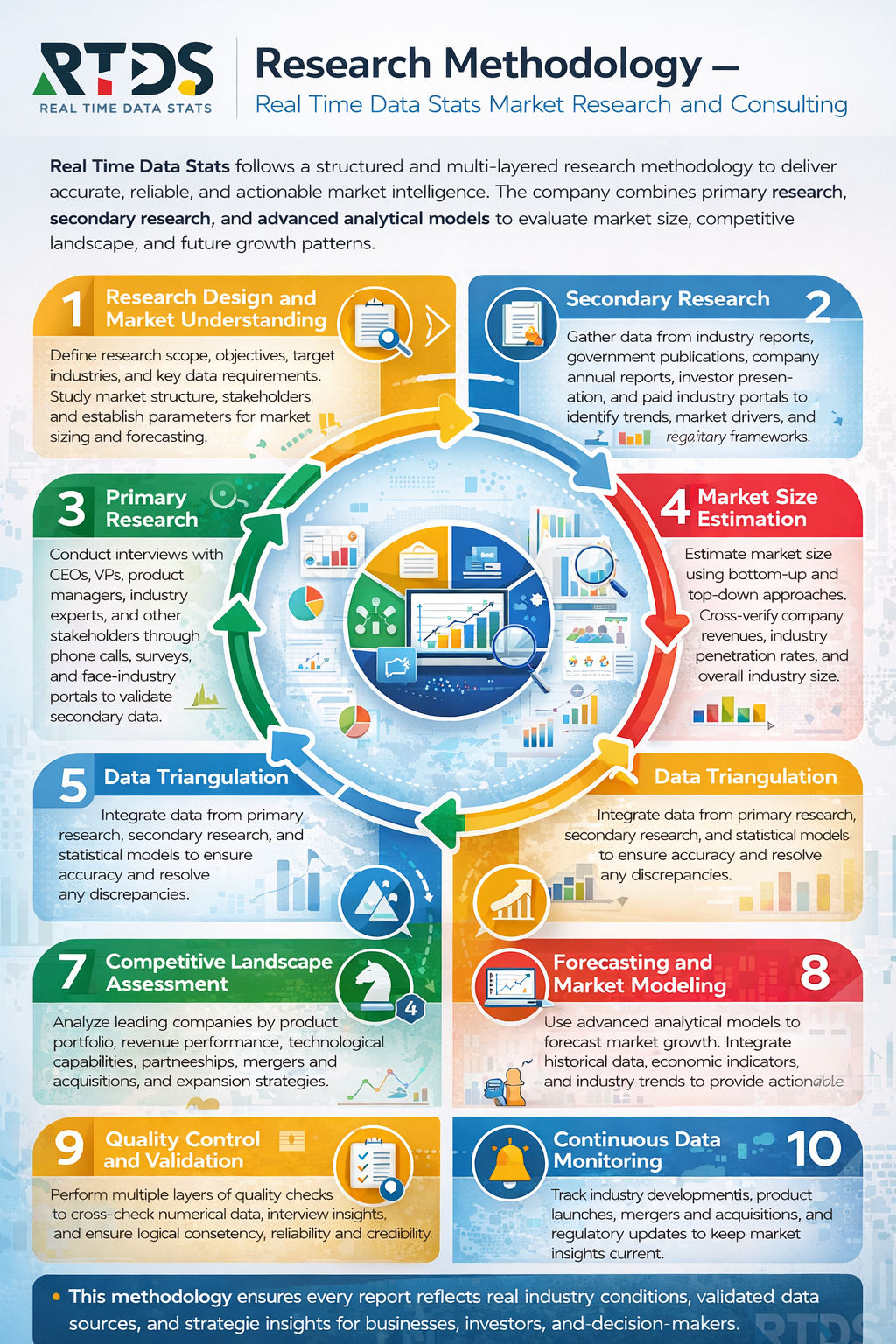
- Research Methodology
- Data Sources
- Abbreviations
- Disclaimer
List of Tables
- Table:1: Global Neural Computation Market Size by Year
- Table:2: Market Growth Rate by Region
- Table:3: Revenue Share by Component
- Table:4: Hardware Segment Revenue Breakdown
- Table:5: Software Segment Revenue Breakdown
- Table:6: Services Segment Revenue Breakdown
- Table:7: Market Size by Technology Type
- Table:8: Deployment Mode Market Share
- Table:9: Application Segment Revenue
- Table:10: Industry Vertical Market Distribution
- Table:11: Regional Market Revenue Comparison
- Table:12: Country-Level Market Forecast
- Table:13: Competitive Market Share of Key Players
- Table:14: Investment and Funding Trends
- Table:15: Patent Filing Distribution by Region
List of Figures
- Figure:1: Neural Computation Market Value Chain
- Figure:2: Market Dynamics Impact Diagram
- Figure:3: Global Market Growth Trend
- Figure:4: Component Segment Share Visualization
- Figure:5: Technology Segment Comparison
- Figure:6: Deployment Mode Distribution
- Figure:7: Application Area Market Split
- Figure:8: Industry Vertical Contribution
- Figure:9: Regional Market Share Map
- Figure:10: Competitive Positioning Matrix
- Figure:11: Investment Flow in Neural Startups
- Figure:12: Neural Chip Architecture Illustration
- Figure:13: Technology Roadmap Timeline
- Figure:14: Supply Chain Flowchart
- Figure:15: Sustainable Neural Computing Framework
Neural Computation Market Key Factors
Drivers:
- Rising demand for AI chips accelerates neuromorphic hardware development.
- Expanding applications in autonomous systems push the need for low-power, real-time processing.
- Increased investment from tech giants and governments fuels advanced research and prototyping.
Restraints:
- High design and fabrication costs limit widespread commercial adoption.
- The lack of standardized programming frameworks hinders developer entry and software ecosystem growth.
- Immature manufacturing processes for novel architectures constrain mass production scalability.
Opportunities:
- Edge computing proliferation creates a strong use case for efficient neuromorphic devices.
- Advancements in material science enable more efficient and brain-like synaptic components.
- Growing requirements for personalized healthcare open doors for brain-computer interfaces and biomedical sensors.
Challenges:
- The field faces a significant shortage of specialists skilled in both neuroscience and computer engineering.
- Demonstrating clear, superior performance over traditional AI hardware for commercial tasks remains difficult.
- Ethical concerns around autonomous decision-making and neurotechnology require robust governance frameworks.
Neural Computation Market Key Regional Trends
North America:
- Strong government funding through agencies like DARPA and NSF drives foundational research.
- Leading technology companies vertically integrate neural computation into cloud and edge products.
- Academic-industry partnerships rapidly prototype and test novel neuromorphic architectures.
Europe:
- Major research initiatives like the Human Brain Project focus on large-scale platform development.
- Stringent data privacy laws shape development towards secure and explainable neural systems.
- Consortia across countries collaborate to build specialized hardware for scientific computing.
Asia-Pacific:
- National strategies prioritize neural computation as a key frontier for economic and technological leadership.
- Massive manufacturing capabilities support the production of next-generation semiconductors for AI.
- Rapid growth in smart cities, robotics, and automotive sectors fuels application-specific demand.
Frequently Asked Questions
Key Questions Answered
- What is the size and growth rate of the market industry?
- What are the main drivers influencing market growth trends?
- What are the key challenges and restraints faced by the market?
- What are the emerging trends and opportunities shaping the market?
- Who are the top players, and what strategies drive their success?
- What are the customer demographics and their buying behaviors?
- What are the key market segments, and what is their scope?
- What are the geographical dynamics, and which region dominates?
- What are the market forecasts and projections for the next decade?
- What regulatory factors are critical to consider for market growth?
Why Choose our Company?
- Major facts and stats backing every report we offer.
- Comprehensive analysis tailored to your business needs.
- Accurate insights backed by extensive market research.
- Expert support to address your queries promptly.
- Data-driven strategies for better decision-making.
- In-depth reports with actionable
recommendations. - Reliable statistics from trusted industry
sources. - Customizable reports to suit your specific goals.
- Unmatched quality and precision in market analysis.
- Competitive pricing with premium content delivery.
Share your experience!
We value you feedback. Please take a moment to review your experience with us.