
According to insights from Real Time Data Stats, the Neural Brainwave Analytics Market was valued at USD 1.12 billion in 2025. It is expected to grow from USD 1.23 billion in 2026 to USD 2.18 billion by 2033, registering a CAGR of 8.6% during the forecast period (2026–2033).
MARKET SIZE AND SHARE
The Neural Brainwave Analytics Market is transitioning from a niche research-focused sector into a broader mainstream industry. Growth is driven by advancements in non-invasive EEG technologies, improved sensor accuracy, and AI-powered data analysis that enhances real-time interpretation of brain activity. Adoption is expanding across healthcare, cognitive wellness, research, education, and neuromarketing applications. As clinical validation improves and hardware becomes more affordable, the market is creating new revenue opportunities while supporting innovation in personalized healthcare and human-computer interaction.
Market share is currently concentrated among specialized neurotechnology companies and established medical device manufacturers with strong EEG portfolios. However, competitive dynamics are expected to evolve as major technology firms and cloud analytics providers enter the space, leveraging their expertise in artificial intelligence, data processing, and scalable platforms. Strategic mergers and acquisitions may increase as companies seek to strengthen capabilities in hardware, software, and integrated analytics solutions. By the forecast period, this convergence of neuroscience and advanced digital technologies is likely to reshape the competitive landscape and global market distribution.
INDUSTRY OVERVIEW AND STRATEGY
The Neural Brainwave Analytics industry leverages electroencephalography (EEG) to decode neural activity, translating brainwaves into actionable data. Core applications span clinical diagnostics, neurofeedback for mental wellness, brain-computer interfaces (BCIs), and consumer neuromarketing research. The industry's evolution is intrinsically linked to miniaturization of hardware and sophisticated machine learning algorithms capable of parsing complex neural signals in real-time, moving beyond controlled labs into real-world settings.
Successful corporate strategy hinges on integrating hardware accessibility with proprietary analytics platforms. Leaders are forming strategic alliances across the value chain, combining sensor manufacturers with software developers and end-user enterprises. A dual-focused strategy targeting both high-value clinical validation and scalable consumer applications is critical. Protecting intellectual property around unique algorithms and securing regulatory approvals for medical claims are paramount strategic pillars for sustained competitive advantage.
Analyst Key Takeaways:
The Neural Brainwave Analytics market is gaining strong momentum as healthcare providers, neuroscience researchers, and digital health companies increasingly adopt AI-enabled brain signal interpretation technologies for faster and more precise neurological assessment. Rising integration of EEG analytics with cloud computing, predictive algorithms, and real-time monitoring platforms is improving diagnostic efficiency across epilepsy detection, sleep disorder analysis, cognitive assessment, and neurodegenerative disease management applications. The growing emphasis on non-invasive neuro-monitoring solutions is further accelerating technology adoption across hospitals and specialized neurology centers.
Industry participants are also focusing on advanced neural data processing capabilities to support personalized medicine, brain-computer interface development, and remote patient monitoring ecosystems. Increasing investments in neurotechnology innovation, coupled with expanding research activities in cognitive analytics and brain mapping, are expected to strengthen long-term market expansion. Additionally, demand for wearable neuro-monitoring devices and AI-driven neurological analytics platforms is creating new commercialization opportunities across both clinical and consumer neurotech segments.
REGIONAL TRENDS AND GROWTH
North America currently leads in market share, fueled by strong R&D investment, a concentration of neurotech startups, and early adoption in healthcare and research. Europe follows closely, with robust growth driven by stringent neurological disorder diagnostic needs and supportive EU regulations for medical devices. The Asia-Pacific region, however, is poised for the highest growth rate, propelled by massive investments in healthcare IT, rising mental health awareness, and expanding academic research in neuroscience.
Primary growth drivers include the escalating global burden of neurological disorders, rising demand for non-pharmacological treatment options, and burgeoning interest in human-computer interaction. Key restraints involve high device costs, data privacy concerns, and a shortage of clinical validation for some applications. Significant opportunities lie in the integration with AR/VR and the development of passive, continuous neural monitoring wearables. The foremost challenge remains achieving standardization in data collection and analysis across diverse platforms.
NEURAL BRAINWAVE ANALYTICS MARKET SEGMENTATION ANALYSIS
BY TYPE:
EEG-based analytics dominate the market due to their non-invasive nature, cost-effectiveness, and widespread clinical acceptance for monitoring brain activity across neurological, cognitive, and behavioral applications. Continuous improvements in electrode sensitivity, signal resolution, and portable EEG systems significantly enhance data accuracy, making EEG the preferred choice for both clinical and consumer-grade analytics. Hybrid brainwave analytics are gaining momentum as organizations seek multi-modal insights by combining EEG with MEG, fNIRS, or AI-driven interpretation layers to improve diagnostic confidence and real-time decision-making.
Advanced analytics types such as AI-enhanced and ECoG-based solutions experience rising adoption in high-precision environments where signal clarity and deep neural mapping are critical. MEG and fNIRS-based analytics benefit from growing research funding and expanding neuroscience programs, particularly in cognitive and behavioral science studies. The ability of advanced types to deliver high-resolution spatial and temporal brain data strengthens their role in specialized diagnostics, neuro-research, and next-generation brain-computer interface development.
BY COMPONENT:
Hardware components hold a significant share due to increasing deployment of wearable EEG devices, clinical brain scanners, and sensor-integrated neuro headsets. Continuous advancements in sensor miniaturization, wireless connectivity, and battery efficiency directly drive hardware demand across hospitals, research institutions, and consumer wellness applications. The rising trend of remote brain monitoring and home-based neuro-assessment further accelerates the adoption of affordable and portable hardware systems.
Software and algorithm components experience rapid growth as data interpretation becomes the core value driver of neural analytics solutions. AI-powered software platforms enable automated pattern recognition, anomaly detection, and predictive modeling, significantly reducing analysis time while improving clinical outcomes. Cloud platforms and visualization tools gain traction By supporting scalable data processing, collaborative research, and real-time insights, making software-centric solutions critical for long-term market expansion.
BY TECHNOLOGY:
Machine learning and deep learning technologies dominate the market due to their ability to process complex neural datasets and identify subtle patterns that traditional analytics fail to detect. These technologies enhance diagnostic accuracy, cognitive performance tracking, and mental health assessments by continuously learning from large-scale brainwave data. Real-time analytics technologies further strengthen adoption by enabling instant feedback in neurofeedback therapy, brain-computer interfaces, and cognitive training applications.
Signal processing and pattern recognition technologies remain foundational, as clean and accurate signal extraction directly influences the reliability of downstream analytics. Predictive analytics gains importance as healthcare providers and researchers increasingly focus on early disease detection and proactive cognitive health management. The integration of multiple technologies into unified platforms enhances analytical depth and strengthens market demand across both clinical and non-clinical environments.
BY DEPLOYMENT MODE:
Cloud-based deployment leads the market due to its scalability, cost efficiency, and ability to support large-volume neural data processing. Cloud platforms enable centralized storage, remote accessibility, and collaborative analytics, making them ideal for research institutions, multi-site hospitals, and AI-driven solution providers. Increasing acceptance of cloud security standards and healthcare data compliance further accelerates cloud adoption globally.
On-premise and hybrid deployment models continue to hold relevance in environments requiring strict data privacy and low-latency processing. Edge computing and mobile-based deployments gain traction as real-time brain analytics applications expand into wearable devices and consumer wellness solutions. The flexibility to choose deployment modes based on data sensitivity, infrastructure readiness, and performance requirements strengthens overall market penetration.
BY APPLICATION:
Neurological disorder diagnosis represents a major application segment due to the growing prevalence of epilepsy, Alzheimer’s disease, Parkinson’s disease, and sleep disorders. Neural brainwave analytics improve diagnostic precision by identifying abnormal brain patterns at early stages, enabling timely clinical intervention. Cognitive performance monitoring and mental health assessment applications also expand rapidly as organizations focus on productivity optimization, stress management, and psychological well-being.
Brain-computer interfaces and neurofeedback therapy applications drive innovation By enabling direct interaction between neural signals and external systems. These applications benefit from advancements in real-time analytics and AI-driven feedback mechanisms. Sleep analysis applications gain strong demand due to rising awareness of sleep-related health risks, further diversifying application-driven revenue streams.
BY END USER:
Hospitals and diagnostic centers dominate the end-user landscape due to high patient volumes, advanced infrastructure, and increasing reliance on data-driven neurological assessments. The integration of neural analytics into clinical workflows enhances diagnostic speed, treatment personalization, and outcome monitoring, making hospitals primary adopters. Rehabilitation centers also expand adoption as brainwave analytics support cognitive recovery and neuro-rehabilitation programs.
Research institutes and academic institutions play a critical role by driving innovation, validating new technologies, and expanding application scope. Neurotechnology companies emerge as high-growth end users by embedding analytics into consumer devices, wearable headsets, and AI-powered platforms. The diversification of end-user demand strengthens market resilience and long-term growth.
BY BRAINWAVE TYPE:
Alpha and beta wave analytics lead the market due to their strong relevance in cognitive performance, attention tracking, and stress monitoring applications. These brainwave types are widely studied and easier to interpret, making them essential for both clinical diagnostics and consumer wellness solutions. Delta and theta wave analytics remain crucial for sleep analysis, neurological disorder detection, and deep cognitive state evaluation.
Gamma wave and multiband analytics experience rapid growth as advanced analytics platforms enable simultaneous analysis of multiple brainwave frequencies. Multiband approaches provide holistic insights into brain function, improving diagnostic accuracy and research outcomes. The growing emphasis on comprehensive neural profiling drives adoption of advanced brainwave-type analytics.
BY USE CASE:
Clinical decision support represents a dominant use case as healthcare providers rely on analytics to enhance diagnostic confidence and treatment planning. Stress monitoring and emotion recognition gain traction across workplace wellness, defense, and consumer health sectors due to rising mental health awareness. Attention tracking and behavioral analysis applications support education, gaming, and productivity optimization initiatives.
Cognitive training use cases benefit from gamification, AI-driven feedback, and personalized learning experiences. The ability of neural analytics to adapt training programs based on real-time brain responses strengthens user engagement and performance outcomes. Expanding use-case diversity fuels continuous market innovation.
BY DATA SOURCE:
Wearable EEG devices and consumer neuro headsets dominate data sourcing due to their accessibility, affordability, and ease of use. These sources enable continuous brain monitoring in real-world environments, supporting large-scale data collection and AI model training. Mobile brain sensors further enhance flexibility By enabling on-the-go analytics.
Clinical EEG systems and implantable neural devices provide high-precision data essential for advanced diagnostics and research applications. Research-grade sensors maintain strong demand in academic and pharmaceutical studies due to their superior accuracy. The combination of consumer-grade and clinical-grade data sources expands analytical depth and market reach.
RECENT DEVELOPMENTS
- In Jan 2024: Kernel launched a next-gen, wearable neuroimaging headset with improved spatial resolution, targeting both research and consumer wellness markets with real-time brain state analytics.
- In Mar 2024: EMOTIV partnered with a major clinical research organization to validate its EEG technology for use in decentralized trials for central nervous system disorders, enhancing remote patient monitoring.
- In Sep 2024: NeuroSky introduced a new AI-powered analytics suite for its MindWave mobile EEG, specifically designed for large-scale classroom attention and cognitive load studies in educational technology.
- In Nov 2024: Brain Products and a leading AI software firm announced a deep integration to offer a seamless, cloud-based platform for advanced brainwave analysis, accelerating neurological research workflows.
- In Feb 2025: Cognionics secured FDA clearance for a novel dry-electrode EEG headset intended for prolonged diagnostic monitoring in epilepsy, marking a significant step into the clinical mainstream.
KEY PLAYERS ANALYSIS
- EMOTIV Inc.
- NeuroSky, Inc.
- InteraXon Inc. (Muse)
- Advanced Brain Monitoring, Inc.
- Brain Products GmbH
- Cognionics, Inc.
- Kernel
- tec medical engineering GmbH
- Natus Medical Incorporated
- Cadwell Industries, Inc.
- Compumedics Limited
- OpenBCI (Open Source Hardware)
- ANT Neuro
- Mindmaze
- Neurable
- Bitbrain Technologies
- Wearable Sensing
- BrainCo
- NextMind (acquired by Snap Inc.)
- Neuroelectrics
Neural Brainwave Analytics Market Segmentation Analysis
By Type:
- EEG-Based Analytics
- MEG-Based Analytics
- fNIRS-Based Analytics
- ECoG-Based Analytics
- Hybrid Brainwave Analytics
- AI-Enhanced Brainwave Analytics
By Component:
- Hardware
- Software
- Algorithms
- Cloud Platforms
- Data Processing Tools
- Visualization Tools
By Technology:
- Machine Learning
- Deep Learning
- Signal Processing
- Pattern Recognition
- Predictive Analytics
- Real-Time Analytics
By Deployment Mode:
- On-Premise
- Cloud-Based
- Hybrid
- Edge Computing
- Mobile-Based
- Web-Based
By Application:
- Neurological Disorder Diagnosis
- Cognitive Performance Monitoring
- Mental Health Assessment
- Sleep Analysis
- Brain-Computer Interfaces
- Neurofeedback Therapy
By End User:
- Hospitals
- Research Institutes
- Diagnostic Centers
- Academic Institutions
- Neurotechnology Companies
- Rehabilitation Centers
By Brainwave Type:
- Delta Wave Analytics
- Theta Wave Analytics
- Alpha Wave Analytics
- Beta Wave Analytics
- Gamma Wave Analytics
- Multiband Wave Analytics
By Use Case:
- Clinical Decision Support
- Cognitive Training
- Stress Monitoring
- Emotion Recognition
- Attention Tracking
- Behavioral Analysis
By Data Source:
- Wearable EEG Devices
- Clinical EEG Systems
- Implantable Neural Devices
- Consumer Neuro Headsets
- Mobile Brain Sensors
- Research-Grade Sensors
By Geography:
- North America (USA, Canada, Mexico)
- Europe (UK, Germany, France, Italy, Spain, Rest of Europe)
- Asia-Pacific (China, Japan, Australia, South Korea, India, Rest of Asia-Pacific)
- South America (Brazil, Argentina, Rest of South America)
- Middle East and Africa (GCC Countries, South Africa, Rest of MEA)
Table of Contents
1. Executive Summary
- Market Overview
- Key Insights
- Growth Outlook
- Strategic Recommendations
2. Market Introduction
- Definition and Scope
- Market Evolution
- Value Chain Analysis
- Market Ecosystem
3. Market Dynamics
- Drivers
- Restraints
- Opportunities
- Challenges
- Impact Analysis
4. Technology Landscape
- AI Integration in Brainwave Analytics
- Signal Processing Advancements
- Real-Time Brain Monitoring Systems
- Cloud & Edge Computing Integration
5. Market Segmentation Analysis
5.1 By Type
- EEG-Based Analytics
- MEG-Based Analytics
- fNIRS-Based Analytics
- ECoG-Based Analytics
- Hybrid Brainwave Analytics
- AI-Enhanced Brainwave Analytics
5.2 By Component
- Hardware
- Software
- Algorithms
- Cloud Platforms
- Data Processing Tools
- Visualization Tools
5.3 By Technology
- Machine Learning
- Deep Learning
- Signal Processing
- Pattern Recognition
- Predictive Analytics
- Real-Time Analytics
5.4 By Deployment Mode
- On-Premise
- Cloud-Based
- Hybrid
- Edge Computing
- Mobile-Based
- Web-Based
5.5 By Application
- Neurological Disorder Diagnosis
- Cognitive Performance Monitoring
- Mental Health Assessment
- Sleep Analysis
- Brain-Computer Interfaces
- Neurofeedback Therapy
5.6 By End User
- Hospitals
- Research Institutes
- Diagnostic Centers
- Academic Institutions
- Neurotechnology Companies
- Rehabilitation Centers
5.7 By Brainwave Type
- Delta Wave Analytics
- Theta Wave Analytics
- Alpha Wave Analytics
- Beta Wave Analytics
- Gamma Wave Analytics
- Multiband Wave Analytics
5.8 By Use Case
- Clinical Decision Support
- Cognitive Training
- Stress Monitoring
- Emotion Recognition
- Attention Tracking
- Behavioral Analysis
5.9 By Data Source
- Wearable EEG Devices
- Clinical EEG Systems
- Implantable Neural Devices
- Consumer Neuro Headsets
- Mobile Brain Sensors
- Research-Grade Sensors
5.10 By Geography
- North America
- Europe
- Asia-Pacific
- South America
- Middle East & Africa
Figures List
Figure 1: Global Neural Brainwave Analytics Market Overview
Figure 2: Market Growth Trend Analysis
Figure 3: Value Chain Structure
Figure 4: Market Segmentation by Type
Figure 5: Market Segmentation by Component
Figure 6: Technology Adoption Landscape
Figure 7: Deployment Mode Distribution
Figure 8: Application Share Analysis
Figure 9: End-User Market Distribution
Figure 10: Brainwave Type Contribution
Figure 11: Geographic Revenue Share
Figure 12: Competitive Landscape Overview
Figure 13: Market Attractiveness Matrix
Figure 14: AI Integration Impact Model
Tables List
Table 1: Market Snapshot Summary
Table 2: Market Drivers and Impact Analysis
Table 3: Restraints and Challenges
Table 4: Opportunity Assessment
Table 5: Segmentation by Type
Table 6: Segmentation by Component
Table 7: Segmentation by Technology
Table 8: Segmentation by Deployment Mode
Table 9: Application-Based Revenue Breakdown
Table 10: End-User Analysis
Table 11: Brainwave Type Analysis
Table 12: Use Case Distribution
Table 13: Data Source Comparison
Table 14: Regional Market Breakdown
Table 15: Competitive Benchmarking
Table 16: Key Company Profiles Summary
Neural Brainwave Analytics Market: Table of Contents
Introduction
- Market Definition and Scope
- Neural Brainwave Analytics Overview
- Industry Ecosystem Structure
- Market Evolution Timeline
- Key Use Cases and Functional Overview
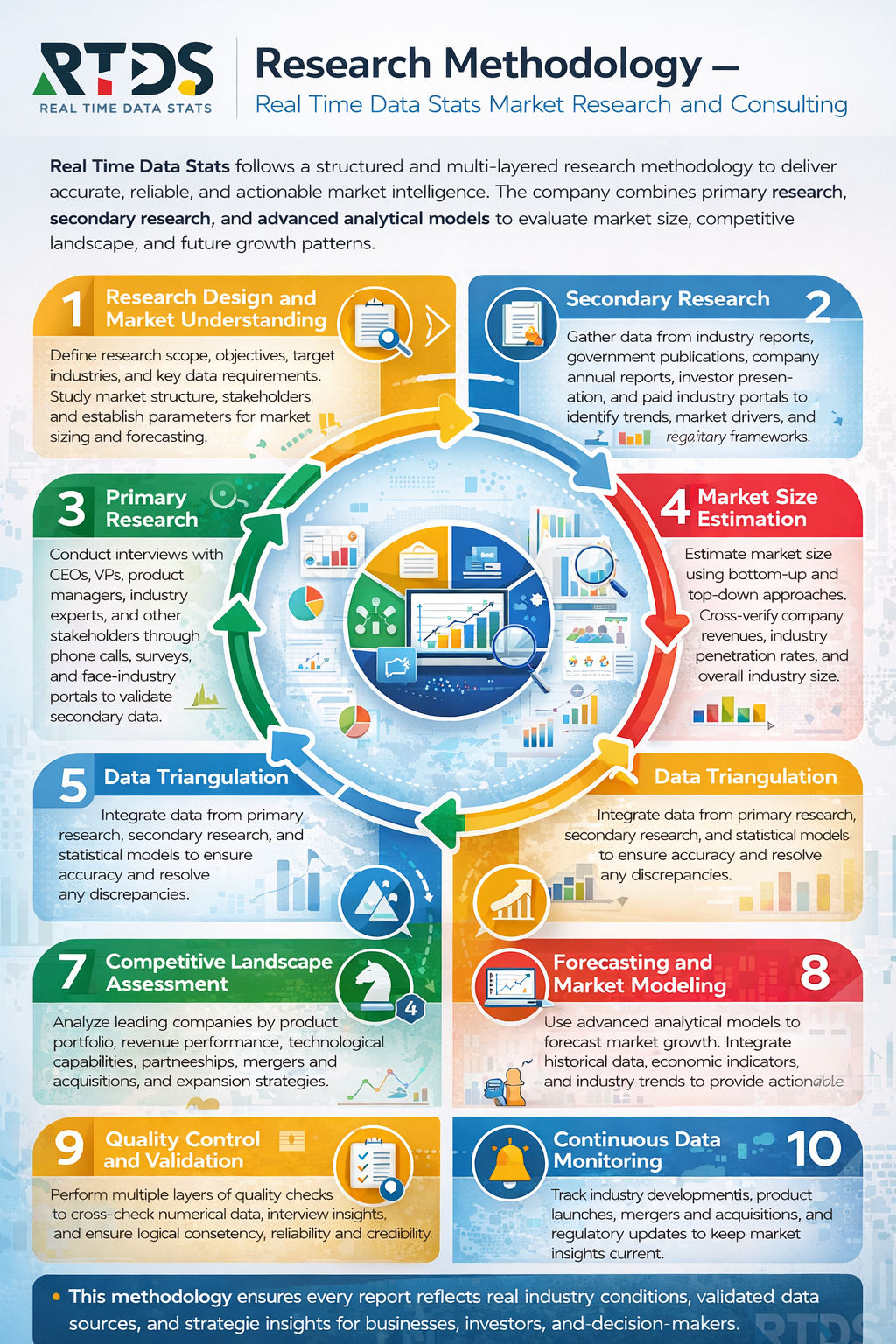
Research Methodology
- Primary Research Framework
- Secondary Research Sources
- Data Triangulation Process
- Assumptions and Limitations
- Forecasting Methodology
Market Dynamics
- Market Drivers
- Market Restraints
- Market Opportunities
- Market Challenges
- Industry Trends and Innovations
Regulatory and Ethical Landscape
- Neurodata Privacy Regulations
- Clinical Compliance Standards
- Ethical AI in Brainwave Analytics
- Regional Regulatory Variations
- Data Security and Consent Frameworks
Market Segmentation Overview
- Segmentation Framework
- Segment Interaction Analysis
- Demand Mapping Across Segments
- Adoption Trends by Segment
- Revenue Contribution Analysis
Neural Brainwave Analytics Market Segmentation Analysis
- By Type
- EEG-Based Analytics
- MEG-Based Analytics
- fNIRS-Based Analytics
- ECoG-Based Analytics
- Hybrid Brainwave Analytics
- AI-Enhanced Brainwave Analytics
- By Component
- Hardware
- Software
- Algorithms
- Cloud Platforms
- Data Processing Tools
- Visualization Tools
- By Technology
- Machine Learning
- Deep Learning
- Signal Processing
- Pattern Recognition
- Predictive Analytics
- Real-Time Analytics
- By Deployment Mode
- On-Premise
- Cloud-Based
- Hybrid
- Edge Computing
- Mobile-Based
- Web-Based
- By Application
- Neurological Disorder Diagnosis
- Cognitive Performance Monitoring
- Mental Health Assessment
- Sleep Analysis
- Brain-Computer Interfaces
- Neurofeedback Therapy
- By End User
- Hospitals
- Research Institutes
- Diagnostic Centers
- Academic Institutions
- Neurotechnology Companies
- Rehabilitation Centers
- By Brainwave Type
- Delta Wave Analytics
- Theta Wave Analytics
- Alpha Wave Analytics
- Beta Wave Analytics
- Gamma Wave Analytics
- Multiband Wave Analytics
- By Use Case
- Clinical Decision Support
- Cognitive Training
- Stress Monitoring
- Emotion Recognition
- Attention Tracking
- Behavioral Analysis
- By Data Source
- Wearable EEG Devices
- Clinical EEG Systems
- Implantable Neural Devices
- Consumer Neuro Headsets
- Mobile Brain Sensors
- Research-Grade Sensors
Regional Market Analysis
- North America Market Overview
- Europe Market Overview
- Asia-Pacific Market Overview
- Latin America Market Overview
- Middle East Market Overview
- Africa Market Overview
Competitive Landscape
- Market Share Analysis
- Competitive Benchmarking
- Strategic Developments
- Mergers and Acquisitions
- Product Launches and Innovations
Company Profiles
- Business Overview
- Product Portfolio
- Technology Capabilities
- Financial Performance
- Strategic Outlook
Investment and Funding Analysis
- Venture Capital Trends
- Government Funding Initiatives
- Startup Ecosystem Analysis
- R&D Investment Patterns
- Return on Investment Outlook
Future Outlook and Forecast
- Market Size Forecast
- Segment-Level Forecast
- Technology Adoption Outlook
- Regional Growth Projections
- Long-Term Industry Roadmap
Conclusion
- Summary of Market Trends
- Key Drivers and Restraints
- Growth Opportunities
- Technology & Innovation Outlook
- Future Market Forecast
Appendix
- Abbreviations and Acronyms
- Data Sources
- Methodology Notes
- Disclaimer
List of Tables
- Table:1: Global Neural Brainwave Analytics Market Size Overview
- Table:2: Framework
- Table:3: Market By Type Analysis
- Table:4: Market By Component Analysis
- Table:5: Market By Technology Analysis
- Table:6: Market By Deployment Mode Analysis
- Table:7: Market By Application Analysis
- Table:8: Market By End User Analysis
- Table:9: Market By Brainwave Type Analysis
- Table:10: Market By Use Case Analysis
- Table:11: Market By Data Source Analysis
- Table:12: Regional Market Revenue Comparison
- Table:13: Competitive Market Share Analysis
- Table:14: Investment and Funding Trends
- Table:15: Market Forecast Summary
List of Figures
- Figure:1: Neural Brainwave Analytics Market Ecosystem
- Figure:2: Research Methodology Flowchart
- Figure:3: Market Dynamics Impact Analysis
- Figure:4: Regulatory and Ethical Framework Overview
- Figure:5: Structure
- Figure:6: Market By Type Visualization
- Figure:7: Market By Component Visualization
- Figure:8: Market By Technology Visualization
- Figure:9: Market By Deployment Mode Visualization
- Figure:10: Market By Application Visualization
- Figure:11: Market By End User Visualization
- Figure:12: Market By Brainwave Type Visualization
- Figure:13: Regional Market Share Distribution
- Figure:14: Competitive Landscape Mapping
- Figure:15: Future Market Growth Roadmap
Frequently Asked Questions
Key Questions Answered
- What is the size and growth rate of the market industry?
- What are the main drivers influencing market growth trends?
- What are the key challenges and restraints faced by the market?
- What are the emerging trends and opportunities shaping the market?
- Who are the top players, and what strategies drive their success?
- What are the customer demographics and their buying behaviors?
- What are the key market segments, and what is their scope?
- What are the geographical dynamics, and which region dominates?
- What are the market forecasts and projections for the next decade?
- What regulatory factors are critical to consider for market growth?
Why Choose our Company?
- Major facts and stats backing every report we offer.
- Comprehensive analysis tailored to your business needs.
- Accurate insights backed by extensive market research.
- Expert support to address your queries promptly.
- Data-driven strategies for better decision-making.
- In-depth reports with actionable
recommendations. - Reliable statistics from trusted industry
sources. - Customizable reports to suit your specific goals.
- Unmatched quality and precision in market analysis.
- Competitive pricing with premium content delivery.
Share your experience!
We value you feedback. Please take a moment to review your experience with us.