
According to insights from Real Time Data Stats, the Digital Epitranscriptomics Market was valued at USD 140 million in 2025. It is expected to grow from USD 168 million in 2026 to USD 642 million by 2033, registering a CAGR of 21.1% during the forecast period (2026–2033).
MARKET SIZE AND SHARE
The digital epitranscriptomics market is evolving from a niche research field into a mainstream biomedical technology. Strong growth is expected as adoption expands across RNA research, precision medicine, and advanced diagnostics. Rising investments in RNA-based therapeutics, sequencing technologies, and data analytics are accelerating market development and creating significant opportunities for innovation and commercialization over the coming decade.
Market share is expected to remain concentrated among biotechnology companies and specialized platform providers offering integrated sequencing, analytics, and bioinformatics solutions. Competitive advantage will depend on technological accuracy, proprietary modification-detection algorithms, and strategic collaborations with pharmaceutical and research organizations. As new entrants emerge, competition will intensify, shaping revenue distribution and influencing the future direction of the industry.
INDUSTRY OVERVIEW AND STRATEGY
The digital epitranscriptomics industry centers on technologies that detect and analyze RNA modifications, crucial for understanding gene regulation. It integrates advanced sequencing platforms, computational tools, and data analytics to decode the ""epitranscriptome."" This field bridges molecular biology and digital health, enabling novel insights into disease mechanisms. Its growth is fundamentally linked to the broader shift towards precision medicine and the exploration of RNA biology beyond the genetic code.
Core strategy for firms involves accelerating platform commercialization and securing intellectual property around key detection methods. Companies must focus on forming collaborative alliances with academic and clinical research institutions to validate applications. Success hinges on developing user-friendly, scalable bioinformatics solutions to manage complex data, thereby transitioning from research tools to indispensable clinical diagnostics and drug discovery assets.
Analyst Key Takeaways:
The digital epitranscriptomics market is gaining momentum as researchers increasingly focus on RNA modifications to better understand disease mechanisms and support the development of precision medicine. Advances in sequencing technologies, artificial intelligence, and bioinformatics platforms are improving the accuracy and scalability of epitranscriptomic analysis across research and clinical applications.
Strategic collaborations between biotechnology firms, pharmaceutical companies, and academic institutions are accelerating innovation and expanding commercial opportunities. Companies that offer integrated data analysis capabilities, proprietary detection technologies, and comprehensive RNA research solutions are expected to strengthen their competitive position as adoption continues to grow globally.
REGIONAL TRENDS AND GROWTH
North America currently leads the market, driven by substantial R&D funding, a concentration of biotechnology firms, and advanced healthcare infrastructure. Europe follows closely, with strong academic initiatives and growing integration of sequencing in clinical research. The Asia-Pacific region emerges as the fastest-growing segment, fueled by increasing government investments in genomics, expanding biotechnology sectors, and rising prevalence of chronic diseases necessitating advanced diagnostic solutions.
Primary growth drivers include the rising demand for personalized medicine and the expanding therapeutic potential of mRNA technologies. However, restraints involve high sequencing costs and analytical complexity. Key opportunities lie in oncology and neurology applications, while challenges persist in data standardization and the need for specialized expertise. Future growth will depend on overcoming these technical and interpretative hurdles to enable widespread clinical adoption.
DIGITAL EPITRANSCRIPTOMICS MARKET SEGMENTATION ANALYSIS
BY TYPE:
The segmentation by type in the digital epitranscriptomics market is primarily driven by the biological relevance and functional diversity of RNA species. mRNA modification analysis holds a dominant position due to its central role in protein translation and gene regulation, especially in cancer biology and therapeutic development. Increasing discoveries around m6A and other mRNA modifications have significantly accelerated demand for high-resolution digital analysis platforms. Additionally, growing investment in understanding post-transcriptional regulation has strengthened the adoption of tools focused on mRNA, tRNA, and rRNA modifications, as these RNA types are critical to cellular homeostasis and disease progression.
Other RNA types such as lncRNA, snRNA/snoRNA, and circRNA are gaining increasing traction as research uncovers their regulatory roles in epigenetics, neurobiology, and immune responses. Advances in sequencing sensitivity and computational analytics now allow researchers to decode low-abundance and structurally complex RNAs, expanding this segment’s growth potential. The diversification of RNA types analyzed digitally reflects a shift from traditional gene expression studies toward comprehensive RNA modification profiling, positioning type-based segmentation as a foundational driver of market expansion.
BY APPLICATION:
Application-based segmentation is heavily influenced by the expanding role of epitranscriptomics in disease-focused research and translational medicine. Cancer research dominates this segment due to the strong correlation between RNA modifications and tumor initiation, progression, and drug resistance. The integration of digital epitranscriptomic tools into oncology pipelines enables precise biomarker identification and therapy optimization, making it a core application area for both academic and pharmaceutical stakeholders.
Beyond oncology, neurological disorders, infectious diseases, and immunology are emerging as high-growth applications. RNA modification dynamics play a crucial role in brain development, viral replication, and immune cell activation, driving demand for digital platforms capable of temporal and single-cell resolution analysis. Precision medicine and developmental biology further reinforce application diversity, as personalized diagnostics and early-stage disease modeling increasingly rely on epitranscriptomic data to improve clinical decision-making.
BY TECHNOLOGY:
Technology segmentation reflects rapid innovation in sequencing and analytical capabilities. Next-generation sequencing remains the dominant technology due to its scalability, accuracy, and widespread adoption across research institutions. The integration of digital tools with NGS platforms enables comprehensive mapping of RNA modifications at high throughput, making it a cornerstone technology for market growth. Nanopore sequencing is gaining momentum due to its real-time detection and ability to directly read RNA modifications without extensive chemical treatment.
Mass spectrometry and microarray-based approaches continue to support validation and complementary analysis, while single-cell technologies represent one of the most transformative segments. The convergence of bioinformatics, artificial intelligence, and machine learning has significantly enhanced data interpretation, allowing complex epitranscriptomic patterns to be translated into actionable biological insights. As datasets grow larger and more complex, technology-driven segmentation remains a key determinant of competitive differentiation.
BY PRODUCT:
Product-based segmentation is shaped by the need for end-to-end digital epitranscriptomics workflows. Instruments and reagents account for a substantial share due to continuous upgrades in sequencing platforms and specialized kits designed for RNA modification detection. Consumables represent a recurring revenue stream, driven by high sample throughput and repeated experimental cycles in research and clinical settings.
Software platforms, databases, and analytical services are rapidly emerging as high-value segments as data complexity increases. The shift toward cloud-based analysis, automated pipelines, and AI-driven interpretation has elevated the importance of digital products beyond hardware. Analytical services are particularly attractive for organizations lacking in-house expertise, reinforcing the product segment’s evolution from tool-centric to solution-oriented offerings.
BY WORKFLOW:
Workflow segmentation highlights the complexity and specialization required across the epitranscriptomics analysis pipeline. Sample preparation and RNA isolation are critical early stages, as data quality is highly dependent on RNA integrity and modification preservation. Advances in optimized protocols and automation have reduced variability, increasing adoption across large-scale studies.
Downstream steps such as library preparation, sequencing, data processing, and interpretation dominate value creation within the workflow. Digital tools play a decisive role in processing massive datasets, correcting biases, and enabling accurate modification calling. As the market matures, workflow integration and seamless interoperability between stages are becoming key competitive advantages for solution providers.
BY END USER:
End-user segmentation is driven by research intensity, funding availability, and commercialization potential. Academic and research institutes represent a major share due to their role in fundamental discovery and method development. Government and public funding initiatives supporting RNA biology research continue to sustain strong demand from this segment.
Pharmaceutical and biotechnology companies are rapidly increasing adoption as epitranscriptomics becomes integral to drug discovery and biomarker development. Clinical laboratories, CROs, and diagnostic centers are emerging as important end users, particularly as digital epitranscriptomics transitions toward clinical validation and routine diagnostics. This shift signals growing commercialization and regulatory alignment within the market.
BY DISEASE AREA:
Disease-area segmentation underscores the clinical relevance of RNA modifications. Oncology remains the most dominant disease segment due to extensive evidence linking epitranscriptomic dysregulation with cancer phenotypes. The ability to identify disease-specific RNA modification signatures has positioned epitranscriptomics as a powerful tool in cancer stratification and targeted therapy development.
Neurodegenerative, cardiovascular, metabolic, autoimmune, and rare genetic diseases represent expanding opportunities as research reveals their epitranscriptomic underpinnings. Increased focus on chronic and complex diseases has heightened demand for digital tools capable of capturing dynamic RNA modification landscapes, strengthening the disease-area segmentation’s long-term growth outlook.
BY RNA MODIFICATION TYPE:
Segmentation by RNA modification type is fundamentally driven by biological prevalence and research maturity. m6A remains the most extensively studied and commercially exploited modification due to its widespread presence and functional significance. Modifications such as m5C, pseudouridine, and m1A are gaining attention as detection technologies improve.
A-to-I editing and hm5C represent emerging modification types with strong implications in neurological and immune-related disorders. As detection sensitivity and computational annotation improve, this segment is expected to diversify further, enabling deeper biological insights and expanding therapeutic relevance across multiple disease domains.
BY PLATFORM:
Platform-based segmentation reflects deployment preferences and data management strategies. Cloud-based platforms dominate due to scalability, cost-efficiency, and collaborative capabilities, especially for large multi-center studies. These platforms enable real-time data sharing, advanced analytics, and integration with AI tools, making them highly attractive for modern research environments.
On-premise and proprietary platforms continue to serve institutions with stringent data security and compliance requirements. Integrated omics platforms and open-source tools further enhance flexibility and customization, ensuring that platform diversity remains a critical factor in addressing varied user needs across academia, industry, and clinical settings.
RECENT DEVELOPMENTS
- In Jan 2024: Illumina launched enhanced sequencing chemistry and AI-driven software updates for its NextSeq 1000/2000 systems, significantly improving the detection accuracy of RNA modifications for epigenetic analysis.
- In Apr 2024: QIAGEN announced a strategic partnership with a major biopharma company to develop companion diagnostic assays leveraging its QIAseq RNA technology for epitranscriptomic biomarker discovery in oncology.
- In Aug 2024: EpiCypher secured $50 million in Series C funding to accelerate the development and commercial scale-up of its KASpi technology for high-throughput, quantitative mapping of RNA modifications.
- In Nov 2024: 10x Genomics released a novel single-cell multiome kit, extending its Chromium platform to allow for simultaneous analysis of RNA modifications and gene expression in individual cells.
- In Mar 2025: Abcam launched a comprehensive new portfolio of over 150 monoclonal antibodies specifically validated for detecting key RNA modifications like m6A, m5C, and pseudouridine in various assay formats.
KEY PLAYERS ANALYSIS
- Abcam plc
- Agilent Technologies, Inc.
- Bio-Techne Corporation
- EpiCypher, Inc.
- Illumina, Inc.
- Janssen Research & Development, LLC (Johnson & Johnson)
- Merck KGaA
- New England Biolabs
- Nugen Technologies (a Takara Bio Company)
- Oxford Nanopore Technologies plc
- Pacific Biosciences of California, Inc.
- PerkinElmer, Inc.
- QIAGEN N.V.
- Revvity, Inc.
- Roche Diagnostics
- Shoreline Biome
- Sysmex Corporation
- Thermo Fisher Scientific Inc.
- 10x Genomics, Inc.
- Zymo Research Corp.
Digital Epitranscriptomics Market Segmentation Analysis
By Type:
- mRNA Modification Analysis
- tRNA Modification Analysis
- rRNA Modification Analysis
- lncRNA Modification Analysis
- snRNA/snoRNA Modification Analysis
- circRNA Modification Analysis
By Application:
- Cancer Research
- Neurological Disorders
- Infectious Diseases
- Immunology
- Developmental Biology
- Precision Medicine
By Technology:
- Next-Generation Sequencing
- Nanopore Sequencing
- Mass Spectrometry
- Microarray-Based Analysis
- Single-Cell Analysis
- Bioinformatics & AI Tools
By Product:
- Instruments
- Reagents & Kits
- Consumables
- Software Platforms
- Databases
- Analytical Services
By Workflow:
- Sample Preparation
- RNA Isolation
- Library Preparation
- Sequencing
- Data Processing
- Data Interpretation
By End User:
- Academic & Research Institutes
- Biotechnology Companies
- Pharmaceutical Companies
- Clinical Laboratories
- Contract Research Organizations
- Diagnostic Centers
By Disease Area:
- Oncology
- Cardiovascular Diseases
- Neurodegenerative Diseases
- Metabolic Disorders
- Autoimmune Diseases
- Rare Genetic Diseases
By RNA Modification Type:
- m6A
- m5C
- Pseudouridine
- m1A
- A-to-I Editing
- hm5C
By Platform:
- Cloud-Based Platforms
- On-Premise Platforms
- Integrated Omics Platforms
- Standalone Bioinformatics Tools
- Open-Source Platforms
- Proprietary Platforms
By Geography:
- North America (USA, Canada, Mexico)
- Europe (UK, Germany, France, Italy, Spain, Rest of Europe)
- Asia-Pacific (China, Japan, Australia, South Korea, India, Rest of Asia-Pacific)
- South America (Brazil, Argentina, Rest of South America)
- Middle East and Africa (GCC Countries, South Africa, Rest of MEA)
Digital Epitranscriptomics Market: Table of Contents
Introduction
- Market Definition
- Scope of Digital Epitranscriptomics
- Evolution of Epitranscriptomics
- Role of Digital Technologies
- Market Ecosystem Overview
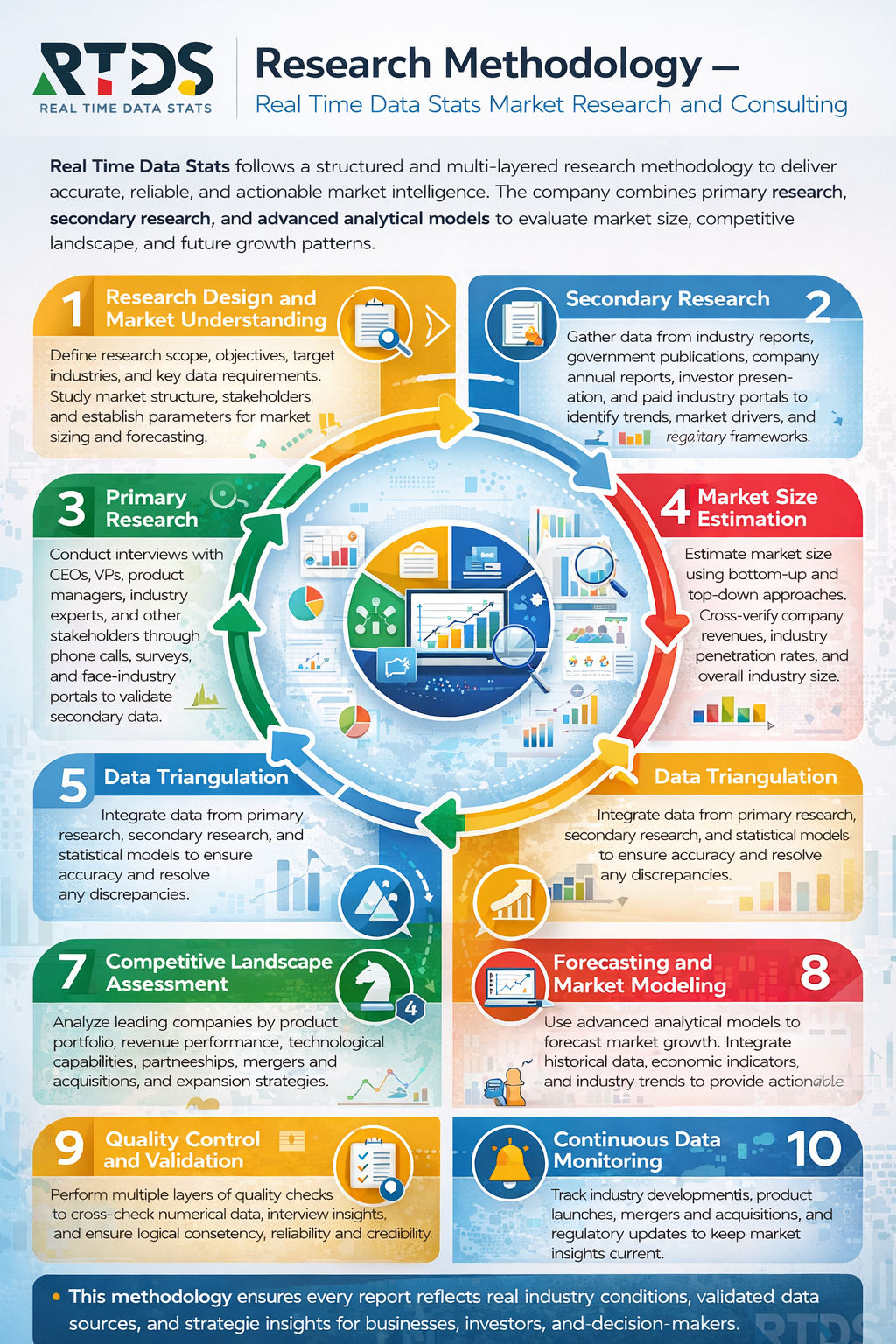
Research Methodology
- Data Collection Approach
- Primary Research Sources
- Secondary Research Sources
- Market Estimation Techniques
- Data Validation & Triangulation
- Assumptions & Limitations
Executive Summary
- Market Snapshot
- Key Findings
- Growth Highlights
- Strategic Insights
- Investment Opportunities
Market Overview
- Market Dynamics Overview
- Market Size Analysis
- Market Growth Trends
- Market Forecast Outlook
- Value Chain Analysis
- Market Drivers
Advances in RNA Biology
- Growth in Precision Medicine
- Increasing Cancer Research Funding
- Technological Advancements in Sequencing
Market Dynamics
- Drivers
- Restraints
- Opportunities
- Challenges
Digital Epitranscriptomics Market Segmentation
- By Type
- mRNA Modification Analysis
- tRNA Modification Analysis
- rRNA Modification Analysis
- lncRNA Modification Analysis
- snRNA/snoRNA Modification Analysis
- circRNA Modification Analysis
- By Application
- Cancer Research
- Neurological Disorders
- Infectious Diseases
- Immunology
- Developmental Biology
- Precision Medicine
- By Technology
- Next-Generation Sequencing
- Nanopore Sequencing
- Mass Spectrometry
- Microarray-Based Analysis
- Single-Cell Analysis
- Bioinformatics & AI Tools
- By Product
- Instruments
- Reagents & Kits
- Consumables
- Software Platforms
- Databases
- Analytical Services
- By Workflow
- Sample Preparation
- RNA Isolation
- Library Preparation
- Sequencing
- Data Processing
- Data Interpretation
- By End User
- Academic & Research Institutes
- Biotechnology Companies
- Pharmaceutical Companies
- Clinical Laboratories
- Contract Research Organizations
- Diagnostic Centers
- By Disease Area
- Oncology
- Cardiovascular Diseases
- Neurodegenerative Diseases
- Metabolic Disorders
- Autoimmune Diseases
- Rare Genetic Diseases
- By RNA Modification Type
- m6A
- m5C
- Pseudouridine
- m1A
- A-to-I Editing
- hm5C
- By Platform
- Cloud-Based Platforms
- On-Premise Platforms
- Integrated Omics Platforms
- Standalone Bioinformatics Tools
- Open-Source Platforms
- Proprietary Platforms
Regional Market Analysis
- North America Market Overview
- Europe Market Overview
- Asia Pacific Market Overview
- Latin America Market Overview
- Middle East Market Overview
- Africa Market Overview
Competitive Landscape
- Market Share Analysis
- Competitive Benchmarking
- Strategic Initiatives
- Mergers & Acquisitions
- Collaborations & Partnerships
Company Profiles
- Company Overview
- Product Portfolio
- Financial Performance
- Recent Developments
- Strategic Outlook
Future Outlook
- Emerging Trends
- Technological Innovations
- Market Forecast
- Strategic Recommendations
Conclusion
- Summary of Market Trends
- Key Drivers and Restraints
- Growth Opportunities
- Technology & Innovation Outlook
- Future Market Forecast
Appendix
- Glossary of Terms
- Abbreviations
- Research Assumptions
- Data Sources
- Disclaimer
List of Tables
- Table:1: Digital Epitranscriptomics Market Overview
- Table:2: Market Size by Type
- Table:3: Market Size by Application
- Table:4: Market Size by Technology
- Table:5: Market Size by Product
- Table:6: Market Size by Workflow
- Table:7: Market Size by End User
- Table:8: Market Size by Disease Area
- Table:9: Market Size by RNA Modification Type
- Table:10: Market Size by Platform
- Table:11: Market Size by Region
- Table:12: Competitive Market Share Analysis
- Table:13: Key Company Financial Overview
- Table:14: Recent Developments & Strategies
- Table:15: Market Forecast Summary
List of Figures
- Figure:1: Digital Epitranscriptomics Market Ecosystem
- Figure:2: Market Size & Forecast Overview
- Figure:3: Market Dynamics Framework
- Figure:4: Value Chain Analysis
- Figure:5: Market Segmentation Overview
- Figure:6: Market by Type Distribution
- Figure:7: Market by Application Distribution
- Figure:8: Market by Technology Distribution
- Figure:9: Market by Product Distribution
- Figure:10: Market by End User Distribution
- Figure:11: Market by Disease Area Distribution
- Figure:12: Market by RNA Modification Type Distribution
- Figure:13: Market by Platform Distribution
- Figure:14: Regional Market Share Analysis
- Figure:15: Competitive Landscape Mapping
Digital Epitranscriptomics Market Key Factors
Drivers:
- Growing research links RNA modifications to chronic diseases.
- Technological advances in sequencing and detection improve analysis.
- Rising pharmaceutical R&D invests in RNA-targeted therapies.
Restraints:
- High costs limit access to advanced tools and technologies.
- Incomplete knowledge of biological functions creates uncertainty.
- Complex data analysis requires scarce specialized expertise.
Opportunities:
- AI and machine learning platforms enhance data interpretation.
- Expansion into oncology and neurology opens new applications.
- Partnerships between diagnostics and pharma companies accelerate translation.
Challenges:
- Lack of standardized protocols hinders reproducibility.
- The dynamic nature of modifications complicates clinical biomarker development.
- Ethical questions emerge regarding genetic and epigenetic data handling.
Digital Epitranscriptomics Market Key Regional Trends
North America:
- Strong venture capital funding propels startup and technology development.
- Leading academic institutes drive foundational research and discovery.
- Biopharma companies actively integrate epitranscriptomics into drug discovery pipelines.
Europe:
- Collaborative, multi-country research consortia support large-scale studies.
- Increasing focus applies research to metabolic and autoimmune diseases.
- Stricter data privacy regulations (e.g., GDPR) shape bioinformatics practices.
Asia-Pacific:
- Governments increase strategic investments in genomics and precision medicine.
- Contract research organizations expand service offerings in epitranscriptomic analysis.
- Rising cancer prevalence fuels demand for novel diagnostic and therapeutic approaches.
Digital Epitranscriptomics Market Key Factors
Drivers:
- Growing research links RNA modifications to chronic diseases.
- Technological advances in sequencing and detection improve analysis.
- Rising pharmaceutical R&D invests in RNA-targeted therapies.
Restraints:
- High costs limit access to advanced tools and technologies.
- Incomplete knowledge of biological functions creates uncertainty.
- Complex data analysis requires scarce specialized expertise.
Opportunities:
- AI and machine learning platforms enhance data interpretation.
- Expansion into oncology and neurology opens new applications.
- Partnerships between diagnostics and pharma companies accelerate translation.
Challenges:
- Lack of standardized protocols hinders reproducibility.
- The dynamic nature of modifications complicates clinical biomarker development.
- Ethical questions emerge regarding genetic and epigenetic data handling.
Digital Epitranscriptomics Market Key Regional Trends
North America:
- Strong venture capital funding propels startup and technology development.
- Leading academic institutes drive foundational research and discovery.
- Biopharma companies actively integrate epitranscriptomics into drug discovery pipelines.
Europe:
- Collaborative, multi-country research consortia support large-scale studies.
- Increasing focus applies research to metabolic and autoimmune diseases.
- Stricter data privacy regulations (e.g., GDPR) shape bioinformatics practices.
Asia-Pacific:
- Governments increase strategic investments in genomics and precision medicine.
- Contract research organizations expand service offerings in epitranscriptomic analysis.
- Rising cancer prevalence fuels demand for novel diagnostic and therapeutic approaches.
Frequently Asked Questions
Key Questions Answered
- What is the size and growth rate of the market industry?
- What are the main drivers influencing market growth trends?
- What are the key challenges and restraints faced by the market?
- What are the emerging trends and opportunities shaping the market?
- Who are the top players, and what strategies drive their success?
- What are the customer demographics and their buying behaviors?
- What are the key market segments, and what is their scope?
- What are the geographical dynamics, and which region dominates?
- What are the market forecasts and projections for the next decade?
- What regulatory factors are critical to consider for market growth?
Why Choose our Company?
- Major facts and stats backing every report we offer.
- Comprehensive analysis tailored to your business needs.
- Accurate insights backed by extensive market research.
- Expert support to address your queries promptly.
- Data-driven strategies for better decision-making.
- In-depth reports with actionable
recommendations. - Reliable statistics from trusted industry
sources. - Customizable reports to suit your specific goals.
- Unmatched quality and precision in market analysis.
- Competitive pricing with premium content delivery.
Share your experience!
We value you feedback. Please take a moment to review your experience with us.