
According to insights from Real Time Data Stats, the Desert Solar Water Desalination Market was valued at USD 0.34 billion in 2025. It is expected to grow from USD 0.42 billion in 2026 to USD 1.34 billion by 2033, registering a CAGR of 18.6% during the forecast period (2026–2033).
MARKET SIZE AND SHARE
The Desert Solar Water Desalination Market is expanding due to severe water scarcity in arid regions and falling solar technology costs. Key players are consolidating market share by integrating advanced photovoltaic and membrane distillation systems, capturing value across utility-scale and agricultural projects in major desert regions worldwide.
Market share analysis highlights a competitive landscape led by early-mover engineering firms and renewable energy specialists. These players expand through strategic partnerships for turnkey plants, while modular containerized systems gain traction in remote areas. Government mandates in the Middle East and North Africa further drive adoption using abundant solar resources.
INDUSTRY OVERVIEW AND STRATEGY
This industry focuses on producing potable water in arid regions using solar thermal or photovoltaic-powered desalination. It addresses the critical nexus of energy and water security, converting abundant sunlight into a scarce resource. The market includes technology providers, engineering firms, and project developers. The core value proposition is sustainable, off-grid water production, reducing reliance on fossil fuels and minimizing environmental impact compared to conventional desalination, which is crucial for desert communities and industries.
Key strategies involve continuous R&D to improve solar collector efficiency and brine management solutions. Companies are pursuing vertical integration to control the technology stack from energy capture to water purification. Strategic partnerships with governments and NGOs are essential for securing large-scale public-private partnerships. A focus on scalable, modular designs allows for deployment in both decentralized rural settings and major centralized infrastructure, ensuring adaptability and market penetration across diverse project scales and geographies.
REGIONAL TRENDS AND GROWTH
The Middle East and North Africa lead adoption, driven by national vision programs and extreme water stress. North America sees growth in the arid southwestern United States and Mexico. Asia-Pacific exhibits potential in nations like China and Australia, investing in pilot projects. Regional trends favor hybrid systems that combine solar with existing grid or diesel power for reliability, while community-scale projects gain traction in Africa, addressing basic water access needs with low-cost innovations.
Primary drivers are acute freshwater scarcity, supportive government policies, and solar cost reductions. Restraints include high initial capital expenditure and intermittent solar supply. Significant opportunities lie in technological advancements in energy storage and efficient desalination membranes. Major challenges involve managing high-salinity brine disposal in sensitive desert ecosystems and securing financing for large-scale projects. Future growth hinges on overcoming these technical and economic hurdles to achieve cost parity with conventional desalination methods.
DESERT SOLAR WATER DESALINATION MARKET SEGMENTATION ANALYSIS
BY TYPE:
The type segment in the Desert Solar Water Desalination Market is strongly influenced by dominant factors such as energy efficiency, system durability, and adaptability to extreme desert climates. Solar photovoltaic and solar thermal systems lead adoption due to their ability to operate with minimal grid dependency and lower long-term operational costs. Hybrid systems are also gaining traction as they combine multiple energy sources, ensuring continuous output even during fluctuating sunlight conditions, which is a critical performance factor in arid environments.
Another dominant factor within the type category is scalability and maintenance requirements, which directly affect investment decisions by governments and private operators. Solar still systems remain relevant for small communities due to affordability, while concentrated solar power and membrane-based systems dominate large projects because of higher production capacity and improved desalination efficiency. Technological innovation, material resilience, and lifecycle cost reduction continue to shape competitive positioning among system types in desert regions.
BY APPLICATION:
The application segment is primarily driven by the urgent need for potable water in water-scarce desert areas, making drinking water supply the most dominant application factor. Agricultural irrigation follows closely due to expanding desert farming initiatives and food security policies. Industrial and municipal uses also contribute significantly, especially in mining zones and rapidly urbanizing desert cities where consistent freshwater availability directly influences economic sustainability and infrastructure expansion strategies.
A secondary dominant factor is emergency and defense usage, where portable solar desalination units are valued for mobility and independence from fuel logistics. Disaster relief operations increasingly rely on solar desalination because of quick deployment and low environmental impact. Government funding programs and international humanitarian initiatives further strengthen this segment, ensuring long-term demand stability while diversifying end-use scenarios across civilian, commercial, and strategic sectors.
BY TECHNOLOGY:
Technology segmentation is shaped by dominant factors such as desalination efficiency, energy consumption ratio, and brine management capability. Reverse osmosis remains the technological leader because of its relatively lower energy requirement and high purification accuracy, making it suitable for both small and large installations. Multi-effect distillation and membrane distillation technologies are expanding due to advancements in heat recovery mechanisms and compatibility with solar thermal integration, which enhances sustainability metrics in desert deployments.
Another strong factor is technological reliability under harsh environmental conditions including high temperatures, dust accumulation, and saline corrosion. Electrodialysis and humidification–dehumidification technologies are increasingly considered for modular and off-grid projects due to simpler maintenance and lower operational complexity. Continuous research and development investments, coupled with smart monitoring systems and AI-based optimization tools, are accelerating performance improvements and encouraging wider adoption across diverse desert terrains.
BY END USER:
The end-user segment is dominated by residential communities and government bodies due to large-scale public water supply initiatives and national water security programs. Industrial plants, especially in oil, gas, and mineral extraction sectors, significantly influence demand because desalinated water ensures uninterrupted operational processes. Commercial establishments such as hotels and tourism resorts in desert destinations also drive adoption, as sustainable water sourcing enhances environmental credentials and reduces long-term utility costs.
Agricultural farms and humanitarian organizations represent additional dominant forces, particularly in regions facing recurring droughts and population displacement. NGOs often deploy decentralized solar desalination systems to remote villages, strengthening market penetration at grassroots levels. The diversity of end users contributes to consistent demand cycles and investment continuity, while policy incentives, subsidies, and infrastructure modernization programs continue to expand accessibility and affordability for varied consumer categories.
BY CAPACITY:
Capacity segmentation is heavily influenced by water demand volume, project funding scale, and geographic population density. Large-scale and utility-scale plants dominate metropolitan and industrial desert zones where continuous high output is essential. Medium-scale systems are widely adopted by municipalities and commercial establishments seeking balanced cost and production efficiency. Portable and modular units are gaining popularity due to flexibility, rapid installation, and suitability for temporary or emergency water supply operations.
Another dominant factor is infrastructure compatibility and expansion potential. Small-scale systems remain vital for isolated communities and research stations where localized water independence is crucial. Capacity planning is also shaped by renewable energy storage integration and seasonal demand fluctuations. Investment trends increasingly favor scalable modular solutions that allow gradual expansion, reducing initial capital burden while ensuring adaptability to future population growth and economic development requirements.
BY COMPONENT:
Component segmentation is driven by technological advancement, cost optimization, and system reliability factors. Solar panels hold the highest dominance because energy generation efficiency directly determines desalination output and operational sustainability. Membranes and filtration units are equally critical, as purification accuracy and lifespan significantly influence maintenance costs and water quality standards. Pumps, motors, and heat exchangers also play vital roles in ensuring consistent system performance under harsh desert temperatures.
Control systems and storage tanks form another major dominance area due to their impact on automation and water distribution efficiency. Smart sensors and IoT-enabled controllers are increasingly integrated to monitor salinity levels, temperature, and system pressure in real time. Component innovation focused on corrosion resistance, lightweight materials, and energy storage compatibility is strengthening market competitiveness, enabling longer operational lifecycles and reducing downtime in extreme environmental conditions.
BY WATER SOURCE:
The water source segment is shaped by availability, salinity level, and purification complexity. Seawater desalination dominates coastal desert markets because of abundant supply despite higher energy requirements. Brackish groundwater follows closely due to lower salt concentration and reduced processing cost, making it attractive for inland desert communities. Surface water and saline lakes also contribute to regional demand where seasonal water bodies can be effectively treated using solar-powered systems.
Wastewater reuse is emerging as a strong dominant factor due to sustainability initiatives and circular water economy policies. Governments and industries increasingly invest in solar desalination to recycle wastewater for irrigation and non-potable uses, reducing freshwater dependency. The choice of water source significantly influences system design, technology selection, and operational expenditure, thereby shaping long-term feasibility and environmental impact considerations across desert water management strategies.
BY INSTALLATION TYPE:
Installation type segmentation is primarily influenced by energy accessibility, land availability, and mobility requirements. Off-grid systems dominate remote desert areas where conventional electricity infrastructure is absent, ensuring independent and uninterrupted water production. Ground-mounted installations are preferred for large-scale projects due to stability and ease of maintenance, while rooftop systems are gaining traction in urban desert settlements aiming to optimize limited space and reduce infrastructure costs.
Floating and mobile installations represent emerging dominant factors driven by innovation and flexibility. Mobile units are widely utilized in military operations and disaster response scenarios, offering rapid deployment and relocation capabilities. Floating solar desalination units are being explored in saline lakes and reservoirs to maximize space efficiency while reducing evaporation losses. These diverse installation approaches enhance adaptability and support market expansion across varied geographic and logistical conditions.
BY DISTRIBUTION CHANNEL:
Distribution channels are influenced by procurement scale, partnership networks, and project financing structures. Direct sales dominate government and industrial projects where customized large-scale solutions are required. EPC contractors play a major role by offering turnkey project execution, from design to installation and maintenance. Distributors and dealers contribute significantly to small and medium system penetration by expanding regional accessibility and after-sales support services.
Online sales and retail suppliers are emerging as dominant channels for portable and modular units, especially among NGOs and small enterprises seeking cost-effective purchasing options. Government tenders remain a crucial factor in shaping market revenue streams, as public water infrastructure projects often involve long-term contracts and large investment volumes. The combination of traditional and digital distribution models ensures broader market reach and operational efficiency.
RECENT DEVELOPMENTS
- In Jan 2024: MANN+HUMMEL and Boreal Light launched a large-scale solar desalination project in Kenya, providing 50,000 liters of clean water daily to local communities, powered entirely by off-grid solar energy.
- In Mar 2024: The UAE's Mohammed bin Rashid Al Maktoum Solar Park initiated a major expansion to integrate a new solar-powered desalination plant, aiming to produce 13 million gallons of water per day using hybrid solar technology.
- In Aug 2024: Solar Water PLC inaugurated its first ""water dome"" solar thermal desalination plant in Neom, Saudi Arabia, utilizing concentrated solar power to distill seawater without reverse osmosis membranes.
- In Nov 2024: A consortium led by ACWA Power and GlassPoint broke ground on a landmark solar steam project for desalination in Oman, designed to significantly reduce the carbon footprint of industrial water supply.
- In Feb 2025: Researchers at MIT and King Abdullah University published a breakthrough in photovoltaic-powered electrodialysis, achieving a 30% reduction in energy consumption for brackish water desalination in desert conditions.
KEY PLAYERS ANALYSIS
- ACWA Power
- Abengoa
- Solar Water PLC
- F Cubed
- Desolenator
- Mascara Renewable Water
- Photon Water
- Boreal Light GmbH
- Elemental Water Makers
- Sterlitech Corporation
- Tesla, Inc. (Solar & Battery Integration)
- Abdul Latif Jameel Energy (FRV)
- GlassPoint Solar
- MANN+HUMMEL
- Sinohydro Corporation
- IDE Technologies
- Acciona
- Engie
- Hafary
- JA Baker (via strategic partnerships)
Desert Solar Water Desalination Market Segmentation
By Type:
- Solar Still Systems
- Solar Photovoltaic (PV) Desalination Systems
- Solar Thermal Desalination Systems
- Hybrid Solar Desalination Systems
- Membrane-Based Solar Desalination
- Concentrated Solar Power (CSP) Desalination
By Application:
- Drinking Water Supply
- Agricultural Irrigation
- Industrial Water Supply
- Municipal Water Treatment
- Military & Defense Water Supply
- Disaster Relief & Emergency Water
By Technology:
- Reverse Osmosis (RO)
- Multi-Stage Flash (MSF)
- Multi-Effect Distillation (MED)
- Electrodialysis (ED)
- Membrane Distillation (MD)
- Humidification–Dehumidification (HDH)
By End User:
- Residential Communities
- Commercial Facilities
- Industrial Plants
- Government & Municipal Bodies
- Agricultural Farms
- NGOs & Humanitarian Organizations
By Capacity:
- Small-Scale Systems
- Medium-Scale Systems
- Large-Scale Systems
- Portable Units
- Modular Units
- Utility-Scale Plants
By Component:
- Solar Panels
- Pumps & Motors
- Membranes & Filters
- Heat Exchangers
- Storage Tanks
- Control Systems
By Water Source:
- Seawater
- Brackish Water
- Groundwater
- Surface Water
- Wastewater
- Saline Lakes
By Installation Type:
- On-Grid Systems
- Off-Grid Systems
- Rooftop Installations
- Ground-Mounted Systems
- Floating Installations
- Mobile Installations
By Distribution Channel:
- Direct Sales
- Distributors & Dealers
- Online Sales
- Government Tenders
- EPC Contractors
- Retail Suppliers
By Geography:
- North America (USA, Canada, Mexico)
- Europe (UK, Germany, France, Italy, Spain, Rest of Europe)
- Asia-Pacific (China, Japan, Australia, South Korea, India, Rest of Asia-Pacific)
- South America (Brazil, Argentina, Rest of South America)
- Middle East and Africa (GCC Countries, South Africa, Rest of MEA)
Desert Solar Water Desalination Market: Table of Contents
Introduction
- Background of desert water scarcity
- Role of solar energy in desalination
- Evolution of solar desalination technologies
Market Definition and Scope
- Market coverage and boundaries
- Inclusion and exclusion criteria
- Units of measurement
Study Objectives
- Primary research objectives
- Secondary research objectives
- Target audience
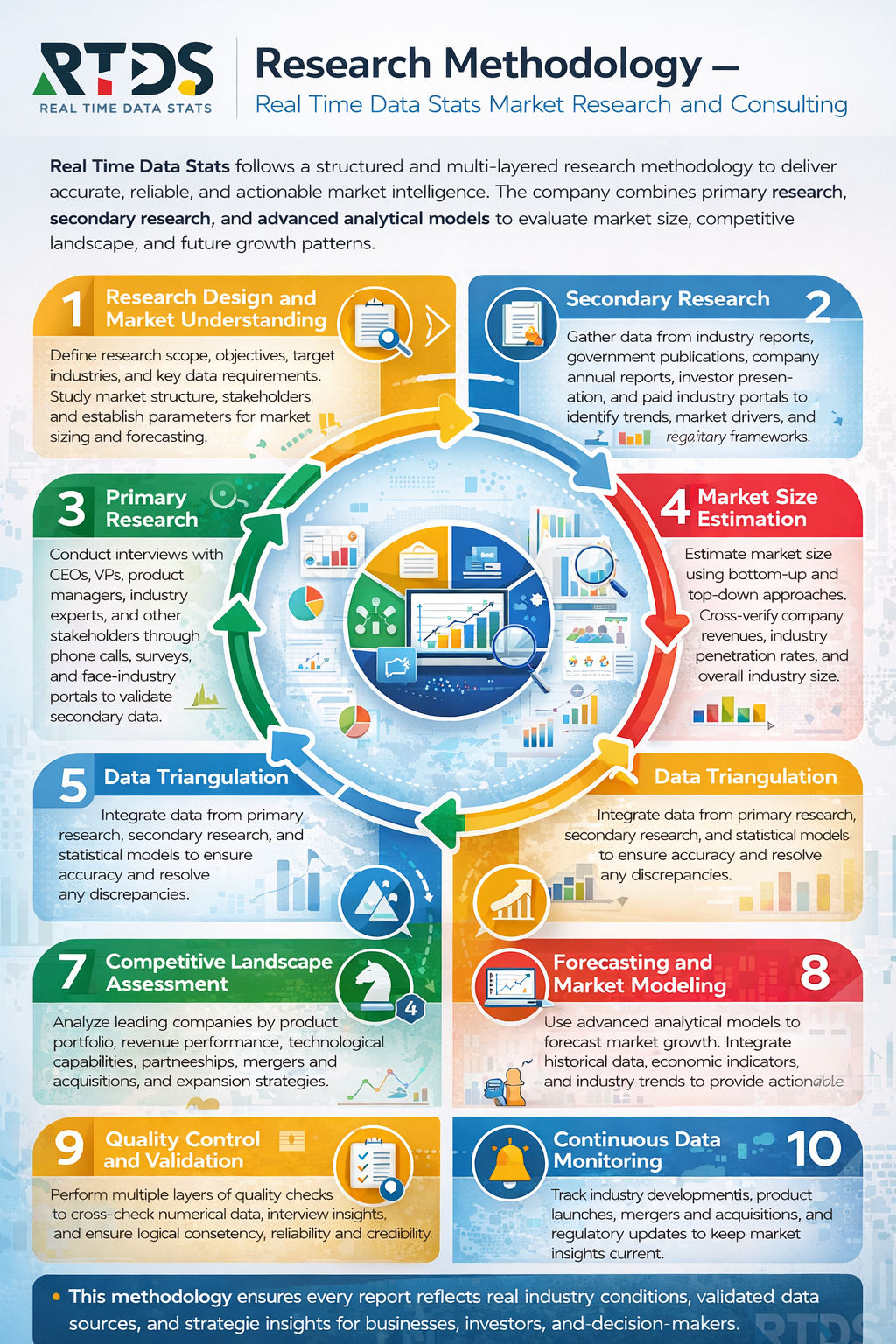
Research Methodology
- Primary research approach
- Secondary data sources
- Data triangulation method
- Market estimation techniques
- Forecasting assumptions
Market Assumptions and Limitations
- Key market assumptions
- Data limitations and constraints
Executive Summary
- Market snapshot overview
- Key findings and insights
- Strategic recommendations
Industry Overview
- Global desalination industry outlook
- Solar energy penetration trends
- Desert infrastructure development
Value Chain Analysis
- Raw material suppliers
- Technology providers
- System integrators
- End users
Ecosystem and Stakeholder Analysis
- Government and regulatory bodies
- Private developers and investors
- Research institutions
Market Dynamics
- Drivers
- Restraints
- Opportunities
- Challenges
Technology Landscape
- Thermal solar desalination
- Multi-effect distillation
- Solar still technologies
- Photovoltaic-based desalination
- Reverse osmosis systems
- Electrodialysis processes
- Hybrid solar desalination systems
Desert Solar Water Desalination Market Segmentation and Sub-Segments
- By Type:
- Solar Still Systems
- Solar Photovoltaic (PV) Desalination Systems
- Solar Thermal Desalination Systems
- Hybrid Solar Desalination Systems
- Membrane-Based Solar Desalination
- Concentrated Solar Power (CSP) Desalination
- By Application:
- Drinking Water Supply
- Agricultural Irrigation
- Industrial Water Supply
- Municipal Water Treatment
- Military & Defense Water Supply
- Disaster Relief & Emergency Water
- By Technology:
- Reverse Osmosis (RO)
- Multi-Stage Flash (MSF)
- Multi-Effect Distillation (MED)
- Electrodialysis (ED)
- Membrane Distillation (MD)
- Humidification–Dehumidification (HDH)
- By End User:
- Residential Communities
- Commercial Facilities
- Industrial Plants
- Government & Municipal Bodies
- Agricultural Farms
- NGOs & Humanitarian Organizations
- By Capacity:
- Small-Scale Systems
- Medium-Scale Systems
- Large-Scale Systems
- Portable Units
- Modular Units
- Utility-Scale Plants
- By Component:
- Solar Panels
- Pumps & Motors
- Membranes & Filters
- Heat Exchangers
- Storage Tanks
- Control Systems
- By Water Source:
- Seawater
- Brackish Water
- Groundwater
- Surface Water
- Wastewater
- Saline Lakes
- By Installation Type:
- On-Grid Systems
- Off-Grid Systems
- Rooftop Installations
- Ground-Mounted Systems
- Floating Installations
- Mobile Installations
- By Distribution Channel:
- Direct Sales
- Distributors & Dealers
- Online Sales
- Government Tenders
- EPC Contractors
- Retail Suppliers
Regional Market Analysis
- North America
- Europe
- Asia Pacific
- Middle East & Africa
- Latin America
Competitive Landscape
- Market structure overview
- Key player profiling
- Strategic partnerships
- Mergers and acquisitions
- Product launches and innovation
Investment and Funding Analysis
- Public sector investments
- Private equity participation
- International funding programs
Regulatory and Policy Framework
- Renewable energy policies
- Water management regulations
- Environmental compliance standards
Sustainability and Environmental Impact
- Carbon emission reduction
- Brine management practices
- Long-term ecological effects
- Risk Assessment
- Technical risks
- Financial risks
- Operational risks
Future Market Outlook
- Technology advancement roadmap
- Regional growth potential
- Long-term market projections
Conclusion
- Key market takeaways
- Strategic implications
Appendix
- Abbreviations and acronyms
- Methodology details
- Data sources
List of Tables
- Table:1: Global Desert Solar Water Desalination Market Scope
- Table:2: Market Segmentation Overview
- Table:3: Key Market Drivers Impact Analysis
- Table:4: Market Restraints Assessment
- Table:5: Opportunity Mapping by Application
- Table:6: Technology Comparison Matrix
- Table:7: Component Cost Breakdown
- Table:8: Capacity-Wise Market Distribution
- Table:9: End-User Demand Analysis
- Table:10: Regional Market Share Snapshot
- Table:11: North America Market Metrics
- Table:12: Europe Market Metrics
- Table:13: Asia Pacific Market Metrics
- Table:14: Middle East & Africa Market Metrics
- Table:15: Competitive Landscape Summary
List of Figures
- Figure:1: Desert Solar Water Desalination Market Overview
- Figure:2: Research Methodology Flowchart
- Figure:3: Market Dynamics Framework
- Figure:4: Solar Desalination Technology Architecture
- Figure:5: Thermal vs PV Desalination Comparison
- Figure:6: Value Chain Analysis Diagram
- Figure:7: Component Integration Structure
- Figure:8: Application Share Distribution
- Figure:9: Capacity Adoption Trends
- Figure:10: End-User Demand Mapping
- Figure:11: Regional Market Distribution
- Figure:12: North America Market Growth Trends
- Figure:13: Asia Pacific Market Expansion Pattern
- Figure:14: Middle East & Africa Investment Hotspots
- Figure:15: Competitive Positioning Matrix
Desert Solar Water Desalination Market Key Factors
Drivers:
- Expanding desert populations demand reliable freshwater access
- Solar energy lowers operating costs in high-irradiance zones
- Governments push renewable desalination to cut carbon output
Restraints:
- High upfront capital slows large-scale project approvals
- Harsh desert conditions accelerate equipment wear
- Limited grid and storage infrastructure restricts output stability
Opportunities:
- Off-grid solar desalination serves remote desert communities
- Hybrid solar-thermal systems improve water yield efficiency
- Public–private partnerships unlock long-term project funding
Challenges:
- Managing brine disposal threatens fragile desert ecosystems
- Scaling systems without efficiency loss remains complex
- Skilled workforce shortages delay deployment timelines
Desert Solar Water Desalination Market Key Regional Trends
North America:
- Utilities pilot solar desalination for drought-prone regions
- Research centers optimize membrane efficiency under heat stress
- States integrate desalination into climate resilience planning
Europe:
- Technology firms export modular solar desalination units
- Policy frameworks favor low-emission water infrastructure
- Innovation focuses on energy-efficient reverse osmosis
Asia Pacific:
- Arid regions adopt decentralized solar desalination plants
- Governments fund pilot projects for rural water security
- Manufacturers scale low-cost system components
Middle East & Africa:
- Mega-projects combine solar farms with desalination hubs
- Oil-dependent economies diversify into renewable water solutions
- Desert nations prioritize water self-sufficiency strategies
Latin America:
- Coastal deserts deploy small-scale solar desalination units
- Mining sector drives demand for off-grid freshwater supply
- Cross-border collaborations support technology transfer
Frequently Asked Questions
Key Questions Answered
- What is the size and growth rate of the market industry?
- What are the main drivers influencing market growth trends?
- What are the key challenges and restraints faced by the market?
- What are the emerging trends and opportunities shaping the market?
- Who are the top players, and what strategies drive their success?
- What are the customer demographics and their buying behaviors?
- What are the key market segments, and what is their scope?
- What are the geographical dynamics, and which region dominates?
- What are the market forecasts and projections for the next decade?
- What regulatory factors are critical to consider for market growth?
Why Choose our Company?
- Major facts and stats backing every report we offer.
- Comprehensive analysis tailored to your business needs.
- Accurate insights backed by extensive market research.
- Expert support to address your queries promptly.
- Data-driven strategies for better decision-making.
- In-depth reports with actionable
recommendations. - Reliable statistics from trusted industry
sources. - Customizable reports to suit your specific goals.
- Unmatched quality and precision in market analysis.
- Competitive pricing with premium content delivery.
Share your experience!
We value you feedback. Please take a moment to review your experience with us.