
The global Coastal Erosion Mapping Services Market size was valued at USD 4.37 billion in 2025 and is projected to expand at a compound annual growth rate (CAGR) of 11% during the forecast period, reaching a value of USD 9.04 billion by 2033.
MARKET SIZE AND SHARE
Growth in the coastal erosion mapping services sector is driven by rising climate change impacts and increased government funding for coastal resilience programs. Coastal regions require accurate monitoring and predictive analysis to manage shoreline changes and protect infrastructure.
Market share is largely held by established geospatial and environmental engineering firms that provide integrated surveying, mapping, and analytical solutions. The competitive landscape is evolving as technology startups use AI and drone-based analytics to deliver faster and more cost-efficient monitoring. These innovations allow more frequent data collection and are gradually reshaping revenue distribution and client engagement across the sector.
INDUSTRY OVERVIEW AND STRATEGY
This industry provides critical geospatial data and analysis to assess shoreline change, utilizing technologies like LiDAR, satellite imagery, and drones. Clients include government agencies, real estate developers, and insurance companies who require accurate erosion risk assessments for planning, mitigation, and insurance underwriting. The sector is inherently interdisciplinary, merging environmental science, surveying, and advanced data analytics to deliver actionable intelligence for coastal management.
Core competitive strategies involve continuous technological differentiation, focusing on automation, real-time data processing, and high-resolution modeling. Firms are strategically forming partnerships with research institutions and government bodies to secure long-term monitoring contracts. A key strategic shift is moving from pure consultancy to offering subscription-based monitoring platforms, ensuring recurring revenue and deeper client integration in the face of climate-related risks.
REGIONAL TRENDS AND GROWTH
North America and Europe dominate the market, driven by stringent environmental regulations, significant infrastructure investments, and high insurance penetration. The Asia-Pacific region, however, is poised for the fastest growth due to extensive vulnerable coastlines, rapid coastal development, and increasing disaster management budgets in countries like Indonesia, Vietnam, and India. Regional trends show a clear shift towards proactive, data-driven coastal zone management over reactive post-event responses.
Primary growth drivers are climate change-induced sea-level rise and storm intensity, coupled with rising public and private investments in resilience. Key restraints include high service costs and fragmented regulatory frameworks across regions. Opportunities lie in integrating AI for predictive analytics and expanding into emerging economies. Major challenges involve data standardization and addressing the high capital expenditure required for advanced sensing technologies.
COASTAL EROSION MAPPING SERVICES MARKET SEGMENTATION ANALYSIS
BY TYPE:
The market by type is driven by rapid technological innovation, increasing coastal vulnerability, and growing demand for high-precision spatial data. Satellite-based mapping and LiDAR survey mapping dominate due to their ability to provide large-scale, high-resolution coastal data. Drone-based and aerial photogrammetry solutions are gaining strong traction for localized surveys, project flexibility, and cost efficiency. GIS-based mapping integrates spatial datasets, enabling predictive modeling, long-term monitoring, and risk assessment, while ground survey mapping remains essential for calibration and validation of digital mapping outputs.
Rising investment in coastal infrastructure protection, climate change adaptation strategies, and shoreline stabilization programs continues to stimulate demand across all mapping types. Governments and engineering firms increasingly adopt multi-platform mapping systems to ensure higher accuracy, faster turnaround time, and real-time data availability. The integration of cloud analytics, automation, and AI-based data interpretation further enhances efficiency, enabling stakeholders to develop precise coastal erosion mitigation strategies while optimizing cost and operational performance.
BY APPLICATION:
Shoreline monitoring remains the dominant application due to rising erosion rates, increasing storm activity, and accelerated sea-level rise. Disaster risk management and coastal infrastructure planning are expanding rapidly as governments prioritize climate resilience, early warning systems, and sustainable development. Environmental impact assessment plays a crucial role in regulatory compliance, ensuring minimal ecological disruption during infrastructure expansion. Coastal zone management and habitat conservation are witnessing strong adoption driven by environmental protection mandates and biodiversity preservation initiatives.
Growing urbanization in coastal regions, tourism expansion, and port infrastructure development significantly increase the demand for advanced erosion mapping applications. Technological advancements such as AI-powered predictive analytics, real-time monitoring systems, and high-resolution satellite imaging enhance planning accuracy and response efficiency. The integration of multi-source datasets allows decision-makers to develop long-term coastal management strategies while improving disaster preparedness, ecosystem sustainability, and economic resilience.
BY SERVICE TYPE:
Data collection services dominate the market due to increasing demand for precise, high-resolution spatial datasets. Data processing, mapping, and visualization services are gaining traction as organizations seek advanced analytical insights and actionable intelligence. Analysis and modeling services support predictive erosion assessments, long-term planning, and risk mitigation strategies. Monitoring, reporting, and consulting services play a vital role in regulatory compliance, project planning, and performance evaluation, offering strategic guidance and operational efficiency.
The growing complexity of coastal ecosystems and rising infrastructure investments increase the need for comprehensive service portfolios. Service providers are increasingly offering integrated, end-to-end solutions combining data acquisition, processing, analytics, visualization, and consulting. Cloud-based platforms, AI-powered analytics, and automation tools significantly enhance service delivery efficiency, enabling faster turnaround times, improved accuracy, and better decision-making capabilities, ultimately strengthening long-term coastal sustainability initiatives.
BY TECHNOLOGY:
Remote sensing and GIS technologies form the backbone of coastal erosion mapping, enabling large-scale monitoring, spatial analysis, and long-term environmental modeling. LiDAR and photogrammetry deliver high-resolution elevation data essential for shoreline profiling and volumetric assessments. GNSS technology ensures precise geolocation accuracy, while AI and machine learning improve data interpretation, pattern recognition, and predictive modeling, significantly enhancing erosion forecasting and disaster risk assessment capabilities.
Technological advancements are transforming traditional mapping methodologies into intelligent, automated, and real-time monitoring systems. Increasing investments in smart coastal management solutions, satellite infrastructure, and drone surveillance networks accelerate technology adoption. Integration of AI-based analytics enables rapid processing of massive datasets, improving accuracy, efficiency, and predictive reliability. This technological convergence supports proactive coastal protection strategies, infrastructure resilience, and sustainable environmental management.
BY DEPLOYMENT MODE:
Cloud-based deployment dominates due to scalability, real-time accessibility, cost efficiency, and seamless data integration. Hybrid and web-based platforms are gaining popularity for enabling collaborative workflows, secure data sharing, and remote monitoring. On-premise and standalone systems remain relevant for high-security environments, sensitive government projects, and remote coastal zones with limited connectivity. Mobile-based platforms enhance field data collection efficiency, enabling real-time data transmission and rapid response.
The growing preference for cloud and web-based systems is driven by increasing adoption of digital transformation strategies across government agencies and engineering firms. These platforms provide enhanced computational power, automation, and analytics capabilities. Hybrid deployment offers optimal flexibility, balancing security and performance. Continuous technological improvements and expanding internet penetration further drive deployment diversification, improving operational efficiency and real-time decision-making capabilities.
BY END USER:
Government agencies represent the largest end-user segment, driven by coastal protection policies, climate adaptation strategies, and disaster preparedness initiatives. Coastal management authorities and disaster management agencies heavily rely on erosion mapping for real-time monitoring, emergency planning, and infrastructure resilience. Engineering and construction firms increasingly adopt advanced mapping services for project planning, risk mitigation, and regulatory compliance. Environmental organizations and research institutions support long-term sustainability and scientific research programs.
Rising coastal population density, tourism development, and maritime trade expansion significantly elevate demand among end users. Strategic investments in smart coastal infrastructure, port development, and climate resilience programs further strengthen market growth. Technological integration enables multi-sector collaboration, enhancing data-driven decision-making and policy development. As climate threats intensify, end-user reliance on advanced erosion mapping solutions continues to accelerate.
BY DATA SOURCE:
Satellite imagery dominates due to its large-area coverage, frequent updates, and consistent data availability. UAV and aerial imagery provide high-resolution localized insights essential for shoreline change analysis and infrastructure monitoring. Field survey data ensures validation accuracy, while sensor-based data supports continuous real-time monitoring. Historical datasets contribute to long-term trend analysis and predictive erosion modeling, enabling robust coastal management planning.
The integration of multiple data sources enhances mapping precision, enabling comprehensive coastal risk assessments. Advanced analytics platforms process diverse datasets to generate accurate predictive models and visualization outputs. Growing investments in satellite constellations, drone fleets, and IoT-based sensor networks significantly strengthen data collection capabilities. This multi-source approach supports sustainable coastal development and proactive disaster risk mitigation strategies.
BY MAPPING OUTPUT:
2D and 3D mapping outputs remain fundamental for baseline assessment, project planning, and infrastructure design. Digital elevation and terrain models provide critical insights into shoreline morphology, sediment movement, and volumetric erosion patterns. Change detection maps enable real-time shoreline tracking, while predictive erosion models assist in long-term planning and disaster preparedness initiatives.
Advancements in geospatial analytics and visualization technologies significantly enhance mapping output accuracy and usability. High-resolution outputs support engineering design, environmental assessments, and policy formulation. Predictive modeling powered by AI and machine learning allows stakeholders to simulate future erosion scenarios, improving risk mitigation strategies. Enhanced visualization improves stakeholder communication, decision transparency, and long-term coastal resilience planning.
BY COASTAL TYPE:
Sandy coasts dominate due to high erosion susceptibility, tourism dependency, and urban development pressure. Deltaic and estuarine coasts face severe sediment displacement and hydrodynamic instability, driving mapping demand. Rocky and muddy coasts require precise geological and geomorphological assessments. Coral reef coasts are increasingly monitored due to rising environmental conservation efforts and biodiversity protection regulations.
Climate change, rising sea levels, storm surges, and increasing anthropogenic activities significantly influence erosion dynamics across coastal types. Advanced mapping technologies enable tailored assessment strategies for diverse coastal morphologies. Governments and environmental agencies increasingly prioritize ecosystem-specific erosion management frameworks, driving continuous demand for high-precision, adaptive coastal mapping solutions.
RECENT DEVELOPMENTS
- In Jan 2024: Fugro launched a new AI-powered data platform, integrating real-time satellite, drone, and sensor data to automate erosion rate calculations and improve predictive coastal modeling for clients.
- In May 2024: Woolpert acquired geospatial firm 1Spatial, significantly enhancing its capacity to manage and analyze large-scale coastal LiDAR and GIS datasets for U.S. federal and state resilience projects.
- In Sep 2024: Esri introduced new live image layers and AI tools within its ArcGIS platform specifically for coastal monitoring, allowing easier time-series analysis of shoreline change for a broader user base.
- In Nov 2024: A collaboration between PlanBlue (subsea hyperspectral mapping) and EOMAP was announced, merging seafloor habitat data with coastal topography for holistic erosion and ecosystem impact assessments.
- In Feb 2025: Tech startup Daxium launched a subscription-based service using a constellation of nanosatellites to provide weekly high-resolution shoreline change monitoring, targeting smaller municipalities and developers.
KEY PLAYERS ANALYSIS
- Fugro
- Esri
- Woolpert
- Trimble Inc.
- Autodesk Inc.
- Bentley Systems
- NV5 Geospatial
- EOMAP GmbH & Co. KG
- Planet Labs PBC
- Airbus Defence and Space
- Satpalda Geospatial Services
- AECOM
- WSP Global Inc.
- Coastal Planning & Engineering, Inc.
- Aerial Imaging Solutions, LLC
- Hexagon AB
- 1Spatial (acquired by Woolpert)
- PlanBlue GmbH
- Daxium
- Geolux
Coastal Erosion Mapping Services Market Segmentation Analysis
By Type:
- Satellite-Based Mapping
- Aerial Photogrammetry
- LiDAR Survey Mapping
- Drone-Based Mapping
- GIS-Based Mapping
- Ground Survey Mapping
By Application:
- Shoreline Monitoring
- Coastal Infrastructure Planning
- Disaster Risk Management
- Environmental Impact Assessment
- Coastal Zone Management
- Habitat Conservation
By Service Type:
- Data Collection Services
- Data Processing Services
- Mapping & Visualization Services
- Analysis & Modeling Services
- Monitoring & Reporting Services
- Consulting Services
By Technology:
- Remote Sensing
- Geographic Information System (GIS)
- Global Navigation Satellite System (GNSS)
- LiDAR Technology
- Photogrammetry
- AI & Machine Learning
By Deployment Mode:
- On-Premise
- Cloud-Based
- Hybrid
- Web-Based Platforms
- Mobile-Based Platforms
- Standalone Systems
By End User:
- Government Agencies
- Environmental Organizations
- Research Institutions
- Engineering & Construction Firms
- Coastal Management Authorities
- Disaster Management Agencies
By Data Source:
- Satellite Imagery
- Aerial Imagery
- UAV Data
- Field Survey Data
- Historical Data
- Sensor-Based Data
By Mapping Output:
- 2D Mapping
- 3D Mapping
- Digital Elevation Models
- Terrain Models
- Change Detection Maps
- Predictive Erosion Models
By Coastal Type:
- Sandy Coasts
- Rocky Coasts
- Muddy Coasts
- Deltaic Coasts
- Estuarine Coasts
- Coral Reef Coasts
By Geography:
- North America (USA, Canada, Mexico)
- Europe (UK, Germany, France, Italy, Spain, Rest of Europe)
- Asia-Pacific (China, Japan, Australia, South Korea, India, Rest of Asia-Pacific)
- South America (Brazil, Argentina, Rest of South America)
- Middle East and Africa (GCC Countries, South Africa, Rest of MEA)
Coastal Erosion Mapping Services Market: Table of Contents
Introduction
- Background of Coastal Erosion
- Importance of Coastal Erosion Mapping Services
- Scope of the Study
- Market Definition
- Study Objectives
- Assumptions & Limitations
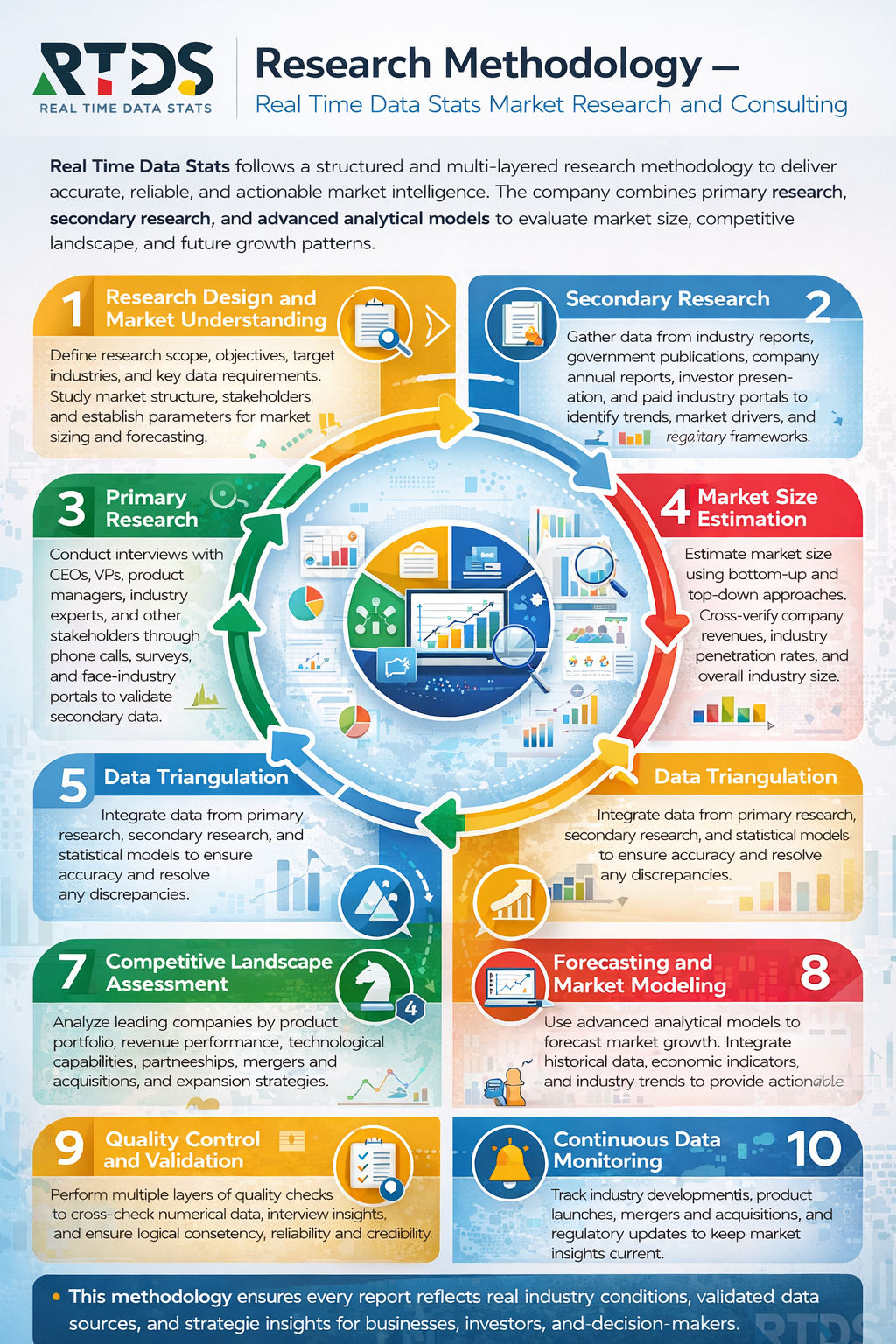
Research Methodology
- Primary Research
- Secondary Research
- Data Triangulation
- Market Size Estimation Approach
- Forecasting Methodology
- Validation Techniques
Executive Summary
- Global Market Snapshot
- Key Market Trends
- High-Growth Segments
- Strategic Insights
Market Overview
- Industry Definition
- Market Evolution
- Market Structure
- Industry Value Chain
- Ecosystem Analysis
Market Dynamics
- Drivers
- Restraints
- Opportunities
- Challenges
Regulatory Framework
- International Coastal Protection Policies
- National Coastal Management Regulations
- Environmental Compliance Standards
- Data Privacy & Security Guidelines
Technology Landscape
- Remote Sensing Technologies
- GIS Platforms
- LiDAR Systems
- Drone-Based Technologies
- Photogrammetry Solutions
- AI-Based Analytics
Coastal Erosion Mapping Services Market Segmentation Analysis
- By Type
- Satellite-Based Mapping
- Aerial Photogrammetry
- LiDAR Survey Mapping
- Drone-Based Mapping
- GIS-Based Mapping
- Ground Survey Mapping
- By Application
- Shoreline Monitoring
- Coastal Infrastructure Planning
- Disaster Risk Management
- Environmental Impact Assessment
- Coastal Zone Management
- Habitat Conservation
- By Service Type
- Data Collection Services
- Data Processing Services
- Mapping & Visualization Services
- Analysis & Modeling Services
- Monitoring & Reporting Services
- Consulting Services
- By Technology
- Remote Sensing
- Geographic Information System (GIS)
- Global Navigation Satellite System (GNSS)
- LiDAR Technology
- Photogrammetry
- AI & Machine Learning
- By Deployment Mode
- On-Premise
- Cloud-Based
- Hybrid
- Web-Based Platforms
- Mobile-Based Platforms
- Standalone Systems
- By End User
- Government Agencies
- Environmental Organizations
- Research Institutions
- Engineering & Construction Firms
- Coastal Management Authorities
- Disaster Management Agencies
- By Data Source
- Satellite Imagery
- Aerial Imagery
- UAV Data
- Field Survey Data
- Historical Data
- Sensor-Based Data
- By Mapping Output
- 2D Mapping
- 3D Mapping
- Digital Elevation Models
- Terrain Models
- Change Detection Maps
- Predictive Erosion Models
- By Coastal Type
- Sandy Coasts
- Rocky Coasts
- Muddy Coasts
- Deltaic Coasts
- Estuarine Coasts
- Coral Reef Coasts
Regional Market Analysis
- Market Size & Forecast
- Growth Trends
- Investment Opportunities
- Policy Impact
- Country-Level Market Analysis
- Market Share Assessment
Growth Drivers
- Competitive Scenario
- Competitive Landscape
- Market Share Analysis
- Competitive Benchmarking
- Strategic Initiatives
Recent Developments
- Mergers & Acquisitions
- Partnerships & Collaborations
- Product Launches
- Company Profiles
- Company Overview
- Product & Service Portfolio
- Financial Performance
- Strategic Developments
SWOT Analysis
- Market Forecast
- Global Market Forecast
- Segment-Wise Forecast
Regional Forecast
- Strategic Recommendations
- Growth Strategies
- Investment Strategies
- Market Entry Strategies
Case Studies
- Government Coastal Protection Programs
- Smart Coastal Monitoring Projects
- Disaster Management Applications
Conclusion
- Summary of Market Trends
- Key Drivers and Restraints
- Growth Opportunities
- Technology & Innovation Outlook
- Future Market Forecast
Appendix
- Abbreviations & Acronyms
- Research Methodology Details
- Data Sources
- Disclaimer
List of Tables
- Table: 1: Global Market Size Overview
- Table: 2: Market Growth Rate Comparison
- Table: 3: Regional Revenue Distribution
- Table: 4: Type-Wise Market Share
- Table: 5: Application-Wise Market Share
- Table: 6: Technology Adoption Rates
- Table: 7: Regulatory Framework Summary
- Table: 8: Pricing Trend Analysis
- Table: 9: Investment Flow Analysis
- Table: 10: Competitive Market Share
- Table: 11: Company Financial Comparison
- Table: 12: Service Portfolio Matrix
- Table: 13: Risk Assessment Matrix
- Table: 14: Forecast Revenue Projections
- Table: 15: Strategic Development Summary
List of Figures
- Figure: 1: Global Market Revenue Trend
- Figure: 2: Market Segmentation Overview
- Figure: 3: Value Chain Diagram
- Figure: 4: Ecosystem Mapping
- Figure: 5: Porter’s Five Forces Model
- Figure: 6: PESTLE Analysis Chart
- Figure: 7: Regional Market Share Pie Chart
- Figure: 8: Technology Adoption Graph
- Figure: 9: Investment Trend Line
- Figure: 10: Competitive Landscape Map
- Figure: 11: Growth Opportunity Matrix
- Figure: 12: Forecast Growth Curve
- Figure: 13: Service Demand Heat Map
- Figure: 14: Risk Impact Diagram
- Figure: 15: Future Outlook Illustration
Coastal Erosion Mapping Services Market Key Factors
Drivers:
- Governments mandate stricter coastal zone management regulations.
- Rising sea levels and intense storms increase erosion vulnerability.
- Insurance and financial sectors demand accurate risk assessments.
Restraints:
- High costs limit advanced technology adoption for some authorities.
- Inconsistent data collection methods hinder regional comparisons.
- Complex permitting processes delay coastal mapping projects.
Opportunities:
- Emerging economies invest in national coastline protection programs.
- AI and machine learning automate analysis of large geospatial datasets.
- Hybrid surveying models combine satellites, drones, and ground sensors.
Challenges:
- Data resolution often fails to meet site-specific engineering needs.
- Rapid environmental changes outpace traditional mapping cycles.
- Legal disputes complicate data sharing between agencies and landowners.
Coastal Erosion Mapping Services Market Key Regional Trends
North America:
- Agencies integrate real-time sensor networks with predictive models.
- Private developers fund pre-construction erosion studies for resilience.
- Focus increases on mapping Arctic coastlines affected by thawing permafrost.
Europe:
- EU directives push for standardized, cross-border vulnerability indices.
- Services expand to monitor erosion impact on cultural heritage sites.
- Public-private partnerships accelerate mapping of high-tourism coastlines.
Asia-Pacific:
- Rapid coastal urbanization drives demand for frequent monitoring.
- Governments prioritize mapping for mangrove restoration and green infrastructure.
- Low-cost drone-based surveys see widespread adoption.
Latin America:
- Mapping focuses on protecting vital aquaculture and fishing zones.
- Projects increasingly target erosion's impact on rural communities.
- Nations seek international funding for baseline coastal mapping.
Middle East & Africa:
- Mapping supports design of major coastal megaprojects and cities.
- Services address erosion threatening critical port infrastructure.
- Satellite-based monitoring grows due to vast, inaccessible coastlines.
Frequently Asked Questions
Key Questions Answered
- What is the size and growth rate of the market industry?
- What are the main drivers influencing market growth trends?
- What are the key challenges and restraints faced by the market?
- What are the emerging trends and opportunities shaping the market?
- Who are the top players, and what strategies drive their success?
- What are the customer demographics and their buying behaviors?
- What are the key market segments, and what is their scope?
- What are the geographical dynamics, and which region dominates?
- What are the market forecasts and projections for the next decade?
- What regulatory factors are critical to consider for market growth?
Why Choose our Company?
- Major facts and stats backing every report we offer.
- Comprehensive analysis tailored to your business needs.
- Accurate insights backed by extensive market research.
- Expert support to address your queries promptly.
- Data-driven strategies for better decision-making.
- In-depth reports with actionable
recommendations. - Reliable statistics from trusted industry
sources. - Customizable reports to suit your specific goals.
- Unmatched quality and precision in market analysis.
- Competitive pricing with premium content delivery.
Share your experience!
We value you feedback. Please take a moment to review your experience with us.