
According to insights from Real Time Data Stats, the Bioinspired Sensor Networks Market was valued at USD 1.1 billion in 2025. It is expected to grow from USD 1.4 billion in 2026 to USD 9.0 billion by 2033, registering a CAGR of 31% during the forecast period (2026–2033).
MARKET SIZE AND SHARE
The global bioinspired sensor networks market is evolving from a niche technology into a mainstream solution, supported by growing demand for efficient, adaptive, and intelligent monitoring systems. Increasing adoption across defense, environmental monitoring, smart infrastructure, healthcare, and industrial automation is driving market expansion. These networks, inspired by biological systems, enhance real-time data collection, resilience, and decentralized decision-making, making them highly suitable for complex and dynamic environments. Continuous advancements in artificial intelligence, edge computing, and wireless communication technologies are further strengthening their commercial viability and deployment potential.
Currently, market share is concentrated among specialized technology providers and defense-focused firms that lead in biomimetic algorithms, advanced sensing hardware, and integrated system design. However, as commercialization accelerates, the competitive landscape is expected to broaden. Large electronics and IoT companies are likely to expand their presence through strategic partnerships, acquisitions, and increased research and development investments. This evolution may lead to greater market consolidation while simultaneously promoting innovation, improving system performance, and reducing overall costs for end users.
INDUSTRY OVERVIEW AND STRATEGY
The bioinspired sensor networks industry leverages principles from nature, such as swarm intelligence and neural processing, to create adaptive, resilient, and energy-efficient monitoring systems. These networks excel in complex, dynamic environments where traditional sensors fail, finding applications in precision agriculture, border surveillance, infrastructure health monitoring, and ecosystem tracking. The industry is characterized by high R&D intensity and interdisciplinary collaboration between biologists, engineers, and data scientists.
Core strategy for leading players focuses on proprietary algorithm development and hardware miniaturization to enhance node capabilities. Strategic partnerships with academic institutions for foundational research and with large-scale system integrators for deployment are crucial. Companies are also prioritizing the development of open-standard communication protocols to ensure interoperability, while aggressively protecting intellectual property around unique biomimetic designs to secure a sustainable competitive advantage in this emerging field.
Analyst Key Takeaways:
The Bioinspired Sensor Networks market is witnessing rapid momentum due to increasing demand for adaptive, self-organizing, and energy-efficient sensing systems across industrial automation, defense surveillance, smart healthcare, and autonomous robotics applications. Advancements in swarm intelligence, neuromorphic processing, and edge AI are accelerating the development of intelligent sensor architectures capable of real-time environmental adaptation and decentralized decision-making. The convergence of biomimetic engineering with wireless sensor infrastructure is creating new opportunities for next-generation resilient network ecosystems.
Strong innovation activity in IoT-enabled sensing platforms and AI-driven communication technologies is expected to support long-term market expansion. Growing investments in smart cities, environmental monitoring, precision agriculture, and autonomous mobility systems are further strengthening adoption prospects for bioinspired sensor technologies. In addition, the increasing focus on low-power distributed networks and self-healing communication frameworks is expected to position bioinspired sensor networks as a strategic component of future intelligent infrastructure deployments.
REGIONAL TRENDS AND GROWTH
North America holds the dominant market share, fueled by substantial defense and homeland security funding for surveillance and reconnaissance applications. Europe follows closely, with strong initiatives in environmental monitoring and smart city projects, emphasizing data privacy. The Asia-Pacific region is identified as the fastest-growing market, driven by rapid industrial automation, government investments in smart infrastructure, and significant agricultural modernization efforts in populous nations.
Primary growth drivers include the critical need for real-time data in IoT ecosystems and advancements in AI integration. Key restraints are high initial development costs and technical complexities in system integration. Significant opportunities lie in disaster management and healthcare diagnostics. However, the market faces challenges regarding data security in decentralized networks and the current lack of standardized regulatory frameworks, which could hinder seamless global adoption and scalability.
BIOINSPIRED SENSOR NETWORKS MARKET SEGMENTATION ANALYSIS
BY TYPE:
Bioinspired sensor networks by type are primarily driven by neuromorphic, swarm-based, self-healing, adaptive learning, hybrid bio-digital, and energy-harvesting architectures, each reflecting biological principles such as neural communication, collective intelligence, and regenerative behavior. The dominant factor shaping this segment is the growing need for autonomous decision-making and real-time adaptability in complex and unpredictable environments. Industries are increasingly favoring neuromorphic and swarm-based networks because they enable distributed intelligence, reduce latency, and enhance system resilience without relying heavily on centralized infrastructure. The shift toward energy-efficient designs is also pushing energy-harvesting and hybrid bio-digital systems into prominence, particularly in remote and infrastructure-limited deployments.
Another strong influencing factor is scalability combined with fault tolerance, which allows these network types to mimic biological ecosystems where nodes can reorganize and continue functioning even after partial failures. Defense, environmental surveillance, and healthcare monitoring sectors are major adopters because these types offer self-learning and self-repair capabilities that minimize maintenance costs and operational risks. Continuous advances in AI chips, low-power electronics, and embedded learning algorithms further intensify the dominance of adaptive and neuromorphic types, making this segment one of the most innovation-centric layers of the overall market structure.
BY COMPONENT:
Component segmentation is dominated by bioinspired sensors, microcontrollers, communication modules, power units, software algorithms, and integration interfaces, with software and algorithmic intelligence emerging as the strongest growth catalyst. The market is increasingly shaped by the demand for multi-functional sensors that can interpret environmental data through pattern recognition and contextual awareness rather than simple signal detection. Microcontrollers and edge processors are gaining importance due to the push toward decentralized analytics, enabling networks to operate with minimal external computational dependency and faster response times.
Power units and energy harvesters act as another dominant force, especially in outdoor or hard-to-reach applications where battery replacement is impractical. Meanwhile, communication modules are evolving toward ultra-low-power and mesh-enabled technologies that strengthen connectivity reliability. The integration layer is becoming more critical as interoperability with IoT ecosystems and AI platforms grows, making component synergy rather than individual hardware strength the defining competitive factor within this segment.
BY APPLICATION:
Application segmentation is heavily influenced by environmental monitoring, healthcare diagnostics, industrial automation, smart agriculture, defense surveillance, and smart city infrastructure. Environmental and healthcare applications currently dominate due to increasing climate monitoring requirements and the expansion of wearable and implantable health technologies. The need for continuous, non-invasive, and adaptive sensing solutions has accelerated the deployment of bioinspired networks that can interpret subtle changes in biological or ecological parameters with higher precision and lower energy consumption.
Industrial and urban infrastructure applications are gaining traction as organizations seek predictive maintenance and autonomous monitoring solutions. Smart agriculture benefits from swarm intelligence and adaptive sensing for crop health and soil analysis, while defense sectors leverage self-organizing capabilities for surveillance and reconnaissance. The dominant factor across applications is the demand for intelligent automation and reduced human intervention, supported by advancements in AI integration and wireless communication frameworks.
BY TECHNOLOGY:
Technology segmentation includes artificial neural networks, genetic algorithms, swarm intelligence, evolutionary computing, fuzzy logic, and machine learning integration, with machine learning and neural networks serving as the primary growth engines. The dominance of these technologies stems from their ability to enable continuous learning, anomaly detection, and adaptive pattern recognition within sensor ecosystems. Swarm intelligence and evolutionary computing are particularly influential in distributed systems where optimization and collective decision-making are essential for efficiency and resilience.
Another critical factor shaping this segment is computational efficiency combined with data accuracy. Fuzzy logic and hybrid AI models are increasingly used in uncertain or variable environments where binary decision systems are insufficient. The convergence of these technologies with edge computing hardware allows sensor networks to function with minimal latency and higher autonomy, reinforcing the technological backbone that differentiates bioinspired networks from conventional sensing infrastructures.
BY DEPLOYMENT MODE:
Deployment mode segmentation is characterized by on-premise, cloud-integrated, edge-based, hybrid, distributed mesh, and centralized configurations, with edge-based and hybrid deployments emerging as dominant forces. The key driver is the requirement for real-time analytics and reduced latency, especially in mission-critical applications such as healthcare monitoring and defense surveillance. Edge deployment allows data processing near the source, minimizing bandwidth consumption and enhancing security, which significantly increases its adoption rate.
Hybrid and distributed mesh deployments are also expanding due to their balance between centralized control and decentralized intelligence. Organizations prefer flexible deployment strategies that allow scalability without compromising system responsiveness. Security considerations, regulatory compliance, and cost optimization are additional dominant factors influencing deployment preferences, making adaptability and infrastructure compatibility central themes in this segment.
BY END-USER INDUSTRY:
End-user segmentation spans healthcare, automotive, aerospace and defense, energy and utilities, manufacturing, and agriculture, with healthcare and defense industries currently leading market penetration. The dominant factor is the critical need for precision monitoring, rapid response systems, and reliability in high-risk or sensitive environments. Healthcare applications benefit from adaptive diagnostics and patient monitoring, while defense relies on autonomous surveillance and situational awareness capabilities.
Manufacturing and energy sectors are also accelerating adoption due to predictive maintenance and operational efficiency improvements. Automotive and agriculture industries are influenced by automation and smart ecosystem integration trends. Cross-industry digital transformation and the push toward sustainability amplify the role of bioinspired sensor networks as foundational infrastructure for intelligent and self-regulating systems.
BY NETWORK ARCHITECTURE:
Network architecture segmentation includes wireless, wired, mesh, star, cluster-based, and hierarchical models, with wireless and mesh architectures holding dominant positions. The primary factor driving this dominance is flexibility combined with ease of scalability, enabling rapid deployment across dynamic or geographically dispersed environments. Mesh architectures in particular align closely with biological swarm behavior, offering redundancy and fault tolerance that strengthen network reliability.
Cluster-based and hierarchical architectures are also gaining importance in large-scale industrial and urban projects where structured data flow and load balancing are essential. The rising demand for seamless connectivity, low energy consumption, and adaptive routing mechanisms significantly influences architectural choices. Technological advances in communication protocols and low-power networking chips continue to refine this segment’s competitive landscape.
BY SENSOR MODALITY:
Sensor modality segmentation includes chemical, optical, acoustic, thermal, pressure, and motion sensors, with optical and chemical sensors emerging as the most influential due to their high sensitivity and broad application scope. The dominant factor here is multi-modal sensing capability, where combining different sensor types enhances accuracy and contextual awareness. Environmental monitoring and healthcare diagnostics heavily rely on chemical and optical sensors for precise data interpretation.
Thermal, pressure, and motion sensors contribute significantly in industrial automation and smart infrastructure scenarios where real-time mechanical or environmental feedback is critical. Continuous improvements in nano-material engineering and micro-electromechanical systems are expanding sensor capabilities while reducing power consumption. The integration of multiple modalities into a single network forms a key competitive advantage in this segment.
BY FUNCTIONALITY:
Functionality segmentation is defined by self-organizing, self-repairing, real-time monitoring, predictive analytics, autonomous decision, and adaptive response systems, with predictive analytics and autonomous decision functions acting as the dominant growth drivers. The increasing need for proactive rather than reactive systems is shaping investment toward networks capable of forecasting failures, environmental changes, or biological anomalies before they occur.
Self-organizing and self-repairing functionalities are also critical, particularly in remote or mission-critical deployments where maintenance access is limited. Adaptive response mechanisms enhance operational continuity by enabling networks to recalibrate automatically in changing conditions. The convergence of AI algorithms with bioinspired logic significantly strengthens this segment, positioning functionality as a core differentiator in market competitiveness.
RECENT DEVELOPMENTS
- In Jan 2024: Boston Dynamics integrated new bioinspired sensor arrays into its Spot robot, enabling swarm-based autonomous inspection in complex industrial environments, significantly improving collective data fusion.
- In Jun 2024: A major research consortium led by MIT and DARPA demonstrated a decentralized, moth-inspired chemical sensor network for ultra-sensitive, distributed leak detection, achieving groundbreaking parts-per-billion sensitivity.
- In Sep 2024: Sony Semiconductor Solutions announced a new line of event-based vision sensors, mimicking retinal processing, specifically designed for low-power, always-on sensor network nodes in smart city applications.
- In Feb 2025: The EU-funded ""Swarmsense"" project published results from a large-scale pilot using fish-school inspired acoustic sensor networks for real-time oceanic pollution tracking and sustainable fishery management.
- In Apr 2025: Raytheon Technologies secured a $48M contract from the U.S. Department of Defense to develop and field-test a bioinspired, neural-network-based sensor grid for perimeter security and threat classification.
KEY PLAYERS ANALYSIS
- BAE Systems
- Lockheed Martin
- Raytheon Technologies
- Thales Group
- Northrop Grumman
- Boston Dynamics (Hyundai)
- Sony Semiconductor Solutions
- IBM Corporation
- Cisco Systems
- Siemens AG
- Hitachi, Ltd.
- Honeywell International Inc.
- General Electric (GE)
- Qualcomm Technologies, Inc.
- Intel Corporation
- L3Harris Technologies, Inc.
- Teledyne Technologies
- Analog Devices, Inc.
- Texas Instruments
- Dyson (Research & Development)
Bioinspired Sensor Networks Market Segmentation Analysis
By Type:
- Neuromorphic Sensor Networks
- Swarm-Based Sensor Networks
- Self-Healing Sensor Networks
- Adaptive Learning Sensor Networks
- Hybrid Bio-Digital Sensor Networks
- Energy-Harvesting Sensor Networks
By Component:
- Bioinspired Sensors
- Microcontrollers & Processing Units
- Communication Modules
- Power Units & Energy Harvesters
- Software & Algorithms
- Integration & Interface Modules
By Application:
- Environmental Monitoring
- Healthcare & Biomedical Monitoring
- Industrial Automation
- Smart Agriculture
- Defense & Surveillance
- Smart Cities & Infrastructure
By Technology:
- Artificial Neural Networks
- Genetic Algorithms
- Swarm Intelligence
- Evolutionary Computing
- Fuzzy Logic Systems
- Machine Learning Integration
By Deployment Mode:
- On-Premise Networks
- Cloud-Integrated Networks
- Edge-Based Networks
- Hybrid Deployment
- Distributed Mesh Networks
- Centralized Networks
By End-User Industry:
- Healthcare & Life Sciences
- Automotive & Transportation
- Aerospace & Defense
- Energy & Utilities
- Manufacturing
- Agriculture & Food Industry
By Network Architecture:
- Wireless Sensor Networks
- Wired Sensor Networks
- Mesh Topology Networks
- Star Topology Networks
- Cluster-Based Networks
- Hierarchical Networks
By Sensor Modality:
- Chemical Sensors
- Optical Sensors
- Acoustic Sensors
- Thermal Sensors
- Pressure Sensors
- Motion & Vibration Sensors
By Functionality:
- Self-Organizing Systems
- Self-Repairing Systems
- Real-Time Monitoring Systems
- Predictive Analytics Systems
- Autonomous Decision Systems
- Adaptive Response Systems
By Geography:
- North America (USA, Canada, Mexico)
- Europe (UK, Germany, France, Italy, Spain, Rest of Europe)
- Asia-Pacific (China, Japan, Australia, South Korea, India, Rest of Asia-Pacific)
- South America (Brazil, Argentina, Rest of South America)
- Middle East and Africa (GCC Countries, South Africa, Rest of MEA)
Bioinspired Sensor Networks Market: Table of Contents
Executive Summary
- Market Snapshot
- Key Insights
- Analyst Highlights
- Opportunity Overview
- Demand–Supply Gap Analysis
- Strategic Recommendations
Market Introduction
- Definition and Scope
- Market Taxonomy
- Research Objectives
- Study Assumptions
- Currency & Pricing Considerations
- Stakeholder Mapping
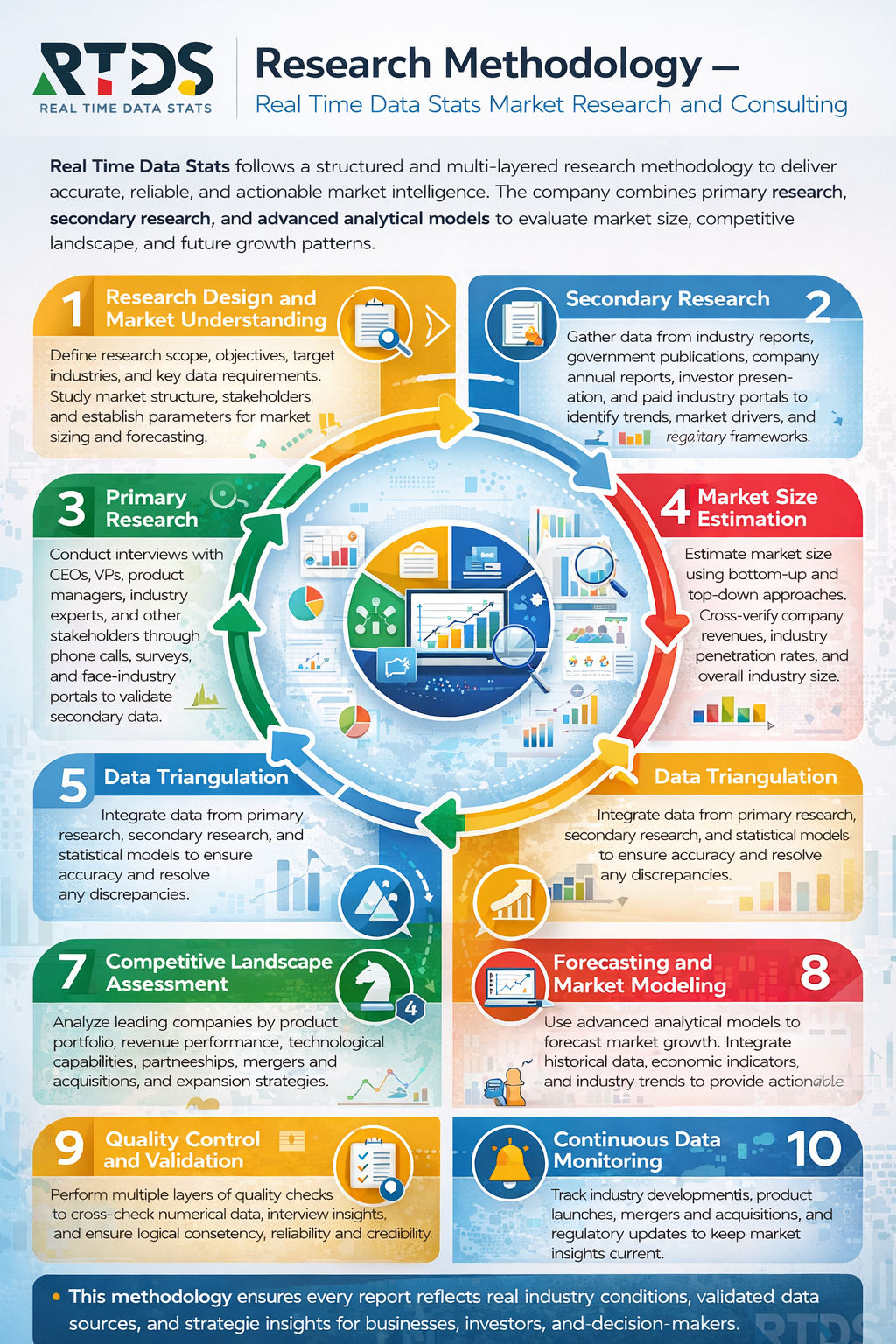
Research Methodology
- Data Collection Modules
- Primary Research Approach
- Secondary Research Sources
- Market Size Estimation Model
- Forecasting Techniques
- Validation & Triangulation
Market Dynamics
- Growth Drivers
- Market Restraints
- Emerging Opportunities
- Key Challenges
- Innovation Trends
Regulatory Landscape
- Industry Value Chain Analysis
- Raw Material Suppliers
- Component Manufacturers
- Technology Providers
- Integrators & Distributors
- Service Providers
- End-User Channels
Pricing & Cost Structure Analysis
- Component Cost Breakdown
- Software & Algorithm Costing
- Deployment Cost Structure
- Maintenance & Lifecycle Costs
- Regional Pricing Trends
Competitive Landscape
- Market Share Analysis
- Company Benchmarking
- Strategic Developments
- Product Launches
- Partnerships & Collaborations
- Mergers & Acquisitions
Bioinspired Sensor Networks Market Segmentation Analysis
- By Type
- Neuromorphic Sensor Networks
- Swarm-Based Sensor Networks
- Self-Healing Sensor Networks
- Adaptive Learning Sensor Networks
- Hybrid Bio-Digital Sensor Networks
- Energy-Harvesting Sensor Networks
- By Component
- Bioinspired Sensors
- Microcontrollers & Processing Units
- Communication Modules
- Power Units & Energy Harvesters
- Software & Algorithms
- Integration & Interface Modules
- By Application
- Environmental Monitoring
- Healthcare & Biomedical Monitoring
- Industrial Automation
- Smart Agriculture
- Defense & Surveillance
- Smart Cities & Infrastructure
- By Technology
- Artificial Neural Networks
- Genetic Algorithms
- Swarm Intelligence
- Evolutionary Computing
- Fuzzy Logic Systems
- Machine Learning Integration
- By Deployment Mode
- On-Premise Networks
- Cloud-Integrated Networks
- Edge-Based Networks
- Hybrid Deployment
- Distributed Mesh Networks
- Centralized Networks
- By End-User Industry
- Healthcare & Life Sciences
- Automotive & Transportation
- Aerospace & Defense
- Energy & Utilities
- Manufacturing
- Agriculture & Food Industry
- By Network Architecture
- Wireless Sensor Networks
- Wired Sensor Networks
- Mesh Topology Networks
- Star Topology Networks
- Cluster-Based Networks
- Hierarchical Networks
- By Sensor Modality
- Chemical Sensors
- Optical Sensors
- Acoustic Sensors
- Thermal Sensors
- Pressure Sensors
- Motion & Vibration Sensors
- By Functionality
- Self-Organizing Systems
- Self-Repairing Systems
- Real-Time Monitoring Systems
- Predictive Analytics Systems
- Autonomous Decision Systems
- Adaptive Response Systems
Regional Analysis
- North America Country Insights
- Europe Country Insights
- Asia Pacific Country Insights
- Latin America Country Insights
- Middle East & Africa Country Insights
Technology & Innovation Landscape
- Bio-Mimicry Design Trends
- AI & ML Integration
- Edge Computing Evolution
- Nano-Sensor Development
- Energy Optimization Innovations
Investment & Funding Analysis
- Venture Capital Trends
- Government Grants
- Private Equity Participation
- Startup Ecosystem
- R&D Spending Patterns
Future Outlook & Forecast
- Short-Term Projections
- Mid-Term Market Evolution
- Long-Term Disruption Potential
- Scenario Analysis
- Opportunity Mapping
Conclusion
- Summary of Market Trends
- Key Drivers and Restraints
- Growth Opportunities
- Technology & Innovation Outlook
- Future Market Forecast
Appendix
- Abbreviations
- Glossary of Terms
- Research Data Sources
- Author Credentials
- Disclaimer
List of Tables
- Table:1: Global Market Size Overview
- Table:2: Demand–Supply Analysis
- Table:3: Pricing Structure by Component
- Table:4: Cost Breakdown Analysis
- Table:5: Value Chain Participants
- Table:6: Competitive Benchmarking Matrix
- Table:7: By Type Segment Share
- Table:8: By Component Segment Share
- Table:9: By Application Segment Share
- Table:10: By Technology Segment Share
- Table:11: By Deployment Mode Share
- Table:12: By End-User Industry Share
- Table:13: By Network Architecture Share
- Table:14: By Sensor Modality Share
- Table:15: Regional Market Share
List of Figures
- Figure:1: Market Growth Trend Graph
- Figure:2: Ecosystem Overview Diagram
- Figure:3: Value Chain Flowchart
- Figure:4: Pricing Trend Visualization
- Figure:5: Competitive Positioning Map
- Figure:6: By Type Segment Pie Chart
- Figure:7: By Component Segment Pie Chart
- Figure:8: By Application Segment Pie Chart
- Figure:9: By Technology Segment Chart
- Figure:10: By Deployment Mode Chart
- Figure:11: By End-User Industry Chart
- Figure:12: By Network Architecture Chart
- Figure:13: By Sensor Modality Chart
- Figure:14: Regional Distribution Map
- Figure:15: Forecast Projection Graph
Bioinspired Sensor Networks Market Key Factors
Drivers:
- Mimic biological efficiency to improve sensing accuracy
- Reduce power consumption through adaptive behavior
- Enable autonomous operation in complex environments
Restraints:
- Increase design complexity during system integration
- Raise development costs due to specialized materials
- Limit scalability across large network deployments
Opportunities:
- Support smart infrastructure and urban monitoring
- Expand use in healthcare and wearable diagnostics
- Enable resilient sensing for defense and surveillance
Challenges:
- Maintain stability under dynamic real-world conditions
- Standardize architectures across diverse applications
- Ensure long-term reliability of bioinspired components
Bioinspired Sensor Networks Market Key Regional Trends
North America:
- Accelerate adoption in defense sensing systems
- Integrate bioinspired models into smart cities
- Fund research through academic–industry partnerships
Europe:
- Focus on sustainability-driven sensor designs
- Promote bioinspired networks for environmental monitoring
- Support innovation through regulatory-backed programs
Asia-Pacific:
- Deploy networks in large-scale industrial automation
- Integrate sensors into smart agriculture systems
- Leverage low-cost manufacturing for rapid rollout
Latin America:
- Apply bioinspired sensing to resource management
- Expand use in disaster and climate monitoring
- Adopt pilot projects in urban infrastructure
Middle East & Africa:
- Use adaptive sensors for energy infrastructure monitoring
- Deploy networks in harsh environmental conditions
- Support early adoption through smart city initiatives
Frequently Asked Questions
Key Questions Answered
- What is the size and growth rate of the market industry?
- What are the main drivers influencing market growth trends?
- What are the key challenges and restraints faced by the market?
- What are the emerging trends and opportunities shaping the market?
- Who are the top players, and what strategies drive their success?
- What are the customer demographics and their buying behaviors?
- What are the key market segments, and what is their scope?
- What are the geographical dynamics, and which region dominates?
- What are the market forecasts and projections for the next decade?
- What regulatory factors are critical to consider for market growth?
Why Choose our Company?
- Major facts and stats backing every report we offer.
- Comprehensive analysis tailored to your business needs.
- Accurate insights backed by extensive market research.
- Expert support to address your queries promptly.
- Data-driven strategies for better decision-making.
- In-depth reports with actionable
recommendations. - Reliable statistics from trusted industry
sources. - Customizable reports to suit your specific goals.
- Unmatched quality and precision in market analysis.
- Competitive pricing with premium content delivery.
Share your experience!
We value you feedback. Please take a moment to review your experience with us.