
According to insights from Real Time Data Stats, the Biohybrid Actuators Market was valued at USD 69 million in 2025. It is expected to grow from USD 89 million in 2026 to USD 505 million by 2033, registering a CAGR of 28.2% during the forecast period (2026–2033).
MARKET SIZE AND SHARE
The biohybrid actuators market is experiencing steady growth, driven by advancements in biomedical engineering, synthetic biology, and next-generation robotics. Market share is currently concentrated among specialized biotechnology companies and academic spin-offs that are pioneering innovations in this interdisciplinary field, supported by ongoing research and technology development efforts.
North American and European organizations currently hold the largest market share, primarily due to their strong focus on research and early-stage applications. However, expanding opportunities in medical devices, soft robotics, prosthetics, and automated systems are expected to diversify the market. Emerging players in the Asia-Pacific region are likely to gain market share through increasing R&D investments, while the competitive landscape evolves as biohybrid actuator technologies move from laboratory research to scalable commercial products.
INDUSTRY OVERVIEW AND STRATEGY
The biohybrid actuators industry merges biological components with synthetic systems to create soft, responsive, and energy-efficient motion. Primary applications include advanced medical devices, biocompatible prosthetics, and adaptive soft robotics. The field is research-intensive, with innovation driven by cross-collaboration between molecular biology, materials science, and robotics. Key industry players are primarily agile startups and university research consortia pushing the boundaries of actuator performance and biocompatibility.
Core strategies revolve around securing intellectual property for novel biomaterial integration and actuation mechanisms. Companies are forming strategic partnerships with medical device corporations and robotics manufacturers to bridge the gap from prototype to product. A focus on miniaturization, power efficiency, and long-term stability in biological environments is paramount for commercialization. Success depends on navigating complex regulatory pathways, especially for implantable medical applications.
Analyst Key Takeaways:
Biohybrid actuators are emerging as a foundational technology at the intersection of soft robotics, tissue engineering, and biomaterials science. Their ability to integrate living muscle cells or engineered tissues with synthetic structures enables highly adaptive, energy-efficient, and biologically inspired motion systems. Growing research investments in biohybrid robotics, regenerative engineering, and biofabrication are accelerating innovation, particularly for applications requiring flexibility, precision, and biocompatibility.
The market is expected to benefit from advancements in 3D bioprinting, engineered tissues, and next-generation biomaterials that improve actuator performance, durability, and scalability. Academic institutions, robotics developers, and biotechnology companies are increasingly collaborating to commercialize biohybrid systems for medical devices, drug testing platforms, microscale robotics, and advanced automation applications. As the field matures, the convergence of biological intelligence with robotic functionality is likely to create new opportunities across healthcare, research, and industrial sectors.
REGIONAL TRENDS AND GROWTH
North America holds the largest market share, supported by substantial government and private funding for bioengineering and a strong presence of leading research institutions. Europe follows closely, with significant activity in Germany and the UK, emphasizing ethical research and medical robotics. Both regions benefit from advanced healthcare infrastructure and collaborative frameworks that accelerate translational research from academic labs to clinical testing.
The Asia-Pacific region is poised for the highest growth rate, driven by aggressive government initiatives in Japan and China to lead in robotics and regenerative medicine. Key drivers include an aging population and industrial automation demands. Restraints involve high development costs and technical complexities in cell integration. Opportunities lie in creating affordable prosthetic and rehabilitation devices. The primary challenge remains achieving consistent performance and scalability while managing regulatory heterogeneity across different countries.
BIOHYBRID ACTUATORS MARKET SEGMENTATION ANALYSIS
BY TYPE:
The segmentation by type plays a critical role in defining the structural and functional evolution of the biohybrid actuators market. Soft biohybrid actuators dominate research and early commercialization due to their high compliance, adaptability, and biological compatibility, making them ideal for applications in soft robotics and medical devices. Rigid and macro-scale actuators, while less flexible, offer higher force output and durability, which supports their use in industrial and assistive systems. Micro-scale actuators are gaining strong momentum as miniaturization trends accelerate, particularly in microfluidics and minimally invasive biomedical technologies.
Market demand across types is strongly influenced by the balance between flexibility, force generation, and system stability. Implantable and wearable biohybrid actuators represent high-growth subsegments, driven by advancements in tissue engineering and bioelectronics. These actuator types benefit from rising investment in personalized healthcare and human–machine integration technologies. The continued diversification of actuator types reflects the market’s shift toward application-specific solutions rather than standardized mechanical outputs.
BY MATERIAL:
Material-based segmentation is a dominant factor shaping performance, longevity, and scalability within the biohybrid actuators market. Hydrogel-based materials are widely preferred due to their high water content, elasticity, and ability to support living cells, making them essential for biologically integrated systems. Polymer- and elastomer-based materials provide enhanced mechanical strength and controllability, supporting hybrid designs that require both biological responsiveness and structural reliability. Nanocomposite materials are emerging as a transformative category, offering improved electrical conductivity and mechanical reinforcement.
Material selection is closely tied to application demands, regulatory requirements, and manufacturing feasibility. Hybrid synthetic–biological materials are increasingly adopted as they bridge the gap between biological sensitivity and industrial robustness. This segment is strongly influenced by advances in biomaterials science, cost optimization, and scalability challenges. As performance expectations rise, material innovation remains one of the most decisive competitive factors in the market.
BY ACTUATION MECHANISM:
Actuation mechanism segmentation reflects the technological core of biohybrid actuator systems. Muscle-cell-driven actuators remain the most biologically authentic mechanism, leveraging natural contraction properties to generate motion. Electrical stimulation-based mechanisms dominate experimental and early commercial systems due to their controllability and compatibility with existing electronic infrastructure. Chemical and optical stimulation mechanisms are gaining attention for precise, localized activation, particularly in research-intensive applications.
The choice of actuation mechanism is largely dictated by response time, energy efficiency, and control complexity. Thermal and magnetic mechanisms, while niche, offer unique advantages in specific environments where electrical or chemical stimulation is impractical. Ongoing innovation in signal integration and feedback systems continues to enhance actuation precision, making mechanism optimization a key determinant of system performance and market adoption.
BY BIOLOGICAL COMPONENT:
Segmentation by biological component highlights the diversity of living tissues integrated into actuator systems. Skeletal muscle cells are widely utilized due to their strong contraction force and controllable behavior, making them suitable for robotic and prosthetic applications. Cardiac and smooth muscle cells offer rhythmic and sustained motion, supporting applications in pumps, fluid control, and bio-inspired systems. Insect muscle tissues are increasingly explored for their durability and lower maintenance requirements.
The selection of biological components is heavily influenced by viability, ethical considerations, and long-term stability. Engineered tissue constructs and mammalian cell lines are gaining traction as they offer improved reproducibility and customization. This segment is strongly driven by progress in tissue engineering, cell culturing techniques, and biocompatibility standards, positioning biological integration as both an opportunity and a technical challenge.
BY POWER SOURCE:
Power source segmentation defines operational efficiency and system autonomy in biohybrid actuators. Biochemical energy-based systems closely mimic natural biological processes and are favored in fully bio-integrated designs. Electrical power-based actuators dominate hybrid systems due to ease of control, scalability, and compatibility with sensors and controllers. Micro-battery-powered solutions support portable and wearable applications, though energy density remains a constraint.
Wireless power transfer and energy-harvesting systems represent emerging solutions aimed at overcoming mobility and longevity limitations. Hybrid power systems combining biological and electrical sources are gaining strategic importance as they enhance reliability and extend operational lifespans. Market growth in this segment is strongly tied to advancements in energy storage, wireless transmission efficiency, and low-power electronics.
BY CONTROL SYSTEM:
Control system segmentation reflects the intelligence and responsiveness of biohybrid actuators. Open-loop systems dominate early-stage applications due to simplicity and lower costs, while closed-loop systems are increasingly adopted for precision-critical operations. Neural signal-based and sensor-integrated control systems represent advanced approaches that enable real-time feedback and adaptive behavior, particularly in prosthetics and human–machine interfaces.
The integration of AI-assisted control systems is a key growth driver, enabling predictive responses and self-optimization. Remote-controlled systems support applications in hazardous or inaccessible environments. This segment is driven by rapid developments in bioelectronics, signal processing, and machine learning, positioning control architecture as a critical differentiator in competitive system design.
BY APPLICATION:
Application-based segmentation is the primary driver of commercial demand within the biohybrid actuators market. Soft robotics remains the leading application area, benefiting from the natural flexibility and adaptability of biohybrid systems. Medical devices, including surgical tools and implantable systems, represent a high-value segment supported by increasing healthcare innovation and demand for minimally invasive solutions.
Prosthetics, drug delivery systems, and microfluidic applications are expanding rapidly due to their reliance on precise, bio-compatible motion. Bio-inspired robotics continues to attract research funding and defense interest. The diversity of applications highlights the market’s transition from experimental platforms to function-driven commercial solutions.
BY END USER
End-user segmentation reflects adoption patterns across industries and institutions. Research laboratories and academic institutions dominate early-stage demand, driven by experimentation and technology validation. Healthcare institutions represent a fast-growing segment due to increasing clinical translation of biohybrid systems. Robotics manufacturers are integrating biohybrid actuators to enhance system adaptability and human interaction.
Biotechnology companies and defense organizations contribute significantly to funding and advanced development. End-user adoption is influenced by regulatory readiness, technical expertise, and cost structures. As commercialization accelerates, demand is gradually shifting from research-focused users to industrial and healthcare end users.
BY TECHNOLOGY READINESS LEVEL
Technology readiness segmentation highlights the maturity landscape of the market. Most biohybrid actuator technologies remain in the conceptual and laboratory-scale prototype stages, reflecting the market’s innovation-driven nature. Preclinical testing and pilot-scale development segments are expanding as translational research increases and proof-of-concept systems mature.
Early commercial deployment remains limited but is expected to grow steadily with improvements in reliability and regulatory clarity. Fully commercialized systems are currently niche, primarily in specialized robotics and biomedical tools. This segmentation underscores the long development cycles and high entry barriers characteristic of the market.
RECENT DEVELOPMENTS
- In Jan 2024: Researchers from UCLA developed a novel biohybrid actuator using engineered muscle tissue, achieving unprecedented contraction force and durability for potential use in advanced prosthetic limbs and soft robotics.
- In Jul 2024: A strategic partnership was announced between Bionaut Labs and a leading materials science firm to co-develop下一代 biohybrid micro-actuators for targeted drug delivery and minimally invasive surgical procedures.
- In Nov 2024: The German biotech startup CyberneX Biotics secured €12 million in Series A funding to advance its flagship platform, which integrates neuron-controlled actuators for neurorehabilitation devices.
- In Mar 2025: MIT's bioengineering team published a breakthrough in Science, detailing a 3D-printed, vascularized biohybrid actuator capable of self-repair, marking a significant step toward long-term implantable systems.
- In Jun 2025: Medtronic entered an exclusive licensing agreement with a university spin-off for a proprietary biohybrid diaphragm actuator technology, aiming to develop a new class of implantable respiratory assist devices.
KEY PLAYERS ANALYSIS
- Bionaut Labs
- CyberneX Biotics
- Ekso Bionics
- Medtronic plc
- Boston Dynamics (Hyundai Motor Group)
- Bioservo Technologies
- SynTouch Inc.
- Festo AG & Co. KG
- Parker Hannifin Corporation
- Myomo, Inc.
- Össur
- Shadow Robot Company
- RightHand Robotics
- Yaskawa Electric Corporation
- Kinova Inc.
- ReWalk Robotics Ltd.
- Mitsubishi Heavy Industries
- Sony Corporation
- Panasonic Holdings Corporation
- Toyota Research Institute
- research institutions (e.g., MIT, UCLA, ETH Zurich)
Biohybrid Actuators Market Segmentation
By Type:
- Soft biohybrid actuators
- Rigid biohybrid actuators
- Micro-scale biohybrid actuators
- Macro-scale biohybrid actuators
- Implantable biohybrid actuators
- Wearable biohybrid actuators
By Material:
- Hydrogel-based
- Polymer-based
- Elastomer-based
- Nanocomposite-based
- Biomembrane-based
- Hybrid synthetic–biological materials
By Actuation Mechanism:
- Muscle-cell-driven
- Electrical stimulation-based
- Chemical stimulation-based
- Optical stimulation-based
- Thermal stimulation-based
- Magnetic field-based
By Biological Component:
- Skeletal muscle cells
- Cardiac muscle cells
- Smooth muscle cells
- Insect muscle tissues
- Mammalian cell lines
- Engineered tissue constructs
By Power Source:
- Biochemical energy-based
- Electrical power-based
- Micro-battery powered
- Wireless power transfer
- Energy harvesting-based
- Hybrid power systems
By Control System:
- Open-loop control
- Closed-loop control
- Neural signal-based control
- Sensor-integrated control
- AI-assisted control
- Remote-controlled systems
By Application:
- Soft robotics
- Medical devices
- Prosthetics and orthotics
- Drug delivery systems
- Microfluidic systems
- Bio-inspired robotics
By End User:
- Healthcare institutions
- Research laboratories
- Robotics manufacturers
- Biotechnology companies
- Academic institutions
- Defense and aerospace organizations
By Technology Readiness Level:
- Conceptual research stage
- Laboratory-scale prototypes
- Preclinical testing stage
- Pilot-scale development
- Early commercial deployment
- Fully commercialized systems
By Geography:
- North America (USA, Canada, Mexico)
- Europe (UK, Germany, France, Italy, Spain, Rest of Europe)
- Asia-Pacific (China, Japan, Australia, South Korea, India, Rest of Asia-Pacific)
- South America (Brazil, Argentina, Rest of South America)
- Middle East and Africa (GCC Countries, South Africa, Rest of MEA)
Biohybrid Actuators Market: Table of Contents
Introduction
- Scope Market definitionof the study
- Research objectives
- Market taxonomy
- Assumptions and limitations
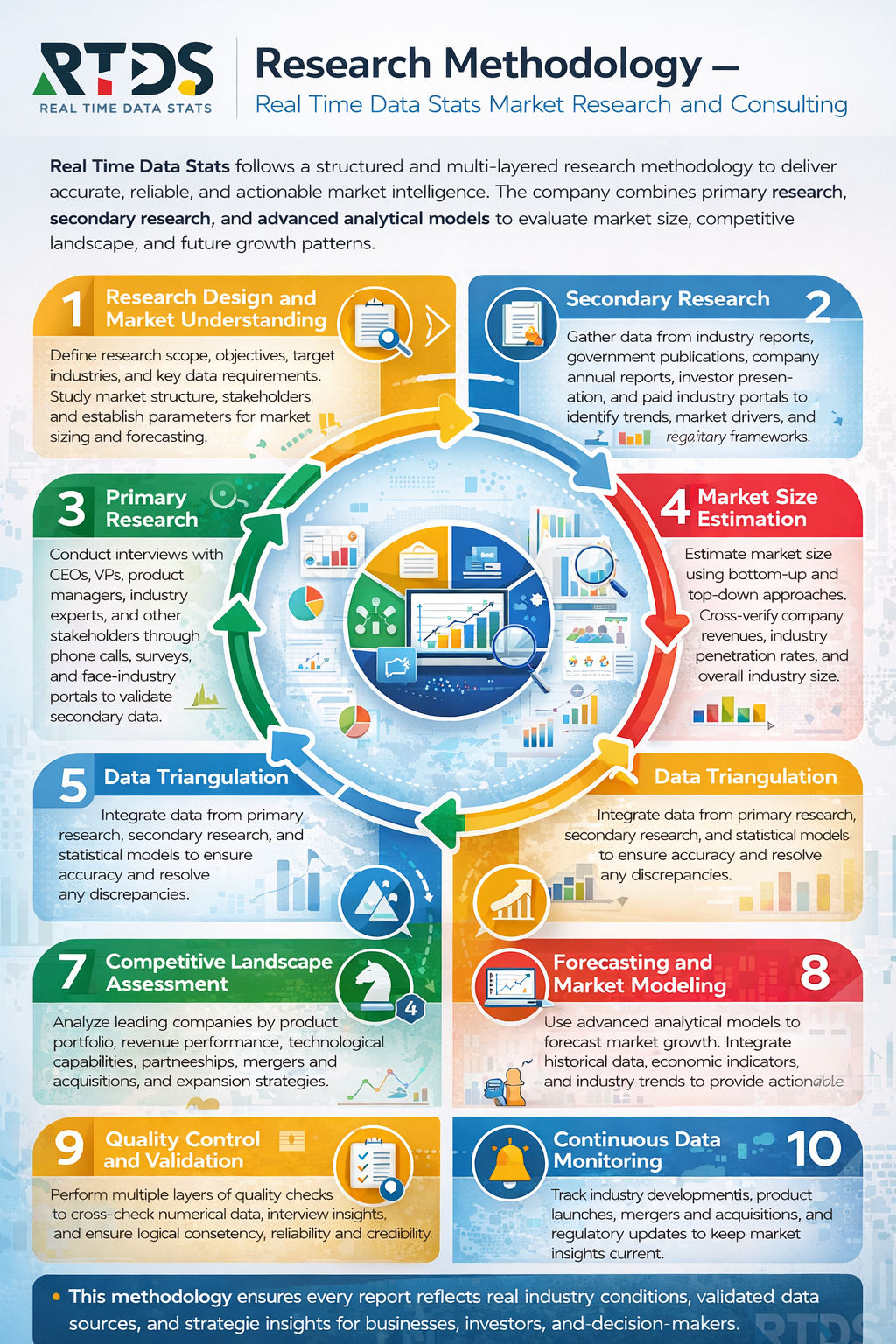
Research Methodology
- Primary research approach
- Secondary research sources
- Data triangulation method
- Market size estimation
- Forecasting approach
- Validation techniques
Executive Summary
- Market overview
- Key findings
- Market highlights
- Strategic recommendations
Market Overview
- Evolution of biohybrid actuators
- Industry ecosystem analysis
- Value chain analysis
Technology landscape
- Regulatory framework
- Ethical and safety considerations
Market Dynamics
- Market drivers
- Market restraints
- Market opportunities
- Market challenges
- Emerging trends
- Innovation outlook
Biohybrid Actuators Market Segmentation
- By Type
- Soft biohybrid actuators
- Rigid biohybrid actuators
- Micro-scale biohybrid actuators
- Macro-scale biohybrid actuators
- Implantable biohybrid actuators
- Wearable biohybrid actuators
- By Material
- Hydrogel-based
- Polymer-based
- Elastomer-based
- Nanocomposite-based
- Biomembrane-based
- Hybrid synthetic–biological materials
- By Actuation Mechanism
- Muscle-cell-driven
- Electrical stimulation-based
- Chemical stimulation-based
- Optical stimulation-based
- Thermal stimulation-based
- Magnetic field-based
- By Biological Component
- Skeletal muscle cells
- Cardiac muscle cells
- Smooth muscle cells
- Insect muscle tissues
- Mammalian cell lines
- Engineered tissue constructs
- By Power Source
- Biochemical energy-based
- Electrical power-based
- Micro-battery powered
- Wireless power transfer
- Energy harvesting-based
- Hybrid power systems
- By Control System
- Open-loop control
- Closed-loop control
- Neural signal-based control
- Sensor-integrated control
- AI-assisted control
- Remote-controlled systems
- By Application
- Soft robotics
- Medical devices
- Prosthetics and orthotics
- Drug delivery systems
- Microfluidic systems
- Bio-inspired robotics
- By End User
- Healthcare institutions
- Research laboratories
- Robotics manufacturers
- Biotechnology companies
- Academic institutions
- Defense and aerospace organizations
- By Technology Readiness Level
- Conceptual research stage
- Laboratory-scale prototypes
- Preclinical testing stage
- Pilot-scale development
- Early commercial deployment
- Fully commercialized systems
Regional Market Analysis
- North America market analysis
- Europe market analysis
- Asia-Pacific market analysis
- Latin America market analysis
- Middle East market analysis
- Africa market analysis
Competitive Landscape
- Market share analysis
- Competitive benchmarking
- Strategic initiatives
- Mergers and acquisitions
- Collaborations and partnerships
- New product development
Company Profiles
- Company overview
- Product portfolio
- Technology focus
- Financial performance
- Strategic outlook
Future Outlook
- Market forecast analysis
- Technology adoption trends
- Investment opportunities
- Long-term growth potential
Conclusion
- Summary of Market Trends
- Key Drivers and Restraints
- Growth Opportunities
- Technology & Innovation Outlook
- Future Market Forecast
Appendix
- Abbreviations and acronyms
- Data sources
- Methodology notes
- Disclaimer
List of Tables
- Table:1: Global Biohybrid Actuators Market Overview
- Table:2: Market Size by Type
- Table:3: Market Size by Material
- Table:4: Market Size by Actuation Mechanism
- Table:5: Market Size by Biological Component
- Table:6: Market Size by Power Source
- Table:7: Market Size by Control System
- Table:8: Market Size by Application
- Table:9: Market Size by End User
- Table:10: Market Size by Technology Readiness Level
- Table:11: Regional Market Size Analysis
- Table:12: North America Market Breakdown
- Table:13: Europe Market Breakdown
- Table:14: Asia-Pacific Market Breakdown
- Table:15: Competitive Landscape Comparison
List of Figures
- Figure:1: Biohybrid Actuators Market Segmentation Framework
- Figure:2: Biohybrid Actuators Market Value Chain
- Figure:3: Market Dynamics Overview
- Figure:4: Technology Landscape of Biohybrid Actuators
- Figure:5: Market Share by Type
- Figure:6: Market Share by Material
- Figure:7: Market Share by Actuation Mechanism
- Figure:8: Market Share by Application
- Figure:9: Market Share by End User
- Figure:10: Regional Market Share Distribution
- Figure:11: North America Market Trends
- Figure:12: Europe Market Trends
- Figure:13: Asia-Pacific Market Trends
- Figure:14: Competitive Positioning Matrix
- Figure:15: Future Market Outlook and Growth Trajectory
Biohybrid Actuators Market Key Factors
Drivers:
- Demand for lifelike motion and adaptability in soft robotics pushes technology forward.
- Medical applications require biocompatible devices for precise surgery and rehabilitation.
- Material science advances enable stronger integration of biological tissues with synthetic components.
Restraints:
- High production costs and complex fabrication processes limit widespread adoption.
- Biological components degrade over time, reducing device longevity and reliability.
- Strict regulatory frameworks slow down the approval process for medical applications.
Opportunities:
- Aging global populations increase the need for advanced assistive and rehabilitative devices.
- Expanding exploration in extreme environments creates demand for resilient, bio-inspired systems.
- Progress in 3D bioprinting allows for the custom creation of complex tissue-based actuators.
Challenges:
- Achieving consistent performance and standardization across biohybrid systems remains difficult.
- Ethical debates concerning the use of biological materials in machines persist.
- Scaling laboratory prototypes into commercially viable, mass-produced products is complex.
Biohybrid Actuators Market Key Regional Trends
North America:
- Strong venture capital and government funding accelerate research in medical and defense robotics.
- Leading universities and tech companies heavily patent novel integration techniques.
- Regulatory agencies actively develop frameworks for approving biohybrid medical devices.
Europe:
- Stringent ethics regulations shape focused research on plant-based and non-animal biological materials.
- Cross-border consortiums drive collaborative projects in soft robotics for manufacturing and healthcare.
- Sustainability mandates promote research into biodegradable and environmentally friendly actuators.
Asia-Pacific:
- Governments prioritize and fund robotics development, including biohybrid systems, for elderly care.
- Rapid manufacturing ecosystems facilitate the prototyping and testing of new actuator designs.
- Research focuses on cost-effective production methods to enhance commercial accessibility.
Frequently Asked Questions
Key Questions Answered
- What is the size and growth rate of the market industry?
- What are the main drivers influencing market growth trends?
- What are the key challenges and restraints faced by the market?
- What are the emerging trends and opportunities shaping the market?
- Who are the top players, and what strategies drive their success?
- What are the customer demographics and their buying behaviors?
- What are the key market segments, and what is their scope?
- What are the geographical dynamics, and which region dominates?
- What are the market forecasts and projections for the next decade?
- What regulatory factors are critical to consider for market growth?
Why Choose our Company?
- Major facts and stats backing every report we offer.
- Comprehensive analysis tailored to your business needs.
- Accurate insights backed by extensive market research.
- Expert support to address your queries promptly.
- Data-driven strategies for better decision-making.
- In-depth reports with actionable
recommendations. - Reliable statistics from trusted industry
sources. - Customizable reports to suit your specific goals.
- Unmatched quality and precision in market analysis.
- Competitive pricing with premium content delivery.
Share your experience!
We value you feedback. Please take a moment to review your experience with us.