
According to insights from Real Time Data Stats, the Bioelectronic Synapse Market was valued at USD 64 million in 2025. It is expected to grow from USD 75 million in 2026 to USD 240 million by 2033, registering a CAGR of 18% during the forecast period (2026–2033).
MARKET SIZE AND SHARE
The global bioelectronic synapse market is witnessing strong expansion, with market share currently concentrated among pioneering neurotechnology firms and major semiconductor companies investing in neuromorphic computing. This growth is fueled by rising demand for brain-computer interfaces and next-generation artificial intelligence systems that rely on energy-efficient, brain-inspired architectures. Continuous innovation in synaptic devices, coupled with advances in materials science and chip design, is enabling more scalable and adaptive computing models. Companies are strengthening their positions through strategic partnerships, research collaborations, and the development of high-performance neuromorphic hardware solutions.
The market share landscape is expected to evolve as competition intensifies with the entry of specialized startups and increased cross-industry collaborations. The neuromorphic hardware segment for AI applications is projected to capture the largest share, followed by medical neural implant technologies. North America is likely to maintain its dominant position due to strong research funding, advanced infrastructure, and the presence of key industry players. Meanwhile, the Asia-Pacific region is set to grow at a rapid pace, driven by government support in semiconductor manufacturing and AI innovation, ultimately reshaping global competitive dynamics and expanding overall market opportunities.
INDUSTRY OVERVIEW AND STRATEGY
The bioelectronic synapse industry develops artificial neural components that emulate biological synapses, enabling efficient neuromorphic computing and direct neural interfaces. Core applications span next-generation AI hardware, advanced prosthetics, and therapeutic implants for neurological disorders. The industry is characterized by intense interdisciplinary research merging neuroscience, materials science, and electrical engineering, positioning it at the frontier of human-machine convergence and low-power computing solutions for complex data processing.
Key competitive strategies involve securing intellectual property around novel memristive materials and device architectures. Companies are forming strategic alliances between semiconductor leaders and medical device corporations to co-develop platforms. The overarching strategy focuses on moving from laboratory prototypes to scalable, reliable manufacturing processes. Success hinges on achieving biocompatibility for medical uses and unparalleled energy efficiency for AI applications, thereby creating distinct, defensible market positions in both the healthcare and information technology sectors.
Analyst Key Takeaways:
The bioelectronic synapse market is emerging at the intersection of bioelectronic medicine, neuromodulation, and advanced bioelectronics, positioning it as a high-impact but still nascent segment within neurotechnology. Growth is being driven by increasing demand for precision neuromodulation, rising research in artificial synaptic interfaces, and rapid advancements in materials such as memristors and organic semiconductors. Compared to its parent markets, the segment exhibits a significantly higher innovation velocity, supported by strong academic research, early-stage commercialization, and cross-disciplinary integration with AI and synthetic biology.
From a strategic standpoint, the market is expected to follow an accelerated adoption curve, outpacing traditional neuromodulation due to its potential for adaptive, real-time neural interaction. However, scalability, regulatory validation, and clinical translation remain key constraints in the near term. As the ecosystem matures, increased collaboration between medical device companies, semiconductor firms, and neuroscience research institutions will be critical in transitioning from experimental applications to mainstream therapeutic deployment.
REGIONAL TRENDS AND GROWTH
North America leads, driven by robust funding from DARPA and the NIH, coupled with strong academic-industry consortia. Europe shows significant traction with its Human Brain Project legacy, focusing on ethical frameworks and research collaboration. The Asia-Pacific region, particularly China, South Korea, and Japan, is the fastest-growing, with national strategies prioritizing neuromorphic chips to achieve semiconductor independence and lead in artificial intelligence, creating a dynamic regional competitive landscape.
Primary growth drivers include the AI processing bottleneck and rising prevalence of neurological diseases. Key restraints are high development costs and lengthy regulatory pathways for medical devices. Opportunities lie in personalized neurotherapeutics and edge AI computing. Major challenges involve achieving long-term stability of organic materials in vivo and scaling production to meet commercial demand, requiring continuous innovation in materials science and neuro-engineering to unlock the market's full potential.
BIOELECTRONIC SYNAPSE MARKET SEGMENTATION ANALYSIS
BY TYPE:
Organic bioelectronic synapses dominate research-driven adoption due to their superior biocompatibility, mechanical flexibility, and compatibility with biological tissues. These materials enable efficient signal transmission, low power consumption, and enhanced synaptic plasticity, making them highly suitable for biomedical implants and neuromorphic systems. Rapid innovation in polymer science, growing funding for bioelectronics research, and advancements in organic semiconductors strongly drive market growth, particularly in healthcare and neural interface applications across developed and emerging economies.
Inorganic and hybrid bioelectronic synapses are gaining momentum because of their structural stability, scalability, and superior electrical performance. Memristor-based and transistor-based synapses deliver high-speed processing, long-term reliability, and precise synaptic weight modulation, enabling large-scale neuromorphic architectures. The demand for high-density memory systems, artificial intelligence hardware acceleration, and next-generation computing platforms significantly supports adoption. Increasing investments in nanotechnology and semiconductor miniaturization further strengthen the expansion of these synapse types globally.
BY APPLICATION:
Neuromorphic computing represents the largest application segment, driven by rising demand for brain-inspired computing architectures that deliver ultra-fast processing, adaptive learning, and reduced energy consumption. Bioelectronic synapses play a crucial role in mimicking biological neural functions, allowing real-time learning and decision-making. The rapid growth of artificial intelligence, edge computing, and autonomous systems strongly accelerates adoption across industries including healthcare diagnostics, industrial automation, robotics, and cognitive computing platforms.
Brain–computer interfaces, biomedical implants, and wearable electronics form the second major application cluster, propelled by advancements in neural prosthetics, cognitive rehabilitation, and assistive technologies. Increasing prevalence of neurological disorders, rising investments in neurotechnology research, and growing demand for personalized healthcare solutions drive market expansion. Continuous progress in miniaturization, wireless connectivity, and biocompatible electronics enhances clinical outcomes, improving patient quality of life and expanding the therapeutic applications of bioelectronic synapse systems.
BY COMPONENT:
Sensors and actuators dominate component demand due to their essential roles in capturing biological signals and executing neural responses. High sensitivity, signal fidelity, and low-noise performance drive innovation in biosensor technologies, enabling precise monitoring of neural activities. Growing demand for real-time data acquisition in brain–machine interfaces, neural prosthetics, and cognitive diagnostics supports widespread adoption. Continuous improvements in nanomaterials and microfabrication techniques significantly enhance operational efficiency and integration flexibility.
Processors, memory devices, and power management units form the core processing infrastructure for bioelectronic synapse platforms. These components enable high-speed computation, energy efficiency, and real-time adaptability, essential for neuromorphic hardware systems. Rising demand for intelligent embedded systems, portable medical devices, and edge AI platforms fuels component innovation. Advanced chip designs, low-power architectures, and system-on-chip integration significantly contribute to the scalability, reliability, and commercial feasibility of large-scale bioelectronic synapse deployments.
BY MATERIAL:
Conductive polymers and carbon-based materials dominate material demand owing to their excellent electrical conductivity, mechanical flexibility, and biological compatibility. These properties enable seamless integration with biological tissues, improving signal transmission efficiency and reducing inflammatory responses. Rapid innovation in polymer engineering, increasing focus on sustainable electronics, and the expanding application scope in medical implants and wearable devices strongly support material adoption across both healthcare and consumer electronics industries.
Metal oxides, semiconductor materials, and two-dimensional materials drive high-performance device development due to their superior electrical stability, durability, and miniaturization potential. These materials enable ultra-thin synaptic devices with enhanced switching speed and reliability, supporting large-scale neuromorphic system deployment. Rising investments in nanotechnology research, semiconductor fabrication advancements, and integration of graphene-based materials significantly boost market growth, especially in advanced computing, defense electronics, and intelligent robotic systems.
BY END USER:
Healthcare institutions and research laboratories represent the largest end-user segments due to increasing adoption of neuroprosthetics, neural diagnostics, and cognitive rehabilitation technologies. Rising incidence of neurological disorders, aging populations, and demand for advanced treatment solutions drive strong market growth. Government funding, academic collaborations, and clinical research initiatives further stimulate innovation, expanding the application scope of bioelectronic synapses across diagnostics, therapy monitoring, and personalized medicine.
Electronics manufacturers, robotics companies, and defense organizations significantly contribute to market expansion through advanced computing, autonomous systems, and next-generation defense electronics. Rising investments in artificial intelligence hardware, robotics automation, and secure communication systems drive adoption. High demand for adaptive learning machines, real-time data processing, and energy-efficient computing platforms positions bioelectronic synapses as a critical enabling technology across industrial automation, smart manufacturing, and military intelligence applications.
BY TECHNOLOGY:
CMOS-based and optoelectronic technologies dominate due to their scalability, manufacturing compatibility, and integration efficiency. These technologies enable high-density circuit fabrication, enhanced signal processing, and reduced energy consumption, making them ideal for neuromorphic processors and medical implants. Rapid advancements in semiconductor fabrication, increasing deployment of AI accelerators, and rising investments in chip-level innovation significantly contribute to market expansion.
Spintronic, ionic electronic, flexible, and printed electronic technologies are gaining traction due to their ability to provide ultra-low power consumption, mechanical adaptability, and high-speed operation. These technologies enable next-generation wearable systems, implantable medical devices, and flexible neural interfaces. Continuous innovation in materials science, nanofabrication, and device miniaturization supports broader adoption, enabling scalable production of compact, high-performance bioelectronic synapse platforms.
BY DEVICE STRUCTURE:
Two-terminal and three-terminal devices dominate due to their compact design, scalability, and efficient signal modulation capabilities. These structures allow precise synaptic weight tuning, enabling high-density integration in neuromorphic circuits. Growing demand for compact AI hardware, energy-efficient computing platforms, and real-time learning systems drives adoption. Advancements in fabrication techniques and nanoscale engineering further enhance performance reliability and device longevity.
Flexible, stretchable, vertical, and planar structures enable advanced form factors for wearable electronics, implantable systems, and robotic sensors. Their mechanical adaptability and durability improve human-machine interface performance and patient comfort. Rising investments in flexible electronics, soft robotics, and biomedical engineering strongly support market expansion. Integration of stretchable substrates and biocompatible materials further enhances clinical usability and long-term operational stability.
BY FUNCTION:
Learning and memory functions dominate due to their fundamental role in artificial intelligence and neuromorphic computing systems. Bioelectronic synapses enable adaptive learning, long-term memory retention, and real-time signal modulation, replicating biological neural behavior. The increasing adoption of cognitive computing, autonomous robotics, and advanced pattern recognition technologies drives demand for these functions across healthcare diagnostics, industrial automation, and intelligent decision-making platforms.
Signal processing, sensory processing, and data storage functions support high-speed computation, accurate perception, and efficient information management. These capabilities are critical for applications such as brain–machine interfaces, medical imaging, and smart robotics. Continuous advancements in signal fidelity, low-latency processing, and energy-efficient architectures significantly boost functional performance, expanding application scope across diverse high-growth industries.
BY INTEGRATION LEVEL:
Integrated circuits, system-on-chip, and multi-chip modules dominate market adoption due to their compact design, energy efficiency, and computational performance. These integration levels enable large-scale neuromorphic systems capable of handling complex cognitive workloads. Rising demand for portable healthcare devices, autonomous systems, and edge computing platforms accelerates adoption. Continuous improvements in semiconductor packaging, miniaturization, and thermal management significantly enhance system reliability and scalability.
Discrete components and hybrid integration platforms support customized solutions for specialized applications such as experimental research, neural implants, and defense electronics. Their modularity allows flexible system design and rapid prototyping. Increasing investments in research laboratories, defense innovation programs, and advanced robotics stimulate demand. Hybrid integration further enables seamless interaction between biological tissues and electronic circuits, enhancing clinical and industrial performance outcomes.
RECENT DEVELOPMENTS
- In Jan 2024: Intel unveiled its next-generation neuromorphic research chip, ""Hala Point,"" achieving brain-scale efficiency for AI workloads, marking a significant step towards commercial bio-inspired computing systems.
- In Mar 2024: Samsung Electronics announced a breakthrough in high-density integration of artificial synapses using advanced 3D stacking technology, aiming to accelerate the development of large-scale neuromorphic processors.
- In Jul 2024: Meta (Reality Labs) published seminal research in Nature on a low-power, organic synaptic transistor for potential use in next-generation wearable and AR/VR neural interface devices.
- In Nov 2024: The Swiss-based startup SynthMind AI secured $25 million in Series B funding to advance its biocompatible synaptic arrays for closed-loop medical implants targeting neurological disorders.
- In Feb 2025: A research consortium led by IMEC and Stanford University demonstrated the first fully integrated bioelectronic synapse system capable of on-chip learning, a critical milestone for autonomous edge AI devices.
KEY PLAYERS ANALYSIS
- Intel Corporation
- International Business Machines Corporation (IBM)
- Samsung Electronics Co., Ltd.
- Hewlett Packard Enterprise (HPE)
- Qualcomm Incorporated
- Medtronic plc
- Boston Scientific Corporation
- Abbott Laboratories
- General Electric Company (GE)
- Texas Instruments Incorporated
- Analog Devices, Inc.
- IMEC
- BrainChip Holdings Ltd.
- SynthMind AI
- Applied Materials, Inc.
- NuroSapiens
- Neuralink Corporation
- PARC (A Xerox Company)
- Furukawa Electric Co., Ltd.
- Hitachi, Ltd.
Bioelectronic Synapse Market Segmentation Analysis
By Type:
- Organic Bioelectronic Synapses
- Inorganic Bioelectronic Synapses
- Hybrid Bioelectronic Synapses
- Memristor-Based Synapses
- Transistor-Based Synapses
- Nanomaterial-Based Synapses
By Application:
- Neuromorphic Computing
- Brain–Computer Interfaces
- Artificial Intelligence Systems
- Wearable Electronics
- Biomedical Implants
- Robotics and Automation
By Component:
- Sensors
- Actuators
- Processors
- Memory Devices
- Power Management Units
- Interface Modules
By Material:
- Conductive Polymers
- Metal Oxides
- Two-Dimensional Materials
- Carbon-Based Materials
- Semiconductor Materials
- Biocompatible Materials
By End User:
- Healthcare Institutions
- Research Laboratories
- Academic Institutes
- Electronics Manufacturers
- Robotics Companies
- Defense Organizations
By Technology:
- CMOS-Based Technology
- Spintronic Technology
- Optoelectronic Technology
- Ionic Electronic Technology
- Flexible Electronic Technology
- Printed Electronic Technology
By Device Structure:
- Two-Terminal Devices
- Three-Terminal Devices
- Vertical Structures
- Planar Structures
- Flexible Structures
- Stretchable Structures
By Function:
- Signal Processing
- Learning and Memory
- Pattern Recognition
- Data Storage
- Signal Modulation
- Sensory Processing
By Integration Level:
- Discrete Components
- Integrated Circuits
- System-on-Chip
- Multi-Chip Modules
- Embedded Systems
- Hybrid Integration
By Geography:
- North America (USA, Canada, Mexico)
- Europe (UK, Germany, France, Italy, Spain, Rest of Europe)
- Asia-Pacific (China, Japan, Australia, South Korea, India, Rest of Asia-Pacific)
- South America (Brazil, Argentina, Rest of South America)
- Middle East and Africa (GCC Countries, South Africa, Rest of MEA)
Bioelectronic Synapse Market: Table of Contents
Introduction
- Market Definition
- Scope of the Study
- Research Objectives
- Market Taxonomy
- Study Assumptions
- Limitations of the Study
Research Methodology
- Primary Research Approach
- Secondary Research Approach
- Data Collection Methods
- Data Validation Process
- Market Estimation Techniques
- Forecasting Model
- Data Triangulation
- Quality Control Measures
Executive Summary
- Market Overview
- Key Findings
- Market Highlights
- Strategic Insights
- Growth Opportunities
- Market Overview
Market Definition and Structure
- Industry Ecosystem
- Value Chain Analysis
- Industry Dynamics
- Technology Landscape
- Innovation Trends
- Regulatory Framework
- Standards and Compliance
Market Dynamics
- Market Drivers
- Market Restraints
- Market Opportunities
- Market Challenges
- Demand Analysis
- Supply Analysis
Impact Assessment
- Market Trends and Developments
- Emerging Technologies
- Product Innovations
- Strategic Partnerships
- Mergers and Acquisitions
- Investment Trends
- Patent Analysis
- R&D Activities
Competitive Landscape
- Market Share Analysis
- Competitive Benchmarking
- Company Profiling Framework
- Strategic Initiatives
- Product Portfolio Comparison
- SWOT Analysis
Bioelectronic Synapse Market Segmentation Analysis
- By Type
- Organic Bioelectronic Synapses
- Inorganic Bioelectronic Synapses
- Hybrid Bioelectronic Synapses
- Memristor-Based Synapses
- Transistor-Based Synapses
- Nanomaterial-Based Synapses
- By Application
- Neuromorphic Computing
- Brain–Computer Interfaces
- Artificial Intelligence Systems
- Wearable Electronics
- Biomedical Implants
- Robotics and Automation
- By Component
- Sensors
- Actuators
- Processors
- Memory Devices
- Power Management Units
- Interface Modules
- By Material
- Conductive Polymers
- Metal Oxides
- Two-Dimensional Materials
- Carbon-Based Materials
- Semiconductor Materials
- Biocompatible Materials
- By End User
- Healthcare Institutions
- Research Laboratories
- Academic Institutes
- Electronics Manufacturers
- Robotics Companies
- Defense Organizations
- By Technology
- CMOS-Based Technology
- Spintronic Technology
- Optoelectronic Technology
- Ionic Electronic Technology
- Flexible Electronic Technology
- Printed Electronic Technology
- By Device Structure
- Two-Terminal Devices
- Three-Terminal Devices
- Vertical Structures
- Planar Structures
- Flexible Structures
- Stretchable Structures
- By Function
- Signal Processing
- Learning and Memory
- Pattern Recognition
- Data Storage
- Signal Modulation
- Sensory Processing
- By Integration Level
- Discrete Components
- Integrated Circuits
- System-on-Chip
- Multi-Chip Modules
- Embedded Systems
- Hybrid Integration
Regional Market Analysis
- North America Market Overview
- Europe Market Overview
- Asia Pacific Market Overview
- Latin America Market Overview
- Middle East Market Overview
- Africa Market Overview
Company Profiles
- Business Overview
- Product Portfolio
- Financial Performance
- Recent Developments
- Strategic Initiatives
- SWOT Analysis
Future Outlook
- Market Forecast
- Growth Opportunities
- Emerging Application Areas
- Technology Roadmap
Conclusion
- Summary of Market Trends
- Key Drivers and Restraints
- Growth Opportunities
- Technology & Innovation Outlook
- Future Market Forecast
Appendix
- Abbreviations and Acronyms
- Research Methodology Details
- Data Sources
- Assumptions and Notes
List of Tables
- Table:1: Global Bioelectronic Synapse Market Overview
- Table:2: Market Size by Type
- Table:3: Market Size by Application
- Table:4: Market Size by Component
- Table:5: Market Size by Material
- Table:6: Market Size by End User
- Table:7: Market Size by Technology
- Table:8: Market Size by Device Structure
- Table:9: Market Size by Function
- Table:10: Market Size by Integration Level
- Table:11: Market Size by Region
- Table:12: Regional Market Growth Rates
- Table:13: Competitive Market Share Analysis
- Table:14: Key Company Financial Comparison
- Table:15: Forecast Market Projections
List of Figures
- Figure:1: Global Bioelectronic Synapse Market Structure
- Figure:2: Market Segmentation Framework
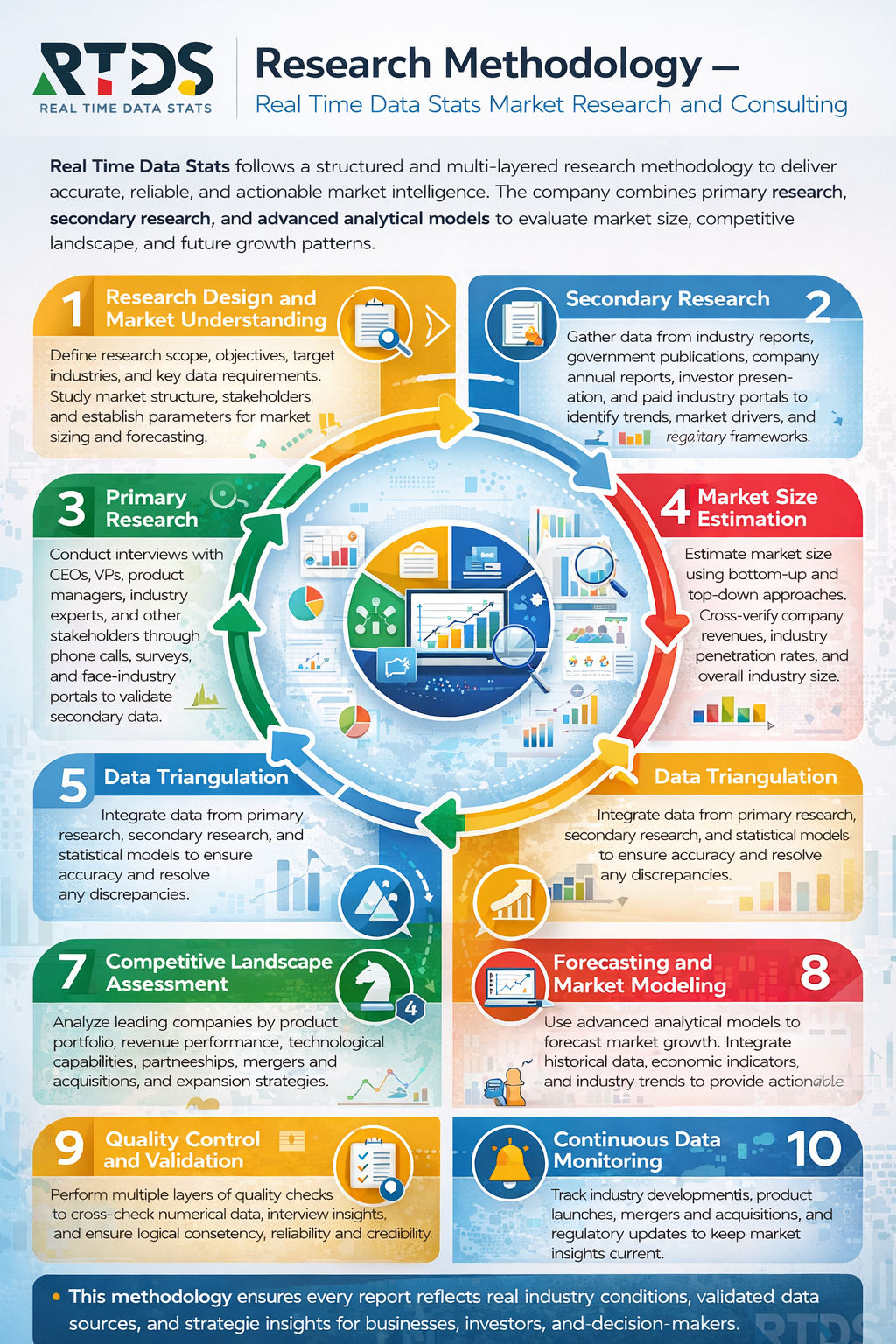
- Figure:3: Research Methodology Flowchart
- Figure:4: Value Chain Analysis
- Figure:5: Market Dynamics Model
- Figure:6: Technology Landscape
- Figure:7: Competitive Landscape Matrix
- Figure:8: Regional Market Distribution
- Figure:9: Market Share by Key Players
- Figure:10: Product Development Trends
- Figure:11: Investment Trends Analysis
- Figure:12: Patent Activity Overview
- Figure:13: Growth Opportunity Map
- Figure:14: Market Forecast Trend
- Figure:15: Future Technology Roadmap
Bioelectronic Synapse Market Key Factors
Drivers:
- Rising neurological disorder prevalence increases demand for advanced neural interfaces.
- Expanding neuromorphic computing applications seek efficient brain-like processing components.
- Growing healthcare investments in bioelectronics accelerate research and prototype development.
Restraints:
- High fabrication costs and complex manufacturing processes limit widespread commercialization.
- Stringent regulatory frameworks for neural devices prolong time-to-market.
- Unresolved long-term stability and biocompatibility issues hinder clinical adoption.
Opportunities:
- Integrating artificial intelligence with bioelectronic systems creates smarter diagnostic and therapeutic tools.
- Developing minimally invasive and wireless implantable devices opens new treatment avenues.
- Expanding research into neuroprosthetics and brain-computer interfaces fuels innovative product development.
Challenges:
- Achieving seamless bidirectional communication between biological and electronic systems remains technically difficult.
- Scarcity of multidisciplinary expertise slows down translational progress from lab to market.
- Addressing ethical and data privacy concerns surrounding neural data collection is crucial for public acceptance.
Bioelectronic Synapse Market Key Regional Trends
North America:
- Significant defense and computing sector funding drives neuromorphic research for advanced applications.
- Strong venture capital presence accelerates startup growth and spin-offs from academic institutions.
- Leading medical device companies actively form partnerships to develop next-generation neural interfaces.
Europe:
- Stringent EU data privacy and medical device regulations shape ethical development and deployment frameworks.
- Focused public funding initiatives support collaborative projects across member states for foundational research.
- Growing emphasis on patient-centric design promotes development of personalized neurotherapy solutions.
Asia-Pacific:
- Governments are prioritizing and investing in nanotechnology and advanced materials as national research initiatives.
- Rapidly expanding electronics manufacturing capabilities support cost-effective prototyping and production.
- Rising healthcare expenditures and increasing awareness of neurological care are expanding the addressable patient population.
Frequently Asked Questions
Key Questions Answered
- What is the size and growth rate of the market industry?
- What are the main drivers influencing market growth trends?
- What are the key challenges and restraints faced by the market?
- What are the emerging trends and opportunities shaping the market?
- Who are the top players, and what strategies drive their success?
- What are the customer demographics and their buying behaviors?
- What are the key market segments, and what is their scope?
- What are the geographical dynamics, and which region dominates?
- What are the market forecasts and projections for the next decade?
- What regulatory factors are critical to consider for market growth?
Why Choose our Company?
- Major facts and stats backing every report we offer.
- Comprehensive analysis tailored to your business needs.
- Accurate insights backed by extensive market research.
- Expert support to address your queries promptly.
- Data-driven strategies for better decision-making.
- In-depth reports with actionable
recommendations. - Reliable statistics from trusted industry
sources. - Customizable reports to suit your specific goals.
- Unmatched quality and precision in market analysis.
- Competitive pricing with premium content delivery.
Share your experience!
We value you feedback. Please take a moment to review your experience with us.