
The global Autonomous Microbial Engineering Market size was valued at USD 2.1 billion in 2025 and is projected to expand at a compound annual growth rate (CAGR) of 20% during the forecast period, reaching a value of USD 9.1 billion by 2033.
MARKET SIZE AND SHARE
The autonomous microbial engineering market is poised for transformative growth, driven by the integration of artificial intelligence and advances in synthetic biology. The industry is shifting from traditional manual microbial modification toward automated, data-driven platforms. This transition expands research capabilities and improves the speed and precision of microbial design during the forecast period.
Market share is expected to consolidate among companies with strong computational platforms and advanced robotics capabilities. Established biotechnology firms and emerging AI-focused startups will compete across therapeutic, agricultural, and industrial applications. The therapeutic segment, particularly in drug discovery and living medicines, is projected to generate the largest revenue share. Strategic collaborations between biology and technology companies will play a key role in developing specialized solutions and capturing high-value market segments.
INDUSTRY OVERVIEW AND STRATEGY
The autonomous microbial engineering industry merges synthetic biology, artificial intelligence, and lab automation to design, build, and test microorganisms without continuous human intervention. This paradigm accelerates R&D cycles for pharmaceuticals, sustainable chemicals, and agricultural solutions. The industry is characterized by high initial R&D investment but promises dramatically lower marginal costs and faster innovation timelines, positioning it as a critical frontier for solving complex global challenges in health and sustainability.
Core strategic imperatives include heavy investment in proprietary AI and machine learning platforms for strain design. Companies are pursuing vertical integration, controlling the full stack from software to automated fermentation. Collaboration is another key strategy, forming ecosystems with cloud providers, automation hardware firms, and end-users in target sectors. Protecting generated data and engineered biological strains through intellectual property forms the cornerstone of competitive strategy and long-term value capture in this rapidly evolving field.
REGIONAL TRENDS AND GROWTH
North America currently leads, fueled by robust venture capital, concentrated tech-bio expertise, and strong regulatory frameworks for bio-innovation. Europe follows with significant research initiatives and a focus on sustainable industrial applications. The Asia-Pacific region is the fastest-growing, driven by substantial government investments in biotechnology, increasing pharmaceutical R&D, and a large agricultural sector seeking microbial solutions for productivity and sustainability, creating a highly dynamic competitive landscape.
Primary growth drivers include the urgent need for biomanufactured products, climate change mitigation, and precision medicine. Key restraints are high capital requirements, cybersecurity risks for digital-biological assets, and evolving regulatory uncertainty. Major opportunities lie in developing scalable platforms for carbon capture and next-generation therapeutics. Significant challenges involve public acceptance, biosafety concerns for engineered organisms, and a pronounced talent gap requiring interdisciplinary skills in biology, data science, and engineering.
AUTONOMOUS MICROBIAL ENGINEERING MARKET SEGMENTATION ANALYSIS
BY TYPE:
The market by type is primarily driven by advances in genetic manipulation and the growing need for highly specialized microbial systems capable of operating autonomously. Genetically engineered bacteria and yeast dominate this segment due to their well-understood genetics, rapid growth rates, and broad industrial applicability. These organisms are widely preferred in pharmaceutical synthesis, enzyme production, and metabolic engineering because they offer predictable behavior, scalability, and compatibility with automated platforms. Synthetic microbial consortia are gaining momentum as industries seek multi-functional systems that can perform complex biochemical tasks more efficiently than single strains.
Engineered fungi, algae, and archaea are emerging as high-potential subsegments due to their ability to operate under extreme or niche conditions. Algae are increasingly used for biofuel and carbon capture applications, while fungi offer advantages in enzyme secretion and biomass conversion. Archaea, though still in early adoption stages, attract interest for their resilience in high-temperature and high-salinity environments, making them valuable for industrial bioprocessing. Overall, innovation in strain stability, autonomy, and environmental adaptability remains the dominant growth factor across this segment.
BY APPLICATION:
Application-based segmentation is heavily influenced by the expanding use of autonomous systems in pharmaceutical and industrial biotechnology. Pharmaceutical production leads this segment, driven by demand for precision drug synthesis, biologics, and personalized medicine. Autonomous microbial platforms enable continuous optimization of metabolic pathways, reducing development time and improving yield consistency. Industrial enzyme production also holds a significant share, supported by rising adoption in chemicals, detergents, and food processing industries seeking cost-efficient and sustainable alternatives.
Biofuel generation, agricultural enhancement, and environmental remediation are fast-growing application areas due to global sustainability initiatives. Autonomous microbes are increasingly deployed for soil health improvement, nitrogen fixation, and pollutant degradation, minimizing human intervention and operational costs. In the food and beverage sector, these systems support fermentation optimization and novel ingredient development. The dominant factor across applications is the ability of autonomous microbes to self-optimize, adapt to dynamic environments, and operate at industrial scale with minimal oversight.
BY TECHNOLOGY:
Technology segmentation is shaped by rapid integration of artificial intelligence, automation, and advanced genome editing tools. AI-driven strain design and machine learning platforms play a central role by enabling predictive modeling, adaptive learning, and real-time optimization of microbial behavior. CRISPR-based genome editing remains foundational, offering unmatched precision and efficiency in microbial engineering. Automated bioreactor systems further enhance this segment by enabling closed-loop control and continuous data-driven process adjustments.
Digital twin modeling and high-throughput screening technologies are strengthening technology adoption across research and industrial environments. These tools allow simulation of microbial performance before physical deployment, significantly reducing risk and development cost. The dominant technological driver is convergence—where AI, automation, and synthetic biology work together to create fully autonomous, self-regulating microbial systems capable of outperforming traditional bioengineering approaches.
BY END USE INDUSTRY:
The healthcare and pharmaceutical industry represents the most mature end-use segment due to its demand for precision, reproducibility, and regulatory compliance. Autonomous microbial engineering supports drug discovery, vaccine production, and biologics manufacturing by enabling adaptive control over complex biological processes. The chemical and materials industry also demonstrates strong adoption, leveraging engineered microbes for sustainable chemical synthesis and specialty material production.
Agriculture, energy, food, and environmental services are expanding end-use segments driven by sustainability and efficiency goals. In agriculture, autonomous microbes improve crop yields and soil health, while in energy they support bioenergy and biofuel production. Environmental services benefit from self-regulating microbial systems capable of long-term remediation without continuous monitoring. The dominant factor across end-use industries is the shift toward sustainable, automated, and data-driven biological manufacturing models.
BY WORKFLOW STAGE:
Segmentation by workflow stage highlights how autonomy is embedded throughout the microbial engineering lifecycle. Early stages such as microbial discovery and strain design benefit from AI-based modeling and automated screening, significantly accelerating innovation. Genome engineering and assembly stages are dominated by CRISPR technologies and robotic automation, ensuring high precision and reproducibility while reducing manual intervention.
Later stages, including fermentation, scale-up, monitoring, and quality validation, are increasingly autonomous due to smart bioreactors and real-time analytics. These systems continuously adjust conditions to optimize yield and maintain product quality. The dominant factor in this segment is the demand for end-to-end automation, allowing organizations to reduce time-to-market, improve scalability, and maintain consistent performance across production cycles.
BY COMPONENT:
The component segment is led by software platforms and automation hardware that enable autonomous decision-making and control. Software solutions provide AI modeling, data analytics, and digital twin capabilities, serving as the backbone of autonomous microbial systems. Hardware components such as robotic platforms, sensors, and automated bioreactors support physical execution and real-time monitoring, ensuring seamless integration between digital and biological systems.
Reagents, consumables, engineered strains, and analytics tools form a critical supporting layer within this segment. While consumables generate recurring revenue, engineered strains represent high-value intellectual property assets. The dominant factor shaping this segment is the increasing preference for integrated solutions that combine software, hardware, and biological components into unified autonomous platforms.
BY DEPLOYMENT MODE:
Deployment mode segmentation reflects how organizations balance control, scalability, and cost. On-premise systems dominate regulated industries such as pharmaceuticals, where data security and compliance are critical. However, cloud-based and hybrid deployments are rapidly gaining adoption due to their flexibility, scalability, and ability to support collaborative research and remote optimization.
Fully autonomous facilities and modular laboratory setups are emerging as transformative deployment models. Distributed manufacturing units allow localized production, reducing supply chain dependencies. The dominant factor influencing deployment choices is the need for operational flexibility combined with secure, real-time data access and scalable infrastructure.
BY ORGANISM SOURCE:
Organism source segmentation is driven by the functional diversity required for different industrial applications. Soil-derived and plant-associated microbes are widely used in agriculture and environmental applications due to their natural adaptability. Marine-derived microbes attract interest for their unique metabolic pathways and tolerance to extreme conditions, supporting novel biochemical production.
Gut microbiome organisms and extremophiles represent advanced research-driven subsegments with high future potential. These organisms enable highly specialized applications, including personalized medicine and extreme-condition bioprocessing. The dominant factor in this segment is the expanding exploration of biodiversity to unlock novel metabolic functions suitable for autonomous engineering.
BY USER TYPE:
Biotechnology and pharmaceutical companies dominate the user type segment due to their financial capacity, technical expertise, and commercialization focus. These organizations leverage autonomous microbial engineering to accelerate R&D, reduce costs, and gain competitive advantage. Research institutes and academic laboratories play a foundational role by driving innovation and early-stage development.
Contract research organizations and government agencies are increasingly adopting autonomous platforms to support large-scale studies and public-sector initiatives. The dominant factor across user types is the growing reliance on automation and AI to handle complex biological data and workflows efficiently.
RECENT DEVELOPMENTS
- In Jan 2024: Ginkgo Bioworks expanded its automated foundry capacity, focusing on partner programs for biosecurity and agricultural biologicals, enhancing its high-throughput strain engineering platform.
- In Mar 2024: Zymergen was fully integrated into Ginkgo Bioworks, ceasing as an independent entity. Its AI-driven discovery assets were absorbed into Ginkgo's platform to bolster automated design capabilities.
- In Jun 2024: Synthace was acquired by BioCoder, a strategic move to integrate its Antha software platform for experiment design and automation with BioCoder's next-generation lab operating system.
- In Nov 2024: Arctoris announced a partnership with a major pharma company to deploy its fully automated, AI-driven discovery platform for engineering microbial strains targeting oncology pathways.
- In Feb 2025: Inscripta launched the next generation of its Onyx® platform, introducing new software and workflow enhancements for automated, multiplexed genome editing in microbial hosts.
KEY PLAYERS ANALYSIS
- Ginkgo Bioworks
- Inscripta
- Twist Bioscience
- Codexis
- Amyris
- Genomatica
- Berkeley Lights
- Arctoris
- Synthace (BioCoder)
- Culture Biosciences
- Evonetix
- Thermo Fisher Scientific
- Sartorius AG
- Hudson Robotics
- Automata
- Benchling
- Deep Branch
- LanzaTech
- Perfect Day
- Impossible Foods
Autonomous Microbial Engineering Market Segmentation
By Type:
- Synthetic microbial consortia
- Genetically engineered bacteria
- Genetically engineered yeast
- Engineered fungi
- Engineered algae
- Engineered archaea
By Application:
- Pharmaceutical production
- Industrial enzyme production
- Biofuel generation
- Agricultural enhancement
- Environmental remediation
- Food and beverage processing
By Technology:
- AI-based strain design
- CRISPR genome editing
- Automated bioreactors
- Machine learning platforms
- Digital twin systems
- High-throughput automation
By End Use Industry:
- Healthcare and pharmaceuticals
- Agriculture and farming
- Energy and bioenergy
- Chemicals and materials
- Food and nutrition
- Environmental services
By Workflow Stage:
- Microbial discovery
- Strain design and modeling
- Genome engineering
- Fermentation and scale-up
- Monitoring and control
- Quality validation
By Component:
- Software platforms
- Hardware systems
- Reagents and consumables
- Engineered strains
- Data analytics tools
- Robotics and automation
By Deployment Mode:
- On-premise deployment
- Cloud-based deployment
- Hybrid deployment
- Fully autonomous facilities
- Modular laboratories
- Distributed manufacturing
By Organism Source:
- Soil-derived microbes
- Marine-derived microbes
- Gut microbiome organisms
- Extremophiles
- Plant-associated microbes
- Industrial culture collections
By User Type:
- Biotechnology companies
- Pharmaceutical companies
- Research institutes
- Academic laboratories
- Contract research organizations
- Government agencies
By Geography:
- North America (USA, Canada, Mexico)
- Europe (UK, Germany, France, Italy, Spain, Rest of Europe)
- Asia-Pacific (China, Japan, Australia, South Korea, India, Rest of Asia-Pacific)
- South America (Brazil, Argentina, Rest of South America)
- Middle East and Africa (GCC Countries, South Africa, Rest of MEA)
Autonomous Microbial Engineering Market: Table of Contents
Introduction
- Market overview
- Definition and scope
- Industry evolution
- Ecosystem analysis
- Value chain overview
Research Methodology
- Primary research approach
- Secondary research sources
- Data triangulation method
- Market estimation techniques
- Assumptions and limitations
Market Dynamics
- Market drivers
- Market restraints
- Market opportunities
- Market challenges
- Impact analysis
Technology Landscape
- AI-driven microbial design platforms
- CRISPR and genome editing tools
- Automated bioprocessing systems
- Machine learning optimization
- Digital twin modeling
- High-throughput screening technologies
Autonomous Microbial Engineering Market Segmentation
- By Type
- Synthetic microbial consortia
- Genetically engineered bacteria
- Genetically engineered yeast
- Engineered fungi
- Engineered algae
- Engineered archaea
- By Application
- Pharmaceutical production
- Industrial enzyme production
- Biofuel generation
- Agricultural enhancement
- Environmental remediation
- Food and beverage processing
- By Technology
- AI-based strain design
- CRISPR genome editing
- Automated bioreactors
- Machine learning platforms
- Digital twin systems
- High-throughput automation
- By End Use Industry
- Healthcare and pharmaceuticals
- Agriculture and farming
- Energy and bioenergy
- Chemicals and materials
- Food and nutrition
- Environmental services
- By Workflow Stage
- Microbial discovery
- Strain design and modeling
- Genome engineering
- Fermentation and scale-up
- Monitoring and control
- Quality validation
- By Component
- Software platforms
- Hardware systems
- Reagents and consumables
- Engineered strains
- Data analytics tools
- Robotics and automation
- By Deployment Mode
- On-premise deployment
- Cloud-based deployment
- Hybrid deployment
- Fully autonomous facilities
- Modular laboratories
- Distributed manufacturing
- By Organism Source
- Soil-derived microbes
- Marine-derived microbes
- Gut microbiome organisms
- Extremophiles
- Plant-associated microbes
- Industrial culture collections
- By User Type
- Biotechnology companies
- Pharmaceutical companies
- Research institutes
- Academic laboratories
- Contract research organizations
- Government agencies
Regional Market Analysis
- North America market overview
- Europe market overview
- Asia-Pacific market overview
- Latin America market overview
- Middle East market overview
- Africa market overview
Competitive Landscape
- Market share analysis
- Competitive benchmarking
- Strategic initiatives
- Partnerships and collaborations
- Mergers and acquisitions
- Product launches
Company Profiles
- Company overview
- Product portfolio
- Technology focus
- Financial overview
- Strategic developments
Investment and Funding Analysis
- Venture capital trends
- Government funding initiatives
- Private equity involvement
- Startup ecosystem analysis
- Regulatory and Ethical Framework
Regulatory landscape
- Biosafety standards
- Ethical considerations
- Compliance requirements
Future Outlook
- Market growth projections
- Emerging trends
- Technological advancements
- Long-term opportunities
Conclusion
- Summary of Market Trends
- Key Drivers and Restraints
- Growth Opportunities
- Technology & Innovation Outlook
- Future Market Forecast
Appendix
- Abbreviations
- Data sources
- Methodology notes
- Disclaimer
List of Tables
- Table:1: Global Autonomous Microbial Engineering Market Overview
- Table:2: Market Segmentation by Type
- Table:3: Market Segmentation by Application
- Table:4: Market Segmentation by Technology
- Table:5: Market Segmentation by End Use Industry
- Table:6: Market Segmentation by Workflow Stage
- Table:7: Market Segmentation by Component
- Table:8: Market Segmentation by Deployment Mode
- Table:9: Market Segmentation by Organism Source
- Table:10: Market Segmentation by User Type
- Table:11: Market Segmentation by Geography
- Table:12: Regional Market Size Analysis
- Table:13: Competitive Market Share Analysis
- Table:14: Key Company Strategic Developments
- Table:15: Future Market Forecast Summary
List of Figures
- Figure:1: Autonomous Microbial Engineering Market Ecosystem
- Figure:2: Market Value Chain Analysis
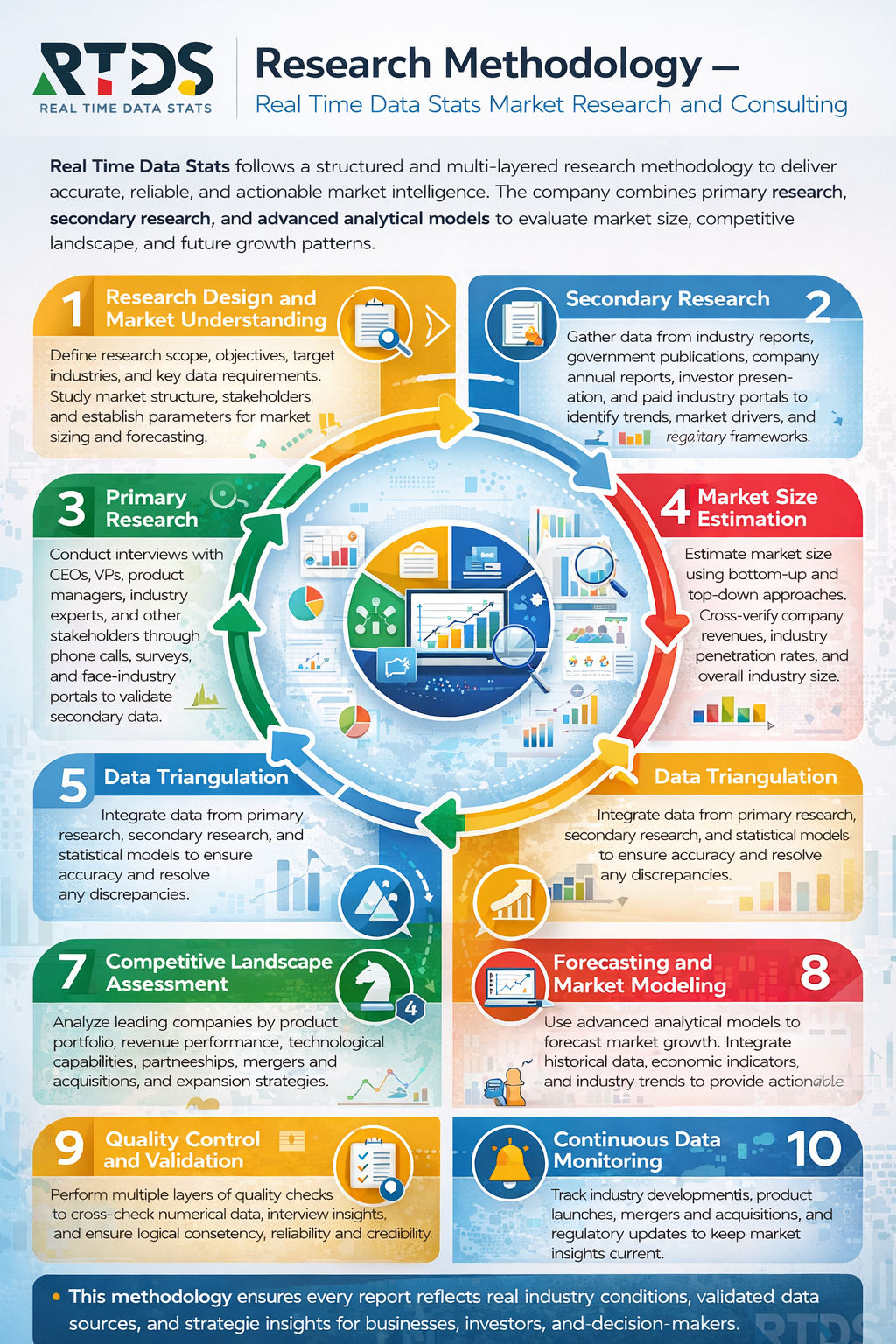
- Figure:3: Research Methodology Framework
- Figure:4: Market Dynamics Overview
- Figure:5: Technology Landscape Map
- Figure:6: Market Segmentation Overview
- Figure:7: Type-wise Market Distribution
- Figure:8: Application-wise Market Distribution
- Figure:9: End Use Industry Analysis
- Figure:10: Workflow Stage Analysis
- Figure:11: Regional Market Share Distribution
- Figure:12: Competitive Landscape Matrix
- Figure:13: Investment and Funding Trends
- Figure:14: Regulatory Framework Overview
- Figure:15: Future Market Growth Outlook
Autonomous Microbial Engineering Market Key Factors
Drivers:
- Increasing demand for sustainable bioproduction accelerates adoption.
- AI and machine learning breakthroughs enhance design automation.
- Growing pharmaceutical R&D investments propel technology use.
Restraints:
- High capital requirements limit small-scale laboratory access.
- Ethical and regulatory uncertainties slow commercial deployment.
- Technical complexities in system integration challenge implementation.
Opportunities:
- Expanding into agricultural and environmental applications creates new markets.
- Cloud-based platform development democratizes access for researchers.
- Strategic partnerships between tech and biotech firms drive innovation.
Challenges:
- A shortage of skilled professionals hinders operational scalability.
- Data standardization issues complicate model training and validation.
- Public perception and biosafety concerns require ongoing management.
Autonomous Microbial Engineering Market Key Regional Trends
North America:
- Strong venture capital funding fuels startup growth and R&D.
- Major pharmaceutical companies actively form technology partnerships.
- Regulatory agencies engage in developing adaptive guideline frameworks.
Europe:
- Public grants strongly prioritize climate-focused microbial engineering.
- Consortium-led projects emphasize ethical AI and standardized data protocols.
- Growth concentrates in established bioeconomy hubs and industrial biotech.
Asia-Pacific:
- Governments aggressively invest in national bio-manufacturing initiatives.
- Companies rapidly adopt automation to scale therapeutic and enzyme production.
- Research focuses on cost-reduction and infrastructure development for accessibility.
Frequently Asked Questions
Key Questions Answered
- What is the size and growth rate of the market industry?
- What are the main drivers influencing market growth trends?
- What are the key challenges and restraints faced by the market?
- What are the emerging trends and opportunities shaping the market?
- Who are the top players, and what strategies drive their success?
- What are the customer demographics and their buying behaviors?
- What are the key market segments, and what is their scope?
- What are the geographical dynamics, and which region dominates?
- What are the market forecasts and projections for the next decade?
- What regulatory factors are critical to consider for market growth?
Why Choose our Company?
- Major facts and stats backing every report we offer.
- Comprehensive analysis tailored to your business needs.
- Accurate insights backed by extensive market research.
- Expert support to address your queries promptly.
- Data-driven strategies for better decision-making.
- In-depth reports with actionable
recommendations. - Reliable statistics from trusted industry
sources. - Customizable reports to suit your specific goals.
- Unmatched quality and precision in market analysis.
- Competitive pricing with premium content delivery.
Share your experience!
We value you feedback. Please take a moment to review your experience with us.