
According to insights from Real Time Data Stats, the Autonomous Biosafety Systems Market was valued at USD 0.69 billion in 2025. It is expected to grow from USD 0.78 billion in 2026 to USD 1.92 billion by 2033, registering a CAGR of 13.7% during the forecast period (2026–2033).
MARKET SIZE AND SHARE
The Autonomous Biosafety Systems Market is driven by expanding biopharmaceutical research and development activities, increasing laboratory automation, and stringent biosafety regulations. Market share is currently concentrated among established automation providers and life science technology companies. Growth is being supported by the integration of artificial intelligence, robotics, and advanced monitoring capabilities into containment systems, while new entrants introduce innovative and modular biosafety solutions for laboratories and production facilities worldwide.
The market is expected to expand significantly over the forecast period, with share dynamics gradually shifting toward companies offering scalable, cloud-connected autonomous platforms. Rising demand for high-containment systems in infectious disease research and vaccine manufacturing will remain a key growth factor. Market share will increasingly favor firms that combine biosafety compliance with workflow automation, reducing human intervention in hazardous environments and improving operational efficiency across academic, government, and industrial end-user segments.
INDUSTRY OVERVIEW AND STRATEGY
The industry encompasses automated solutions for biological hazard containment, including self-regulating cabinets, robotic sample handling, and AI-driven monitoring platforms. It is driven by the critical need to minimize human exposure to pathogens and ensure protocol integrity. Key players range from large laboratory equipment manufacturers to specialized tech startups. The sector's core value proposition lies in enhancing reproducible science and industrial bioprocessing while maintaining the highest safety standards, making it integral to modern life sciences infrastructure.
Primary competitive strategies involve heavy investment in R&D for smart sensor integration and interoperability with laboratory information systems. Companies are pursuing partnerships with research institutes for pilot deployments and focusing on offering customizable, upgradeable systems. Strategic emphasis is placed on providing total solutions that include training and support, thereby transitioning from product vendors to essential partners in lab safety and efficiency. Success hinges on demonstrating clear return on investment through productivity gains and risk mitigation.
Analyst Key Takeaways:
The Autonomous Biosafety Systems market is gaining momentum as laboratories, biopharmaceutical facilities, and high-containment research centers increasingly adopt AI-enabled monitoring, automated containment, and robotic biosafety solutions. Growing emphasis on pathogen handling safety, regulatory compliance, and real-time risk management is accelerating the integration of autonomous technologies into biosafety infrastructure. Advances in sensor networks, machine learning, and remote operational capabilities are further enhancing system reliability and operational efficiency.
North America remains a leading adopter due to strong investments in biosecurity preparedness, advanced laboratory infrastructure, and ongoing innovation in laboratory automation. Meanwhile, Asia-Pacific is emerging as a high-growth region driven by expanding life sciences research, increasing biotechnology investments, and modernization of healthcare and diagnostic facilities. Strategic collaborations between biosafety equipment manufacturers, automation providers, and research institutions are expected to play a crucial role in shaping the competitive landscape and accelerating technology adoption.
REGIONAL TRENDS AND GROWTH
North America currently leads, propelled by substantial healthcare funding, a dense network of high-containment labs, and rapid tech adoption. Europe follows, with strong growth anchored in EU-wide biosafety directives and advanced pharmaceutical sectors. The Asia-Pacific region is identified as the fastest-growing market, driven by massive government and private investments in national biodefense and vaccine manufacturing self-sufficiency. Latin America and MEA show emerging potential, particularly in national public health reference laboratories.
Key growth drivers include pandemic preparedness initiatives, rising synthetic biology applications, and global biomanufacturing expansion. Restraints involve high capital costs and regulatory complexity. Significant opportunities lie in developing cost-effective systems for mid-tier labs and integrating with the Internet of Things. Major challenges are the need for standardized protocols and a skilled workforce to operate advanced systems. Future growth will depend on balancing technological sophistication with accessibility and user-friendly design across diverse economic regions.
AUTONOMOUS BIOSAFETY SYSTEMS MARKET SEGMENTATION ANALYSIS
BY TYPE:
Autonomous containment units dominate where high-risk pathogen isolation is critical, driven by the need for sealed, self-regulating environments that minimize human exposure. Rising outbreaks of infectious diseases and stricter biosafety regulations push labs to adopt units that automatically manage pressure gradients, airflow, and sterilization cycles. Automated decontamination systems gain traction due to their ability to reduce turnaround time between experiments while ensuring consistent sterilization quality. UV-C, vaporized hydrogen peroxide, and chemical fogging systems integrated with robotics are replacing manual cleaning, especially in high-throughput labs. Robotic sample handling systems expand rapidly as laboratories aim to eliminate human contact with infectious materials, improve repeatability, and scale testing volumes. These systems are particularly vital in genomic sequencing and diagnostic workflows where precision and contamination control are essential.
Autonomous biosafety cabinets remain foundational, but the dominant shift is toward cabinets with AI-driven airflow regulation, self-sanitizing surfaces, and real-time contamination detection. Labs prefer smart cabinets that log usage data and integrate with lab information systems. Smart air filtration systems are growing due to heightened awareness of airborne pathogen transmission; HEPA/ULPA systems with automated filter integrity monitoring are becoming standard in advanced facilities. Meanwhile, autonomous waste management systems are emerging as a critical segment because biohazard disposal poses significant infection risks. Robotic segregation, sterilization, and sealed transport systems help facilities comply with strict environmental and biosafety regulations while reducing manual handling.
BY APPLICATION:
In clinical laboratories, automation adoption is driven by the need for high testing volumes, rapid turnaround, and strict contamination control. Pandemic preparedness and molecular diagnostics growth are pushing labs toward autonomous sample processing and containment systems. pharmaceutical manufacturing relies heavily on autonomous biosafety systems to maintain sterile production environments, especially for biologics, vaccines, and cell therapies. The dominant factor here is regulatory compliance with GMP standards combined with the need to protect high-value production batches from contamination.
Research institutes prioritize flexibility and advanced containment due to work with novel or engineered pathogens. Funding for infectious disease and synthetic biology research fuels demand for modular, reconfigurable autonomous systems. Hospitals and healthcare facilities adopt these systems mainly in pathology labs and infectious disease units to protect staff and prevent cross-contamination. Biotechnology labs drive growth through high-throughput experimentation and gene-editing workflows that require sterile, automated environments. In agricultural research centers, biosafety automation is expanding to manage plant pathogens and zoonotic disease studies, where cross-species contamination risks are increasing.
BY LEVEL OF BIOSAFETY:
BSL-1 and BSL-2 systems see steady adoption in educational, diagnostic, and routine research labs where automation improves workflow efficiency and reduces human error. The dominant factor is cost-effective automation that enhances safety without the complexity of high-containment infrastructure. BSL-3 systems represent a major growth driver, fueled by rising research on airborne infectious agents like tuberculosis and coronaviruses. Automation here focuses on sealed robotic handling, pressure-controlled environments, and remote operation to limit human entry.
BSL-4 systems remain niche but highly investment-intensive, with dominant demand from national research centers and defense labs. Autonomous operation is critical because human access is extremely restricted; robotic manipulation and AI monitoring significantly enhance safety. Multi-level containment systems are gaining attention as facilities seek flexible labs capable of handling different biosafety levels within one infrastructure. Modular biosafety systems are expanding due to faster deployment needs, especially in outbreak zones and temporary research facilities.
BY AUTOMATION LEVEL:
Fully autonomous systems lead in high-risk labs where zero-contact operation is a priority. The dominant factor is the reduction of human exposure combined with 24/7 operational capability. Semi-autonomous systems appeal to cost-sensitive institutions that want partial automation while retaining human oversight. These systems dominate mid-tier labs transitioning toward automation. Remote-controlled systems are critical in high-containment environments, allowing specialists to operate equipment without physical presence.
AI-integrated systems represent the fastest-growing segment, driven by predictive contamination detection, adaptive airflow control, and intelligent workflow optimization. Sensor-driven systems dominate where real-time environmental monitoring—temperature, particle count, gas levels—is essential. Programmable systems remain relevant for labs requiring repeatable, standardized procedures, particularly in pharmaceutical and diagnostic settings.
BY END USER:
Academic and research institutes lead adoption due to expanding bioscience research and government funding. Their dominant need is flexible, upgradeable systems that support diverse experiments. Hospitals and clinics invest primarily in automated containment and decontamination to protect healthcare workers and manage infectious samples safely. Pharmaceutical and biotech companies represent a high-revenue segment driven by sterile manufacturing, R&D automation, and strict regulatory compliance.
Government and defense labs prioritize high-containment autonomous systems for biodefense and emerging pathogen research. Contract research organizations (CROs) adopt automation to handle multiple client projects efficiently while maintaining biosafety standards. agriculture and food safety labs are growing users due to increased monitoring of zoonotic diseases and foodborne pathogens.
BY COMPONENT:
Robotic arms and manipulators are core components, with demand driven by the need for precise, contamination-free sample handling. Sensors and detection modules are expanding rapidly as real-time biosafety monitoring becomes mandatory in advanced labs. Control software acts as the brain of autonomous systems, with growth fueled by AI integration, data analytics, and remote management capabilities.
Filtration and air handling units remain essential due to strict airborne contamination standards. Waste disposal units are gaining importance as automated sterilization and disposal become regulatory expectations. Communication and monitoring systems dominate in multi-room and multi-site facilities, enabling centralized biosafety oversight.
BY SAFETY FEATURE:
Containment monitoring systems are crucial, ensuring pressure stability and leak-free operation. Automated decontamination remains a dominant feature as labs seek faster and more reliable sterilization. Leak detection systems are gaining regulatory importance, particularly in high-containment labs handling airborne pathogens.
Air pressure control systems drive adoption in BSL-3 and BSL-4 environments. Emergency shutdown systems are mandatory safety features, especially in government and pharmaceutical facilities. Remote alert systems are increasingly vital for real-time incident response and compliance tracking.
BY INTEGRATION:
IoT-enabled systems dominate through real-time connectivity and centralized monitoring. AI-powered biosafety systems are expanding due to predictive analytics and automated risk mitigation. Cloud-connected systems grow in multi-site organizations needing remote data access and compliance documentation.
Standalone systems remain relevant in smaller labs with budget constraints. Networked laboratory systems are rising as institutions integrate biosafety with broader lab automation. Hybrid integration systems are increasingly preferred, balancing local control with cloud and AI capabilities.
BY MAINTENANCE TYPE:
Predictive maintenance systems lead growth by minimizing downtime through sensor-based performance tracking. Scheduled maintenance systems remain common in regulated environments where routine validation is required. Remote maintenance systems are expanding as vendors offer off-site diagnostics and updates.
Self-cleaning systems reduce manual intervention and contamination risks, making them attractive in high-throughput labs. Modular replacement systems allow quick part swaps, minimizing disruption. Sensor-based maintenance systems are gaining ground as real-time equipment health monitoring becomes standard.
RECENT DEVELOPMENTS
- In Jan 2024: NuAire introduced its AI-enabled, autonomous biosafety cabinet with real-time airflow monitoring and self-decontamination protocols, enhancing lab safety and operational efficiency for high-throughput facilities.
- In Apr 2024: Thermo Fisher Scientific launched the Aerosol Containment Monitor (ACM) for continuous, real-time verification of cabinet performance, integrating data directly into laboratory information management systems for compliance.
- In Jul 2024: Azenta Life Sciences partnered with a leading robotics firm to develop a fully automated, modular biosafety system for compound management and sample storage, targeting large biobanks and pharmaceutical R&D.
- In Nov 2024: ILC Dover acquired a specialized containment engineering firm to expand its portfolio of flexible, single-use biocontainment solutions for the growing cell and gene therapy manufacturing market.
- In Mar 2025: Esco Lifesciences unveiled its next-generation, cloud-connected VX6 PCR Cabinet, featuring autonomous UV decontamination cycles and predictive maintenance alerts through its proprietary Apex management platform.
KEY PLAYERS ANALYSIS
- Thermo Fisher Scientific Inc.
- Danaher Corporation (Beckman Coulter)
- Esco Lifesciences Group
- NuAire, Inc.
- The Baker Company
- Labconco Corporation
- Germfree Laboratories, Inc.
- Tecniplast S.p.A.
- Azenta Life Sciences
- ILC Dover
- Kewaunee Scientific Corporation
- BIOBASE Group
- Heal Force Bio-meditech Holdings Limited
- Telstar Life Science Solutions
- MRC Systems GmbH
- Clean Air Products
- Berner International GmbH
- Haier Biomedical
- EuroClone S.p.A.
- Yamato Scientific Co., Ltd.
Autonomous Biosafety Systems Market Segmentation Analysis
By Type:
- Autonomous Containment Units
- Automated Decontamination Systems
- Robotic Sample Handling Systems
- Autonomous Biosafety Cabinets
- Smart Air Filtration Systems
- Autonomous Waste Management Systems
By Application:
- Clinical Laboratories
- Pharmaceutical Manufacturing
- Research Institutes
- Hospitals & Healthcare Facilities
- Biotechnology Labs
- Agricultural Research Centers
By Level of Biosafety:
- BSL-1 Systems
- BSL-2 Systems
- BSL-3 Systems
- BSL-4 Systems
- Multi-Level Containment Systems
- Modular Biosafety Systems
By Automation Level:
- Fully Autonomous Systems
- Semi-Autonomous Systems
- Remote-Controlled Systems
- AI-Integrated Systems
- Sensor-Driven Systems
- Programmable Systems
By End User:
- Academic & Research Institutes
- Hospitals & Clinics
- Pharmaceutical & Biotech Companies
- Government & Defense Labs
- Contract Research Organizations (CROs)
- Agriculture & Food Safety Labs
By Component:
- Robotic Arms & Manipulators
- Sensors & Detection Modules
- Control Software
- Filtration & Air Handling Units
- Waste Disposal Units
- Communication & Monitoring Systems
By Safety Feature:
- Containment Monitoring Systems
- Automated Decontamination
- Leak Detection Systems
- Air Pressure Control
- Emergency Shutdown Systems
- Remote Alert Systems
By Integration:
- IoT-Enabled Systems
- AI-Powered Biosafety Systems
- Cloud-Connected Systems
- Standalone Systems
- Networked Laboratory Systems
- Hybrid Integration Systems
By Maintenance Type:
- Predictive Maintenance Systems
- Scheduled Maintenance Systems
- Remote Maintenance Systems
- Self-Cleaning Systems
- Modular Replacement Systems
- Sensor-Based Maintenance Systems
By Geography:
- North America (USA, Canada, Mexico)
- Europe (UK, Germany, France, Italy, Spain, Rest of Europe)
- Asia-Pacific (China, Japan, Australia, South Korea, India, Rest of Asia-Pacific)
- South America (Brazil, Argentina, Rest of South America)
- Middle East and Africa (GCC Countries, South Africa, Rest of MEA)
Autonomous Biosafety Systems Market: Table of Contents
Market Introduction
- Market Definition
- Market Scope
- Research Objectives
- Study Timeline
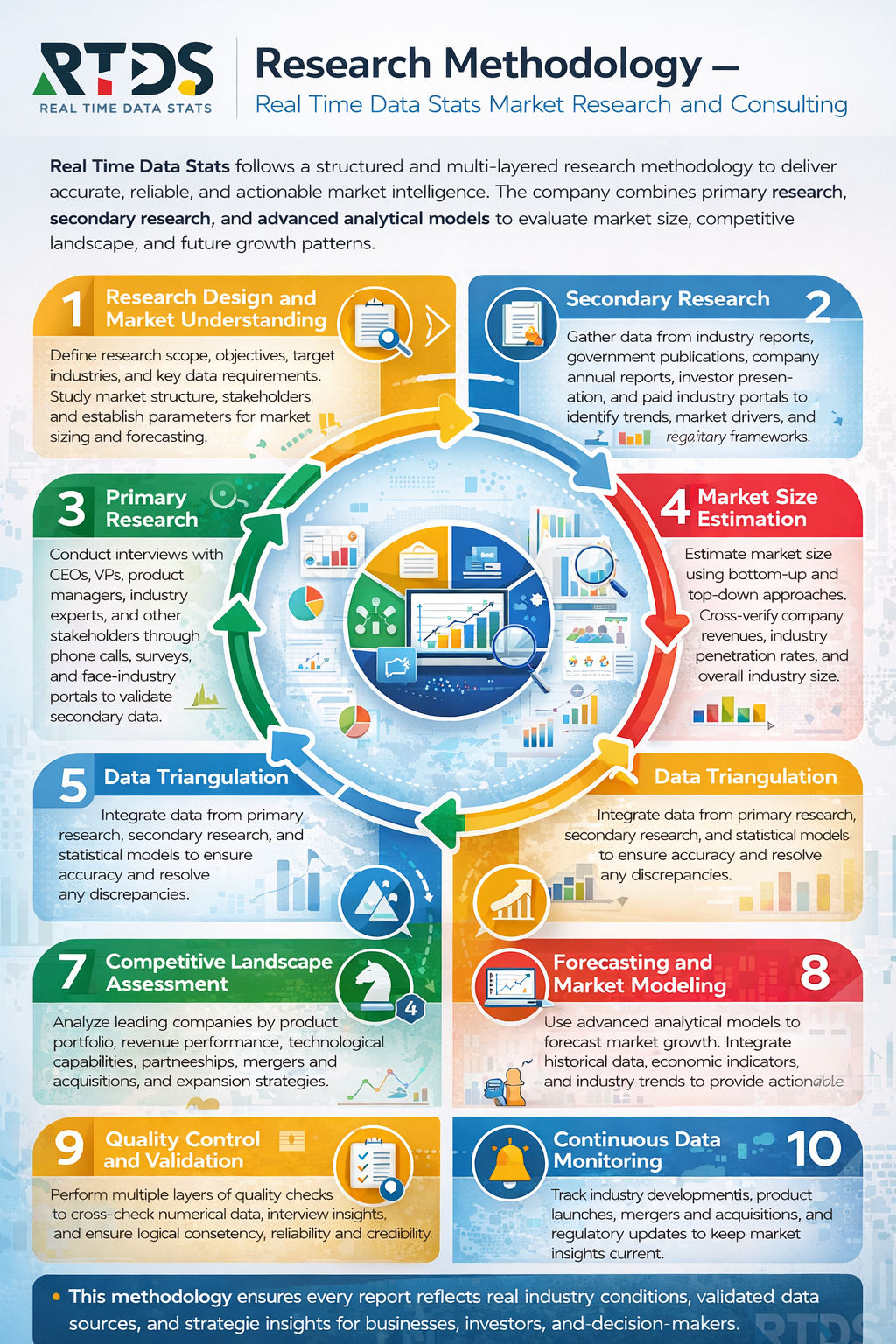
Research Methodology
- Research Design
- Primary Research
- Expert Interviews
- Industry Surveys
- Secondary Research
- Industry Databases
- Company Reports
- Government Publications
- Data Validation
- Forecasting Techniques
- Assumptions and Limitations
Executive Summary
- Market Snapshot
- Key Highlights
- Analyst Insights
- Growth Outlook
Market Dynamics
- Market Drivers
- Market Restraints
- Market Challenges
Industry Trends
- Robotics in High-Containment Labs
- AI-Powered Environmental Monitoring
- Real-Time Pathogen Detection
- IoT-Enabled Smart Biosafety Systems
- Remote Monitoring and Control
Regulatory Landscape
- Global Biosafety Standards
- Regional Compliance Frameworks
- Laboratory Certification Requirements
- Safety Audit Procedures
Value Chain Analysis
- Raw Material Suppliers
- Component Manufacturers
- System Integrators
- Software Providers
- End Users
After-Sales Service Providers
- Supply Chain Analysis
- Manufacturing Hubs
- Distribution Channels
- Logistics Considerations
- Maintenance and Support Networks
Autonomous Biosafety Systems Market Segmentation Analysis
- By Type:
- Autonomous Containment Units
- Automated Decontamination Systems
- Robotic Sample Handling Systems
- Autonomous Biosafety Cabinets
- Smart Air Filtration Systems
- Autonomous Waste Management Systems
- By Application:
- Clinical Laboratories
- Pharmaceutical Manufacturing
- Research Institutes
- Hospitals & Healthcare Facilities
- Biotechnology Labs
- Agricultural Research Centers
- By Level of Biosafety:
- BSL-1 Systems
- BSL-2 Systems
- BSL-3 Systems
- BSL-4 Systems
- Multi-Level Containment Systems
- Modular Biosafety Systems
- By Automation Level:
- Fully Autonomous Systems
- Semi-Autonomous Systems
- Remote-Controlled Systems
- AI-Integrated Systems
- Sensor-Driven Systems
- Programmable Systems
- By End User:
- Academic & Research Institutes
- Hospitals & Clinics
- Pharmaceutical & Biotech Companies
- Government & Defense Labs
- Contract Research Organizations (CROs)
- Agriculture & Food Safety Labs
- By Component:
- Robotic Arms & Manipulators
- Sensors & Detection Modules
- Control Software
- Filtration & Air Handling Units
- Waste Disposal Units
- Communication & Monitoring Systems
- By Safety Feature:
- Containment Monitoring Systems
- Automated Decontamination
- Leak Detection Systems
- Air Pressure Control
- Emergency Shutdown Systems
- Remote Alert Systems
- By Integration:
- IoT-Enabled Systems
- AI-Powered Biosafety Systems
- Cloud-Connected Systems
- Standalone Systems
- Networked Laboratory Systems
- Hybrid Integration Systems
- By Maintenance Type:
- Predictive Maintenance Systems
- Scheduled Maintenance Systems
- Remote Maintenance Systems
- Self-Cleaning Systems
- Modular Replacement Systems
- Sensor-Based Maintenance Systems
Regional Market Analysis
- North America Market Trends
- Europe Market Trends
- Asia-Pacific Market Trends
- Middle East and Africa Market Trends
- Latin America Market Trends
Competitive Landscape
- Market Share Analysis
- Competitive Positioning Matrix
- Strategic Initiatives
- Mergers and Acquisitions
- Partnerships and Collaborations
- Product Launches
- R&D Investments
Company Profiles
- Company Overview
- Product Portfolio
- Financial Overview
- Strategic Developments
- Recent Innovations
Investment and Funding Analysis
- Venture Capital Trends
- Government Funding Programs
- Startup Ecosystem
Future Outlook
- Short-Term Market Outlook
- Mid-Term Market Outlook
- Long-Term Market Outlook
- Emerging Technology Roadmap
Conclusion
- Key Market Findings
- Growth Outlook Summary
- Strategic Insights
- Future Industry Direction
- Final Analyst Perspective
Appendix
- Abbreviations
- Methodology Details
- Data Sources
- Disclaimer
List of Tables
- Table:1: Global Autonomous Biosafety Systems Market Overview
- Table:2: Key Market Dynamics Summary
- Table:3: Regulatory Framework Comparison
- Table:4: Value Chain Breakdown
- Table:5: Supply Chain Structure
- Table:6: Market Size by Component
- Table:7: Market Size by System Type
- Table:8: Market Size by Biosafety Level
- Table:9: Market Size by Application
- Table:10: Market Size by End User
- Table:11: Market Size by Deployment Mode
- Table:12: Regional Market Size Comparison
- Table:13: Competitive Benchmarking of Key Players
- Table:14: Investment and Funding Trends
- Table:15: Market Forecast (2025–2035)
List of Figures
- Figure:1: Autonomous Biosafety Systems Market Segmentation
- Figure:2: Research Methodology Framework
- Figure:3: Market Dynamics Impact Model
- Figure:4: Technology Evolution Timeline
- Figure:5: Value Chain Illustration
- Figure:6: Supply Chain Flowchart
- Figure:7: Component Market Share Analysis
- Figure:8: System Type Distribution
- Figure:9: Biosafety Level Distribution
- Figure:10: Application Share Analysis
- Figure:11: End User Share Analysis
- Figure:12: Regional Market Share
- Figure:13: Competitive Landscape Mapping
- Figure:14: Investment Trend Graph
- Figure:15: Market Growth Forecast Curve
Autonomous Biosafety Systems Market Key Factors
Drivers:
- Increasingly stringent regulatory frameworks mandate higher containment standards.
- Rising global biopharmaceutical R&D expands the need for advanced laboratory safety.
- Growing concerns over pandemics and biothreats accelerate investment in automated containment.
Restraints:
- High initial capital and integration costs limit adoption in budget-sensitive facilities.
- Technical complexities in system deployment and maintenance hinder widespread implementation.
- Concerns over system reliability and false alarms create hesitation among potential end-users.
Opportunities:
- Advancements in AI and robotics enable the development of more predictive and responsive systems.
- Expanding life sciences sector in emerging economies creates new growth markets.
- Integration with smart laboratory and building management systems opens avenues for holistic safety solutions.
Challenges:
- Establishing universal interoperability standards between different manufacturers' systems remains difficult.
- A shortage of skilled technicians capable of operating and maintaining these advanced systems persists.
- Navigating diverse and evolving international biosafety regulations complicates global market strategies.
Autonomous Biosafety Systems Market Key Regional Trends
North America:
- Leading adoption driven by strong biodefense funding and major pharmaceutical hubs.
- Rapid integration of AI-driven analytics to enhance threat detection and protocol compliance.
- Increasing partnerships between tech firms and research institutions to co-develop next-generation systems.
Europe:
- Strict EU-wide regulations and directives push for standardized, automated biosafety upgrades.
- Growing focus on sustainability is driving demand for energy-efficient containment systems.
- Collaborative cross-border research projects foster shared technology platforms and best practices.
Asia-Pacific:
- Rapid expansion of biotechnology and pharmaceutical manufacturing fuels market growth.
- Governments are investing heavily in national biosafety infrastructure to bolster pandemic preparedness.
- Local manufacturers are increasing R&D to offer cost-competitive solutions tailored to regional needs.
Frequently Asked Questions
Key Questions Answered
- What is the size and growth rate of the market industry?
- What are the main drivers influencing market growth trends?
- What are the key challenges and restraints faced by the market?
- What are the emerging trends and opportunities shaping the market?
- Who are the top players, and what strategies drive their success?
- What are the customer demographics and their buying behaviors?
- What are the key market segments, and what is their scope?
- What are the geographical dynamics, and which region dominates?
- What are the market forecasts and projections for the next decade?
- What regulatory factors are critical to consider for market growth?
Why Choose our Company?
- Major facts and stats backing every report we offer.
- Comprehensive analysis tailored to your business needs.
- Accurate insights backed by extensive market research.
- Expert support to address your queries promptly.
- Data-driven strategies for better decision-making.
- In-depth reports with actionable
recommendations. - Reliable statistics from trusted industry
sources. - Customizable reports to suit your specific goals.
- Unmatched quality and precision in market analysis.
- Competitive pricing with premium content delivery.
Share your experience!
We value you feedback. Please take a moment to review your experience with us.