
According to insights from Real Time Data Stats, the Autonomous Bioinformatics Market was valued at USD 2.01 billion in 2025. It is expected to grow from USD 2.37 billion in 2026 to USD 7.95 billion by 2033, registering a CAGR of 18% during the forecast period (2026–2033).
MARKET SIZE AND SHARE
The autonomous bioinformatics market is transitioning from a niche solution into a widely adopted, mainstream platform across life sciences. Rapid advances in artificial intelligence, machine learning, and cloud computing are accelerating this shift, enabling faster and more accurate analysis of complex biological data. Growing reliance on automated genomic sequencing, drug discovery workflows, and precision medicine is pushing organizations to adopt scalable bioinformatics platforms. Pharmaceutical companies, research laboratories, and academic institutions are increasingly integrating these systems to streamline operations, reduce manual intervention, and improve research outcomes. This expansion reflects a broader transformation toward data-driven biology, where automation plays a central role in innovation and clinical advancement.
Market share remains concentrated among established bioinformatics vendors and emerging AI-first startups that continue to push technological boundaries. Leading companies are leveraging proprietary algorithms, advanced analytics capabilities, and extensive biological datasets to strengthen their competitive position. At the same time, new entrants are targeting niche applications such as rare disease research, multi-omics integration, and real-time diagnostics, adding intensity to the competitive landscape. Strategic collaborations, platform scalability, and continuous innovation are becoming critical differentiators for long-term success. As the ecosystem evolves, market leadership will increasingly depend on the ability to deliver high-performance, interoperable, and cost-efficient solutions tailored to diverse healthcare and research needs.
INDUSTRY OVERVIEW AND STRATEGY
The autonomous bioinformatics industry represents the convergence of artificial intelligence, machine learning, and biological data science to create self-driving analytical platforms. These systems automate complex tasks like sequence alignment, variant calling, and predictive modeling, drastically reducing manual intervention and accelerating research timelines. The industry's core value proposition lies in enhancing precision, reproducibility, and scalability in genomics and proteomics, thereby addressing the data deluge challenge in modern life sciences.
Key competitive strategies revolve around continuous algorithm development and data acquisition. Successful firms are prioritizing the creation of integrated, user-friendly platforms that serve both computational biologists and bench scientists. Strategic moves include forming alliances with sequencing companies, cloud service providers, and major pharmaceutical consortia. A focus on ensuring robust data security, regulatory compliance, and interpretable AI outputs is paramount to gaining user trust and achieving widespread clinical and research adoption.
Analyst Key Takeaways:
The Autonomous Bioinformatics segment is emerging as a high-impact convergence layer within AI-driven bioinformatics, characterized by rapid integration of machine learning, generative AI, and workflow automation. Its growth trajectory is structurally higher than the parent market due to increasing demand for end-to-end automated data interpretation across genomics, proteomics, and multi-omics environments. The transition from tool-based analytics to self-optimizing platforms is reshaping research and clinical pipelines, particularly in drug discovery and precision medicine.
A key strategic insight is the accelerating penetration of autonomous capabilities within the broader bioinformatics ecosystem, supported by cloud-native infrastructure, scalable data architectures, and rising biological data complexity. While still a niche segment, its share is expected to expand steadily as enterprises prioritize efficiency, reproducibility, and real-time decision-making. The market is also benefiting from cross-industry innovation spillovers, positioning autonomous bioinformatics as a critical enabler of next-generation life sciences R&D.
REGIONAL TRENDS AND GROWTH
North America currently leads the market, fueled by substantial R&D investment, advanced healthcare IT infrastructure, and the presence of major technology and biopharma firms. Europe follows closely, with strong growth driven by national genomics initiatives and robust data protection frameworks influencing platform development. The Asia-Pacific region is anticipated to be the fastest-growing market, spurred by increasing government funding in precision medicine, expanding biotech sectors, and rising adoption of AI solutions in countries like China and India.
Primary growth drivers include the explosion of biological data, declining sequencing costs, and urgent needs in pandemic preparedness and oncology. Significant restraints involve high initial costs, data privacy concerns, and a shortage of skilled personnel. Opportunities abound in integrating multi-omics data and moving towards clinical diagnostics. Key challenges are achieving seamless interoperability with existing laboratory systems and navigating the complex, evolving regulatory landscape for AI-based medical software across different regions.
AUTONOMOUS BIOINFORMATICS MARKET SEGMENTATION ANALYSIS
BY TYPE:
The genomics segment dominates the autonomous bioinformatics market due to the rapid expansion of whole-genome sequencing, next-generation sequencing platforms, and precision medicine initiatives. Increasing investments in population genomics, oncology research, and genetic disease diagnostics are significantly accelerating demand. Autonomous systems enhance genome annotation, variant interpretation, and sequence alignment efficiency, enabling faster turnaround times. Rising clinical adoption of genomic testing and growing pharmaceutical dependency on genomics-driven drug discovery further contribute to sustained growth.
Proteomics, transcriptomics, metabolomics, epigenomics, and systems biology segments are witnessing accelerated expansion driven by integrated multi-omics research approaches. These domains demand autonomous data interpretation due to massive dataset complexity. The increasing focus on biomarker discovery, protein structure modeling, and pathway analysis is pushing adoption of AI-powered automation. Growing research funding, pharmaceutical pipeline complexity, and expanding personalized therapy development are strengthening these segments’ growth trajectories globally.
BY APPLICATION:
Drug discovery represents the largest application segment due to increasing pharmaceutical reliance on AI-based automation for target identification, compound screening, and toxicity prediction. Autonomous bioinformatics platforms significantly reduce drug development timelines and operational costs. The integration of deep learning algorithms enhances predictive accuracy and compound optimization efficiency. Rising biologics development, expanding rare disease drug pipelines, and increasing clinical trial complexity are further strengthening market growth across pharmaceutical and biotechnology organizations.
Precision medicine, clinical diagnostics, agriculture biotechnology, forensic analysis, and environmental biotechnology are experiencing rapid adoption due to increasing data-driven decision requirements. Personalized treatment protocols demand automated genomic interpretation, while agricultural genomics benefits from autonomous trait selection models. Forensic bioinformatics is expanding due to rising crime investigation complexity. Environmental monitoring applications leverage autonomous analysis to detect ecological risks, contamination patterns, and biodiversity changes, driving long-term adoption.
BY COMPONENT:
Software platforms account for the largest revenue share due to increasing deployment of cloud-based bioinformatics suites, AI-powered analytics tools, and real-time genomic interpretation platforms. The growing complexity of biological datasets necessitates highly scalable, secure, and automated computational environments. Rising demand for integrated analysis pipelines, visualization dashboards, and automated reporting solutions is accelerating software adoption. Continuous upgrades in algorithmic intelligence further enhance market expansion.
Algorithms, databases, cloud infrastructure, automation tools, and data integration systems are experiencing rapid penetration as organizations prioritize end-to-end autonomous workflows. Machine learning algorithms improve predictive modeling, while curated biological databases enable faster hypothesis generation. Cloud platforms support scalable computation, and automation tools streamline sample processing. Integrated data ecosystems allow seamless interoperability across research domains, driving operational efficiency and scientific productivity at scale.
BY TECHNOLOGY:
Artificial intelligence dominates technological deployment due to its transformative impact on predictive modeling, genomic interpretation, and protein structure prediction. Machine learning and deep learning frameworks optimize data-driven discovery, accelerating therapeutic research outcomes. Increasing computational power and algorithmic accuracy are significantly reducing manual intervention. Autonomous AI-driven decision-making platforms are enabling real-time adaptive analytics, improving both diagnostic reliability and pharmaceutical research efficiency across diverse biological research environments.
Natural language processing, high-performance computing, and blockchain integration are increasingly shaping next-generation autonomous bioinformatics solutions. NLP enables automated literature mining, knowledge extraction, and research synthesis. High-performance computing enhances computational throughput for large-scale biological simulations. Blockchain improves data integrity, traceability, and secure collaboration. Together, these technologies enhance platform reliability, scalability, and regulatory compliance, strengthening overall market sustainability and technological competitiveness.
BY WORKFLOW:
Data acquisition and preprocessing represent foundational stages where autonomous systems enable rapid ingestion, normalization, and validation of biological datasets. Automated quality control, noise filtering, and anomaly detection improve dataset reliability. The increasing deployment of robotic laboratory automation and real-time sequencing systems is driving demand for autonomous preprocessing workflows. These capabilities significantly enhance data readiness, enabling downstream analytical accuracy and accelerating research cycles.
Data annotation, analysis, visualization, and reporting workflows benefit immensely from AI-driven automation. Automated gene annotation, pathway modeling, and phenotype prediction accelerate biological interpretation. Visualization tools provide intuitive insights for researchers, while automated reporting supports regulatory compliance and clinical integration. Growing demand for real-time analytics, predictive modeling, and high-throughput decision support systems continues to strengthen this segment’s long-term market potential.
BY DEPLOYMENT MODE:
Cloud-based deployment dominates the market due to scalability, flexibility, and cost efficiency. Cloud platforms enable real-time collaboration, elastic computing, and rapid data access across global research networks. Increasing investments in cloud-native architectures and secure data storage are driving adoption among pharmaceutical firms and academic institutions. The integration of AI pipelines and distributed computing frameworks further enhances cloud deployment attractiveness, accelerating market penetration.
On-premise, hybrid, edge computing, and private cloud solutions remain essential for organizations prioritizing data security, regulatory compliance, and infrastructure control. Hybrid deployment enables seamless workload distribution between cloud and local servers. Edge computing supports real-time diagnostics and field-based bioinformatics applications. Increasing concerns over data privacy, cybersecurity, and compliance regulations are sustaining demand for flexible and secure deployment architectures.
BY END USER:
Pharmaceutical and biotechnology companies dominate market consumption due to increasing reliance on autonomous bioinformatics for drug discovery, clinical development, and regulatory compliance. Automation accelerates molecular modeling, candidate screening, and predictive toxicology, improving pipeline efficiency. Rising R&D expenditure, complex biological modeling needs, and competitive pressure for faster drug launches continue to drive strong adoption across global pharmaceutical enterprises.
Academic institutions, hospitals, contract research organizations, and government agencies are expanding adoption due to growing data-driven healthcare, translational research, and public health initiatives. Hospitals increasingly deploy automated genomic diagnostics for personalized therapies. CROs benefit from scalable data processing and analytical automation. Government-funded research programs and national genomics initiatives further stimulate demand, supporting long-term market sustainability.
BY DATA TYPE:
Sequence data accounts for the largest market share due to exponential growth in next-generation sequencing and clinical genomics testing. Autonomous interpretation tools accelerate variant calling, alignment, and functional annotation. Increasing demand for high-throughput genomic analysis in oncology, rare diseases, and population genomics is driving sustained expansion. Automated platforms improve accuracy, reduce turnaround times, and enhance clinical diagnostic efficiency.
Structural, functional, clinical, imaging, and multi-omics data are gaining prominence as integrated biological modeling becomes essential. Structural data supports protein modeling, while functional data aids pathway analysis. Clinical and imaging data enhance predictive diagnostics and treatment planning. Multi-omics integration provides holistic biological insights, driving complex system-level discovery and strengthening adoption of autonomous computational platforms across diverse biomedical research domains.
BY ENTERPRISE SIZE:
Large enterprises dominate due to significant R&D investments, infrastructure capabilities, and global research operations. Multinational pharmaceutical companies deploy autonomous platforms to optimize discovery pipelines, manage complex datasets, and enhance operational efficiency. Their ability to adopt high-cost advanced technologies, integrate AI models, and maintain large computational ecosystems strengthens their market leadership position.
Medium enterprises, startups, innovation centers, and research labs are experiencing rapid growth driven by increased venture capital funding and cloud accessibility. Affordable SaaS-based bioinformatics solutions enable smaller organizations to leverage advanced computational tools. Growing entrepreneurship in biotechnology, AI-driven drug discovery startups, and academic-industry partnerships significantly contribute to expanding adoption across emerging enterprise segments.
RECENT DEVELOPMENTS
- In Jan 2024: NVIDIA launched BioNeMo, a generative AI platform for drug discovery, significantly expanding its cloud services for autonomous bioinformatics applications in partnership with major biotech firms.
- In May 2024: Thermo Fisher Scientific announced a strategic collaboration with Quantum-Si to integrate next-generation protein sequencing data into its cloud-based bioinformatics platforms, enhancing autonomous analysis capabilities.
- In Sep 2024: Illumina launched its Connected Insights platform with new AI-driven, autonomous workflows for secondary and tertiary genomic analysis, aiming to streamline clinical interpretation and reporting.
- In Feb 2025: DNAnexus acquired a pioneering AI startup specializing in autonomous variant interpretation, directly integrating its technology to create a hands-off clinical analysis pipeline for genetic diseases.
- In Jun 2025: A coalition led by Google DeepMind and Insilico Medicine published a landmark paper in Nature demonstrating a fully autonomous AI system that designed, simulated, and nominated a novel pre-clinical drug candidate.
KEY PLAYERS ANALYSIS
- Illumina, Inc.
- Thermo Fisher Scientific Inc.
- QIAGEN N.V.
- DNAnexus (a subsidiary of Illumina)
- SOPHiA GENETICS
- Fabric Genomics
- NVIDIA Corporation
- Google (DeepMind/Alphabet)
- IBM (Watson Health)
- BenevolentAI
- Insilico Medicine
- Recursion
- PathAI
- Tempus Labs
- Seven Bridges Genomics
- Partek Incorporated
- PerkinElmer, Inc.
- Dassault Systèmes (Biovia)
- Revvity, Inc.
- Pacific Biosciences
Autonomous Bioinformatics Market Segmentation Analysis
By Type:
- Genomics
- Proteomics
- Transcriptomics
- Metabolomics
- Epigenomics
- Systems Biology
By Application:
- Drug Discovery
- Precision Medicine
- Clinical Diagnostics
- Agriculture Biotechnology
- Forensic Analysis
- Environmental Biotechnology
By Component:
- Software Platforms
- Algorithms & AI Models
- Databases
- Cloud Infrastructure
- Automation Tools
- Data Integration Systems
By Technology:
- Artificial Intelligence
- Machine Learning
- Deep Learning
- Natural Language Processing
- High-Performance Computing
- Blockchain Integration
By Workflow:
- Data Acquisition
- Data Preprocessing
- Data Annotation
- Data Analysis
- Visualization
- Reporting & Interpretation
By Deployment Mode:
- On-Premise
- Cloud-Based
- Hybrid
- Edge Computing
- Private Cloud
- Public Cloud
By End User:
- Pharmaceutical Companies
- Biotechnology Companies
- Academic & Research Institutes
- Hospitals & Clinics
- Contract Research Organizations
- Government & Regulatory Bodies
By Data Type:
- Sequence Data
- Structural Data
- Functional Data
- Clinical Data
- Imaging Data
- Omics Data
By Enterprise Size:
- Large Enterprises
- Medium Enterprises
- Small Enterprises
- Startups
- Research Labs
- Innovation Centers
By Geography:
- North America (USA, Canada, Mexico)
- Europe (UK, Germany, France, Italy, Spain, Rest of Europe)
- Asia-Pacific (China, Japan, Australia, South Korea, India, Rest of Asia-Pacific)
- South America (Brazil, Argentina, Rest of South America)
- Middle East and Africa (GCC Countries, South Africa, Rest of MEA)
Autonomous Bioinformatics Market: Table of Contents
Introduction
- Market Definition
- Scope of the Study
- Research Objectives
- Market Taxonomy
- Study Assumptions
- Limitations of the Study
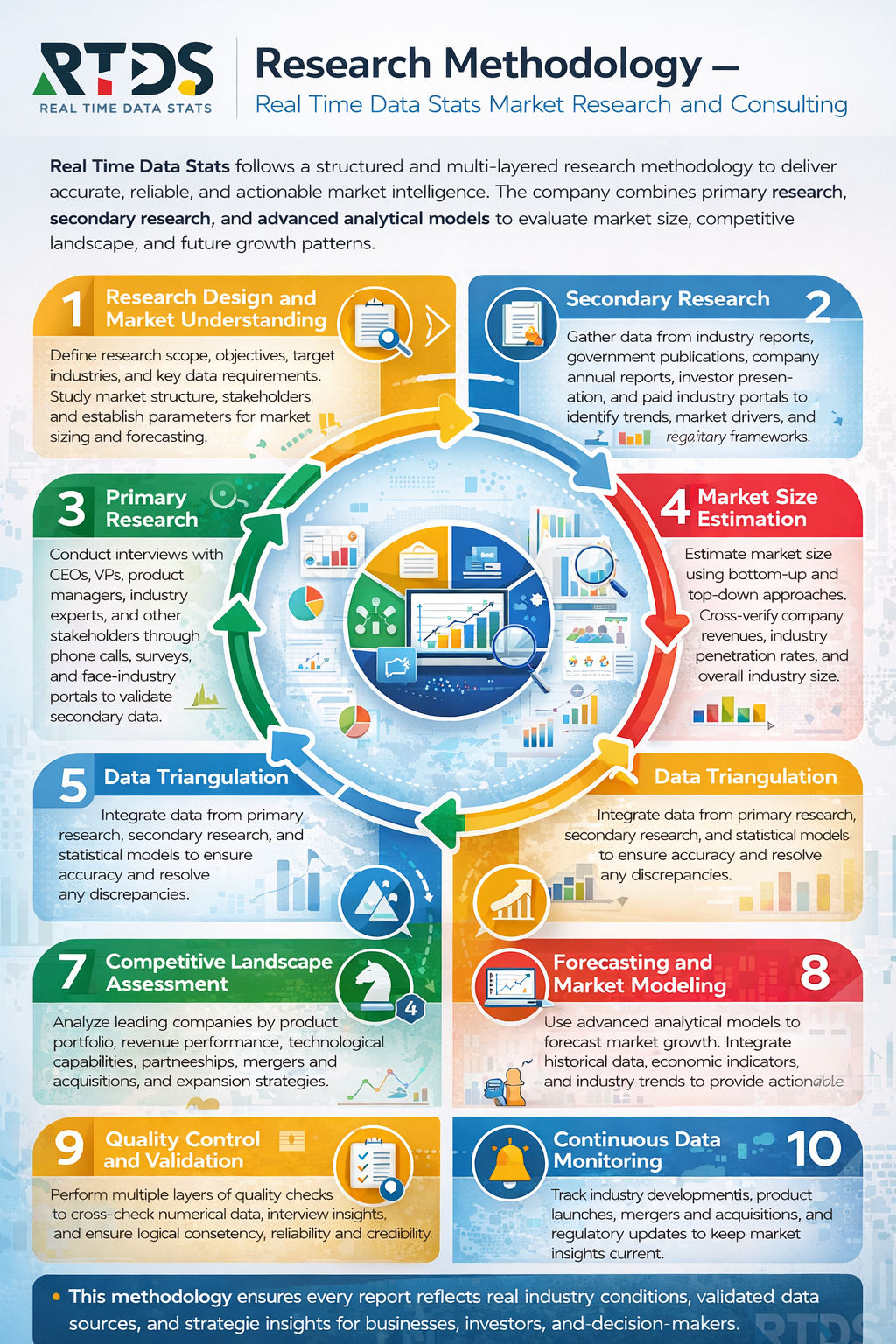
Research Methodology
- Primary Research Approach
- Secondary Research Approach
- Data Collection Techniques
- Data Validation & Triangulation
- Market Estimation Techniques
- Forecasting Model
- Analytical Tools & Frameworks
Executive Summary
- Market Snapshot
- Key Market Highlights
- Key Trends & Developments
- Strategic Insights
- Opportunity Analysis
Market Overview
- Market Evolution
- Industry Ecosystem Analysis
- Value Chain Analysis
- Pricing Analysis
Technology Landscape
- Regulatory Framework
- Industry Standards & Compliance
- Market Dynamics
- Market Drivers
- Market Restraints
- Market Opportunities
- Market Challenges
- Impact Analysis
- Risk Assessment
Autonomous Bioinformatics Market Global Analysis
- Market Size & Forecast
- Market Growth Rate
- Market Share Analysis
- Demand-Supply Assessment
- Investment Landscape
- Funding & Grants Overview
Autonomous Bioinformatics Market Segmentation Analysis
- By Type:
- Genomics
- Proteomics
- Transcriptomics
- Metabolomics
- Epigenomics
- Systems Biology
- By Application:
- Drug Discovery
- Precision Medicine
- Clinical Diagnostics
- Agriculture Biotechnology
- Forensic Analysis
- Environmental Biotechnology
- By Component:
- Software Platforms
- Algorithms & AI Models
- Databases
- Cloud Infrastructure
- Automation Tools
- Data Integration Systems
- By Technology:
- Artificial Intelligence
- Machine Learning
- Deep Learning
- Natural Language Processing
- High-Performance Computing
- Blockchain Integration
- By Workflow:
- Data Acquisition
- Data Preprocessing
- Data Annotation
- Data Analysis
- Visualization
- Reporting & Interpretation
- By Deployment Mode:
- On-Premise
- Cloud-Based
- Hybrid
- Edge Computing
- Private Cloud
- Public Cloud
- By End User:
- Pharmaceutical Companies
- Biotechnology Companies
- Academic & Research Institutes
- Hospitals & Clinics
- Contract Research Organizations
- Government & Regulatory Bodies
- By Data Type:
- Sequence Data
- Structural Data
- Functional Data
- Clinical Data
- Imaging Data
- Omics Data
- By Enterprise Size:
- Large Enterprises
- Medium Enterprises
- Small Enterprises
- Startups
- Research Labs
- Innovation Centers
Regional Market Analysis
- North America Market Overview
- Europe Market Overview
- Asia-Pacific Market Overview
- Latin America Market Overview
- Middle East Market Overview
- Africa Market Overview
Competitive Landscape
- Market Share Analysis
- Competitive Benchmarking
- Strategic Initiatives
- Mergers & Acquisitions
- Partnerships & Collaborations
- Product Launches & Innovations
Company Profiles
- Business Overview
- Product Portfolio
- Financial Overview
- Strategic Developments
- SWOT Analysis
Investment & Opportunity Analysis
- Emerging Investment Areas
- Startup Ecosystem
- Venture Capital Trends
- Government Initiatives
- Strategic Growth Opportunities
- Technology & Innovation Trends
- AI Integration Trends
Automation Advancements
- Cloud & Edge Computing Developments
- Data Security Innovations
- Platform Evolution
- Future Outlook
- Market Forecast
- Trend Analysis
- Growth Opportunities
- Strategic Recommendations
Conclusion
- Summary of Market Trends
- Key Drivers and Restraints
- Growth Opportunities
- Technology & Innovation Outlook
- Future Market Forecast
Appendix
- Abbreviations & Acronyms
- Research Assumptions
- Data Sources
- Methodology Notes
- Disclaimer
List of Tables
- Table:1: Global Autonomous Bioinformatics Market Size Overview
- Table:2: Market Segmentation by Type
- Table:3: Market Segmentation by Application
- Table:4: Market Segmentation by Component
- Table:5: Market Segmentation by Technology
- Table:6: Market Segmentation by Workflow
- Table:7: Market Segmentation by Deployment Mode
- Table:8: Market Segmentation by End User
- Table:9: Market Segmentation by Data Type
- Table:10: Market Segmentation by Enterprise Size
- Table:11: Market Segmentation by Region
- Table:12: Regional Market Comparison
- Table:13: Competitive Landscape Analysis
- Table:14: Investment & Funding Trends
- Table:15: Market Forecast Summary
List of Figures
- Figure:1: Global Market Overview Diagram
- Figure:2: Market Segmentation Framework
- Figure:3: Value Chain Analysis
- Figure:4: Industry Ecosystem Map
- Figure:5: Technology Landscape Overview
- Figure:6: Market Dynamics Model
- Figure:7: Workflow Architecture
- Figure:8: Deployment Model Comparison
- Figure:9: End-User Distribution Chart
- Figure:10: Regional Market Share Distribution
- Figure:11: Competitive Landscape Matrix
- Figure:12: Investment Flow Diagram
- Figure:13: Innovation & Technology Roadmap
- Figure:14: Growth Opportunity Matrix
- Figure:15: Future Market Forecast Trend Chart
Autonomous Bioinformatics Market Key Factors
Drivers:
- Increasing adoption of AI and machine learning accelerates genomic data analysis.
- Pharmaceutical companies invest heavily to reduce drug discovery timelines and costs.
- Rising demand for personalized medicine expands the need for automated interpretation of complex datasets.
Restraints:
- High initial implementation costs deter widespread adoption, especially among smaller research entities.
- Concerns over data privacy and security protocols hinder data sharing and system integration.
- The shortage of skilled professionals capable of managing advanced autonomous platforms limits growth.
Opportunities:
- Cloud-based solutions create scalable and accessible platforms for a broader range of users.
- Expanding applications in agriculture and microbiology open new revenue streams.
- Strategic partnerships between bioinformatics firms and healthcare providers drive innovation and market penetration.
Challenges:
- Integrating autonomous systems with legacy laboratory infrastructure presents technical hurdles.
- Lack of standardized regulatory frameworks creates uncertainty for product approval and validation.
- Ensuring the accuracy, interpretability, and bias-free nature of algorithmic outputs remains difficult.
Autonomous Bioinformatics Market Key Regional Trends
North America:
- Strong venture capital funding fuels innovation and startup growth in the sector.
- Leading pharmaceutical and biotech firms aggressively pilot and deploy autonomous R&D platforms.
- Regulatory bodies actively engage with industry to shape guidelines for AI-driven clinical decision support.
Europe:
- Stringent data protection laws (GDPR) shape the development of privacy-centric bioinformatics solutions.
- Significant public and private initiatives promote translational research and precision medicine.
- Growing focus on cross-border, collaborative genomics projects boosts demand for interoperable systems.
Asia-Pacific:
- Government-led national genomics programs significantly increase the volume of sequence data requiring analysis.
- Expanding contract research and manufacturing base adopts automation to enhance service offerings.
- Rapid digital healthcare expansion creates opportunities for diagnostic and therapeutic applications.
Rest of the World:
- Focus on infectious disease surveillance and public health genomics drives initial adoption.
- Market growth relies heavily on cost-effective, cloud-delivered models due to infrastructure constraints.
- Partnerships with global organizations facilitate technology transfer and build local capacity.
Frequently Asked Questions
Key Questions Answered
- What is the size and growth rate of the market industry?
- What are the main drivers influencing market growth trends?
- What are the key challenges and restraints faced by the market?
- What are the emerging trends and opportunities shaping the market?
- Who are the top players, and what strategies drive their success?
- What are the customer demographics and their buying behaviors?
- What are the key market segments, and what is their scope?
- What are the geographical dynamics, and which region dominates?
- What are the market forecasts and projections for the next decade?
- What regulatory factors are critical to consider for market growth?
Why Choose our Company?
- Major facts and stats backing every report we offer.
- Comprehensive analysis tailored to your business needs.
- Accurate insights backed by extensive market research.
- Expert support to address your queries promptly.
- Data-driven strategies for better decision-making.
- In-depth reports with actionable
recommendations. - Reliable statistics from trusted industry
sources. - Customizable reports to suit your specific goals.
- Unmatched quality and precision in market analysis.
- Competitive pricing with premium content delivery.
Share your experience!
We value you feedback. Please take a moment to review your experience with us.